GIAN BERTO VANNI
A restless innovator who worked in Rome, Paris, and New York, Vanni crafted richly textured paintings
where logic falters and memory takes shape in ambiguous, poetic form—an uncommon voice in
postwar abstraction reflecting the complexity of a multicultural world
(read full bio)


ARTIST BIO
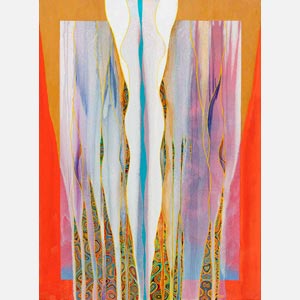
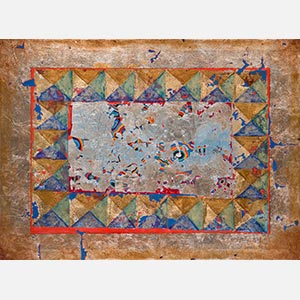
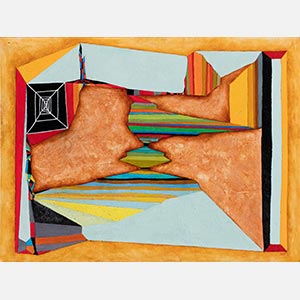
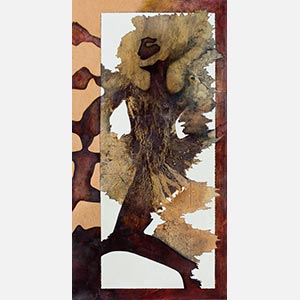
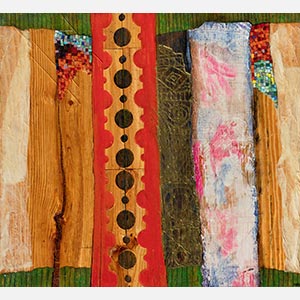
Gian Berto Vanni (Rome, 1927 – Kythira, 2017) was an Italian painter known for his deeply layered and eclectic style that bridges modern and contemporary art. Vanni’s artistic formation began with Italian Futurist Alberto Bragaglia, then continued with Neo-Plasticist Friedrich Vordemberge-Gildewart in Amsterdam, and culminated at Yale under the tutelage of Josef Albers. These diverse influences shaped Vanni’s unique visual grammar, characterized by juxtaposing precise miniature-like detail with raw textures and fluid paint flows. His paintings often integrate figurative fragments, geometric shapes, and biomorphic forms, creating complex and ambiguous narratives on richly textured surfaces. Vanni’s career spanned Europe and the U.S., with notable periods in Paris, Rome, and New York City, where he taught at Cooper Union for three decades. His work is recognized for its exploration of memory, abstraction, and contradiction, often pushing the boundaries of traditional painting to evoke timeless and introspective experiences.
ABOUT THE WORK
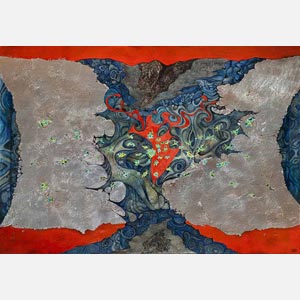
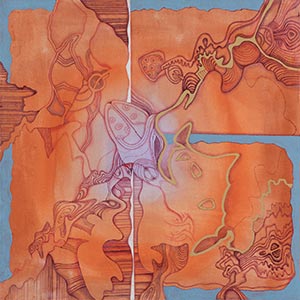
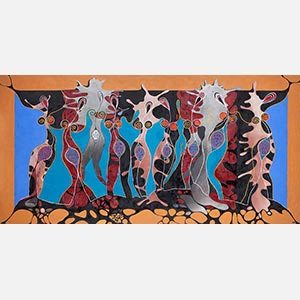
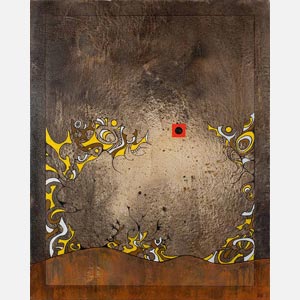
Gian Berto Vanni’s work is characterized by an ambiguity of interpretation expressed through spatial, temporal, formal, and iconological contradictions. For him, these elements reflect real life, with disparate realities that relate to different, yet equally valid, systems of logic. Memory acts as a point of decantation, where past and present coexist, allowing for a multitude of formulations.
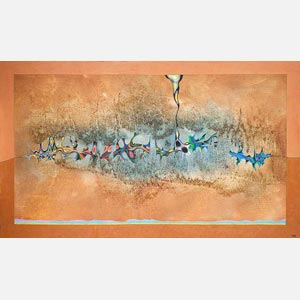
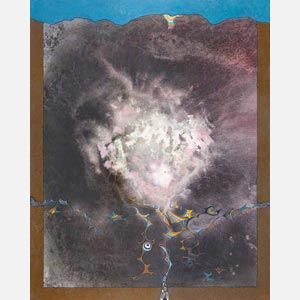
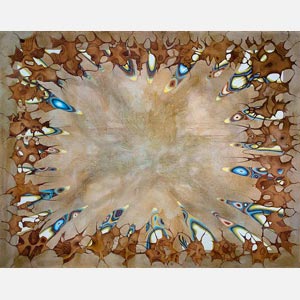
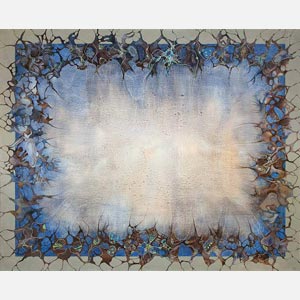
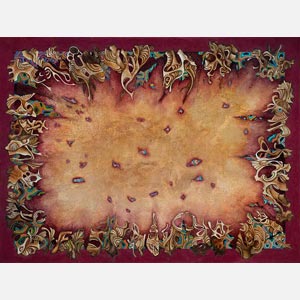
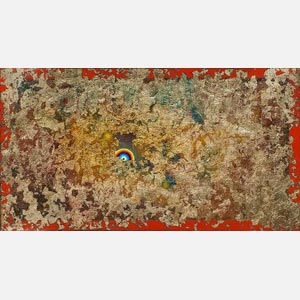
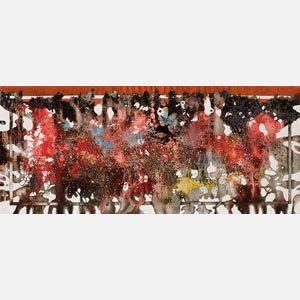
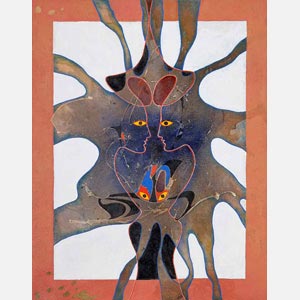
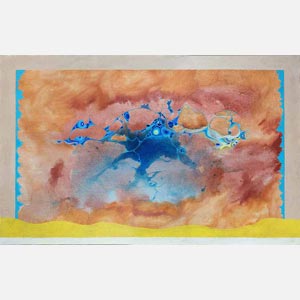
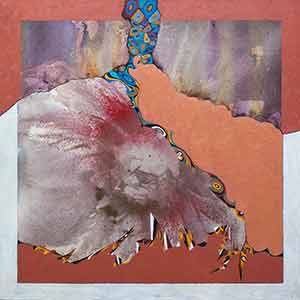
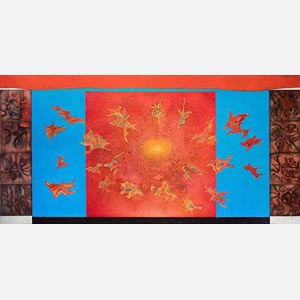
His canvases embody this multiplicity. Macroscopic and microscopic elements are explored, dissected, and reassembled into metamorphic structures. Agates transform into amoebas, merging within an aquatic veil destined to crack like parched earth. Alternatively, there can be an opposite, generative process in which cells emerge—like knots in wood—from the flow's accidents, multiplying and invading the surrounding fields.
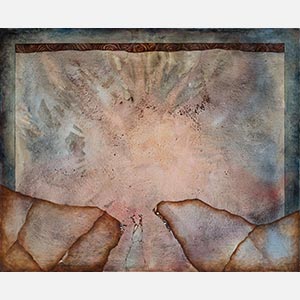
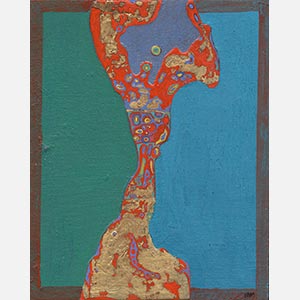
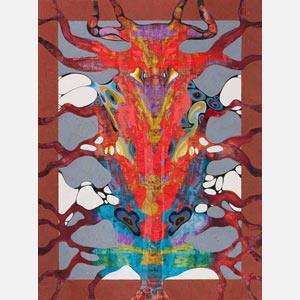
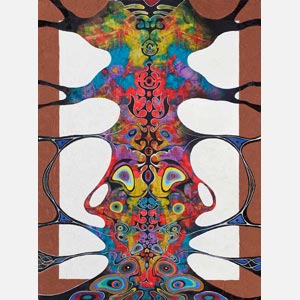
The field itself is often bordered by a frame to demarcate the internal space of the painting from the external space. After establishing this boundary, Vanni then crosses it with elements from the internal space of the canvas. This intervention negates the frame’s traditional function and subverts its meaning, thereby expressing the ambiguity of the painting’s physical limits.
Vanni creates scenarios where completing any logical path becomes impossible, revealing the underlying theme of his works: the non-acceptance of reality as it appears.
ARTIST STATEMENT
Painting is a tool to understand nature beneath appearances, disregarding the scientist’s eye and using the poet’s, in search of those mysterious rules that conduct her marvelous harmonies.
PRESENTED AT ARCO GALLERY
Exhibitions:
THE EARLY YEARS - 1952–1960 (2025)
BEYOND THE SURFACE (2021)
MODERN MINIATURES (2021)
UNDER THE INFLUENCE OF THE MOON (2020)
Thematic focus:
Abstract Art
You're welcome to reach out for additional works, context, or conversation around Gian Berto Vanni's practice.