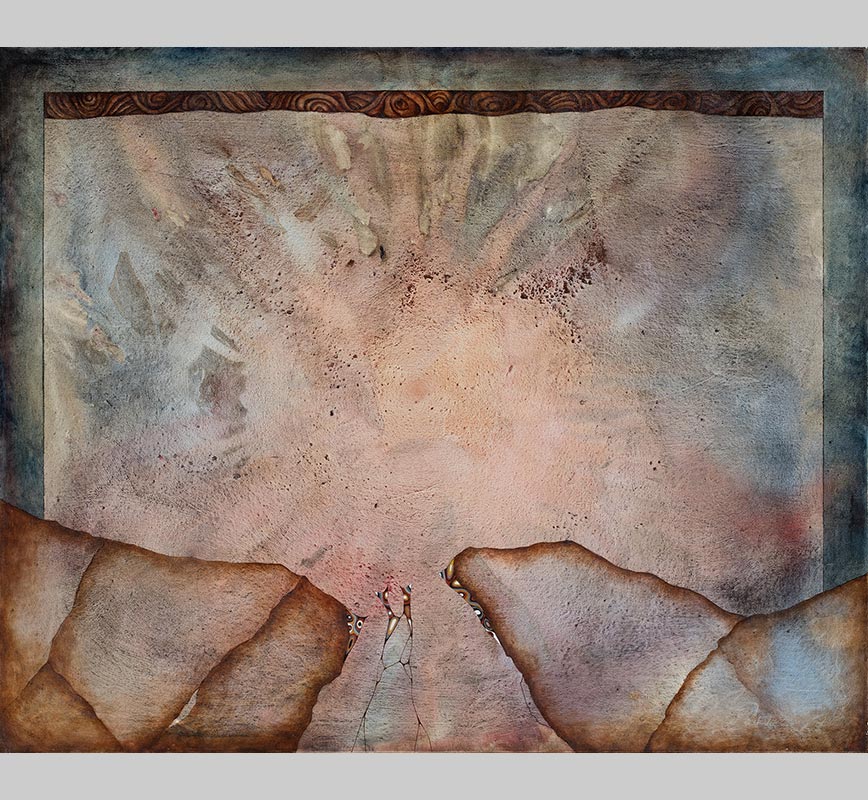
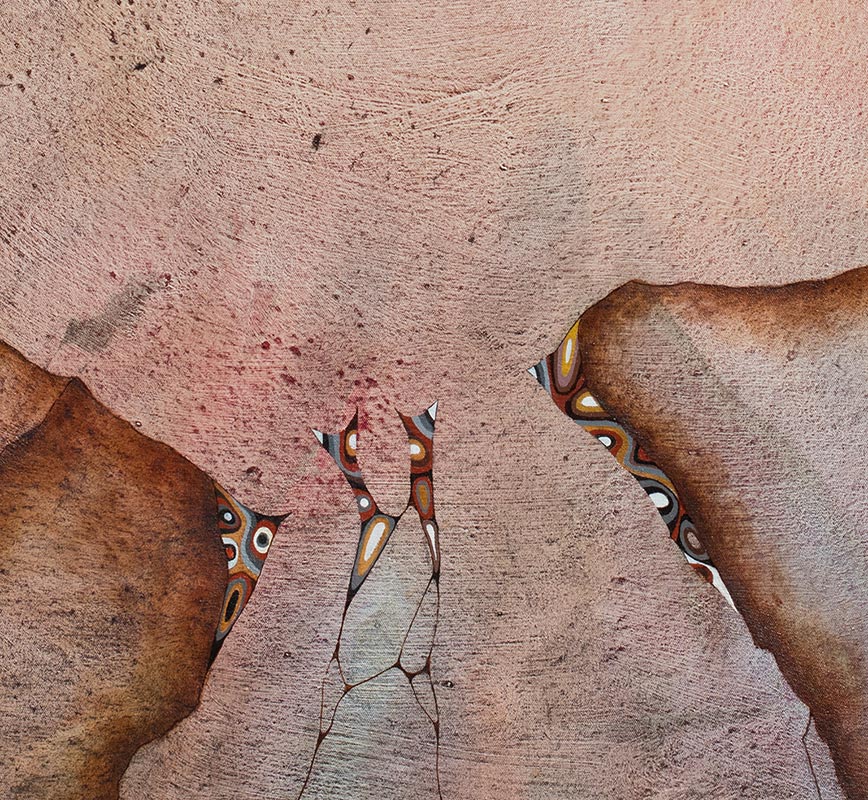
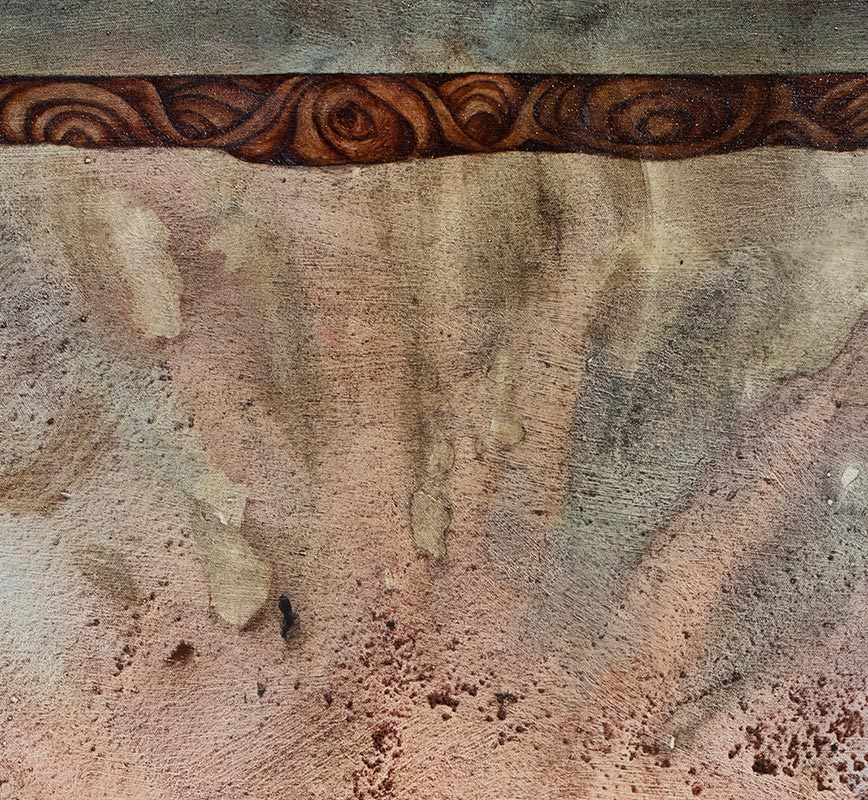
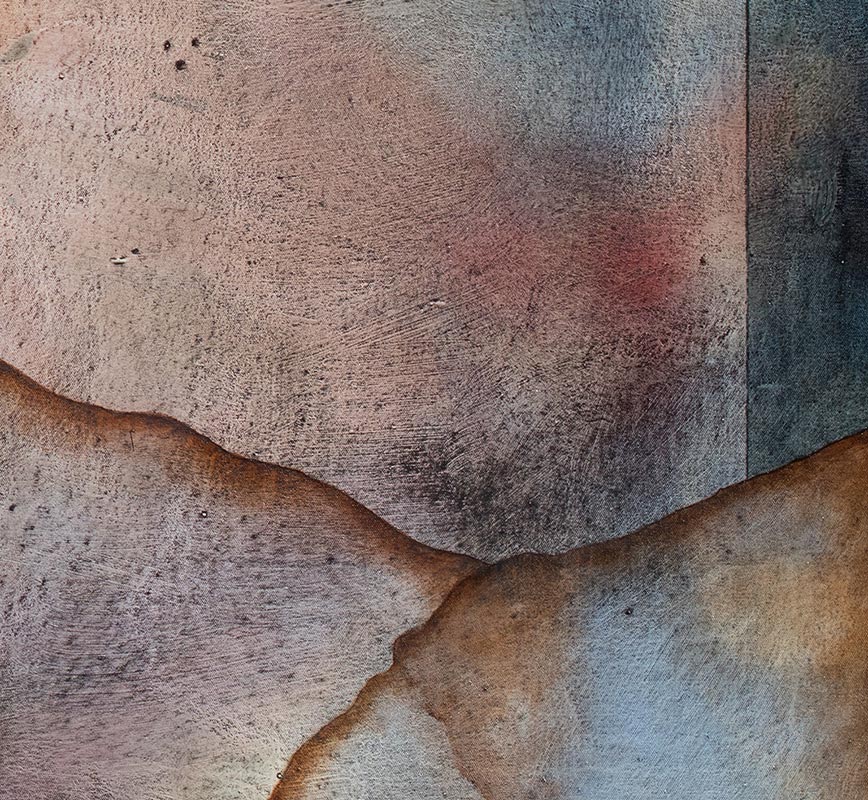
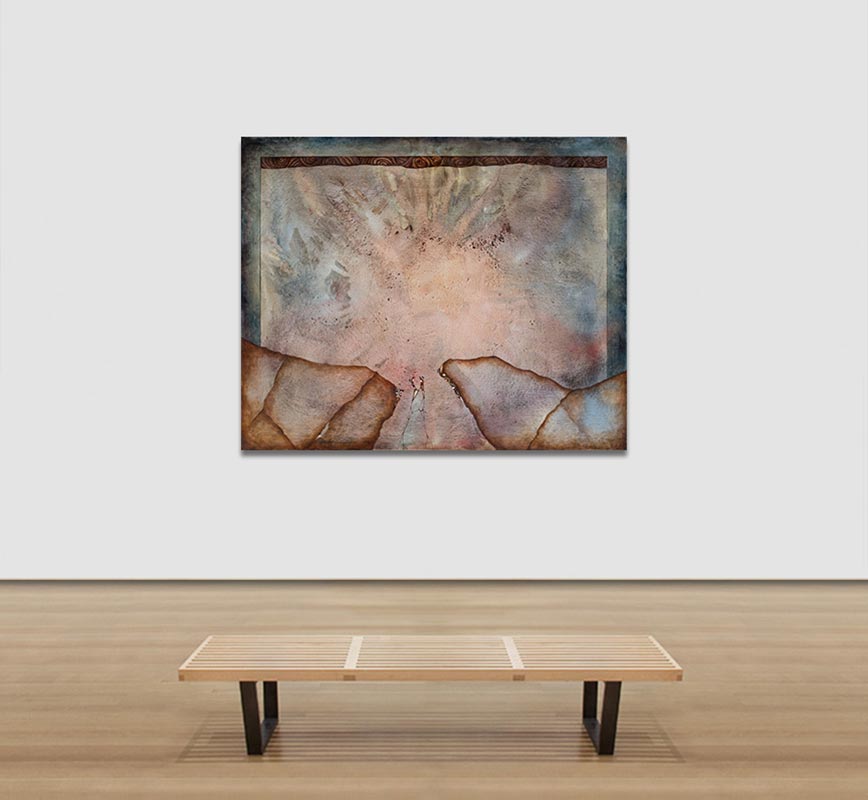
A tall vertical canvas in deep brown and white, with a large organic form occupying the center: not quite a body, not quite a tree, not quite a geological formation, but carrying properties of all three. The form is built from earthy impasto and flowing lines of dark material; its movement is vertical, upward, arrested at the moment of maximum extension. White zones open within the dark mass like spaces of sudden visibility: not blank ground but the rough edge of something still becoming.
A tall vertical canvas in deep brown and white, with a large organic form occupying the center: not quite a body, not quite a tree, not quite a geological formation, but carrying properties of all three. The form is built from earthy impasto and flowing lines of dark material; its movement is vertical, upward, arrested at the moment of maximum extension. White zones open within the dark mass like spaces of sudden visibility: not blank ground but the rough edge of something still becoming.
Shiva's cosmic dance, the Tandava, is among the most formally demanding subjects in Hindu iconography: the tradition of the Nataraja presents the figure in a ring of fire, perfectly balanced on one foot, each of the four arms in a codified gesture, the cosmological argument about creation, preservation, and destruction made visible in the body's precise organization. Vanni refuses all of this iconographic apparatus. The dance here is not depicted in its traditional visual language but abstracted into its formal premise: transformation as a continuous process, visible in the moment of its occurring rather than frozen in the codified posture that records its completion. A direct encounter with India in the mid-1990s gave the cultural reference a biographical ground, but the interpretive framework driving the work is the same one that governs the mythological canvases drawn from Ovid: the myth understood as the allegorical expression of perpetual change rather than a fixed narrative.
The white zones that open within the dark organic mass are the most formally alive passages in the canvas. They are not the white of blank ground but the white of revealed interior space, as if the dark geological matter has been cut through to show what is inside. In the vocabulary of the Tandava, these might be the fire-ring's light showing through the moving arms; in the vocabulary of Vanni's formal practice, they are apertures onto another spatial register, the other world inside the visible one.