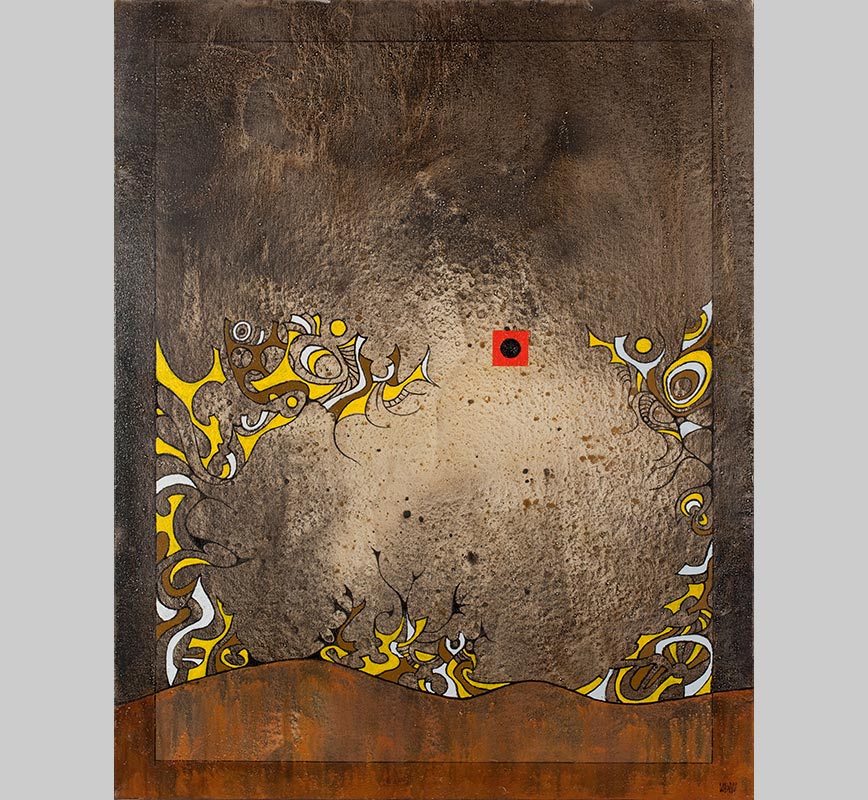
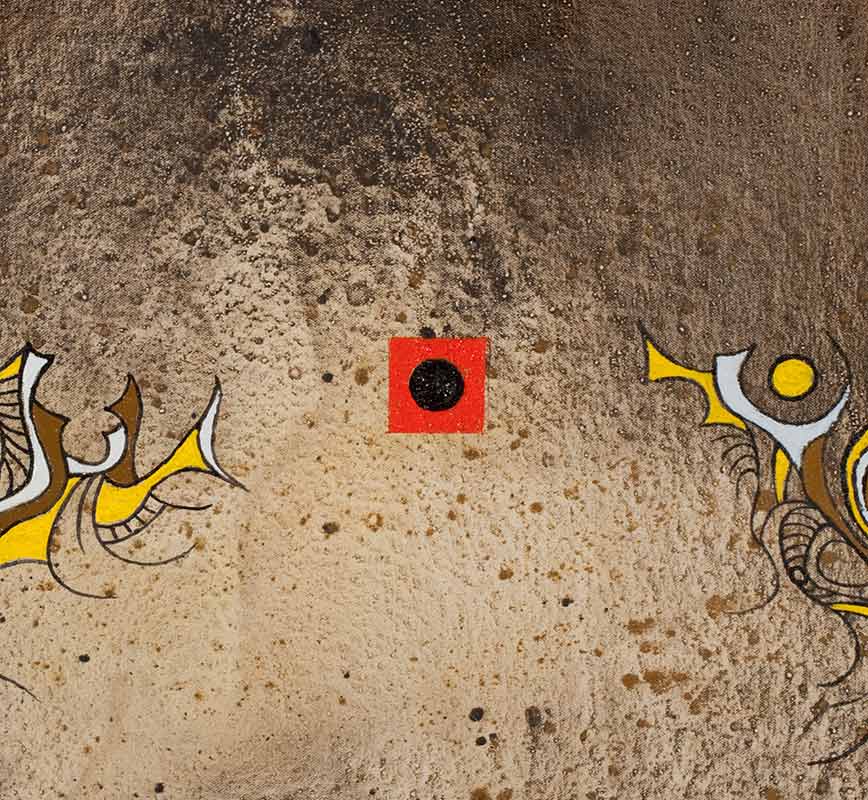
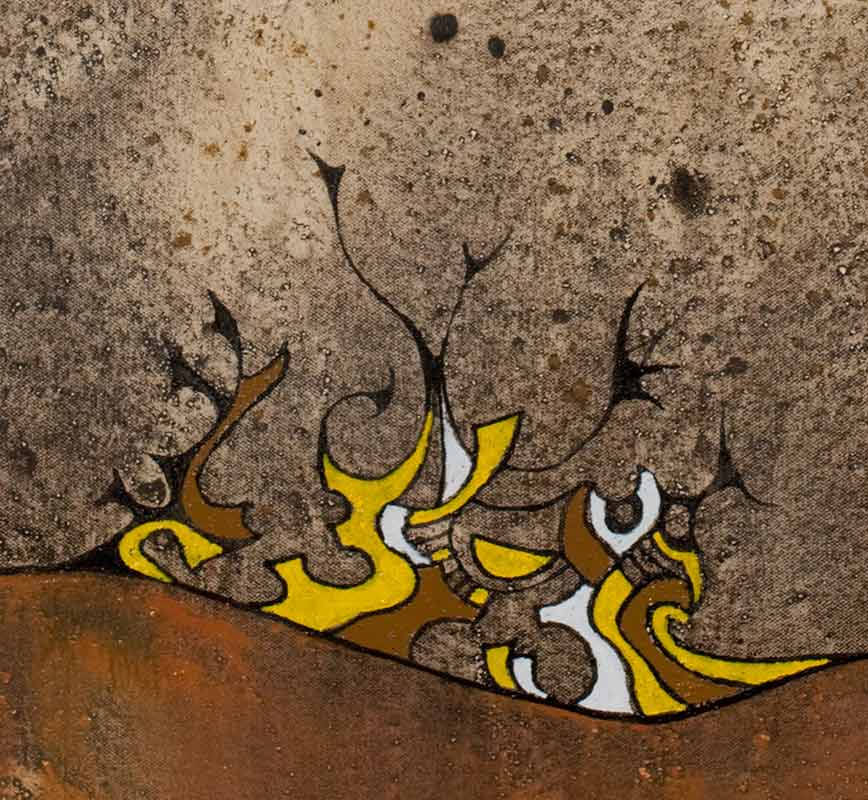
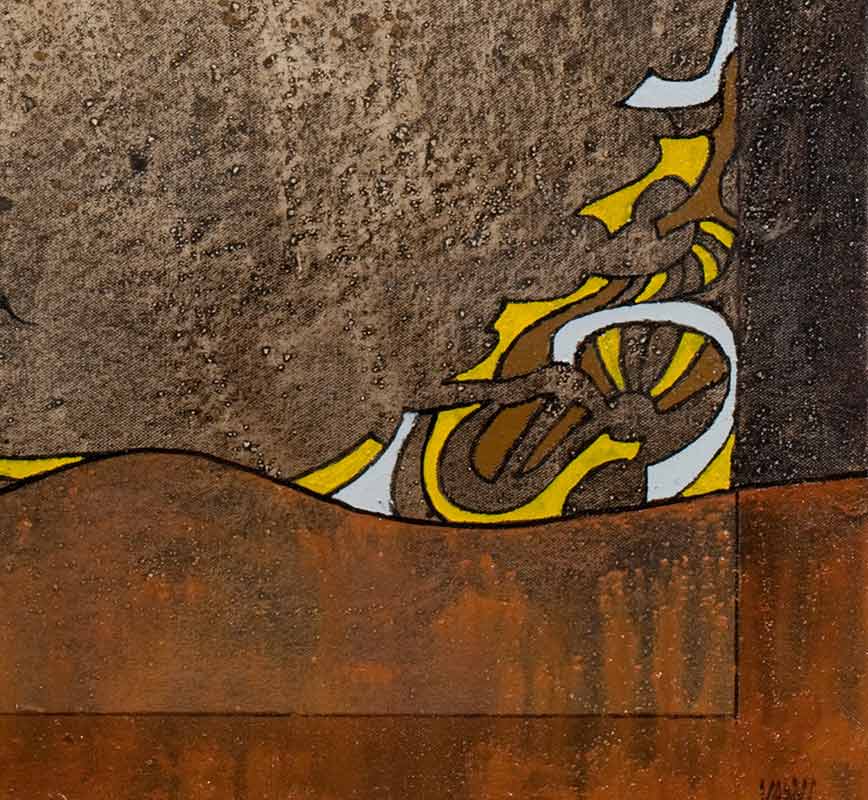
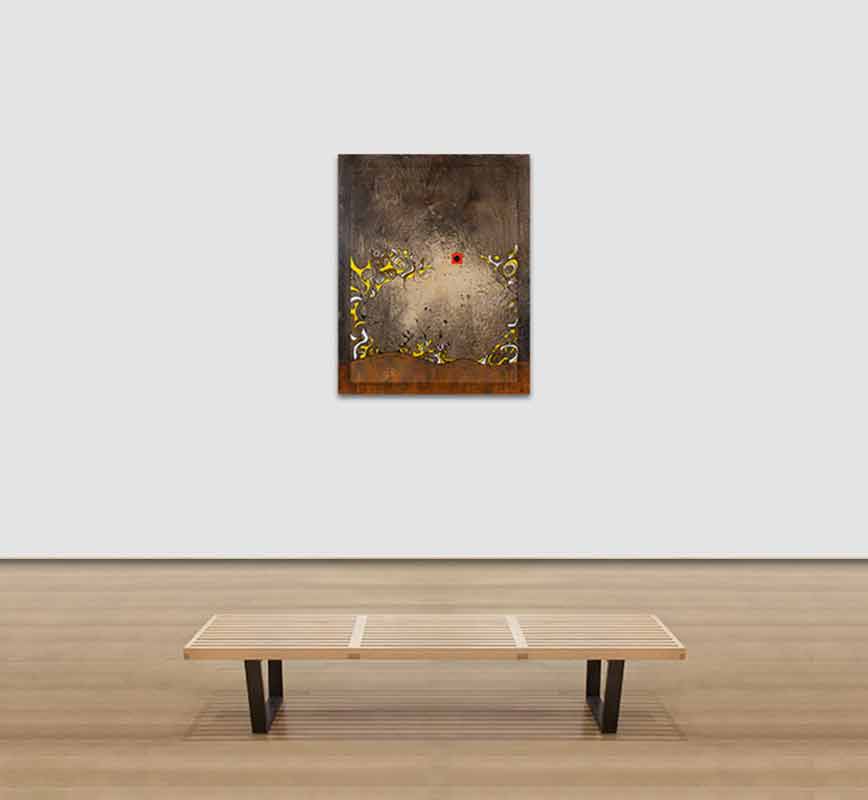
A luminous pale center, barely differentiated from the ground, almost nothing: and around it, completing a large rectangle, a dense border of interlocking biological forms, cellular, branching, and crystalline, each internally detailed, each carrying small polychrome events. Spring is present not in any seasonal imagery but in the quality of the light: an atmospheric condition rather than a depicted scene. The cornice enclosing it functions like the framing vocabulary throughout Vanni's New York work, here constructed entirely from biological matter.
A luminous pale center, barely differentiated from the ground, almost nothing: and around it, completing a large rectangle, a dense border of interlocking biological forms, cellular, branching, and crystalline, each internally detailed, each carrying small polychrome events. Spring is present not in any seasonal imagery but in the quality of the light: an atmospheric condition rather than a depicted scene. The cornice enclosing it functions like the framing vocabulary throughout Vanni's New York work, here constructed entirely from biological matter.
The work carries the designation soffitto, ceiling painting, placing it in the same formal category as the great ceiling works of the early 1990s, designs made to be viewed from below with no fixed gravitational orientation: the luminous center is neither top nor bottom but a source of energy in all directions simultaneously. The border's mosaic-like character is materialist rather than decorative: each organic form is a specimen, a life form, biological evidence gathered from the natural world and arranged in the service of a formal argument about what encloses and what is enclosed.
The luminous interior approaches pure light through tonal reduction, subtracting rather than adding: the center nears the bare canvas, and luminosity is generated not by the application of anything bright but by the removal of everything that would absorb it. This is a parallel condition to what Monet's late water-lily canvases achieve, though by the opposite material means, dissolving discrete form into continuous chromatic event through the accumulation of gestural marks. The distance between these two approaches to luminosity, one subtractive, one additive, measures something about the difference between painting as illusion and painting as matter.