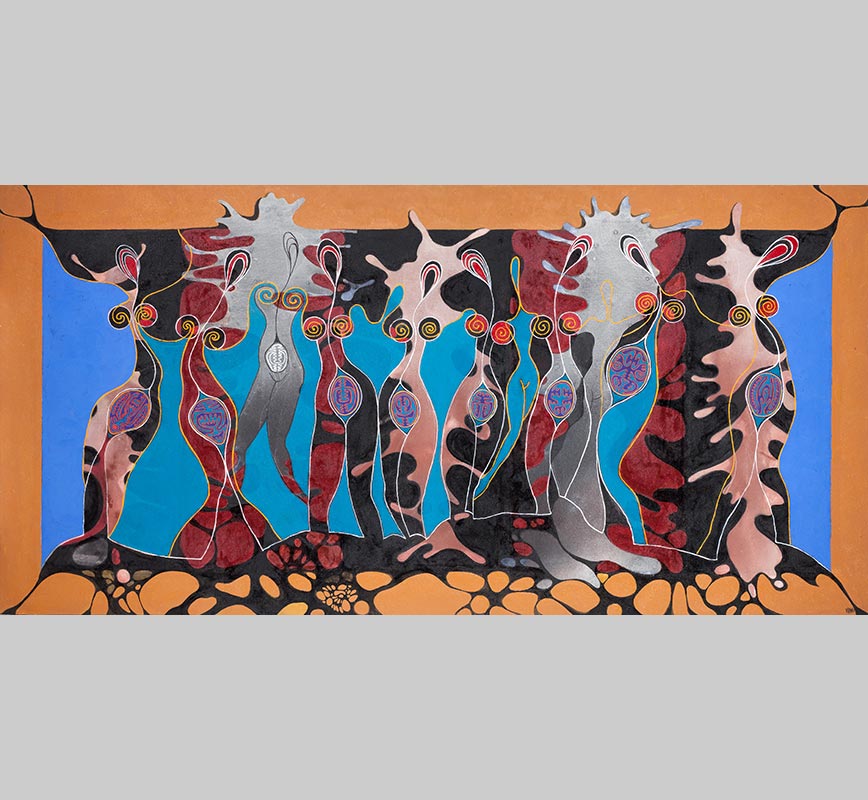
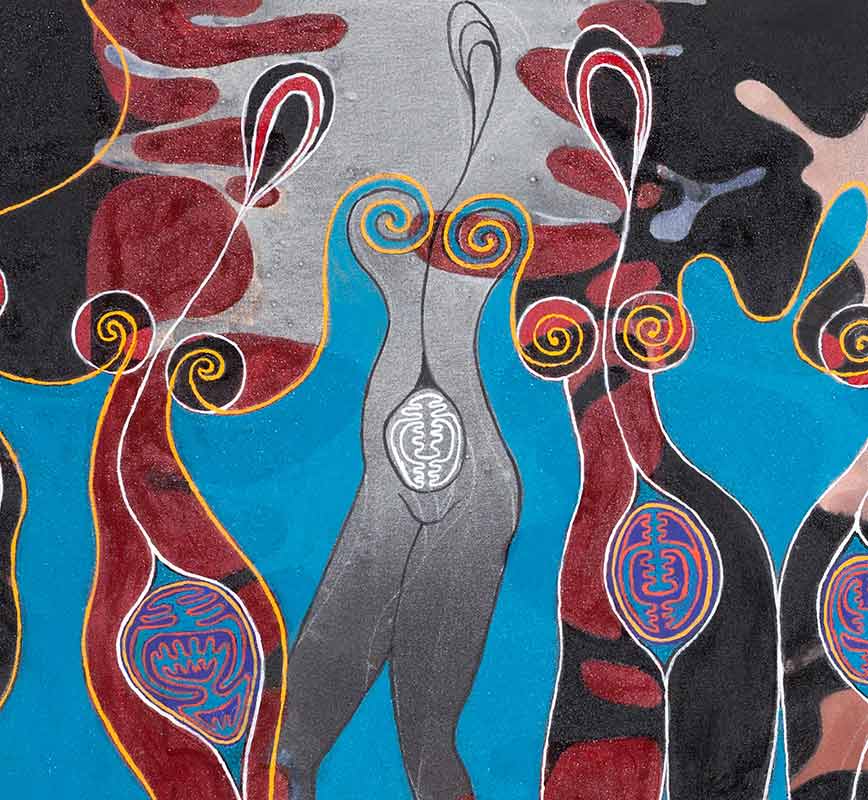
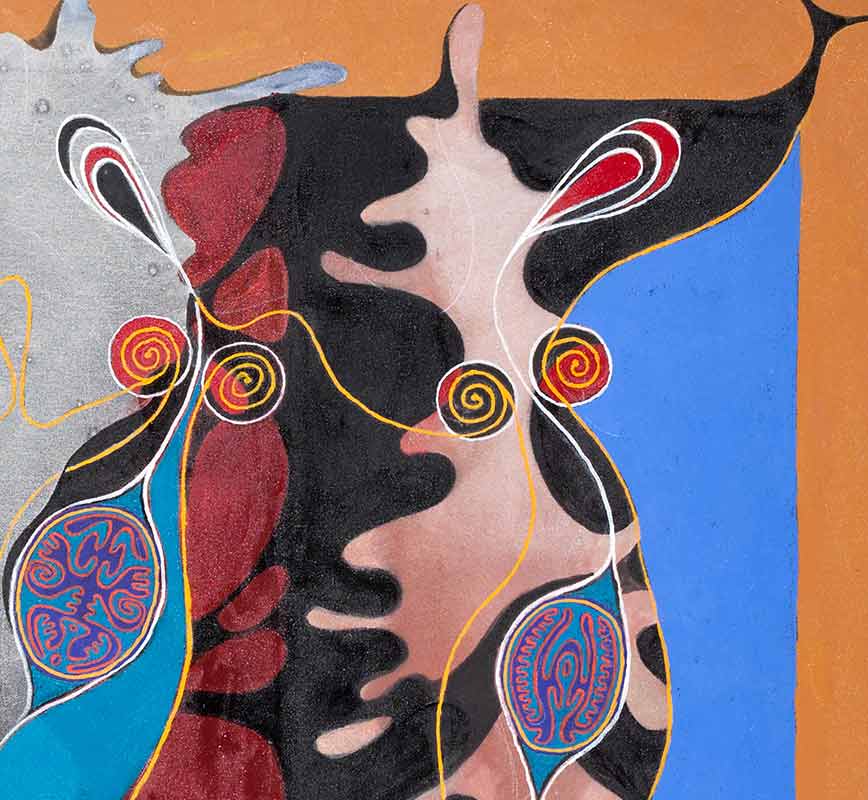
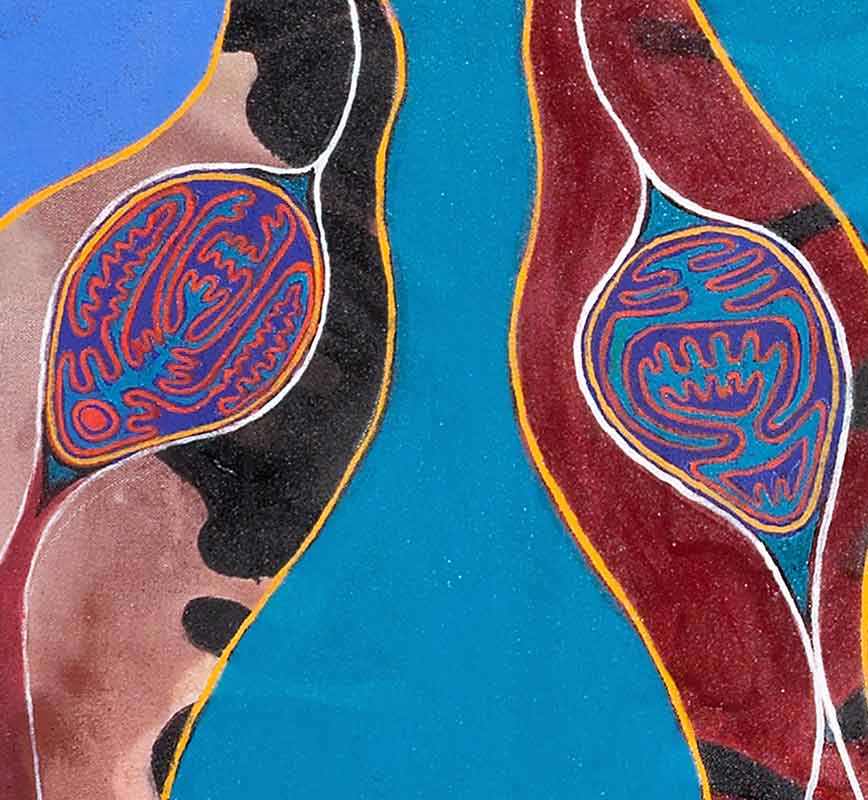
Two figures face each other in bilateral symmetry, their shared axis the vertical center of this tall, dark canvas. They are not described so much as excavated: red contour-lines draw them out of a field of deep brown-blue geological matter, their forms simultaneously body and organism. The eyes glow with the concentric ring-forms that Vanni uses throughout the New York period to mark inhabited intelligence: yellow, orange, and black rings that say here is a center, without specifying what kind.
Two figures face each other in bilateral symmetry, their shared axis the vertical center of this tall, dark canvas. They are not described so much as excavated: red contour-lines draw them out of a field of deep brown-blue geological matter, their forms simultaneously body and organism. The eyes glow with the concentric ring-forms that Vanni uses throughout the New York period to mark inhabited intelligence: yellow, orange, and black rings that say here is a center, without specifying what kind.
The brown-blue field from which the figures emerge is not background but matter: the same geological and biological substance that constitutes the abstract works from the same period. The figures do not stand before it; they are made of it. The psychological subject is inseparable from the material that gives it form, and the bilateral structure that frames their encounter makes the conversation internal by definition: two aspects of a single intelligence, looking at each other across the axis that divides them.
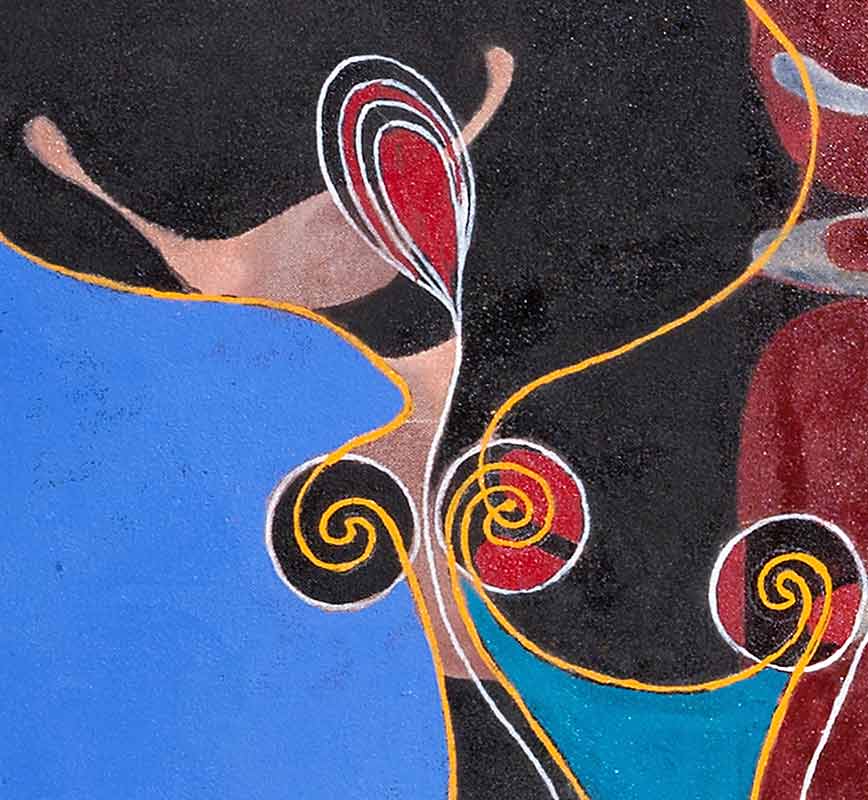
The figures carry their identity not in the specificity of their bodies but in the symbolic charge of their eyes: the concentric ring-forms do the work that individualized anatomy would do in a different tradition. This is the formal logic of Egyptian funerary art, where the human figure carries psychological weight through economy of means, the profile, the standardized gesture, the eye rendered with a precision the rest of the body does not require.
The contour-line figures carry a formal directness that trained art-making tends to suppress, as if the geological material from which they were drawn has preserved something that refinement would have removed. This is the same directness that Jean Dubuffet pursued within Art Brut, though arrived at by a completely different route: not by bypassing formal training but by absorbing it fully and working through its entire complexity toward a visual language in which the geological and the figural are made of the same material.