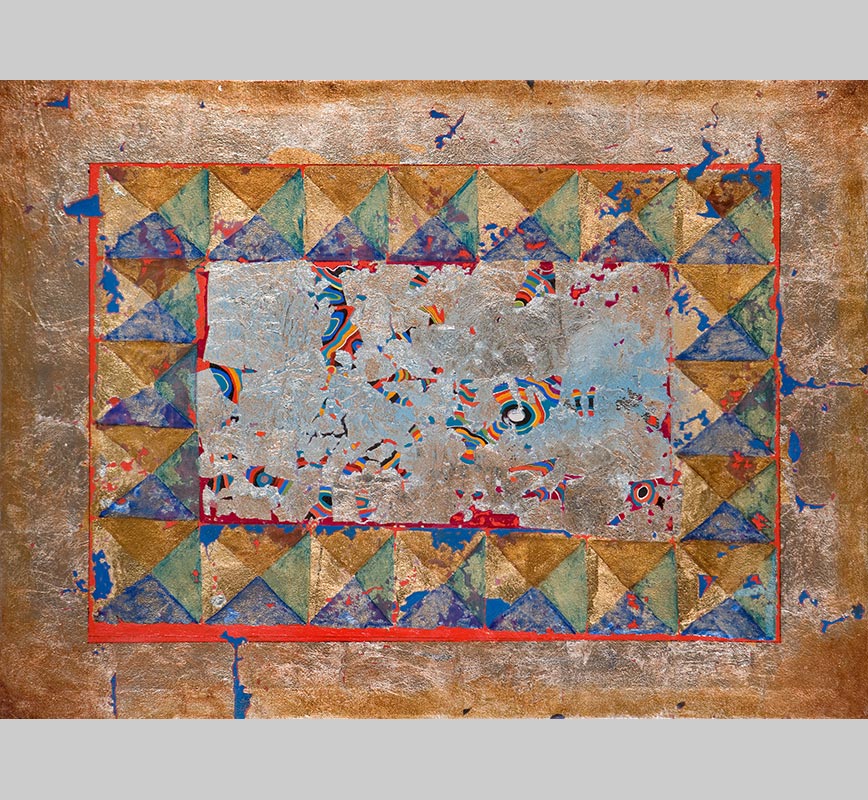
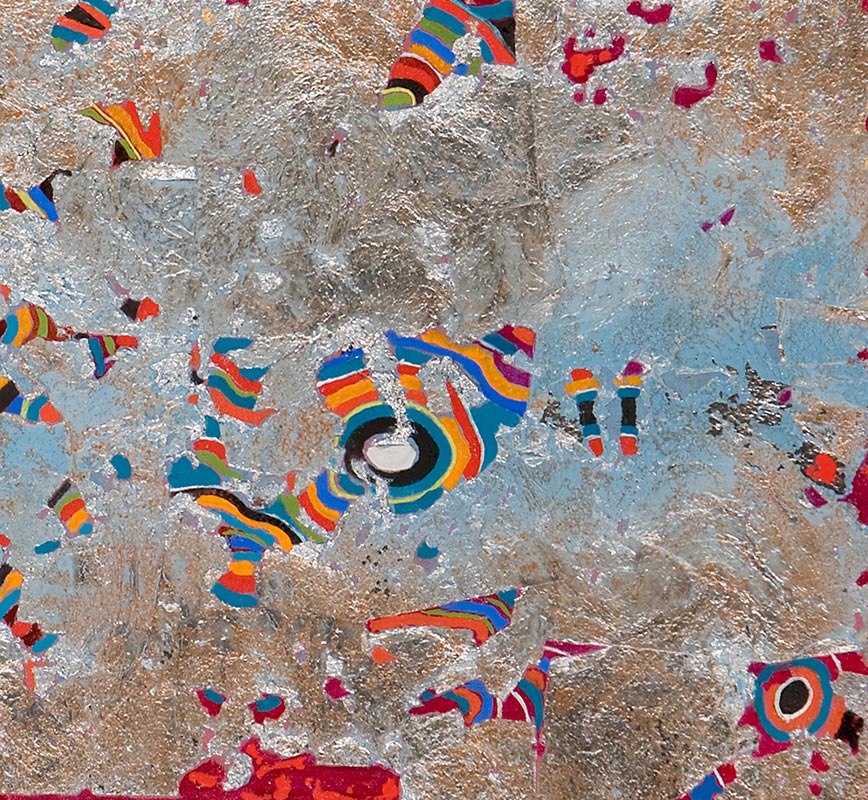
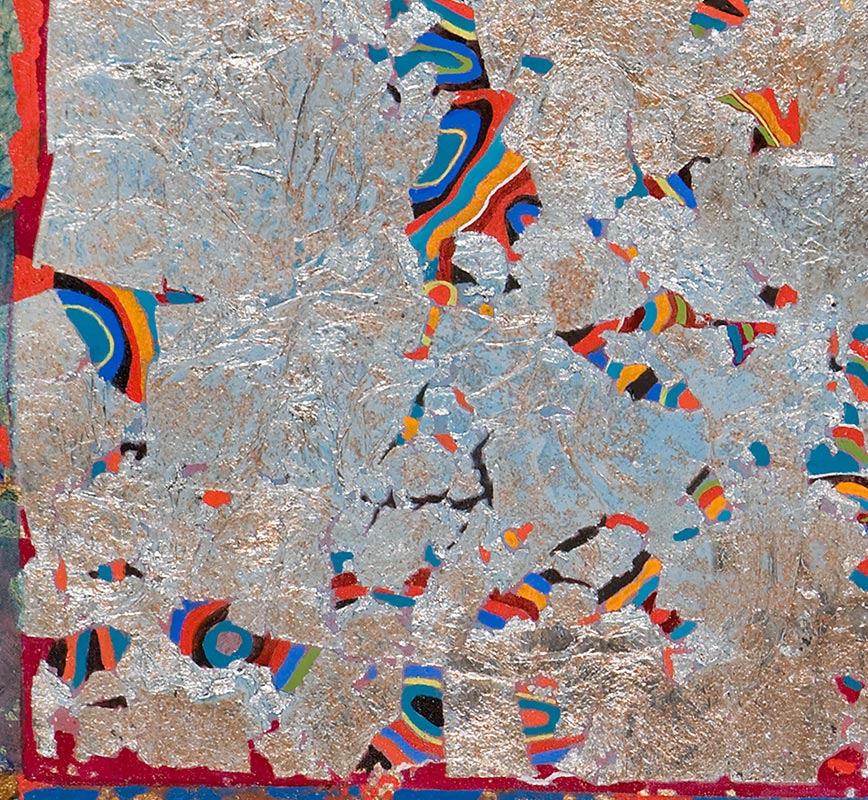
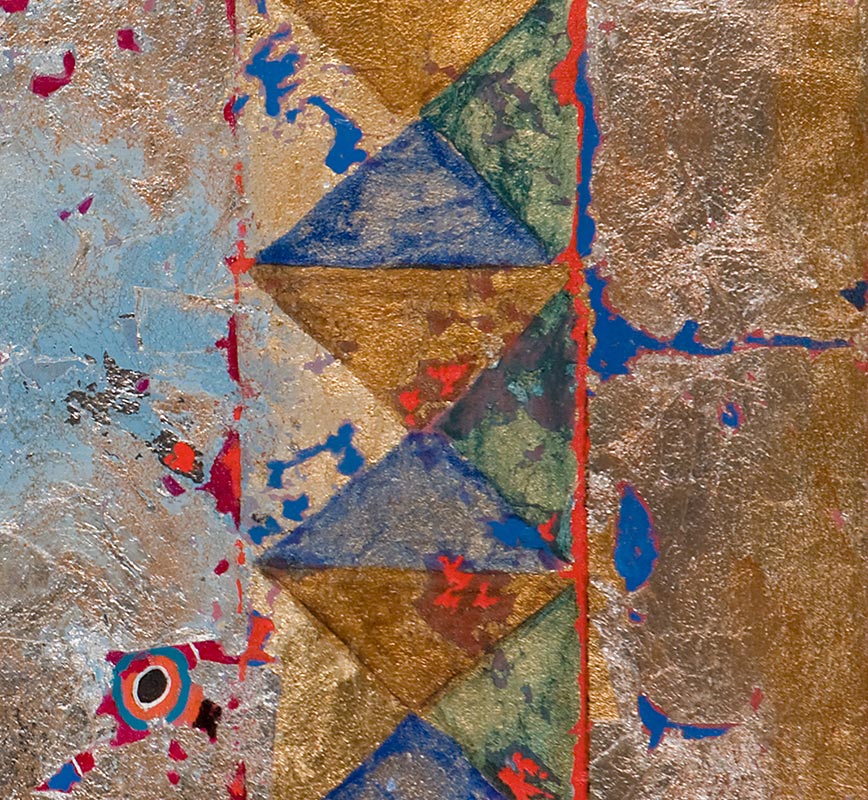
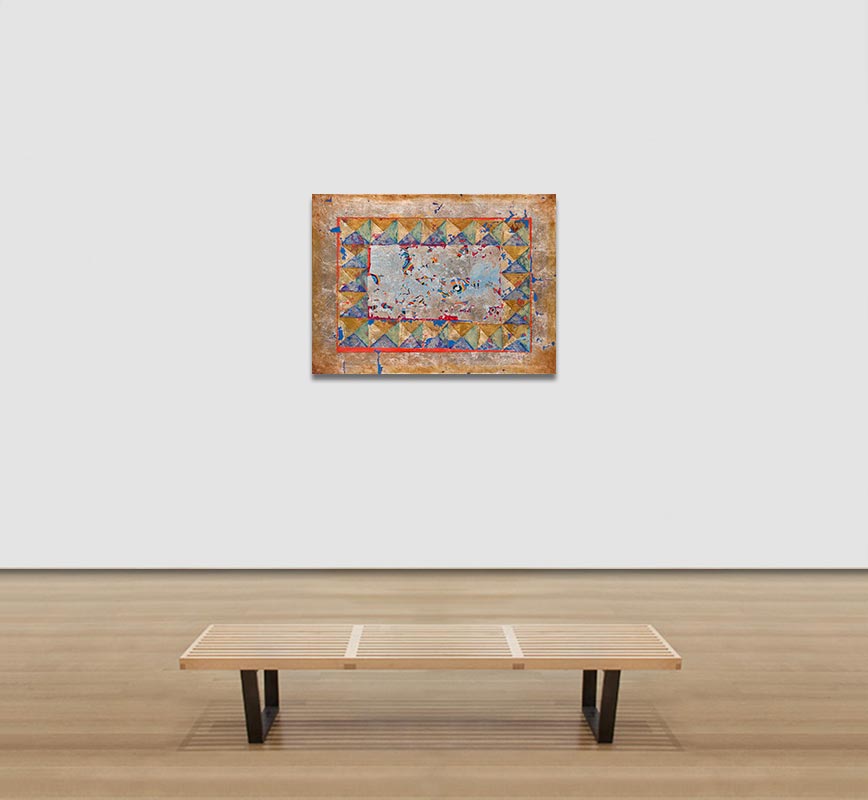
The ground is terracotta: warm, clay-fired, the color of the earth after rain in the Mediterranean. Across this field, a dense calligraphic system unfolds, not writing exactly, but the visual preconditions of writing: marks that carry the formal properties of script, regularity, directionality, and the implication of meaning, without the phonetic content. At the center, the composition opens into a lighter zone where the marks give way to a more fluid biomorphic event: pale purples and whites in forms suggesting the interior of something organic.
The ground is terracotta: warm, clay-fired, the color of the earth after rain in the Mediterranean. Across this field, a dense calligraphic system unfolds, not writing exactly, but the visual preconditions of writing: marks that carry the formal properties of script, regularity, directionality, and the implication of meaning, without the phonetic content. At the center, the composition opens into a lighter zone where the marks give way to a more fluid biomorphic event: pale purples and whites in forms suggesting the interior of something organic.
Vanni's sustained engagement with undeciphered pre-Classical visual systems, Minoan Linear A, early hieroglyphic traditions, the calligraphic notation of pre-Columbian monumental writing absorbed through his Art Survey teaching at Cooper Union, gave him a deep knowledge of mark-making traditions in which form carries the implication of meaning without being reducible to code. The marks are organized as though they communicate, whether or not they do. Signs, Alive names not symbols inert in a system but marks with their own biological vitality, existing prior to any particular linguistic assignment.
The calligraphic surfaces operate on a conviction that the oldest marks carry a force that survives the loss of their original meaning: form communicates before, and independent of, what it is decoded to say. This is a parallel path to the one taken by Wifredo Lam, to fuse calligraphic mark-making with mythological iconography and the formal intelligence of Afro-Caribbean visual traditions. The archaeological imagination here is Mediterranean and Aegean rather than Caribbean, but the governing formal premise is identical: the biological and the calligraphic are indistinguishable at the point where marks are most ancient.