ENZO RAGAZZINI: CREATURE
Fine Art Photography Exhibition
PRESENTATION
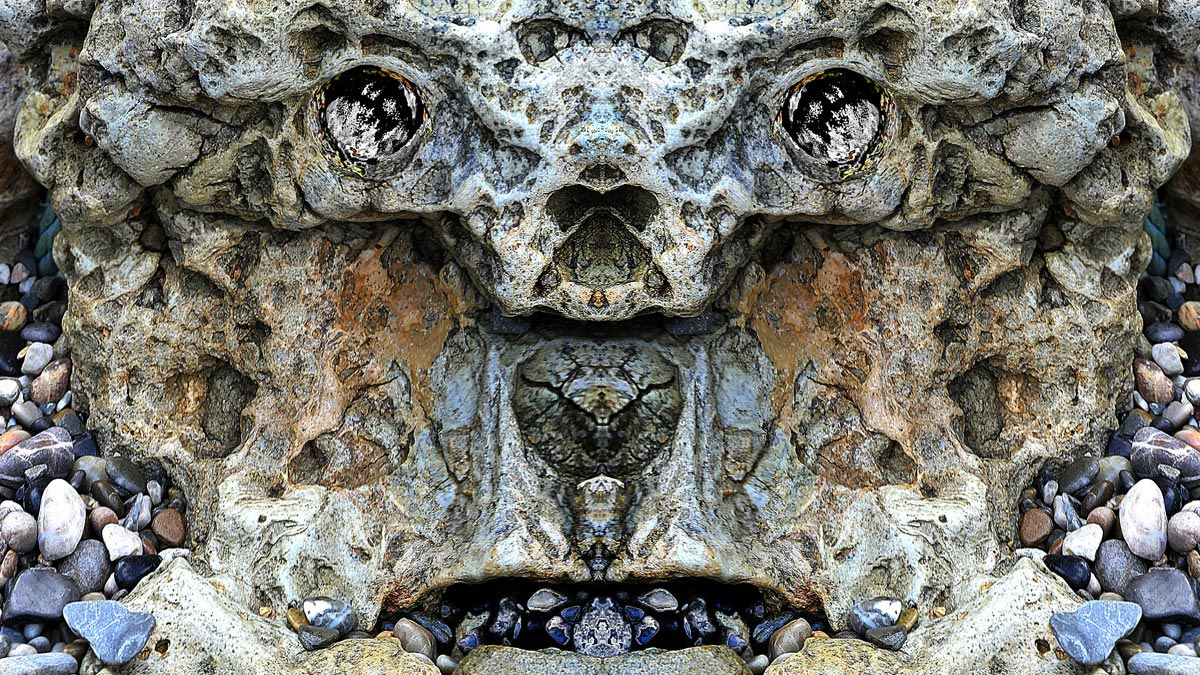
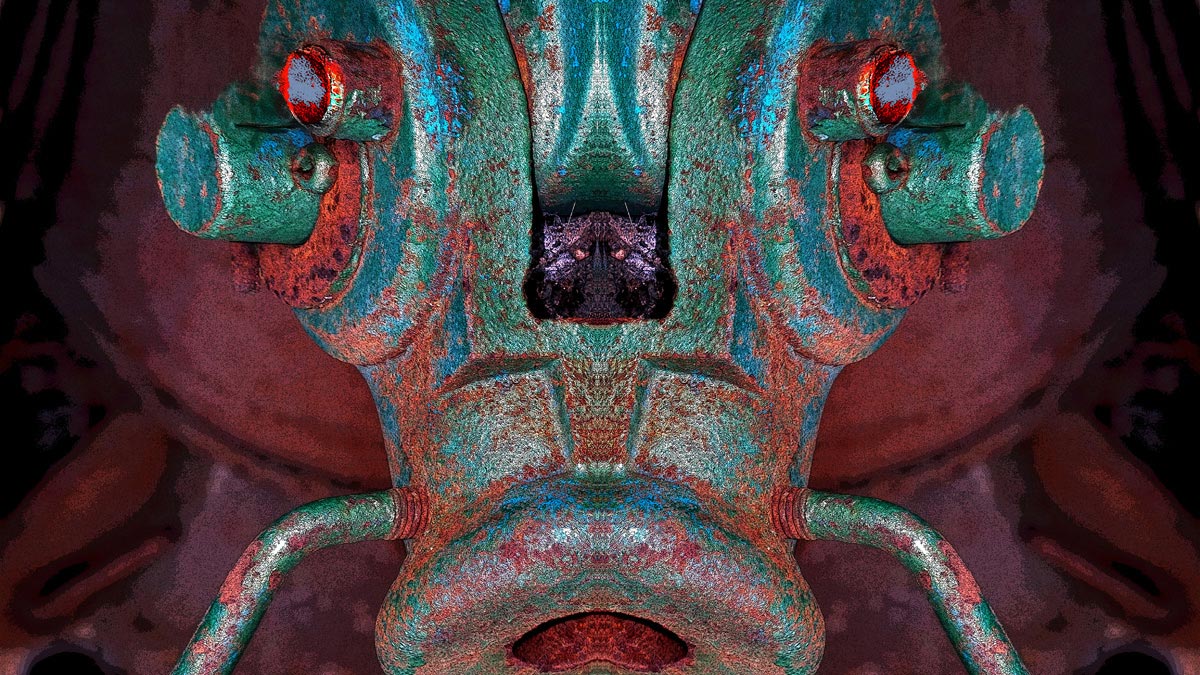
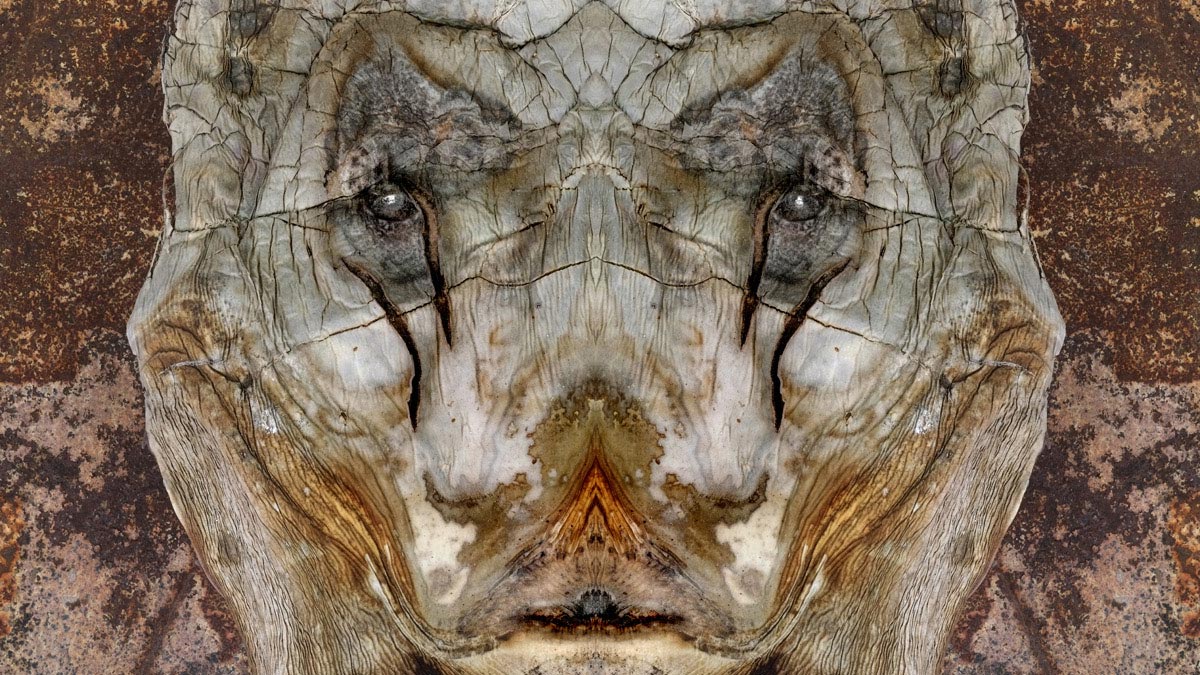
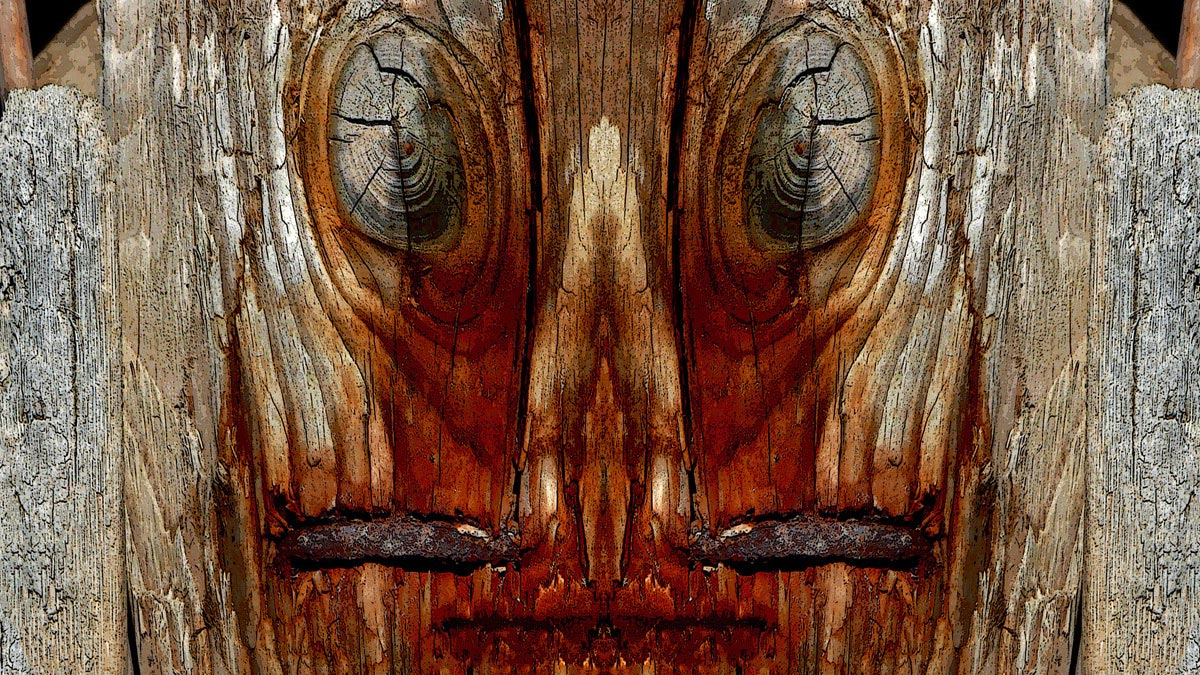
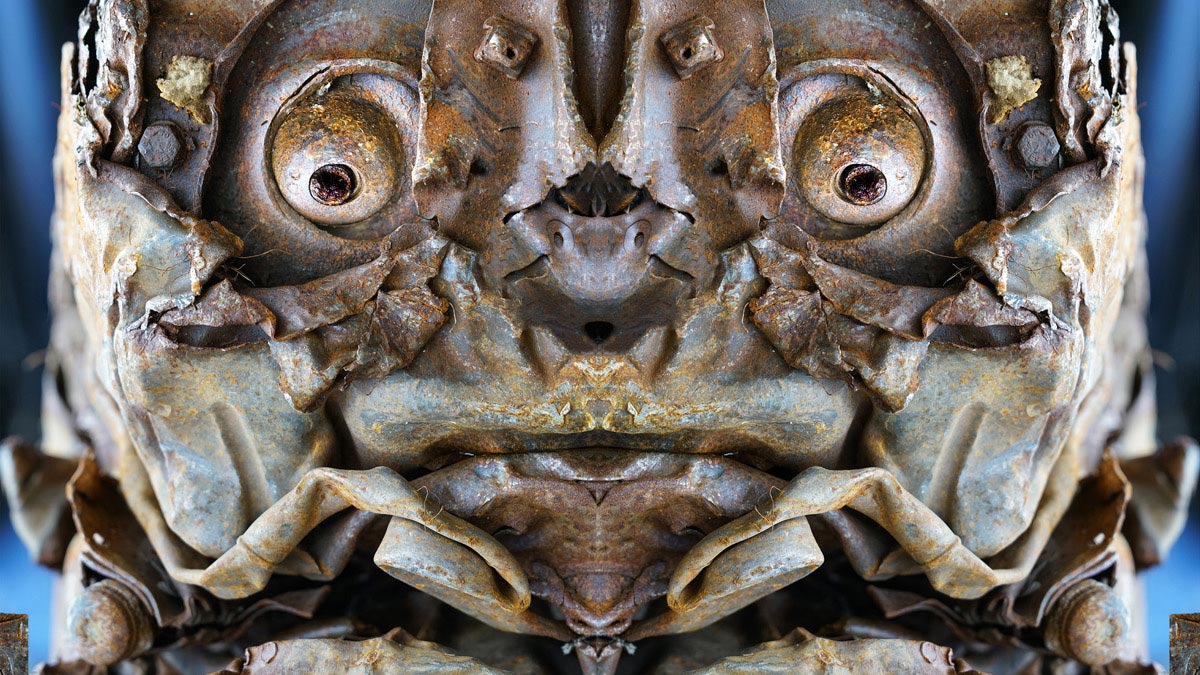
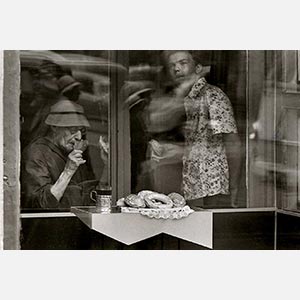
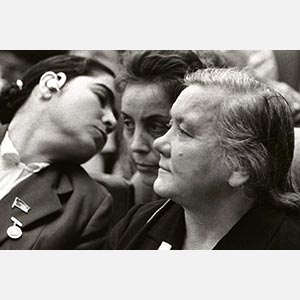
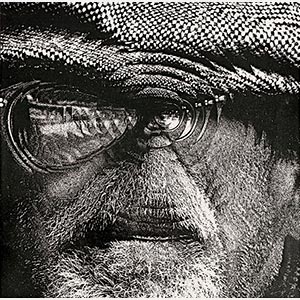
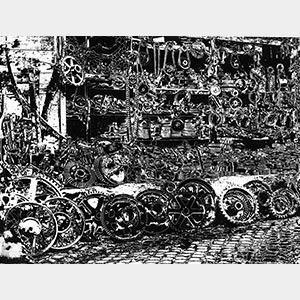
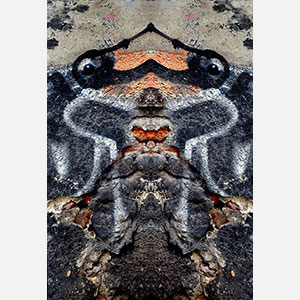
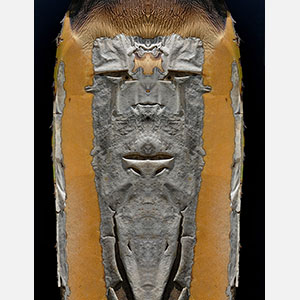
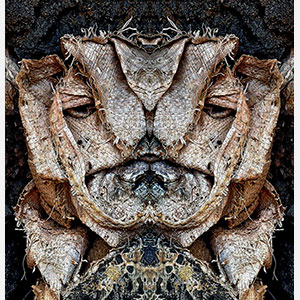
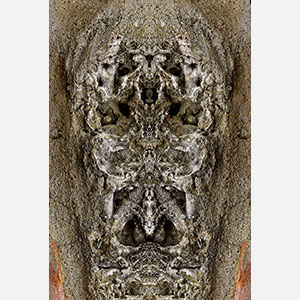
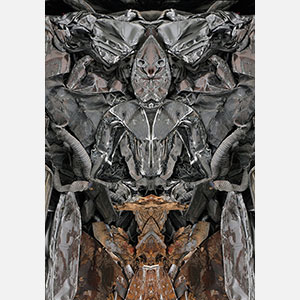
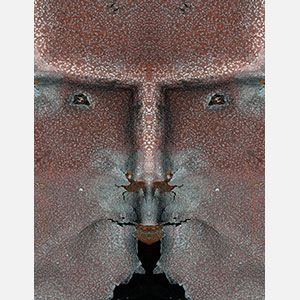
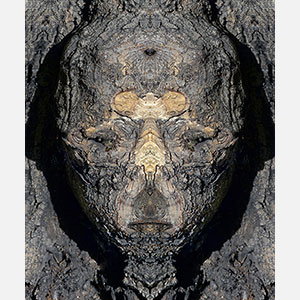
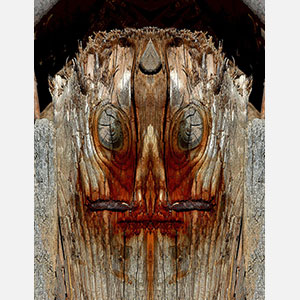
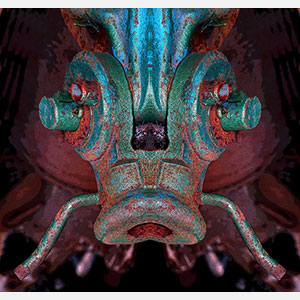
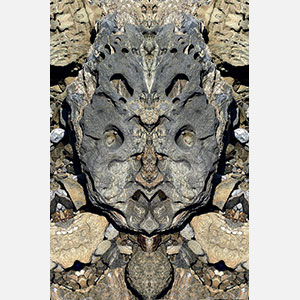
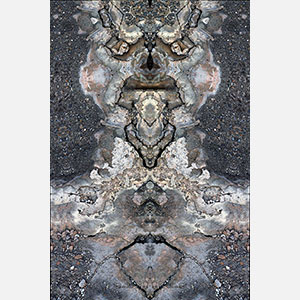
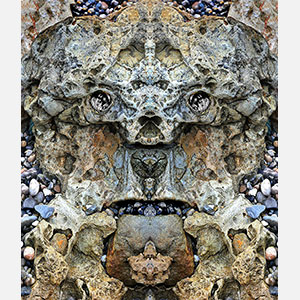
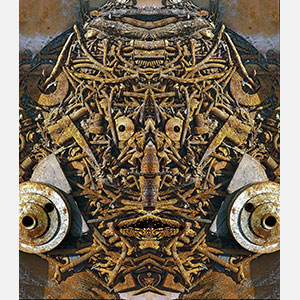
Arco Gallery presents Creature, a photography exhibition of twenty-four works from the ongoing series the Roman photographer has been developing since 2013. In each work, Ragazzini photographs a surface and mirrors it: stone, bark, corroded metal, cracked plaster, agave leaf, worn fabric. The bilateral symmetry that results activates pareidolia, the involuntary compulsion of the human mind to find faces wherever the conditions for a face exist. The faces that surface were already there, assembled by erosion, oxidation, time, and use, just waiting for Ragazzini to reveal them.
Full story of the Creature
FOREWORD
I first saw the Creature when I visited Enzo's studio in the Tuscan countryside. I was surrounded by a collection of paraphernalia that populated every shelf, forming a museum of ideas, where objects coming from the most different origins dialogued creating new meanings. I was looking at a print and Enzo told me: "you see it is that driftwood over there." I was astounded, and when he patiently guided my eyes I saw it as well. But the magic persisted because I knew that hadn't he seen it the image would have stayed there dormant forever.
I first saw the Creature when I visited Enzo's studio in the Tuscan countryside. I was surrounded by a collection of paraphernalia that populated every shelf, forming a museum of ideas, where objects coming from the most different origins dialogued creating new meanings. I was looking at a print and Enzo told me: "you see it is that driftwood over there." I was astounded, and when he patiently guided my eyes I saw it as well. But the magic persisted because I knew that hadn't he seen it the image would have stayed there dormant forever.
What Ragazzini does with that seeing is the work. The series is organized by material family: stone, metal, wood and bark, walls and urban surfaces, organic. Each family has its own character, its own palette, its own register of presence. Together they demonstrate that pareidolia, the involuntary human compulsion to find faces in the world, does not discriminate by material. The capacity for figural projection is everywhere matter accumulates into suggestion. Ragazzini is everywhere looking, and what his eye finds has the authority of something that was waiting to be seen.
ARTIST BIO
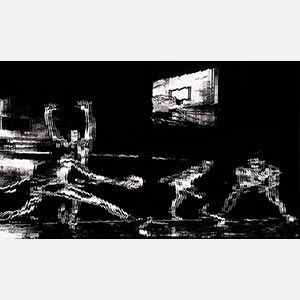
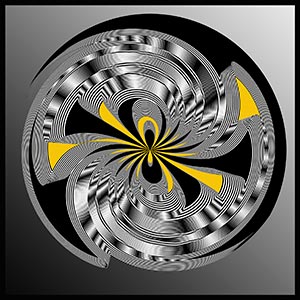
Enzo Ragazzini (b. Rome, 1934) is an Italian photographer and Op-Art pioneer. He began his photographic activity in the 1950's, when photographers were still uncommon in Italy, experimenting with "photomechanics" in a garage darkroom he built by himself. For the 1960 Olympics in Rome, three murals of his revolutionary "optically altered" images of boxers, wrestlers, and basketballers were integrated into the Palazzetto dello Sport dell'Eur designed by Pierluigi Nervi.
Enzo Ragazzini
(b. Rome, 1934) is an Italian photographer and Op-Art pioneer. He began his photographic activity in the late 1950s, when photographers experimenting with darkroom transformations were still uncommon in Italy. Working with self-taught techniques, he built his own garage darkroom and explored what he termed "photomechanics." For the 1960 Olympics in Rome, three large-scale murals of his "optically altered" images of boxers, wrestlers, and basketball players were installed in the Palazzetto dello Sport dell'Eur designed by Pierluigi Nervi.
Between 1966 and 1975, Ragazzini lived and worked in London, where he became involved with the city's experimental art scene. His work was featured in the ICA's first photography exhibition (1969) Four Photographers in Contrast, while also having a solo show at Modern Art Oxford for his abstract imagery. While Ragazzini created work out of a personal search, using self-taught techniques, his "Swinging London" period coincided with the "Op-Art Boom" of the 60's and 70's; abstract images were commissioned from him to illustrate numerous Penguin editions, accompany When I'm Sixty-Four in The Beatles Illustrated Lyrics, and one of the first covers of Time Out Magazine. In 72', his work was featured in the English Pavilion of the Venice Biennale.
In 1988, the International Center of Photography in New York presented a major solo exhibition introduced by Cornell Capa, titled The Tropics Before the Engine. One of Ragazzini's most notable "anthropological reportages", it showcased an eight-year investigation into manual labor around the world, documenting people working without the aid of machinery. This extensive fieldwork continued a broader commitment to visual storytelling, informed by earlier reportages in Italy and abroad that focused on communities and cultural practices often marginalized by mainstream narratives.
At the turn of the 21st century, the MACRO Contemporary Art Museum in Rome presented a solo exhibition of Ragazzini's photographic reinterpretations of erotic imagery, titled Luci Rosse, which connected his transformed visuals to the conceptual "red lights" of the darkroom. Ongoing projects include Waiting for Godot, a series on urban isolation that began in Rome in 1976, and Creature and Sculptures from the Studio, in which Ragazzini transforms found objects, textures, and surfaces into imagined presences and tactile meditations. His work, which has been shaped by a lifetime of experimentation, accumulation, and observation, remains rooted in visual inquiry and the psychological landscapes of modern life. He is based in Tuscany.