Limited Edition of 5
40 x 52.0 in
101.6 x 132.1 cm
US $ 4,600
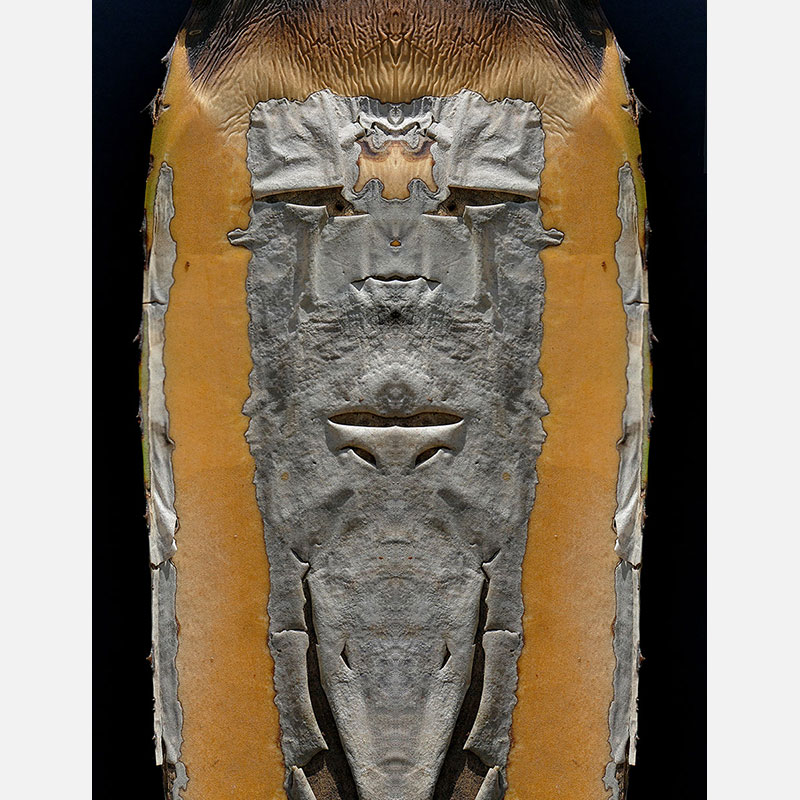
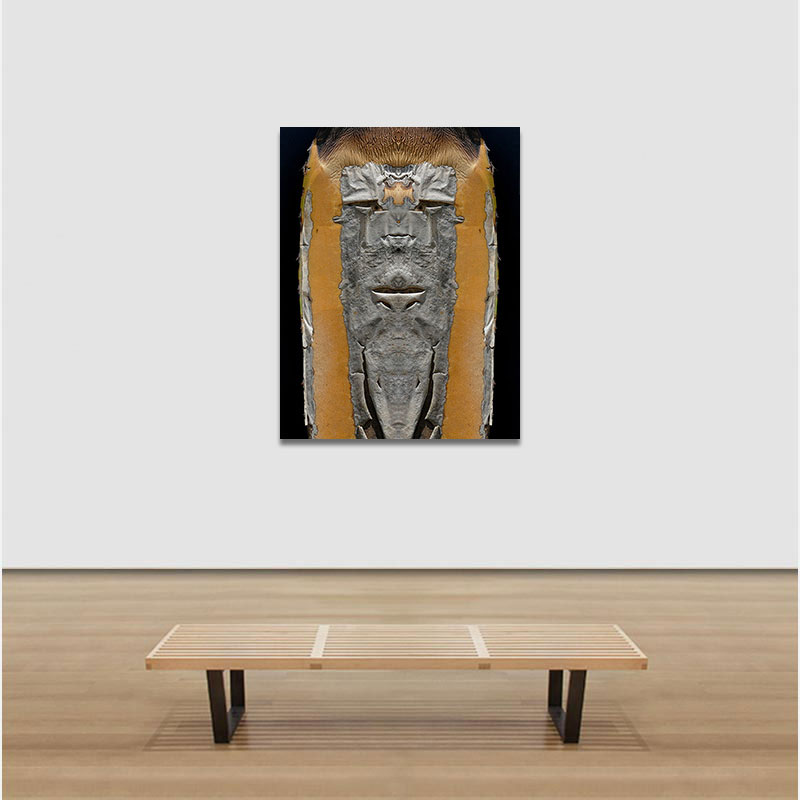
What reads at first as the natural striations of an agave leaf, its dry curling layers and transitions from ochre to silvery gray, gradually organizes into a structured form: a crown-like configuration at the top, flanked by ridges and folds that suggest eyes, a mouth, a torso. The transformation is neither imposed nor forced but quietly revealed, as if the living material had offered its hidden symmetries without being asked. The figure that emerges is elongated, regal, and entirely itself.
What reads at first as the natural striations of an agave leaf, its dry curling layers and transitions from ochre to silvery gray, gradually organizes into a structured form: a crown-like configuration at the top, flanked by ridges and folds that suggest eyes, a mouth, a torso. The transformation is neither imposed nor forced but quietly revealed, as if the living material had offered its hidden symmetries without being asked. The figure that emerges is elongated, regal, and entirely itself.
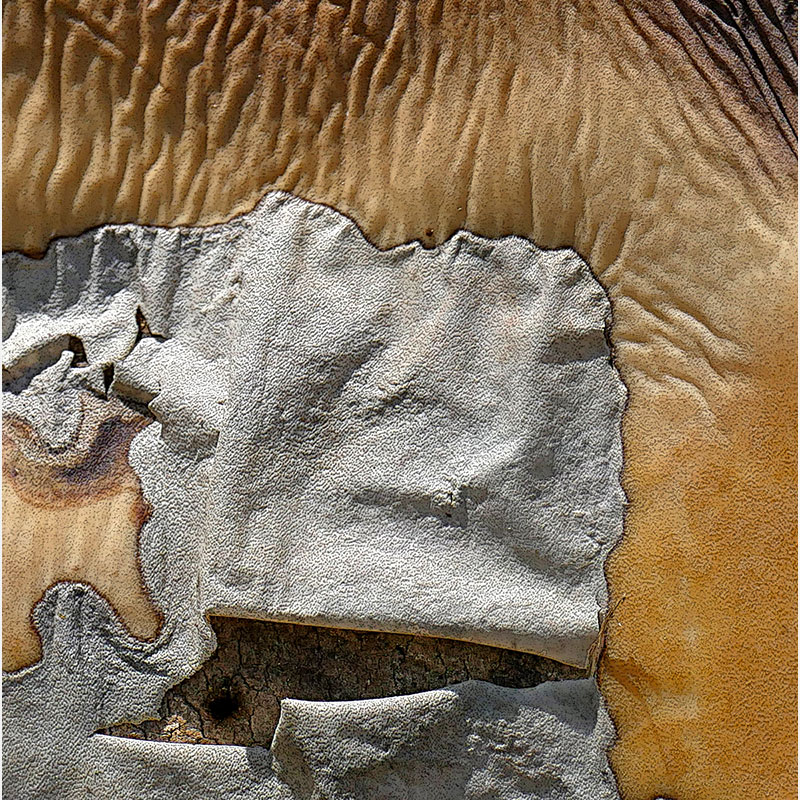
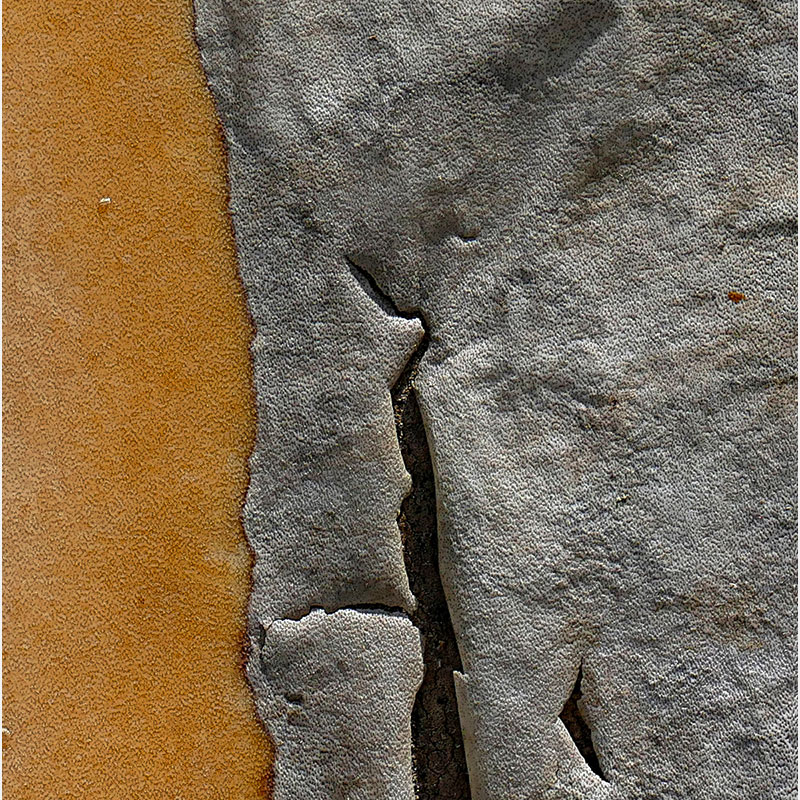
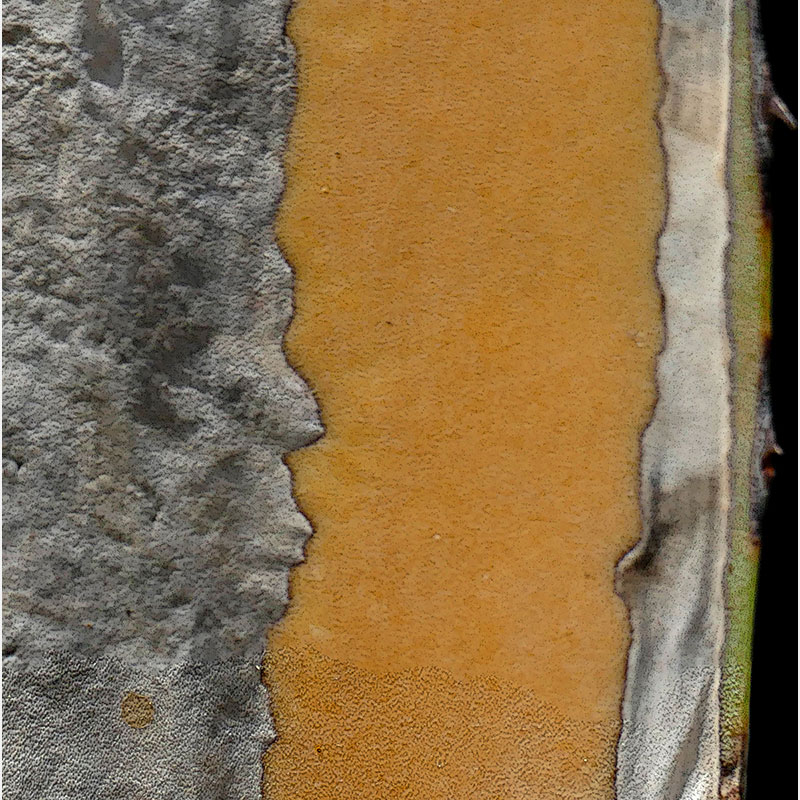
Ragazzini photographs the agave surface at close range, selecting the section where the tonal transitions and structural complexity are in productive tension. The mirroring guides the material into a bilateral composition, and then the image is worked: the dry ochres and cool grays are brought into a clarity and tonal precision the raw photograph only approximates. The artist's contribution is not only attention but labor: the precision to know which fragment contains what the process will reveal, and the craft to bring it fully into view. The tactile contrasts between smooth, cracked, and fibrous zones add a haptic dimension to the work: this is not only a face but a surface one wants to touch.
The perceptual mechanism at work here is the one Ruggero Pierantoni analyzed in L'occhio e l'idea: the visual system seeks the face as its most urgent compulsive target in any field of sufficient tonal complexity and bilateral organization. The agave surface provides both. The system engages before the viewer has decided to look for anything. The figure that surfaces is elongated and regal; the material that produced it is a dried leaf.
For a closer look at the making, and the thinking behind the Creature series: What the Eye Finds