Limited Edition of 5
40 x 41.7 in
101.6 x 105.9 cm
US $ 4,600
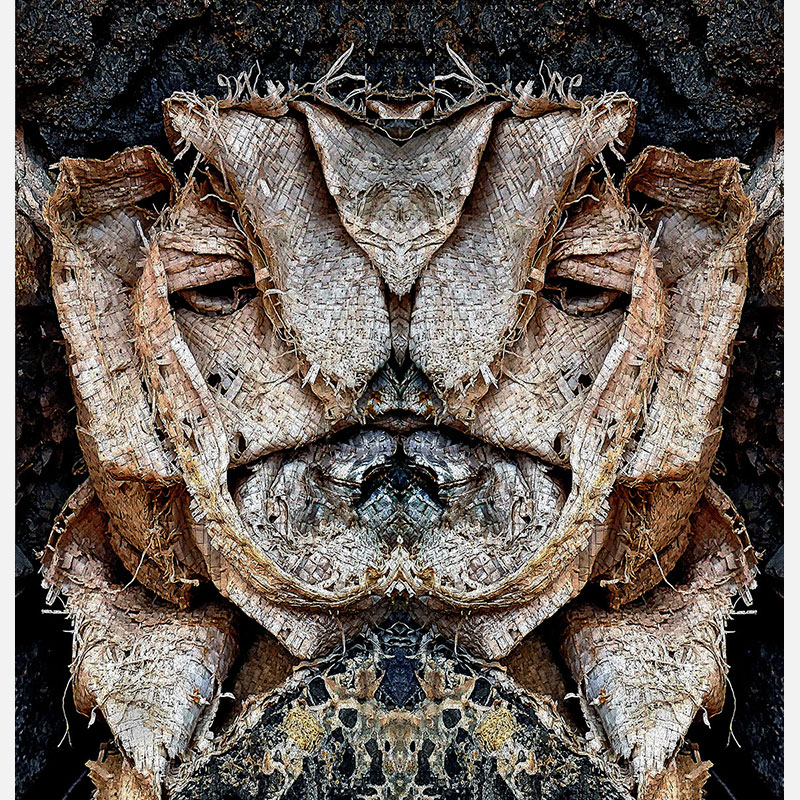
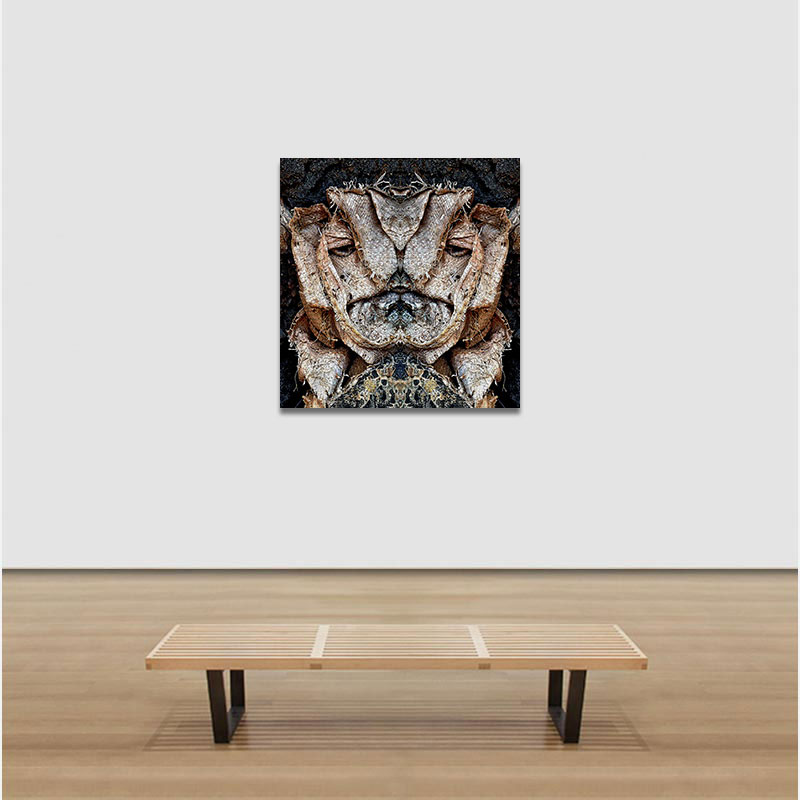
Worn fabric, its threads and folds carrying the memory of use, draws the viewer into a layered field of texture where the impression of a face or figure assembles slowly from the material's own complexity. The transformation is gentle and intuitive, emerging from the fabric's weave rather than being imposed upon it: soft browns, muted creams, and dark accents deepen the tactile sensation, while the frayed edges carry a fragility that the monumental reading of the emerging figure makes poignant.
Worn fabric, its threads and folds carrying the memory of use, draws the viewer into a layered field of texture where the impression of a face or figure assembles slowly from the material's own complexity. The transformation is gentle and intuitive, emerging from the fabric's weave rather than being imposed upon it: soft browns, muted creams, and dark accents deepen the tactile sensation, while the frayed edges carry a fragility that the monumental reading of the emerging figure makes poignant.
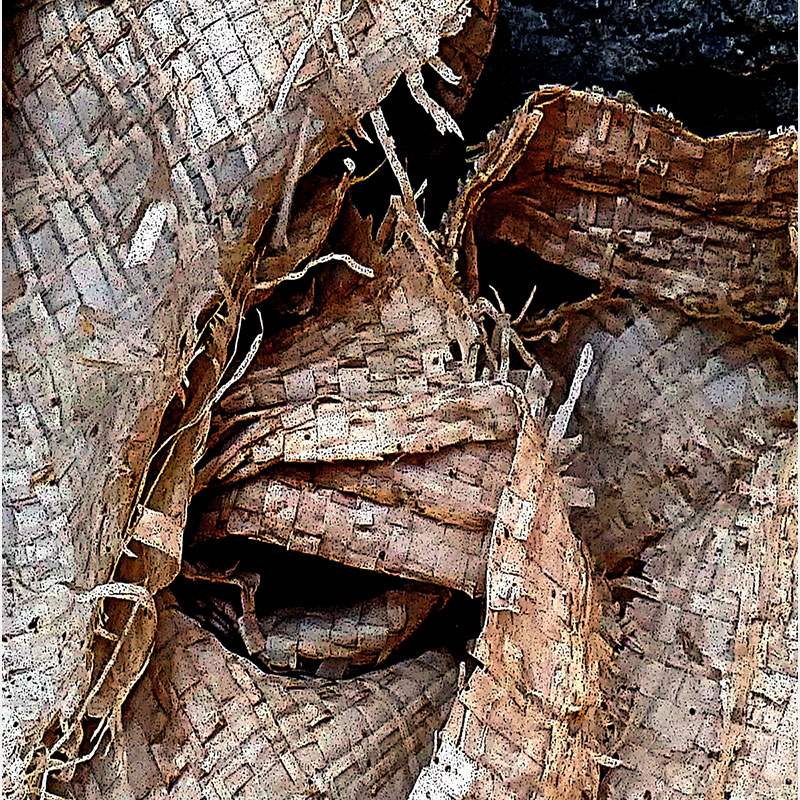
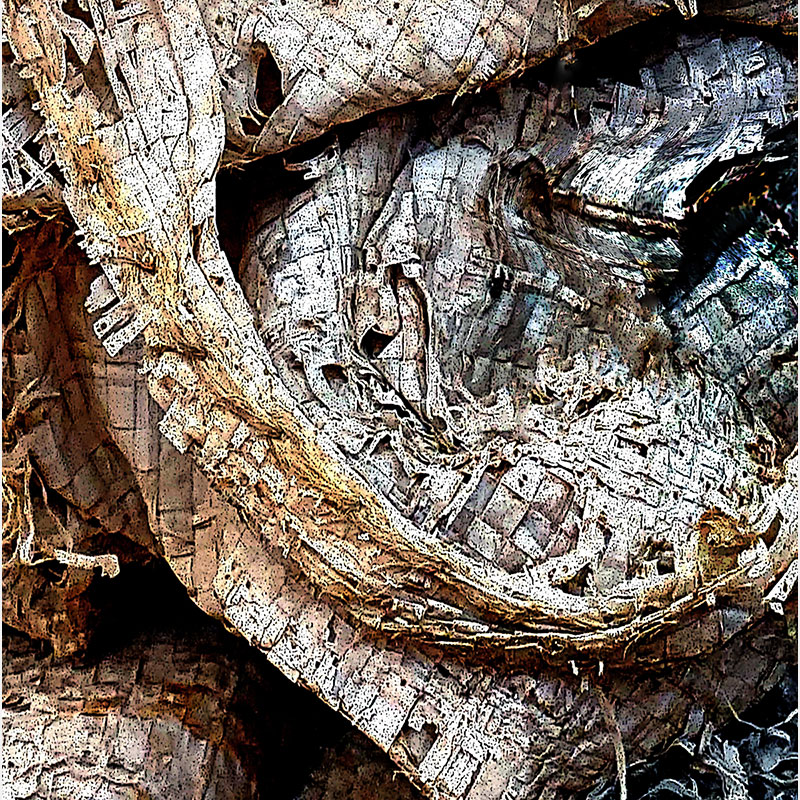
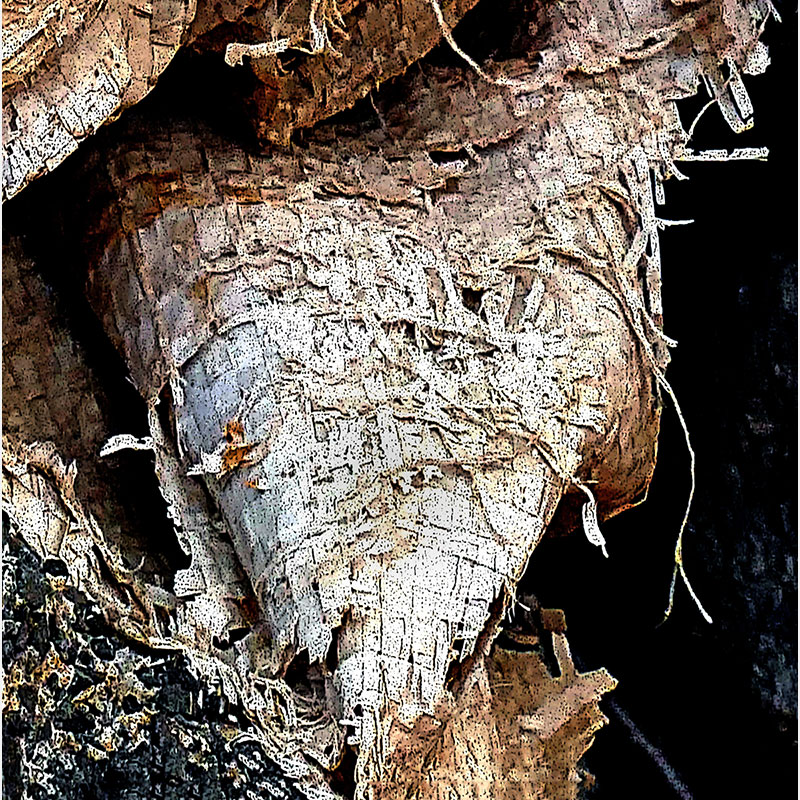
Ragazzini photographs the weathered fabric at close range, isolating the section where the density of texture and the tonal variation are richest. The mirroring activates what was latent in the material, and then the image is worked: the soft browns and muted creams are refined to a tactile density that gives the humble source material the presence the finished work demands. The face assembles from threads and folds that were always there, but it takes Ragazzini's elaboration to make them hold. The worn fabric is precisely the kind of surface that tests the limits of the series' argument: humble, domestic, without the obvious suggestiveness of stone or bark.
Yet the mechanism engages regardless. Ruggero Pierantoni's argument in L'occhio e l'idea is that the visual system cannot be switched off: it seeks the face compulsively in any field of sufficient complexity and bilateral organization, extracting pattern from retinal chaos before conscious attention has intervened. The material does not need to cooperate. The mind finds the face in the weave because the mind cannot choose not to. The fabric's own mythology surfaces.
For a closer look at the making, and the thinking behind the Creature series: What the Eye Finds