Limited Edition of 5
40 x 44.8 in
101.6 x 113.8 cm
US $ 4,600
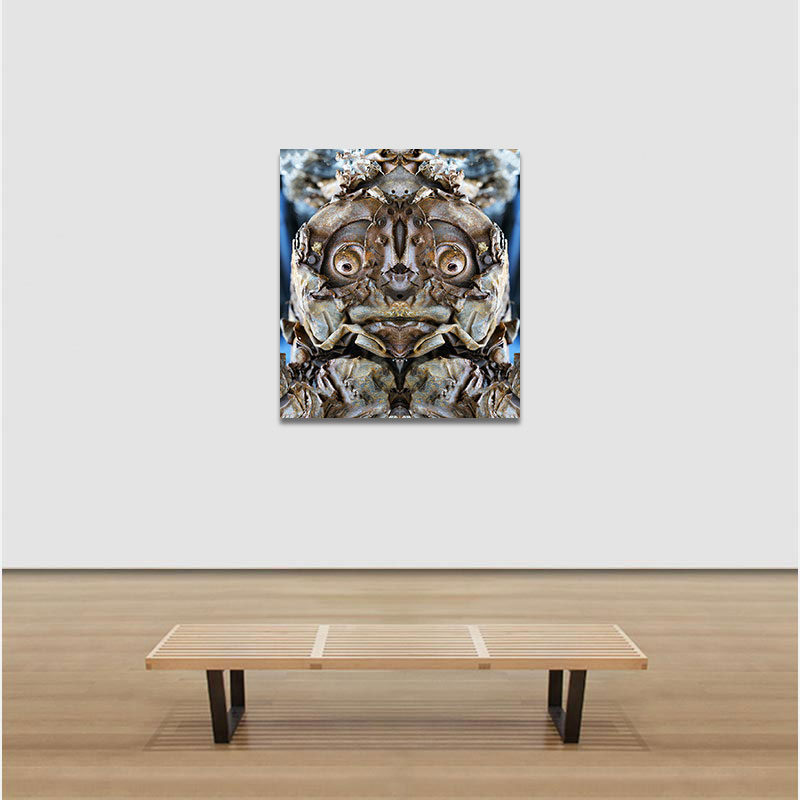
Crumpled and riveted metal sheeting, its surface a labyrinth of folds, perforations, and industrial scars, assembles through mirroring into a face of considerable psychological weight. Wide circular openings serve as eyes; layered folds suggest a brow, a nose, a mouth held in something between grimace and resignation. The patina of rusty ochres, burnished silvers, and deep shadows gives the surface a richness that reads less like found metal than like paint, as though the corrosion had been applied with intention rather than accrued through abandonment.
Crumpled and riveted metal sheeting, its surface a labyrinth of folds, perforations, and industrial scars, assembles through mirroring into a face of considerable psychological weight. Wide circular openings serve as eyes; layered folds suggest a brow, a nose, a mouth held in something between grimace and resignation. The patina of rusty ochres, burnished silvers, and deep shadows gives the surface a richness that reads less like found metal than like paint, as though the corrosion had been applied with intention rather than accrued through abandonment.
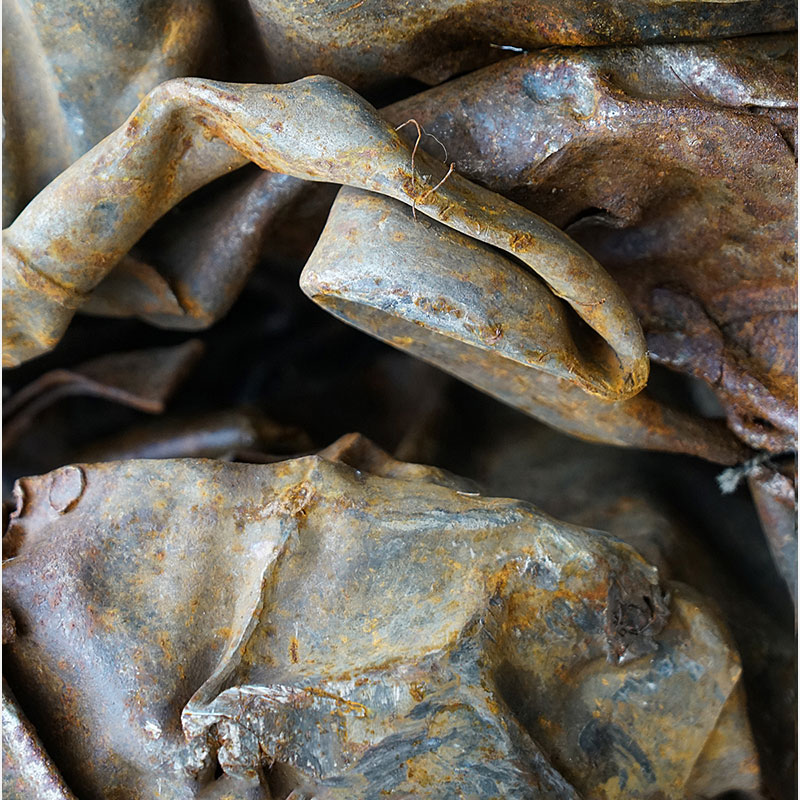
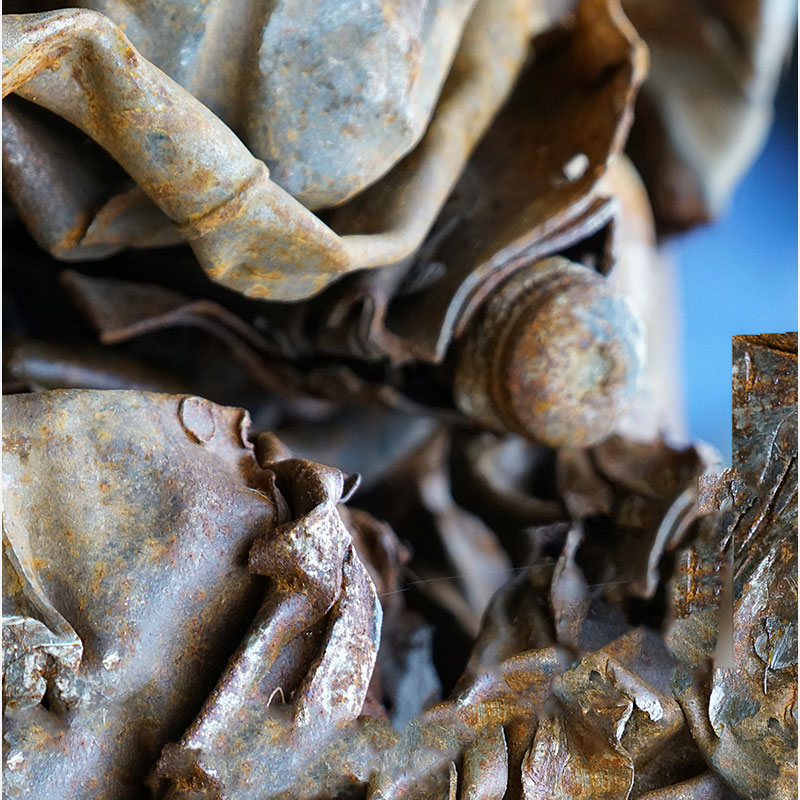
Ragazzini frames the crumpled sheeting at the distance and angle at which its accidental geometry yields a face. The mirroring confirms what the selection has already sensed, and then the image is worked: the patina of rusty ochres, burnished silvers, and deep shadows is refined to a richness the raw photograph would not have achieved. The industrial origin of the material remains fully legible throughout; the richness of the surface accumulates from that industrial history.
The psychological charge here belongs to a specific tradition within Expressionist portraiture: the lineage that runs through Kokoschka, where the face is treated not as a social surface but as the site of an interior condition that the paint could barely contain, faces rendered as though the skin were insufficient to hold what was behind it. Ragazzini achieves that same quality without a brush. The crumpled metal is already broken open; the mirroring simply makes the psychological content of that rupture unavoidable.
For a closer look at the making, and the thinking behind the Creature series: What the Eye Finds