Limited Edition of 5
40 x 58.7 in
101.6 x 149.1 cm
US $ 4,600
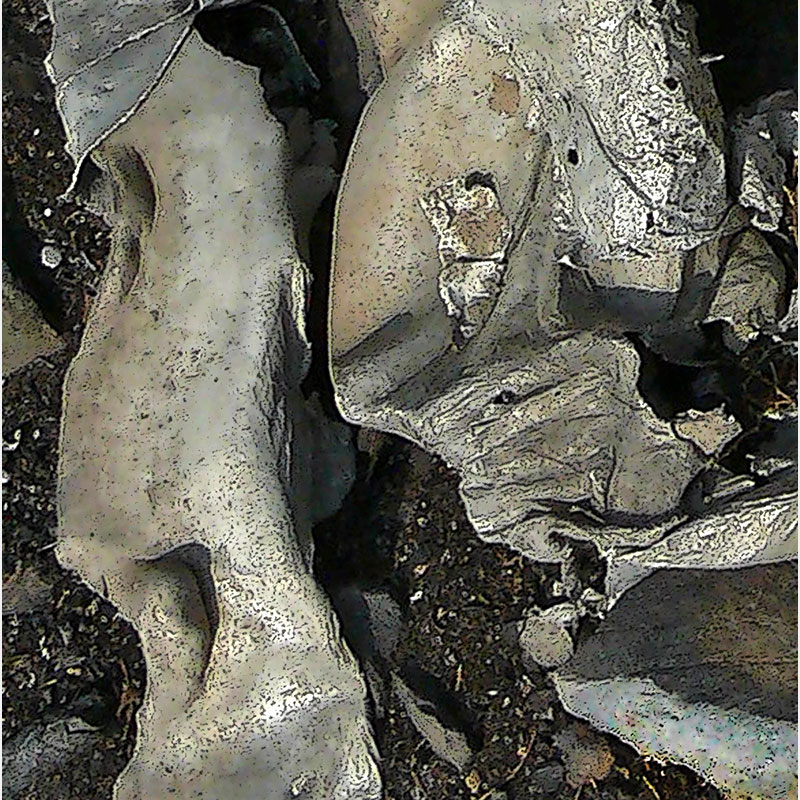
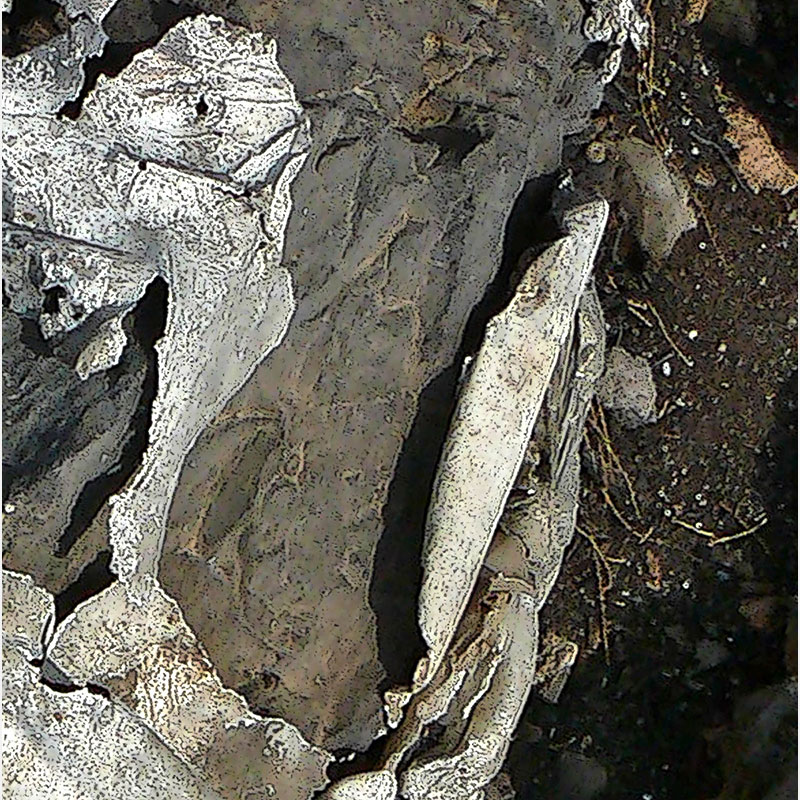
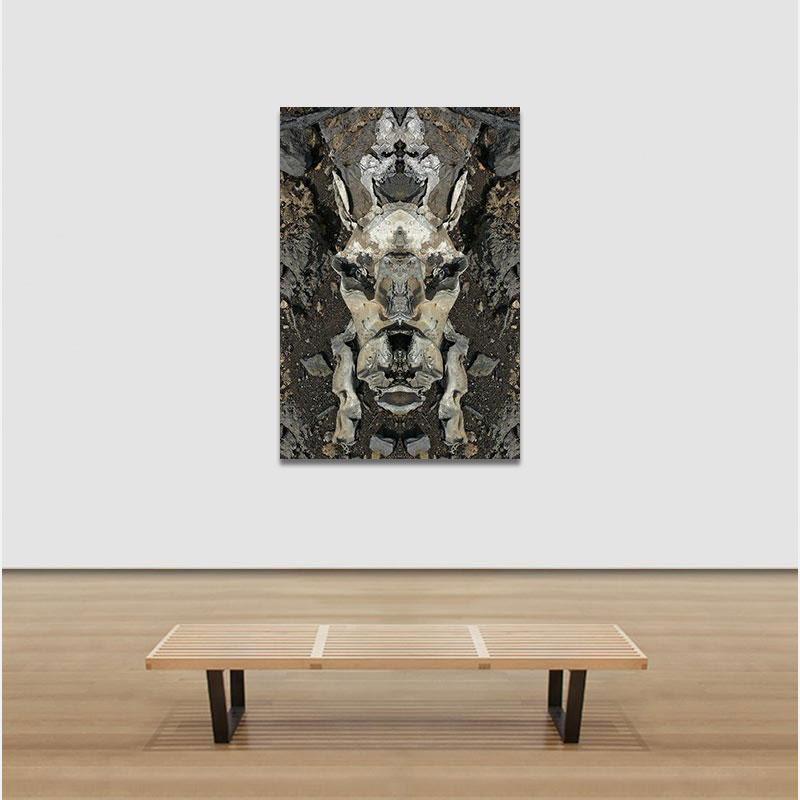
Discarded metal fragments, weathered and corroded, yield a presence that feels skeletal and totemic at once. The mirrored image generates bilateral symmetry from what was random debris: a composition emerges that is frontal, centered, and possessed of an authority that the raw material would never have suggested. Scorched grays, oxidized silvers, and earthen browns gather into something that reads as a face, or a mask, or both: the distinction ceases to matter once the image has declared itself.
Discarded metal fragments, weathered and corroded, yield a presence that feels skeletal and totemic at once. The mirrored image generates bilateral symmetry from what was random debris: a composition emerges that is frontal, centered, and possessed of an authority that the raw material would never have suggested. Scorched grays, oxidized silvers, and earthen browns gather into something that reads as a face, or a mask, or both: the distinction ceases to matter once the image has declared itself.
Ragazzini's selection of this particular accumulation of metal is itself an act of critical attention: he finds in the debris what the debris is capable of yielding, frames it at the distance at which the latent figure becomes legible. The photograph precedes the mirroring; the selection precedes both. But the labor does not end with the mirror: Ragazzini works the image afterward, amplifying the stippled luminosity of the corrosion and refining the surface until the figure holds its full authority. The stippling of corrosion across the surface gives the image an unexpected luminosity; what reads as ruin carries a visual energy that survives its origins.
That energy belongs to a tradition that found in raw, damaged, and discarded surfaces a psychological charge equal to or greater than that of the human figure. The Expressionist sensibility, as it developed in the work of Kirchner and his circle, understood that the distortion and damage of a surface carries an affective weight that polished or idealized material cannot reach. The face assembled from this corroded debris arrives in that register: not ruin, but presence.
For a closer look at the making, and the thinking behind the Creature series: What the Eye Finds