Limited Edition of 5
40 x 40.8 in
101.6 x 103.6 cm
US $ 4,600
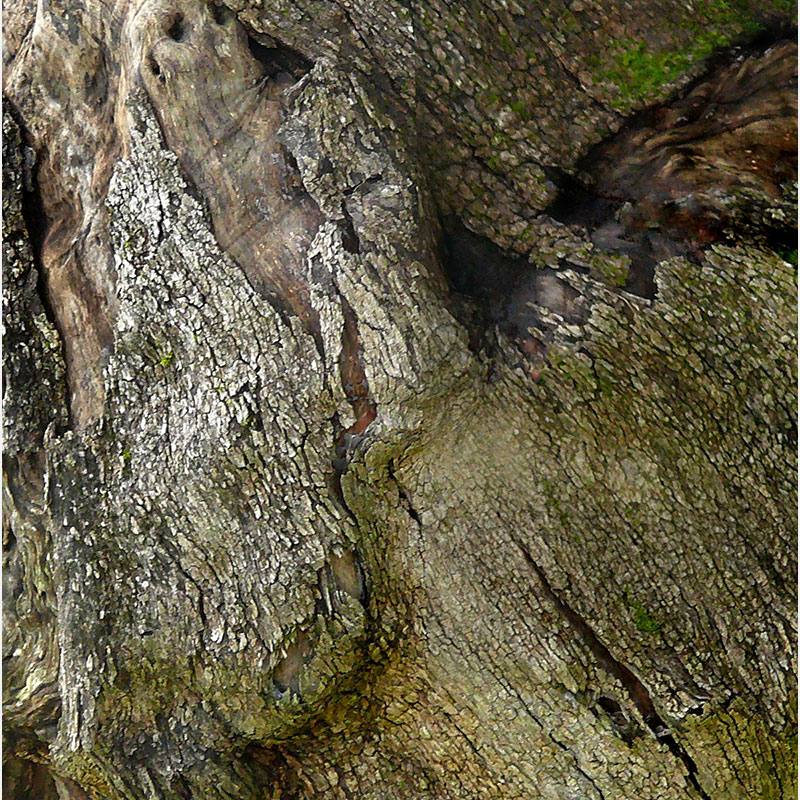
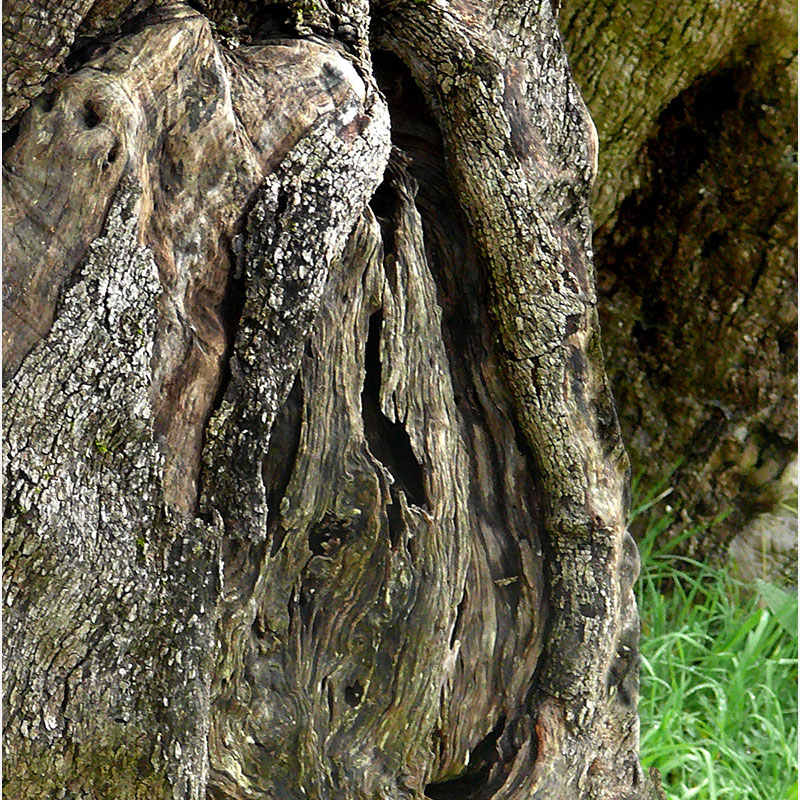
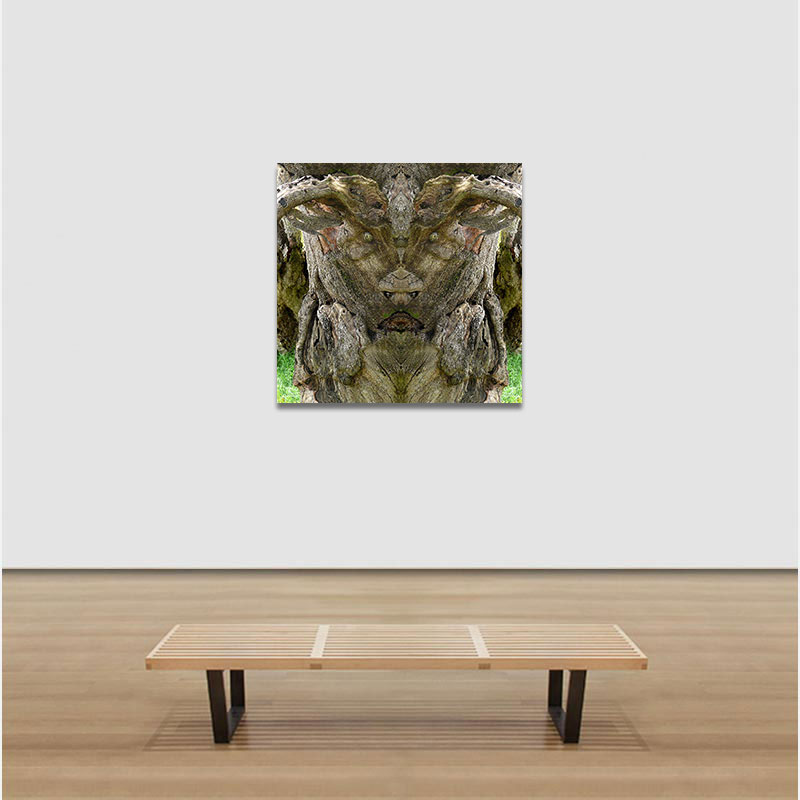
The gnarled surface of a tree trunk, its bark twisted into coarse ridges and hollowed by age, yields through mirroring a figure that is simultaneously specific and unclassifiable: spectral, frontal, part human and part something older. Mossy patches and vein-like striations render the bark's complexity with tactile fidelity, making the transformation all the more unsettling. Nothing has been added; the bark was already holding this presence, waiting for the right frame of attention to make it visible.
The gnarled surface of a tree trunk, its bark twisted into coarse ridges and hollowed by age, yields through mirroring a figure that is simultaneously specific and unclassifiable: spectral, frontal, part human and part something older. Mossy patches and vein-like striations render the bark's complexity with tactile fidelity, making the transformation all the more unsettling. Nothing has been added; the bark was already holding this presence, waiting for the right frame of attention to make it visible.
Ragazzini isolates a section of the trunk, photographs it at close range, mirrors the image along the vertical axis, then works the image: the mossy patches and vein-like striations are brought to a tactile specificity that the raw photograph contains only in latent form. The selection is decisive: a different fragment, a different angle, and nothing would emerge. The particular piece chosen here yields a face of genuine authority, the latent symmetry of the bark's growth patterns becoming, under the mirroring, the bilateral structure the visual system needs to commit to recognition.
That a surface, given the right contact, should yield imagery its own structure was already holding: this is the principle Max Ernst formulated in the Histoire Naturelle frottages of 1926, pressing paper against resistant surfaces and letting the material generate what the hand could not invent. Ragazzini's method is structurally identical, transposed into photography. The bark generates the image; the camera and the mirror are instruments of solicitation, not composition.
For a closer look at the making, and the thinking behind the Creature series: What the Eye Finds