Limited Edition of 5
40 x 52.0 in
101.6 x 132.1 cm
US $ 4,600
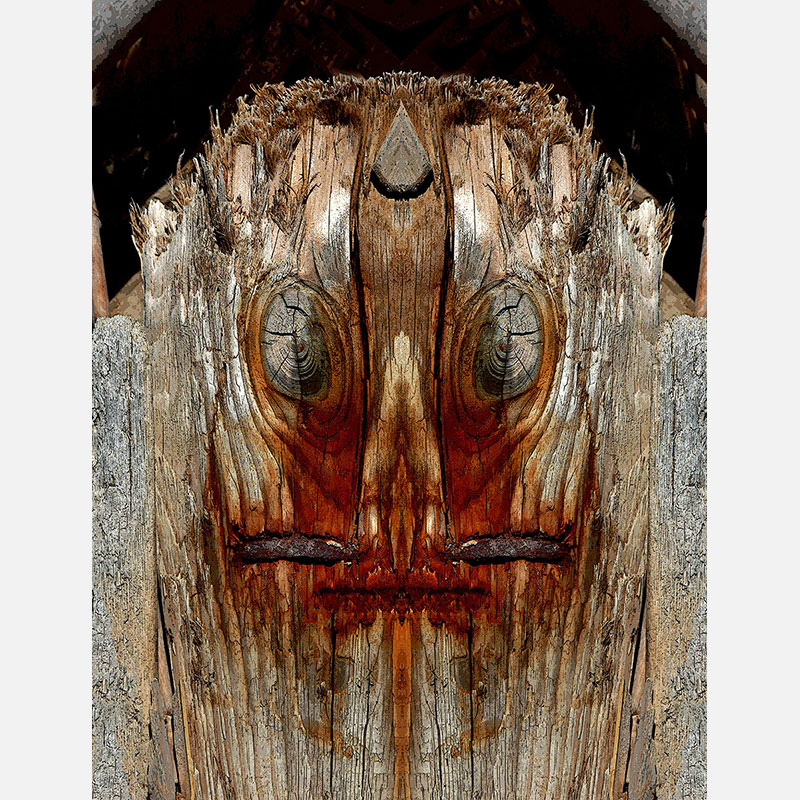
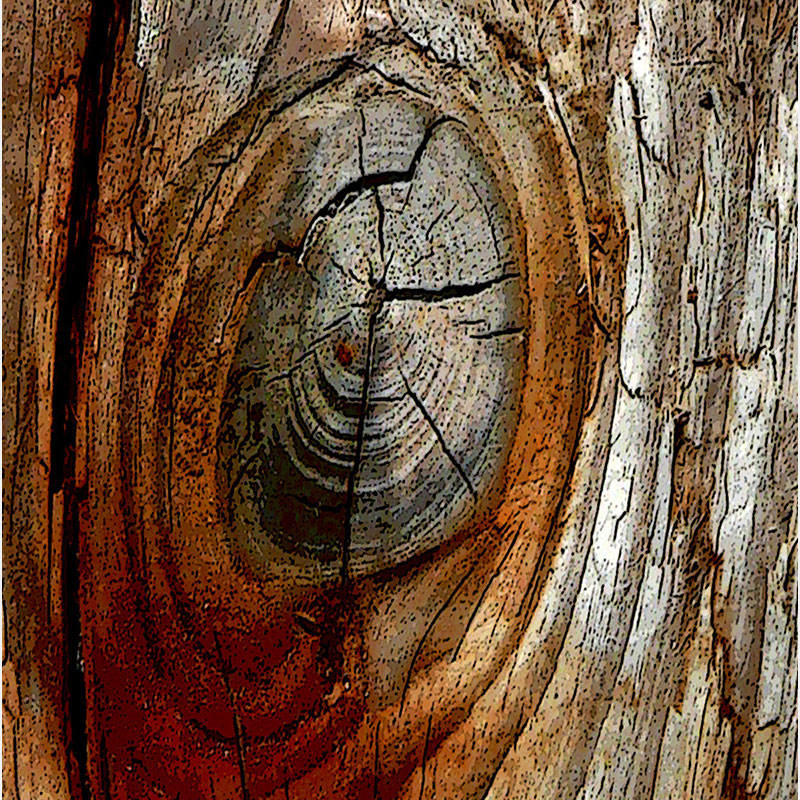
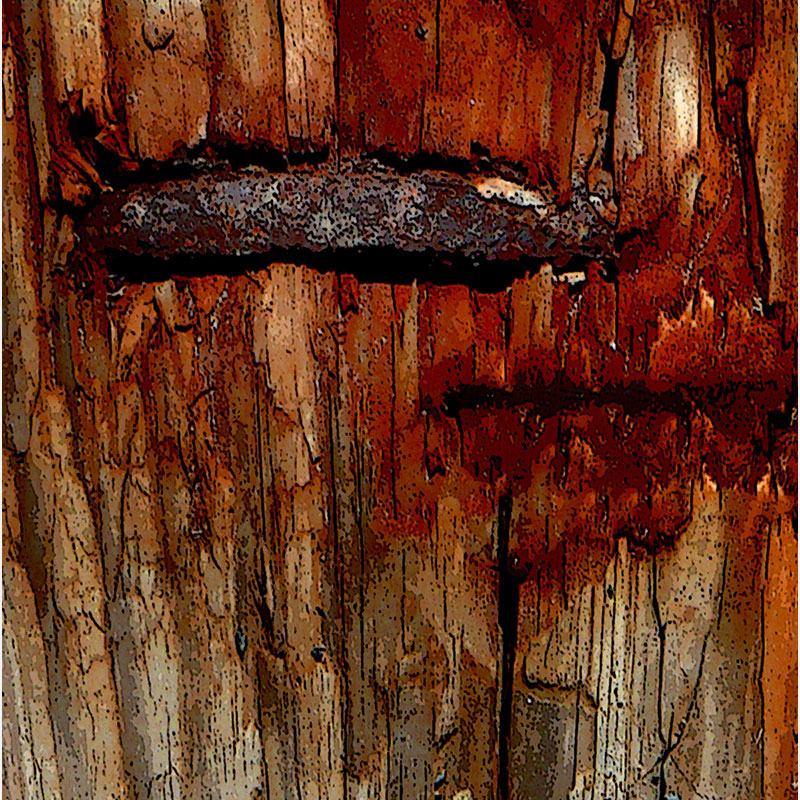
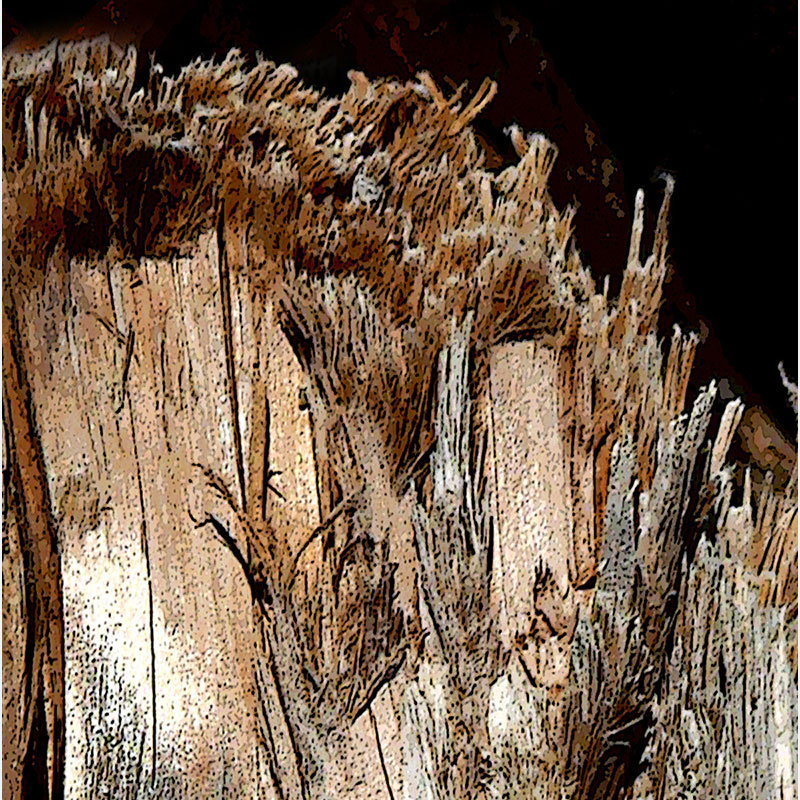
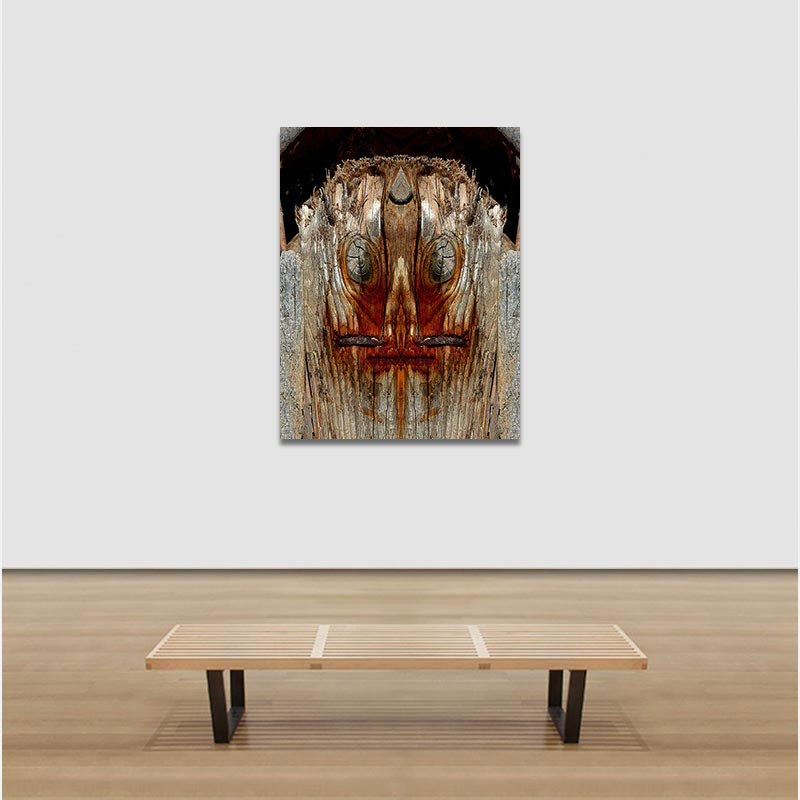
A weathered plank yields something older than itself. Two wood knots, their concentric rings intact, serve as eyes: not hollow voids but genuine irises, ancient and watchful. A diamond shape at the crown suggests a third eye or a wound. Below, a rusted nail seals the mouth, its oxidation bleeding downward in a slow red stain. The grain runs vertically through the face like carved meridians. The presence that emerges is frontal, hieratic, and unambiguous.
A weathered plank yields something older than itself. Two wood knots, their concentric rings intact, serve as eyes: not hollow voids but genuine irises, ancient and watchful. A diamond shape at the crown suggests a third eye or a wound. Below, a rusted nail seals the mouth, its oxidation bleeding downward in a slow red stain. The grain runs vertically through the face like carved meridians. The presence that emerges is frontal, hieratic, and unambiguous.
Ragazzini began with a straightforward photograph of a plank, ordinary building material worn to grey by time and weather. The mirroring revealed the bilateral symmetry already latent in the wood's structure, and then the image was worked: the grain articulated, the oxidized nail at the mouth brought to the precise tone that makes it read as seal rather than accident, the composition refined until it is frontal, hieratic, and unambiguous. It makes the central argument of the entire Creature series with unusual force: the face was already there. The process revealed it.
The form that surfaces through this process belongs unmistakably to what the art historian Aby Warburg called Pathosformeln: charged formal configurations that survive across centuries in cultural material, re-emerging when conditions allow. Frontal, apotropaic faces that guard and warn constitute one of the oldest such lineages. The plank carries no such intention; the lineage surfaces regardless. The oxidized nail at the mouth reinforces the point: it functions not as accident but as seal, with the precision of something meant. Max Ernst, in the Histoire Naturelle frottages of 1926, worked by the same solicitation, letting the surface yield what the hand could not invent. What this surface yields is archaic, unnerving, and entirely self-sufficient.
For a closer look at the making, and the thinking behind the Creature series: What the Eye Finds