Limited Edition of 5
40 x 59.3 in
101.6 x 150.6 cm
US $ 4,600
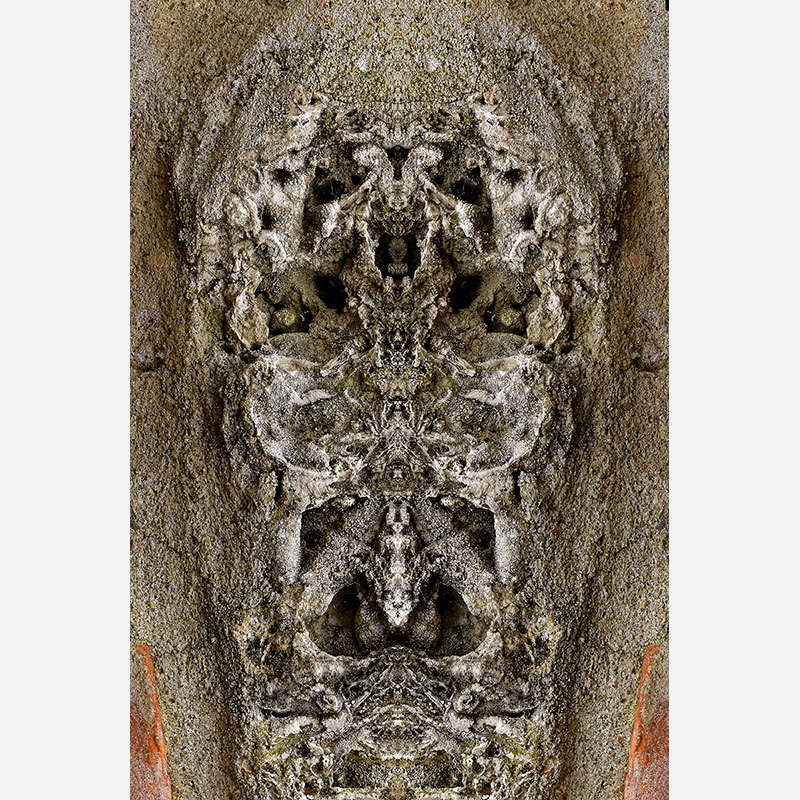
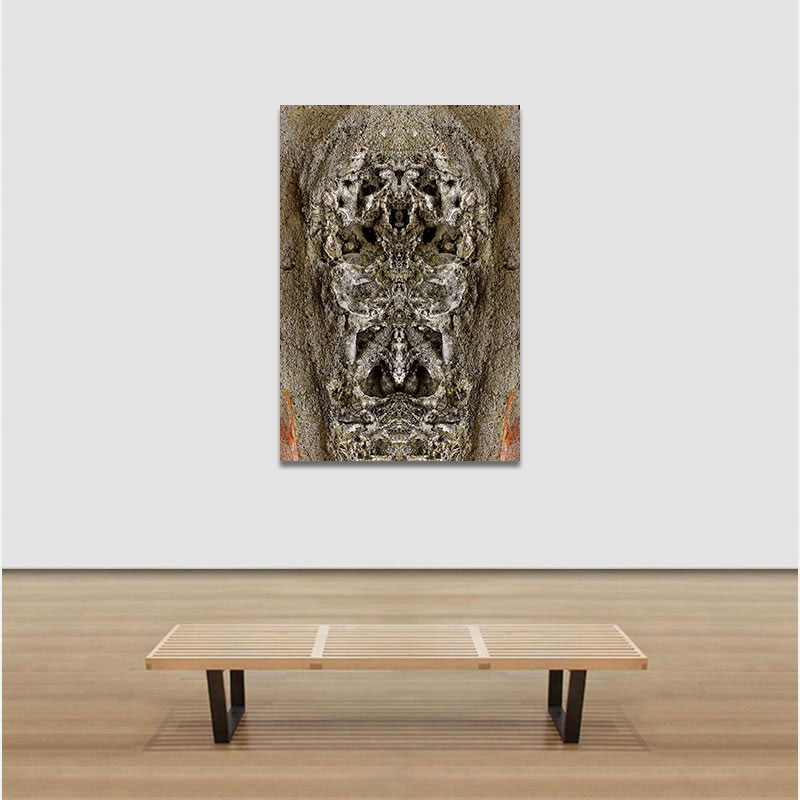
The surface of this stone has been doing something for a long time before Ragazzini arrived: eroding, layering, fracturing into a dense mineral relief. What the photograph reveals is that it was also composing a face. The symmetry of the mirrored image makes what was latent unavoidable: a heavy brow, deep-set voids for eyes, a mouth held shut with the gravity of ancient stone. The figure does not announce itself. It simply becomes visible, as though waiting for the right angle of attention.
The surface of this stone has been doing something for a long time before Ragazzini arrived: eroding, layering, fracturing into a dense mineral relief. What the photograph reveals is that it was also composing a face. The symmetry of the mirrored image makes what was latent unavoidable: a heavy brow, deep-set voids for eyes, a mouth held shut with the gravity of ancient stone. The figure does not announce itself. It simply becomes visible, as though waiting for the right angle of attention.
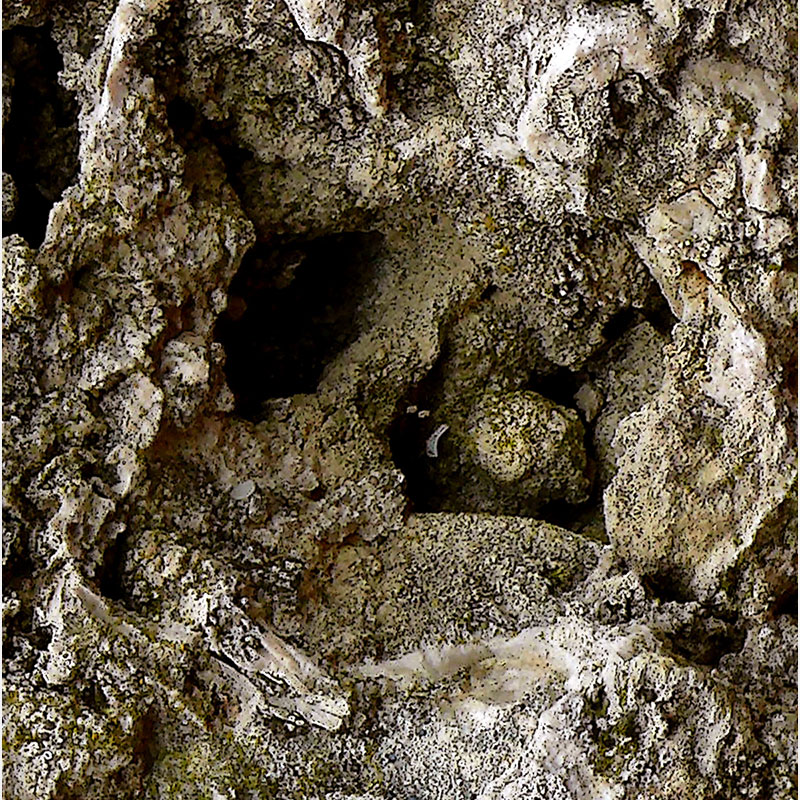
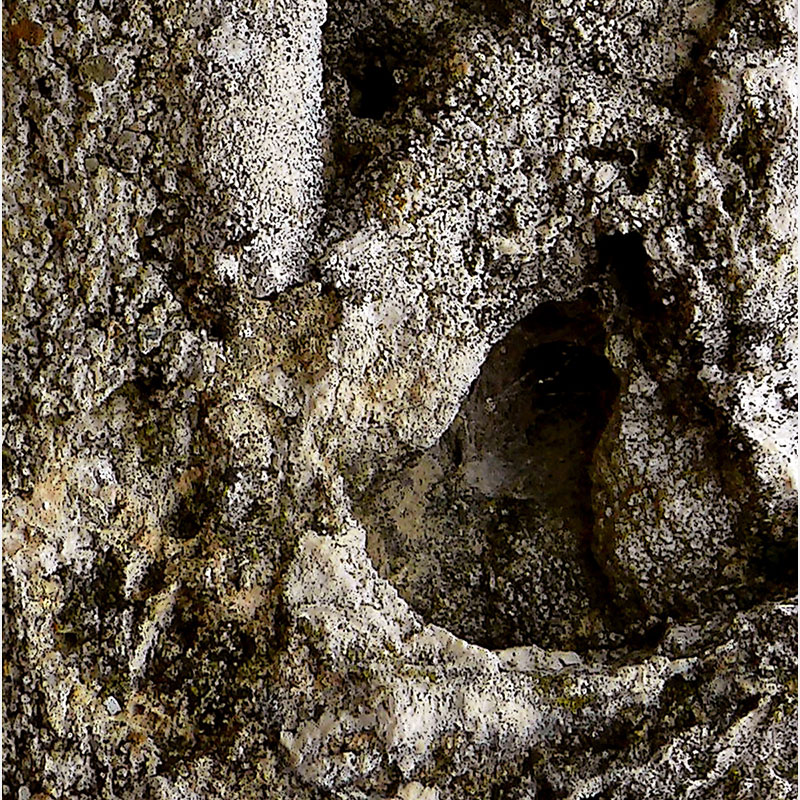
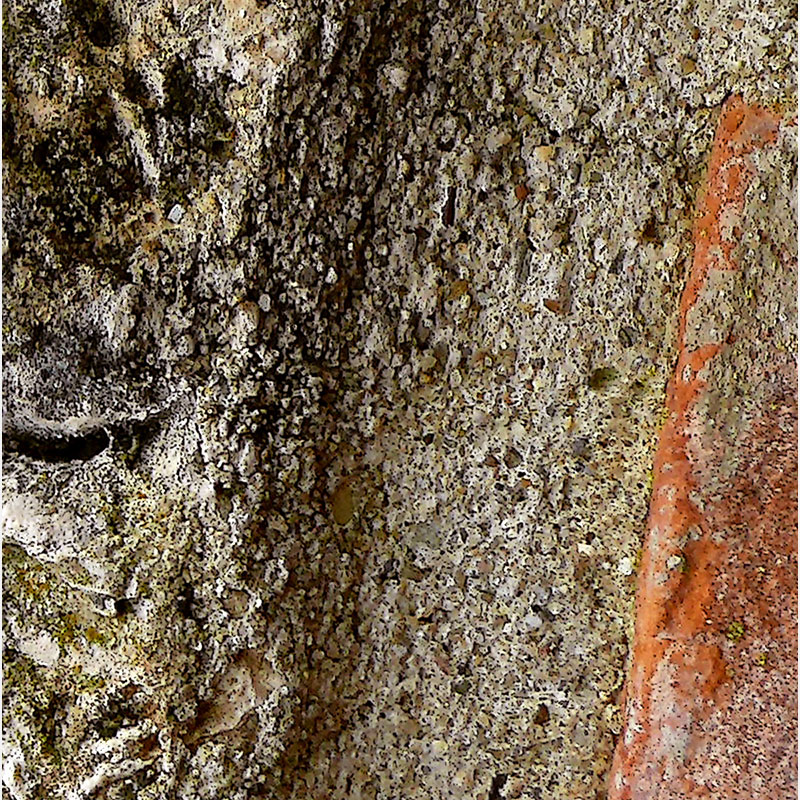
Ragazzini's method begins with selection and framing: a fragment chosen, photographed at close range, mirrored vertically, then worked until the image yields all that the material was holding. He adds nothing and subtracts nothing. The palette is the palette of geological time, mineral grays, ochres, and pale whites that carry no warmth, no organic hint. The apparition that emerges belongs to no civilization and no epoch. It is simply present, with the solidity of something that was always going to be there once someone looked.
This act of uncovering without alteration connects Ragazzini to a much older account of how figuration begins. Leon Battista Alberti, in De statua, traced the origins of sculpture to a primordial moment of recognition: early humans gazing at rocks and trees shaped by erosion began to see forms that resembled the human body and felt compelled to finish what nature had started. Ragazzini stops precisely where that impulse would have taken over. He finishes nothing. The threshold is the work.
For a closer look at the making, and the thinking behind the Creature series: What the Eye Finds