Limited Edition of 5
40 x 57.2 in
101.6 x 145.3 cm
US $ 4,600
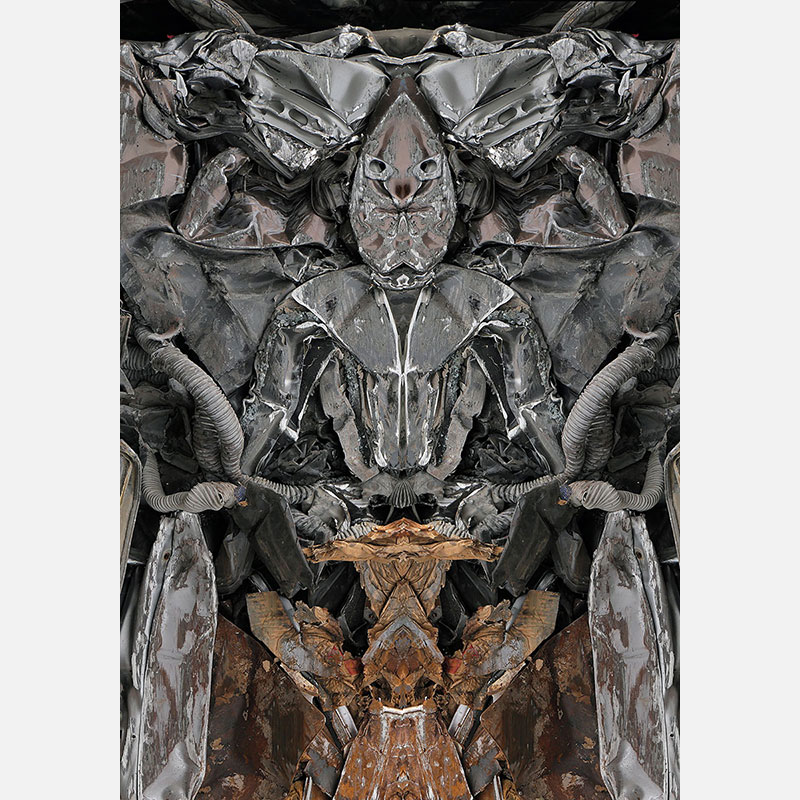
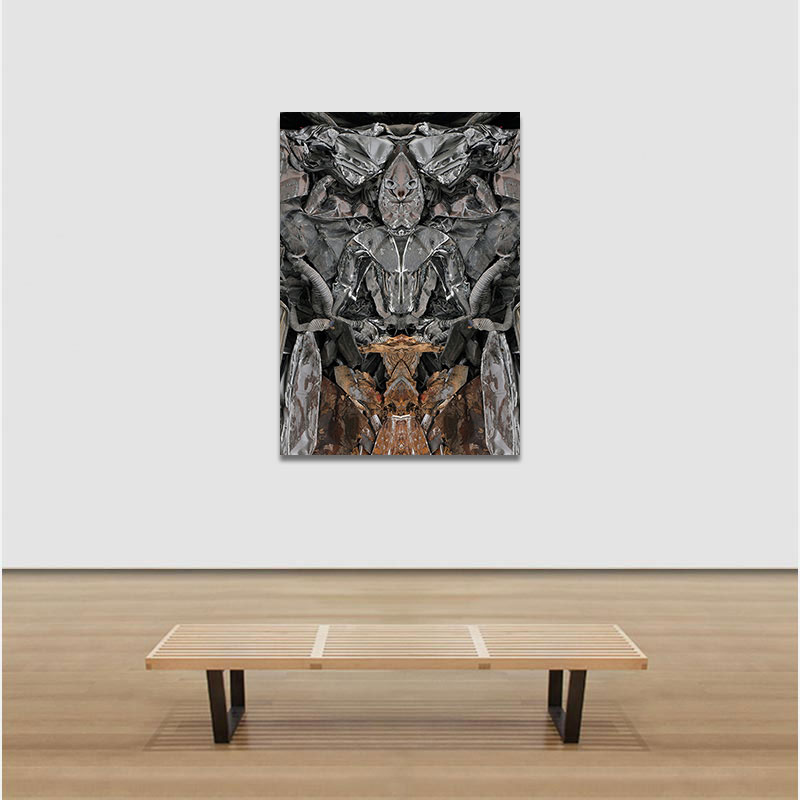
Compressed scrap metal, crumpled and rusted into a dense mass of interlocking forms, yields through mirroring a figure of considerable force. The image is mechanical and mythological at once: a presence that hovers between post-industrial ruin and something far older, assembled not by a hand but by the accumulated pressure of human use and subsequent abandonment. Glinting metallic slashes cut through dusky patches of corrosion; the result has the tactile depth more usually associated with expressive painting than with photography.
Compressed scrap metal, crumpled and rusted into a dense mass of interlocking forms, yields through mirroring a figure of considerable force. The image is mechanical and mythological at once: a presence that hovers between post-industrial ruin and something far older, assembled not by a hand but by the accumulated pressure of human use and subsequent abandonment. Glinting metallic slashes cut through dusky patches of corrosion; the result has the tactile depth more usually associated with expressive painting than with photography.
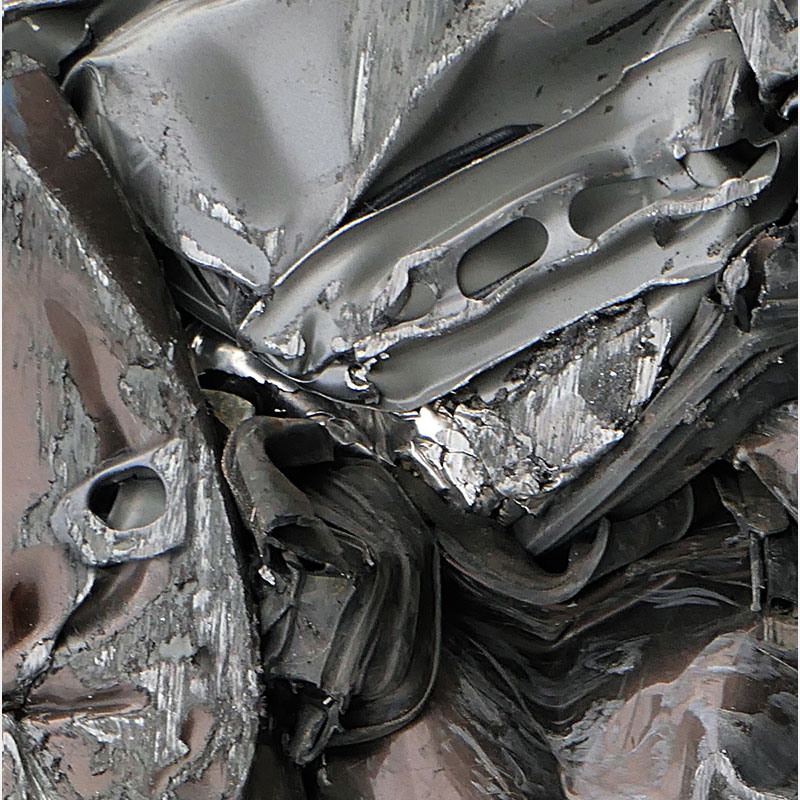
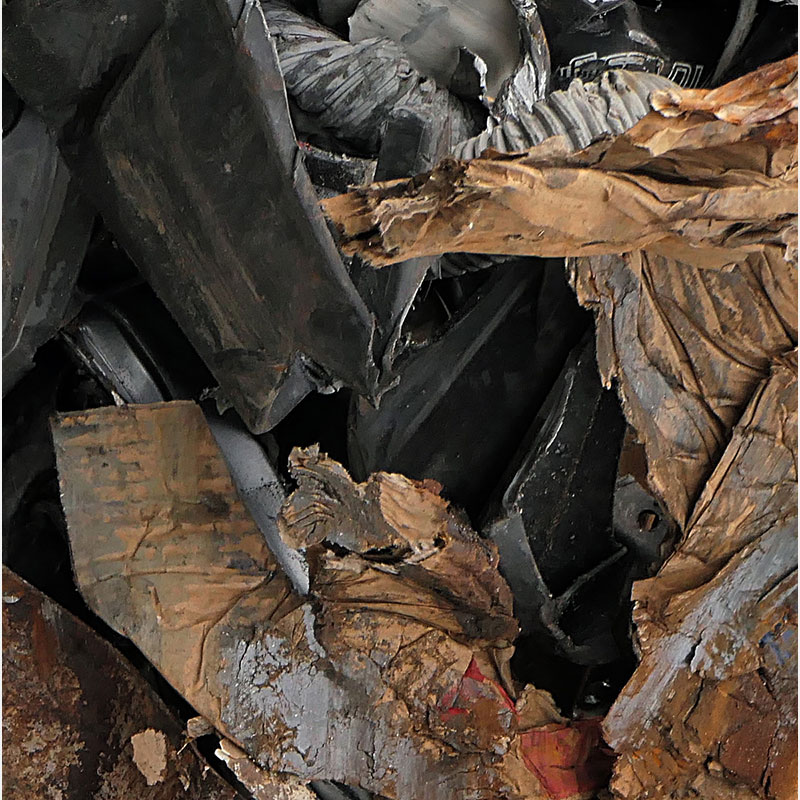
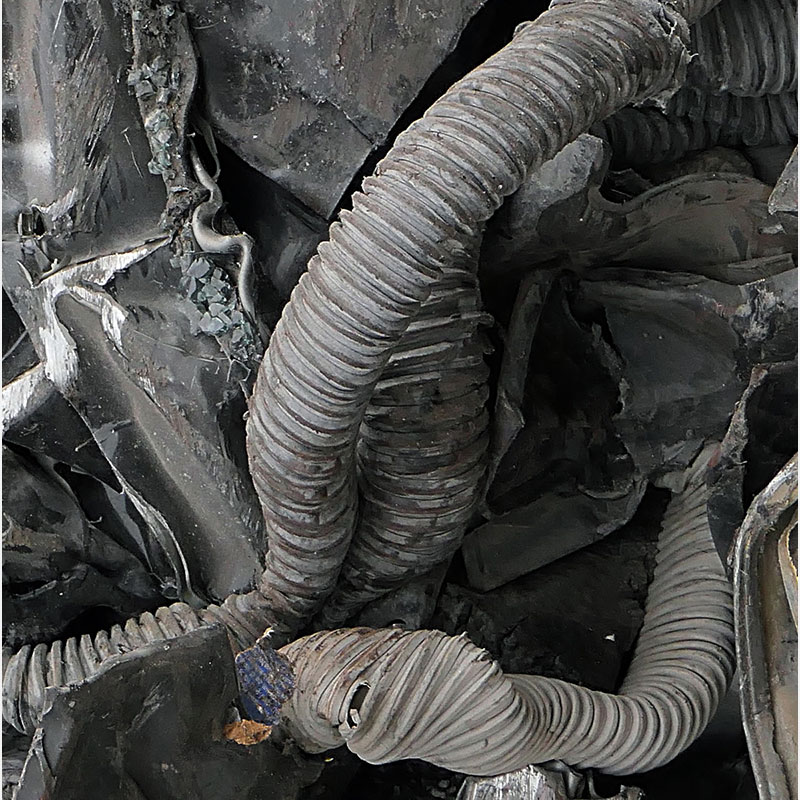
Ragazzini photographs the heap at close range, allowing the intricacies of the crushed surface to fill the frame entirely. The mirroring pulls the mechanical chaos toward a center, and then the image is worked: the dense layering of textures, from glinting metallic slashes to dusky patches of corrosion, is refined and amplified until the piece achieves a tactile depth that blurs the boundary between photography and painting. A figure emerges that the original heap contained no hint of.
That the surface, solicited rather than directed, should yield imagery no deliberate composition could reach: this is the logic Ragazzini shares with Max Ernst's Histoire Naturelle frottages of 1926, where Ernst pressed paper against resistant surfaces and let the texture generate what the hand could not invent. The method is structurally the same, transposed into photography. The camera and the mirror are instruments of solicitation. What the scrap metal yields here belongs to the same order of discovery.
For a closer look at the making, and the thinking behind the Creature series: What the Eye Finds