Limited Edition of 5
40 x 52.0 in
101.6 x 132.1 cm
US $ 4,600
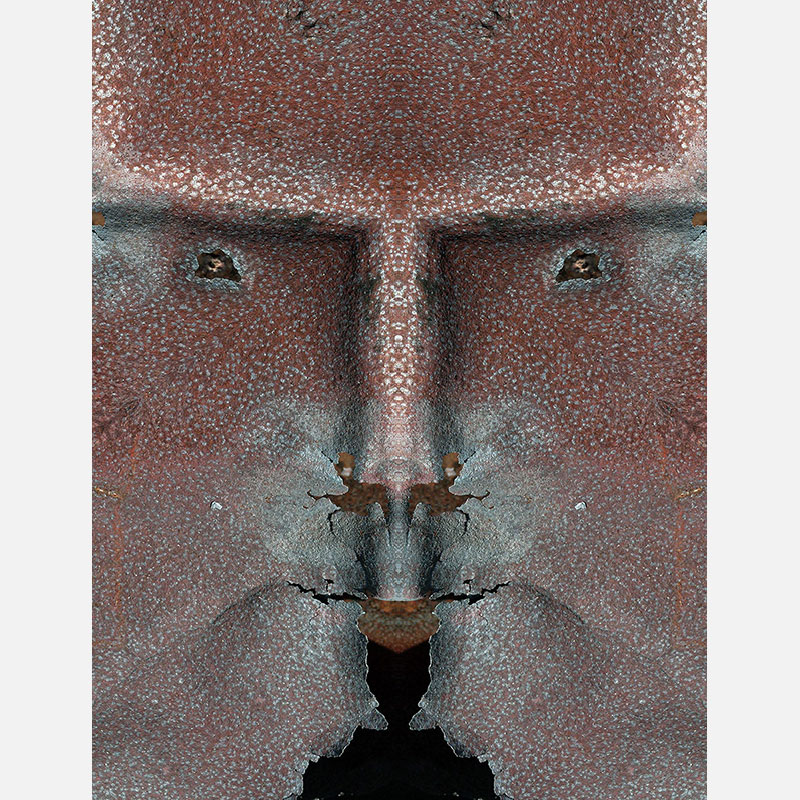
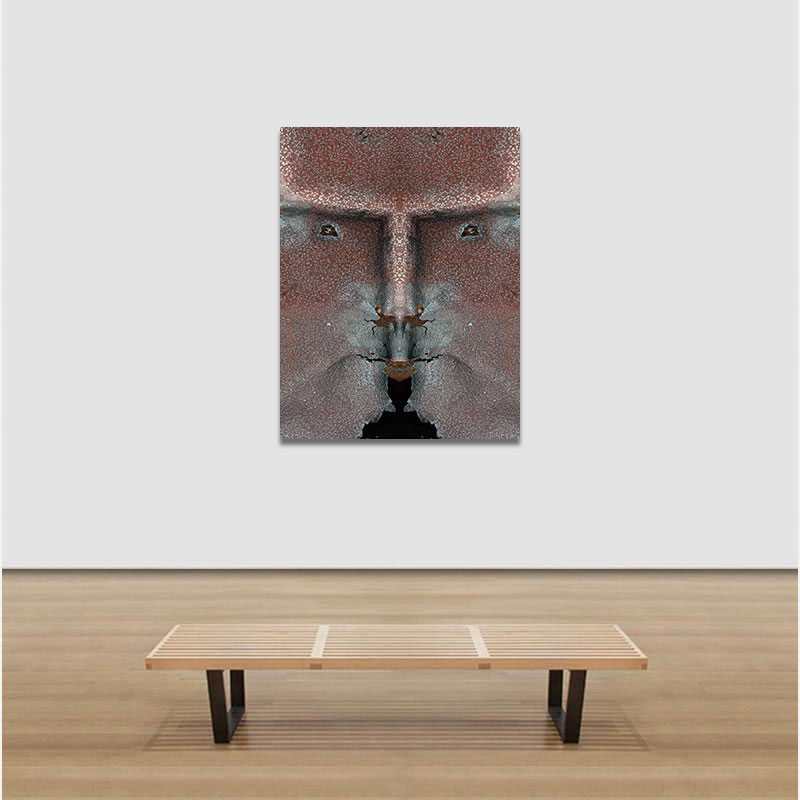
The rusted surface of a metal sheet, battered and pitted by corrosion, generates in its mirrored form a face of startling precision: hollow eyes, a mouth held in a kind of grimace, the fine stippling of oxidation catching light across the surface like the grain of a print. The composition has the density of something worked rather than found. But nothing has been worked. The corrosion did this; the framing, and the act of looking, made it visible.
The rusted surface of a metal sheet, battered and pitted by corrosion, generates in its mirrored form a face of startling precision: hollow eyes, a mouth held in a kind of grimace, the fine stippling of oxidation catching light across the surface like the grain of a print. The composition has the density of something worked rather than found. But nothing has been worked. The corrosion did this; the framing, and the act of looking, made it visible.
What the mirroring reveals in this work is a face that refuses to resolve into anything identifiable. It is not human, not animal, not mythological in any specific sense. The oxidized textures, dotted with silvery specks and patches of earthen red, produce an image that oscillates between recognition and abstraction. Ragazzini then works the image to hold that oscillation precisely: the ambiguity is not a problem to be solved but the content of the work, and the elaboration serves to keep both readings equally available.
This deliberate refusal of resolution has a precise theoretical name. Roland Barthes argued that the task of art is not to express the inexpressible but to resist the reduction of what resists naming: to hold open, against the viewer's demand for decoding, what the image declines to yield. The face in this work is there, clearly enough to compel attention, but the questions it invites, what kind of face, what it is from, what it means, the surface declines to answer. The discipline of the work is in that refusal.
For a closer look at the making, and the thinking behind the Creature series: What the Eye Finds