PAOLO BUGGIANI
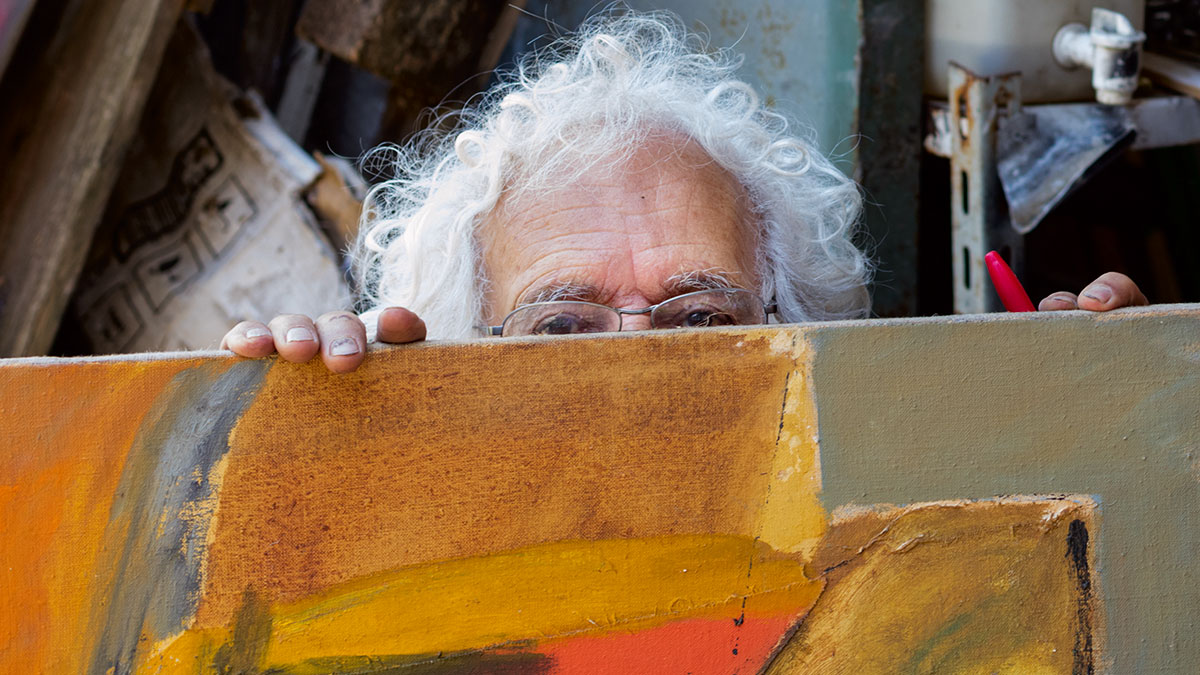
A Tuscan-born artist who helped define the New York Street Art movement, Buggiani has painted
alongside his performances throughout his career, building a body of fresco-on-canvas landscapes
where color is spatial fact and the land is never merely scenery
(read full bio)
ARTIST BIO
Paolo Buggiani was born in 1933 in Castelfiorentino, in the heart of Tuscany. In the early 1950s he moved to Rome, where he engaged with the postwar avant-garde alongside Alberto Burri, Piero Dorazio, Carla Accardi, and Gastone Novelli, exhibiting under the sponsorship of Corrado Cagli at the Galleria Schneider in 1956. In 1958 he showed in Paris, introduced to the Galerie Glaser-Cordier by Wifredo Lam. He moved to New York in 1962, received the Guggenheim Fellowship for sculptural research in America in 1968, and returned to Italy that same year to develop a series of radical investigations including performance, wearable art, and paintings over photographed reality.
Back in New York from 1979, Buggiani became a central figure of the Street Art movement, staging fire sculptures and mythological figures in the city's streets and public spaces alongside Keith Haring, Richard Hambleton, and Ken Hiratsuka. He documented and preserved early Keith Haring subway drawings during 1981 and 1982, before Haring's rise to fame. Major retrospectives followed at the Palazzo Medici Riccardi, Florence, and the Museo Laboratorio d'Arte Contemporanea, Sapienza University of Rome, in 2017 and 2018. He has continued to divide his time between New York and the medieval village of Isola Farnese, near Rome, painting throughout.
ABOUT THE WORK
Buggiani is best known internationally for his performances and fire sculptures, yet painting has never been separate from this practice. Di Genova, documenting his career across five decades, notes simply: "l'artista non ha cessato di dipingere" — the artist has never stopped painting. The canvases and the performances draw from the same source: a sensibility formed in the Roman Informale circle of the 1950s in which art is inseparable from physical encounter, whether with pigment on canvas or fire in urban space.
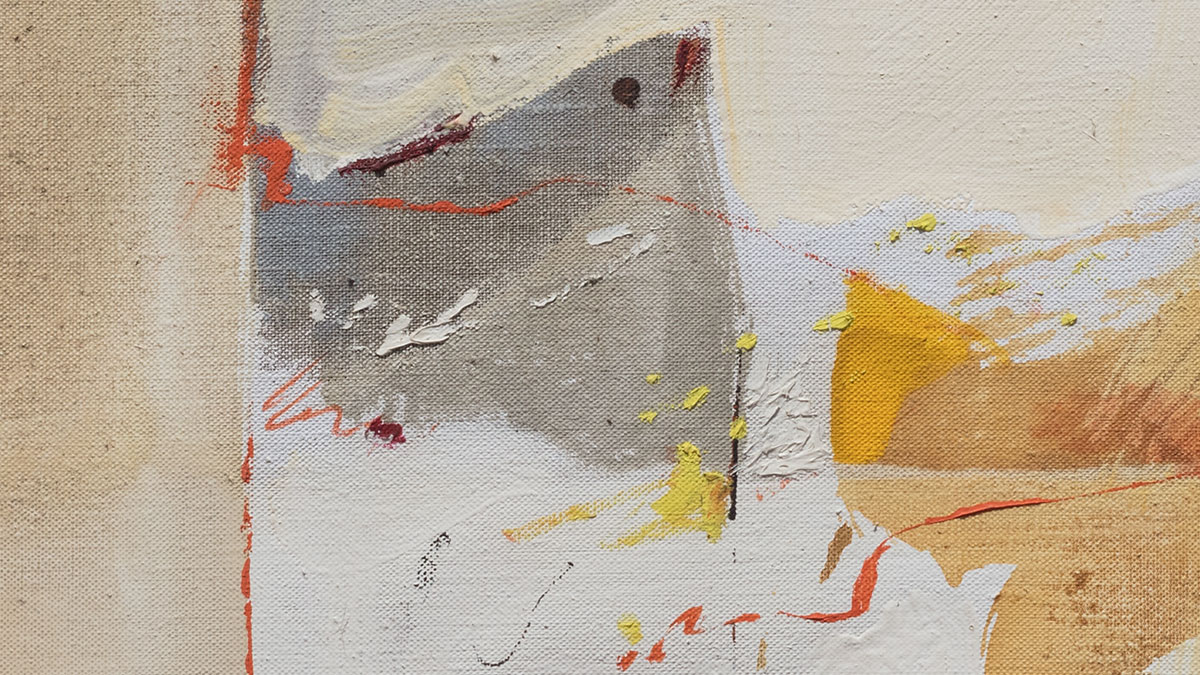
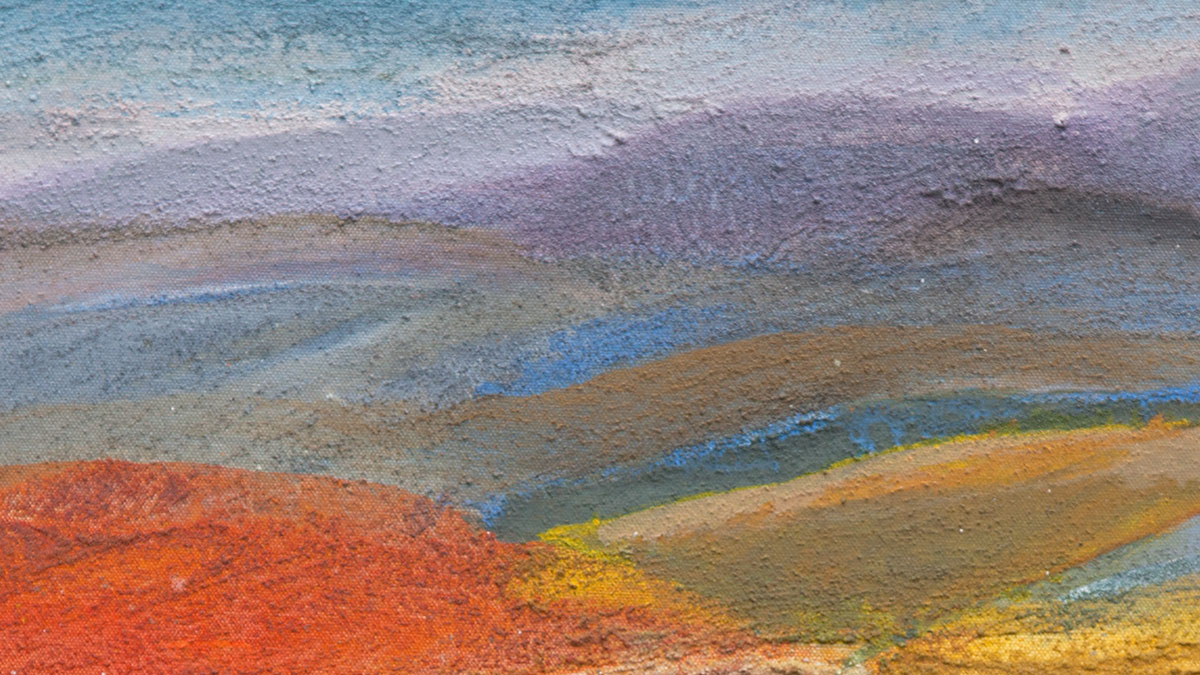
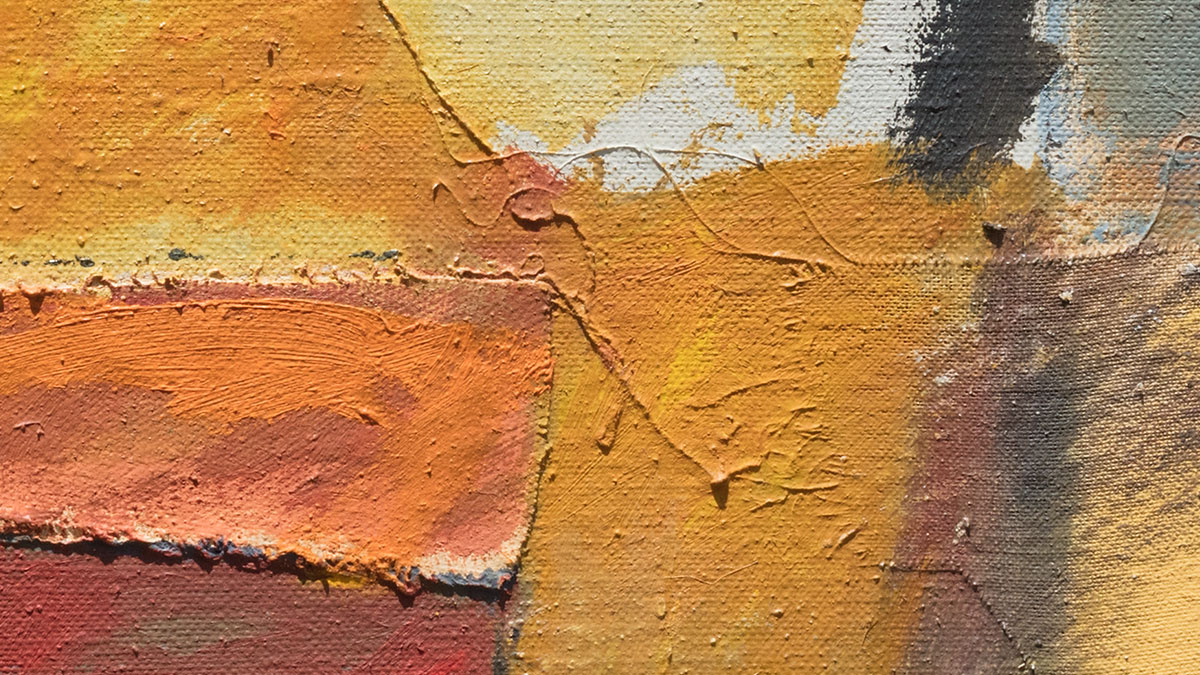
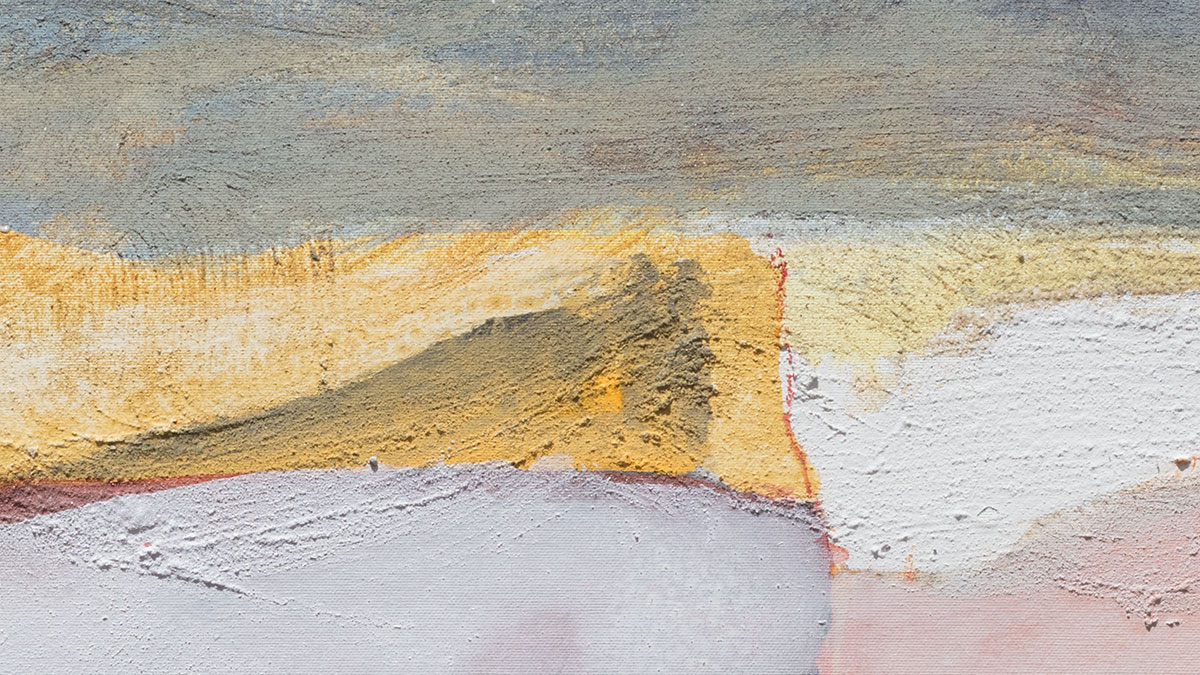
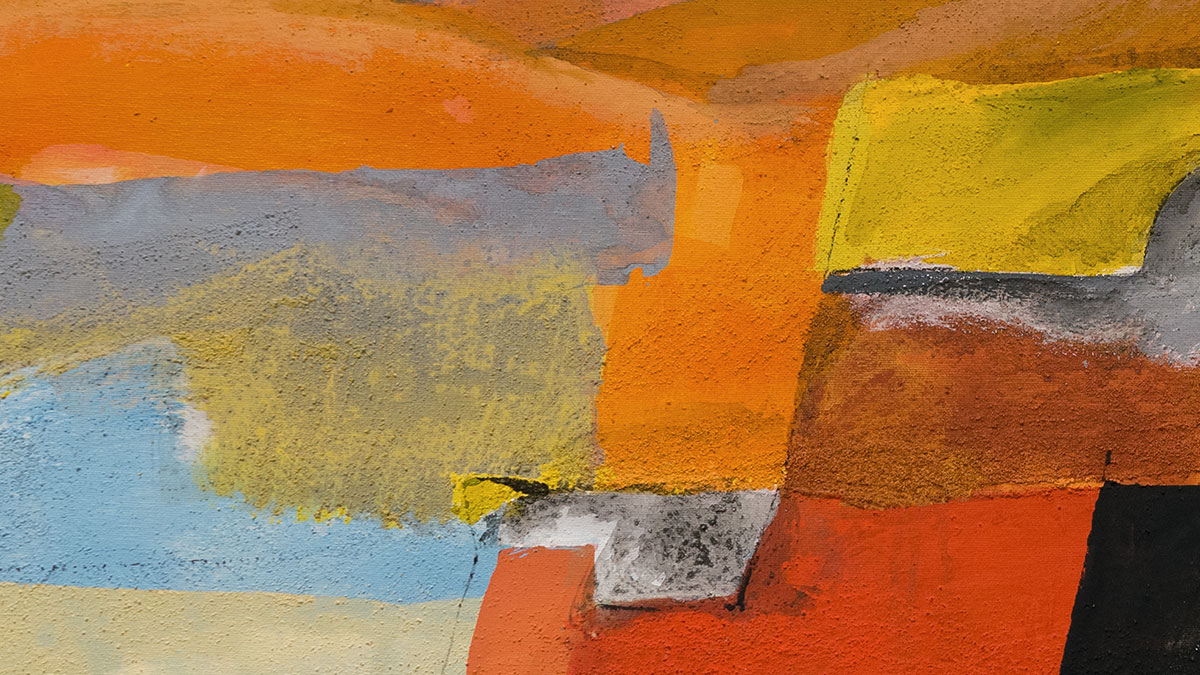
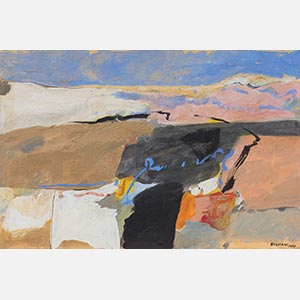
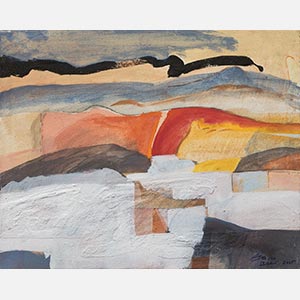
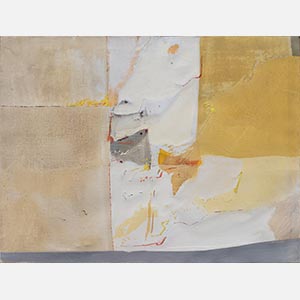
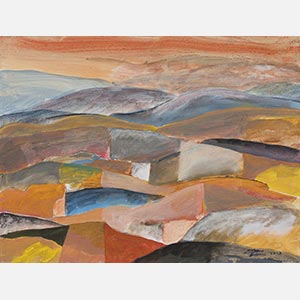
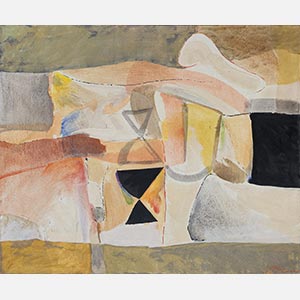
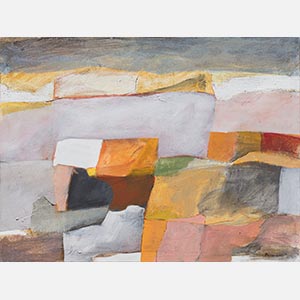
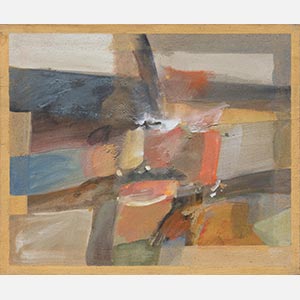
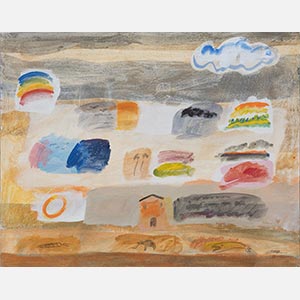
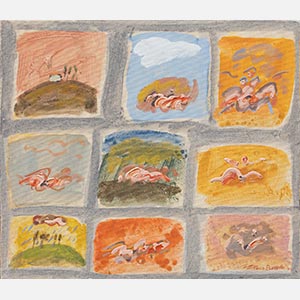
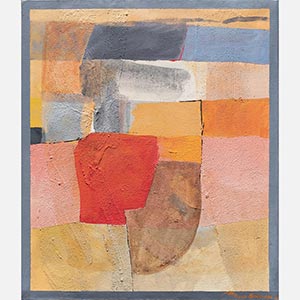
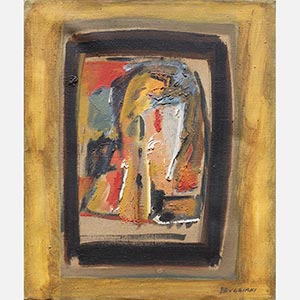
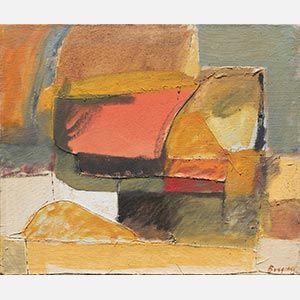
The paintings presented here belong to Buggiani's mature fresco-on-canvas practice, in which sand mixed with pigment is applied to canvas to produce a surface that absorbs light rather than reflecting it. The result is a matte, granular plane whose spatial logic owes nothing to tonal modeling: depth is built entirely through the placement of color zones, each carrying its own weight. Horizontal registers of ochre, terracotta, orange, and grey-blue organize the Tuscan and southern Italian landscape into structures of chromatic feeling rather than topographic description.
The technique itself carries history. Fresco is the medium of the Italian wall painting tradition, from Giotto through the Renaissance, and Buggiani's decision to bring it onto a portable canvas places these landscapes in deliberate dialogue with that inheritance. At the same time, the constructive spatial discipline of the Italian Informale, and specifically the sensibility Buggiani absorbed in the circle around Burri and Cagli, governs every compositional decision. The result is a practice that is simultaneously rooted in five centuries of Italian painting and entirely of the present.
ARTIST STATEMENT
I could not conceive of art without experimentation. For this reason, I choose to live in modern cities as they are key hubs of communication. I also love watching the sea from a deserted beach, because the breeze and sound of waves have been unchanged for millions of years. I would like to be a plant to taste the soil; a fish to breathe water; a bird and not have vertigo. To be a saint and believe in heaven and hell; a witch doctor to believe in macumba. I like being in my studio with no phone, with perfect light, before a large canvas playing with colors, as if the canvas were a playground.
Tuscany is my land, and beyond the hills that form a curtain on the horizon, I know there is the sea. Mine are the natural colors of frescoes, and the ideograms that flower from the canvas, the synthesis of my language.
PRESENTED AT ARCO GALLERY
Thematic focus: Abstract Art
You're welcome to reach out for additional works, context, or conversation around Paolo Buggiani's practice.