Paesaggio Senza Persone [Landscape without People], 1999
Fresco on Canvas
16.0 x 20.0 in
41 x 51 cm
$ 3,900
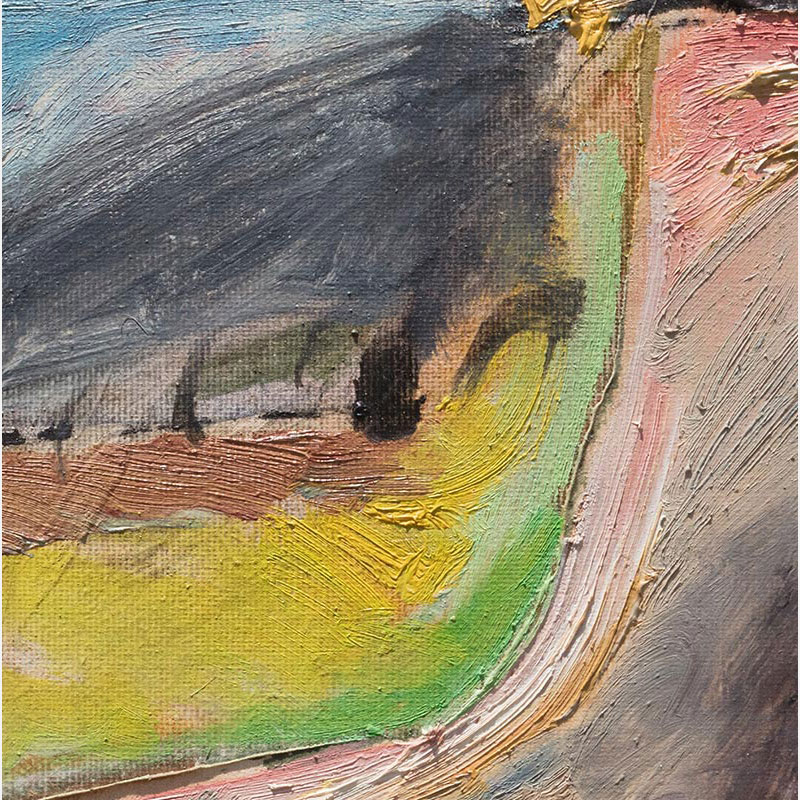
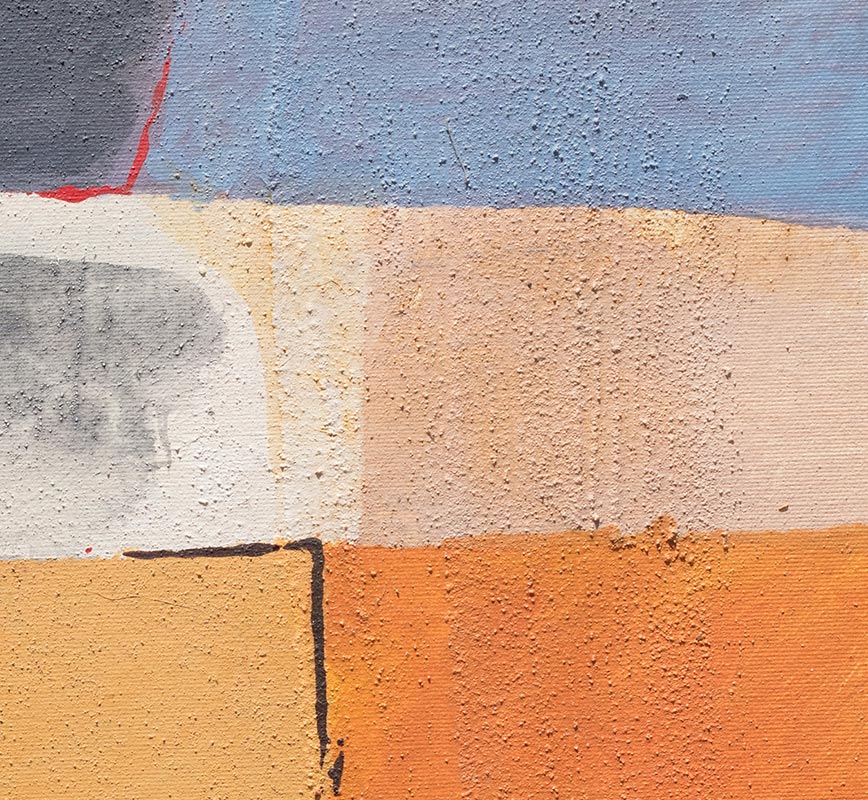
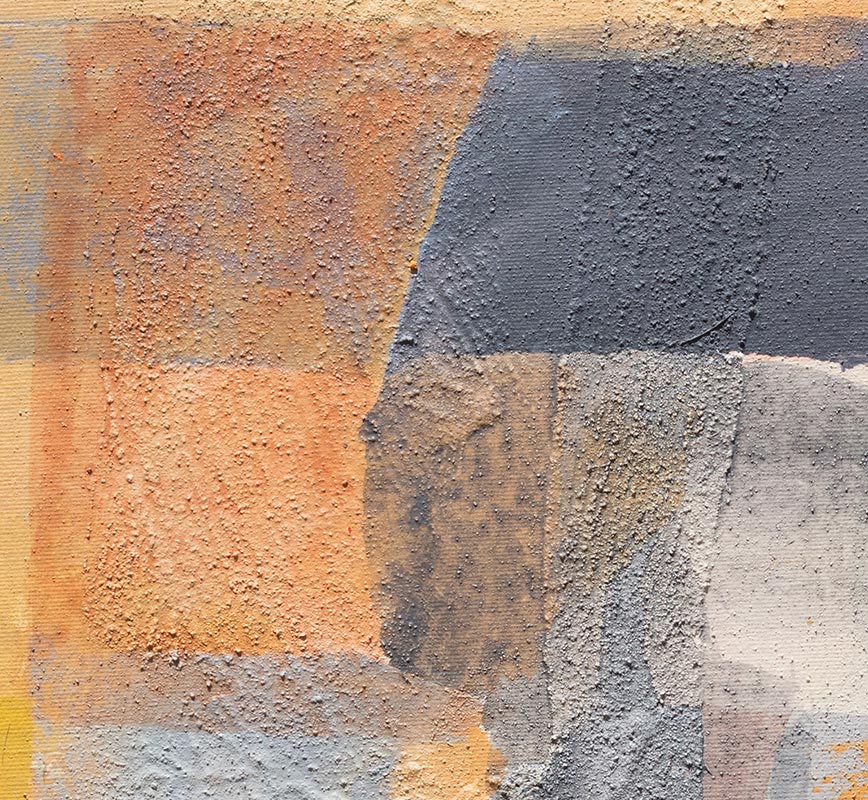
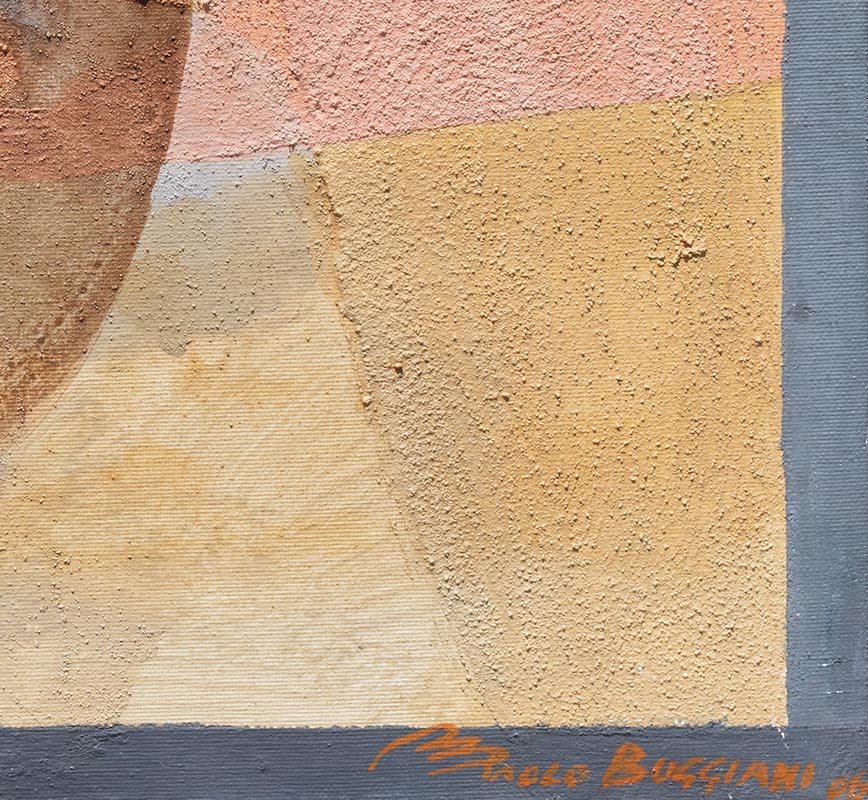
Paesaggio Senza Persone [Landscape without People] presents a quiet paradox in its title: the genre label announces landscape, but the surface, a compressed field of dark gestural strokes, black forms, and warm color fragments on a beige ground, is as close to pure sign-making as anything in this practice. A blue-grey painted border holds the gestural interior from expanding outward, giving the small format an unusual pictorial density.
Paesaggio Senza Persone [Landscape without People] presents a quiet paradox in its title: the genre label announces landscape, but the surface, a compressed field of dark gestural strokes, black forms, and warm color fragments on a beige ground, is as close to pure sign-making as anything in this practice. A blue-grey painted border holds the gestural interior from expanding outward, giving the small format an unusual pictorial density.
The individual marks resolve at close range into a set of spatial decisions: dark form pressing against pale ground, a green accent anchoring the left edge, warm orange-red in the lower right. Together they produce a landscape sensation without depicting a landscape, the sign carrying spatial weight through position and pressure rather than representation. This is a painting that rewards sustained looking: the more time given to it, the more the apparent spontaneity reveals itself as decision.
The argument has been reduced to its essential terms: the mark, the ground, the pressure of one against the other. Di Genova traced the persistence of trace-segniche throughout Buggiani’s formation, sign-marks that survive through and beyond the Italian Informale: the gestural urgency of the postwar Roman avant-garde concentrated into the smallest possible surface, where the sign carries the full weight of the practice.
![Paolo Buggiani, Paesaggio Senza Persone [Landscape without People], 1999. Fresco on canvas, 16 × 20 in. Gestural dark strokes and warm color fragments on beige ground within a blue-grey painted border.](images/artwork10a.jpg)