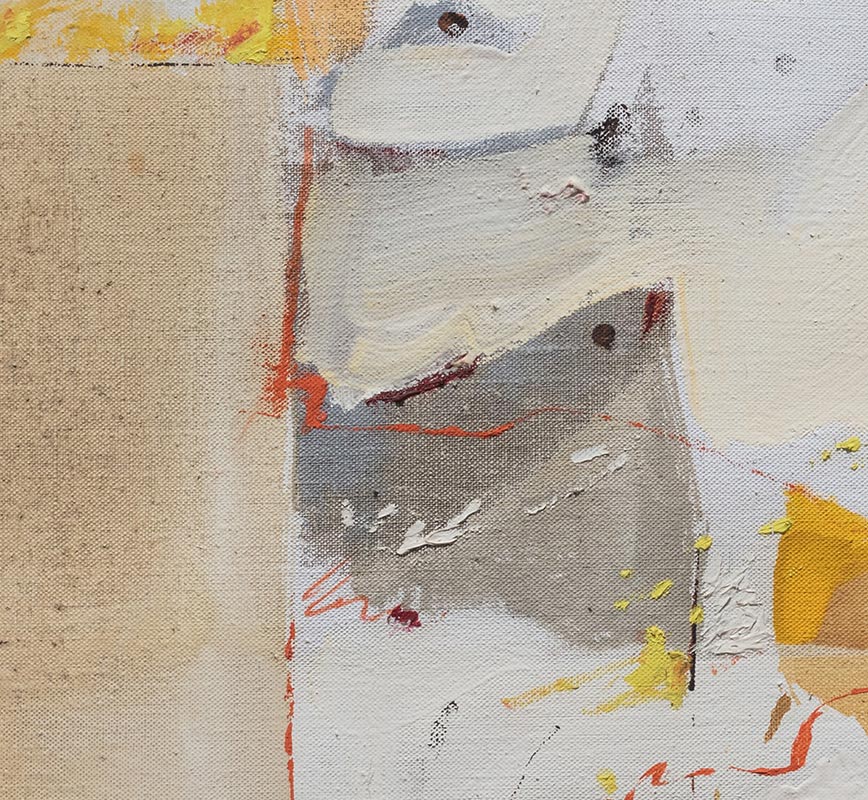
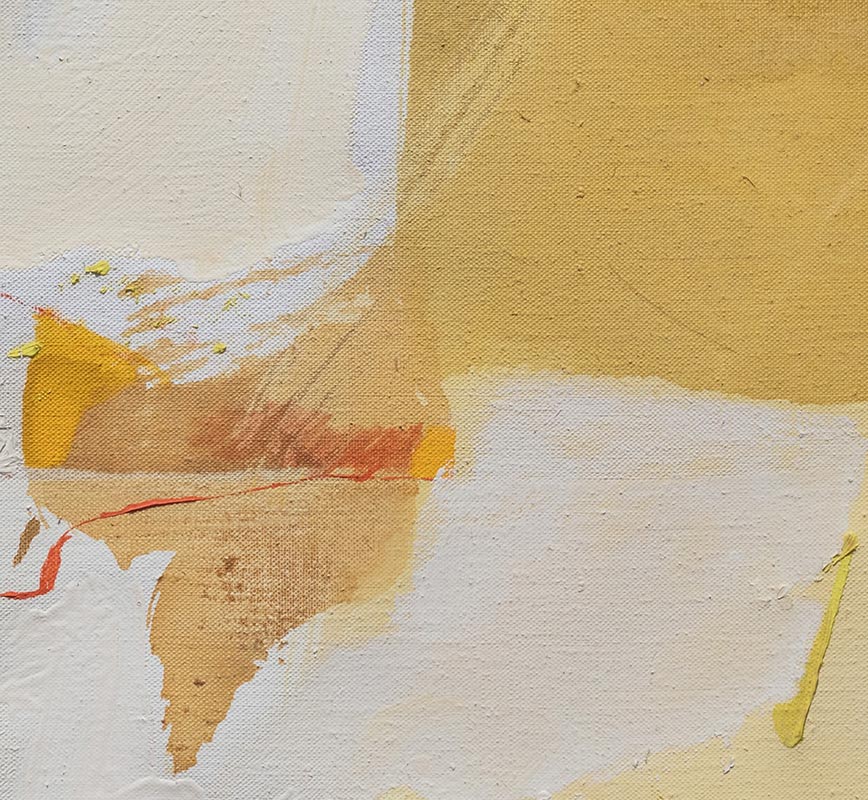
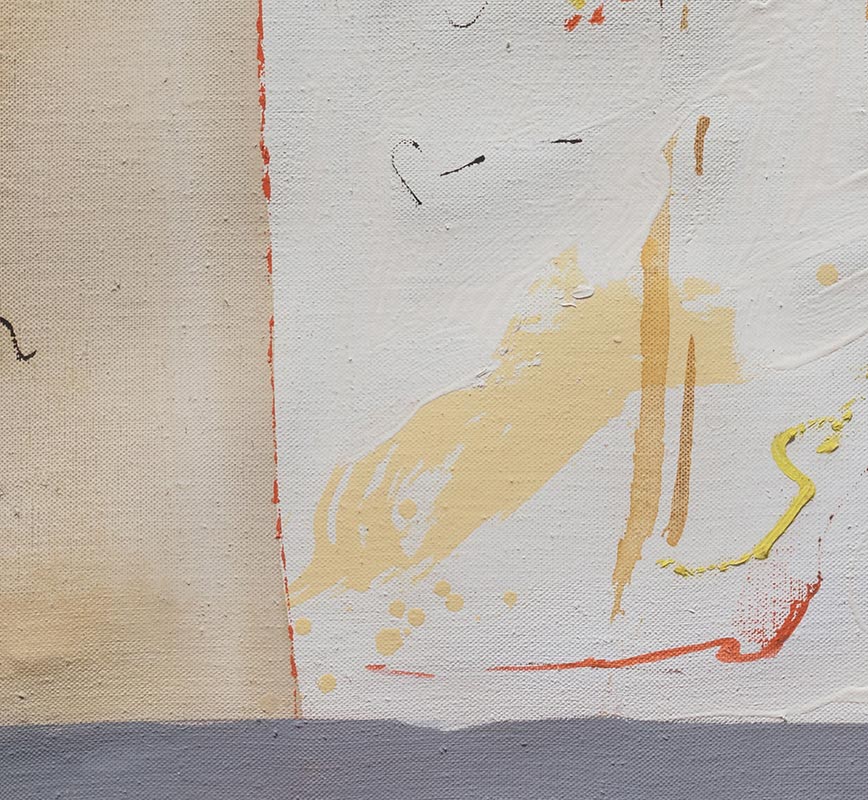
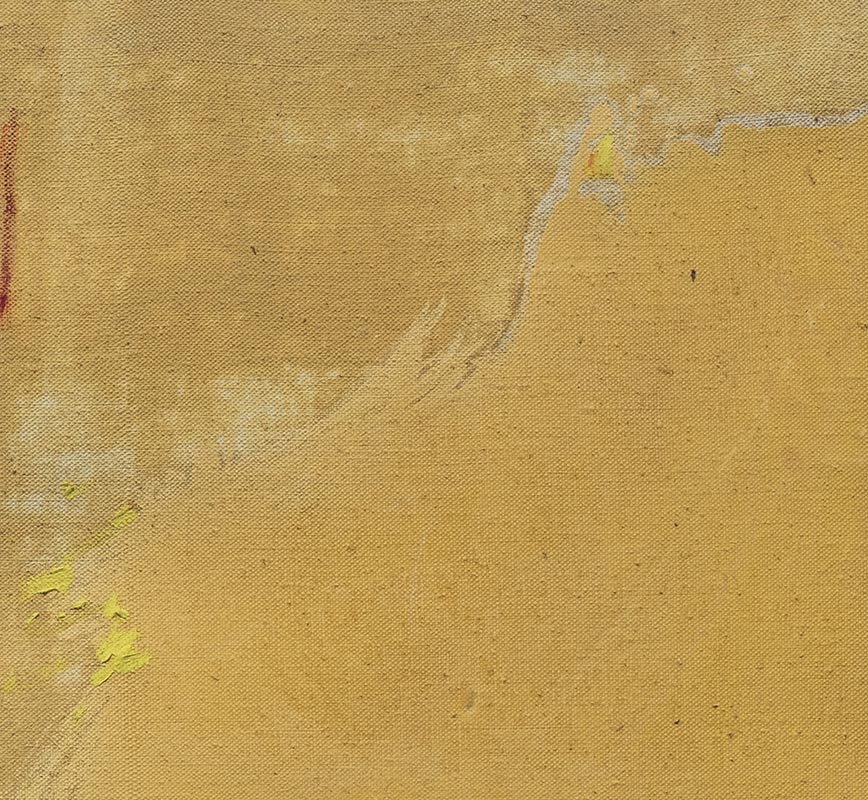
Nel Paese del Colore [In the Land of Color] announces its subject in its title: a painting about color as landscape and landscape as color, the Tuscan terrain dissolved into a horizontal field of grey, orange, pink, and ochre planes that read simultaneously as topography and chromatic event. A low horizon allows the sky zone, cool grey and pale ochre, to occupy nearly a third of the surface, the landscape below fragmenting into interlocking planes of fields, roads, and shadows.
Nel Paese del Colore [In the Land of Color] announces its subject in its title: a painting about color as landscape and landscape as color, the Tuscan terrain dissolved into a horizontal field of grey, orange, pink, and ochre planes that read simultaneously as topography and chromatic event. A low horizon allows the sky zone, cool grey and pale ochre, to occupy nearly a third of the surface, the landscape below fragmenting into interlocking planes of fields, roads, and shadows.
The palette here is cool and deliberately austere, the dominant grey-pink-white register broken only by patches of stronger orange and a single red accent. The fresco surface in these cooler tones takes on a dusty, almost fresco-secco quality, the sand granules catching light at oblique angles and producing a surface shimmer that the warmer palette does not generate. It is a painting of early morning or late afternoon, the light softening chromatic contrasts into a more tender register.
The color zones have been fully liberated from topographic necessity, reading as geological strata, architectural fragments, or pure spatial divisions with equal conviction. This is color as spatial argument, closest in spirit to Morandi’s chromatic philosophy of late still life, in which the most restrained palette carries the heaviest spatial weight: austere on the surface, inexhaustible underneath.
![Paolo Buggiani, Nel Paese del Colore [In the Land of Color], 2007. Fresco on canvas, 35.5 × 47 in. Cool horizontal field of grey, pale pink, and ochre planes with low horizon and prominent sky zone.](images/artwork03a.jpg)