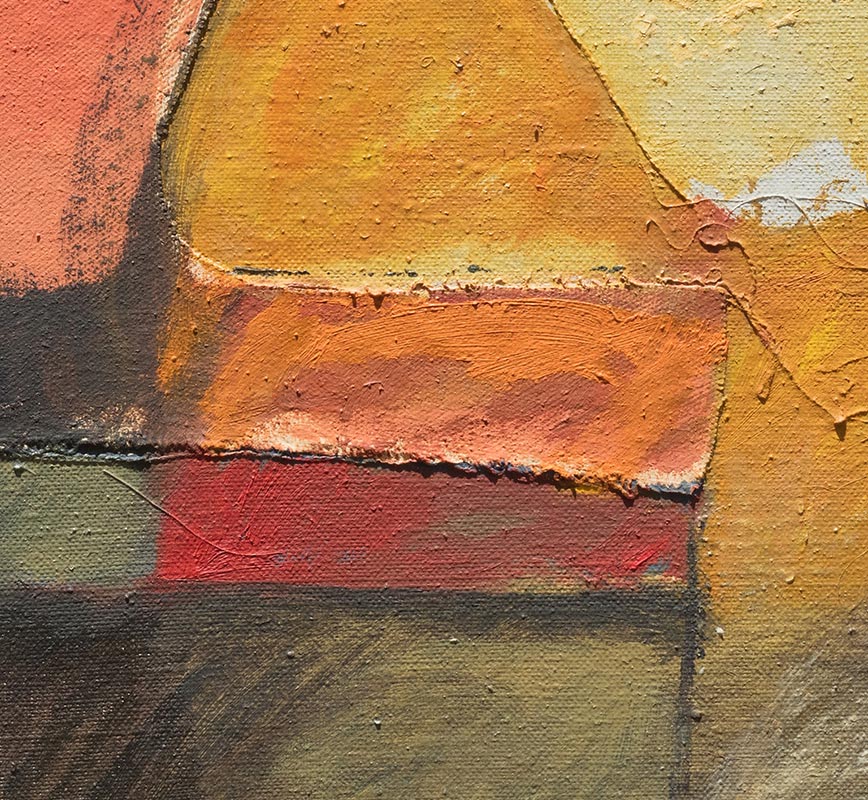
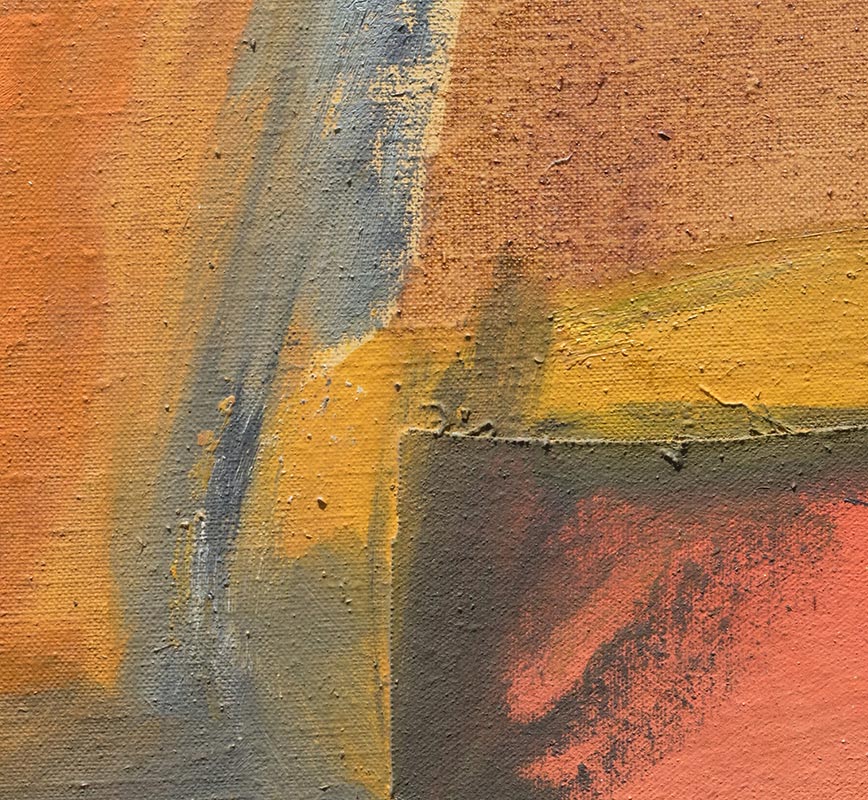
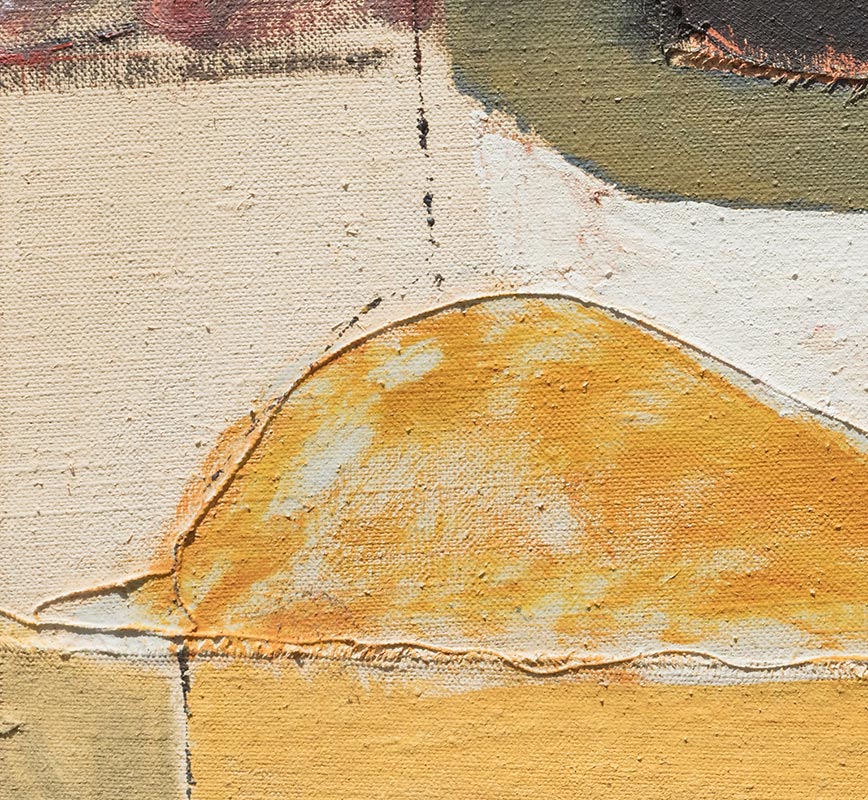
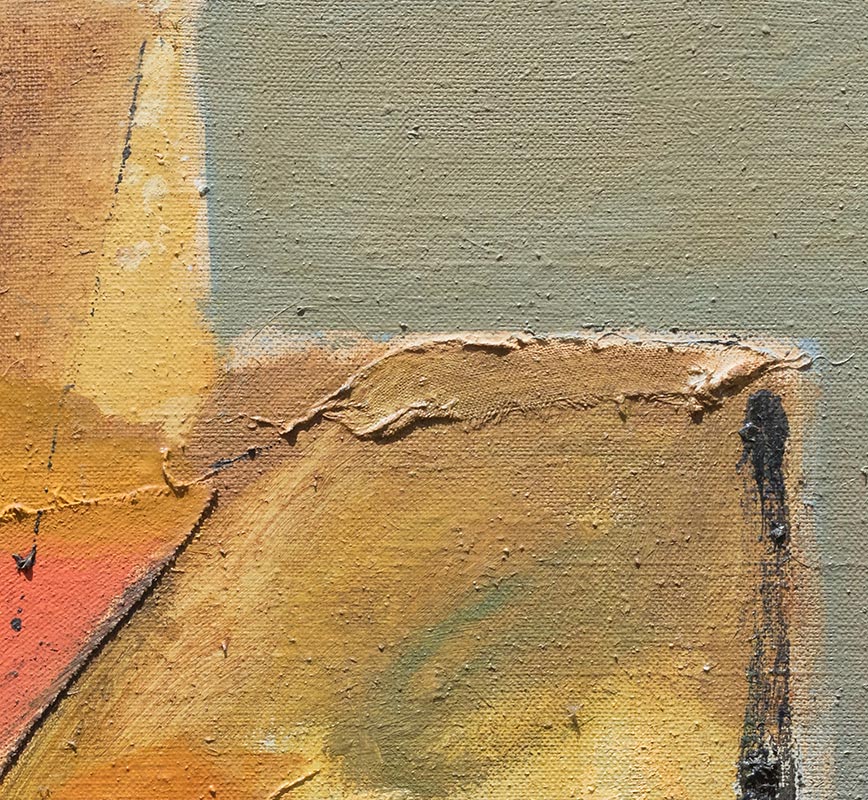
Dolce Incontro [Sweet Encounter] presents its formal argument in plain sight: a painted rectangular frame encloses a loosely drawn landscape of rolling hills and sky at the center of the canvas, while a broader field of warm, freely handled color surrounds it. Dated 1971, the painting-within-a-painting device belongs to the period of Buggiani’s most radical experimentation with space, the body, and the picture plane, between his return to Italy from New York in 1968 and his second departure in 1979.
Dolce Incontro [Sweet Encounter] presents its formal argument in plain sight: a painted rectangular frame encloses a loosely drawn landscape of rolling hills and sky at the center of the canvas, while a broader field of warm, freely handled color surrounds it. Dated 1971, the painting-within-a-painting device belongs to the period of Buggiani’s most radical experimentation with space, the body, and the picture plane, between his return to Italy from New York in 1968 and his second departure in 1979.
The Paintings over Reality series from the same years, in which Buggiani photographed landscapes through painted crystal, provides the conceptual context: the picture plane as permeable membrane, the painted image as something superimposed on rather than recording an observed reality. The rectangular frame makes the act of framing visible, turning the landscape into a quotation of itself, something seen through the apparatus of painting rather than directly encountered. This connects the work to the broader anti-illusionist investigations of the early 1970s, from Arte Povera to the French Supports/Surfaces group.
The title introduces a warmth the structural analysis might obscure: this is also a painting about looking with tenderness at a known landscape. The outer field of amber, green, and blue pressing against the inner rectangle feels like protective surround rather than critical distance, the intellectual device held inside something genuinely felt.
![Paolo Buggiani, Dolce Incontro [Sweet Encounter], 1971. Fresco on canvas, 20 × 16 in. Painting-within-a-painting: inner landscape of rolling hills enclosed by a painted rectangular frame within a warm amber and green outer field.](images/artwork12a.jpg)