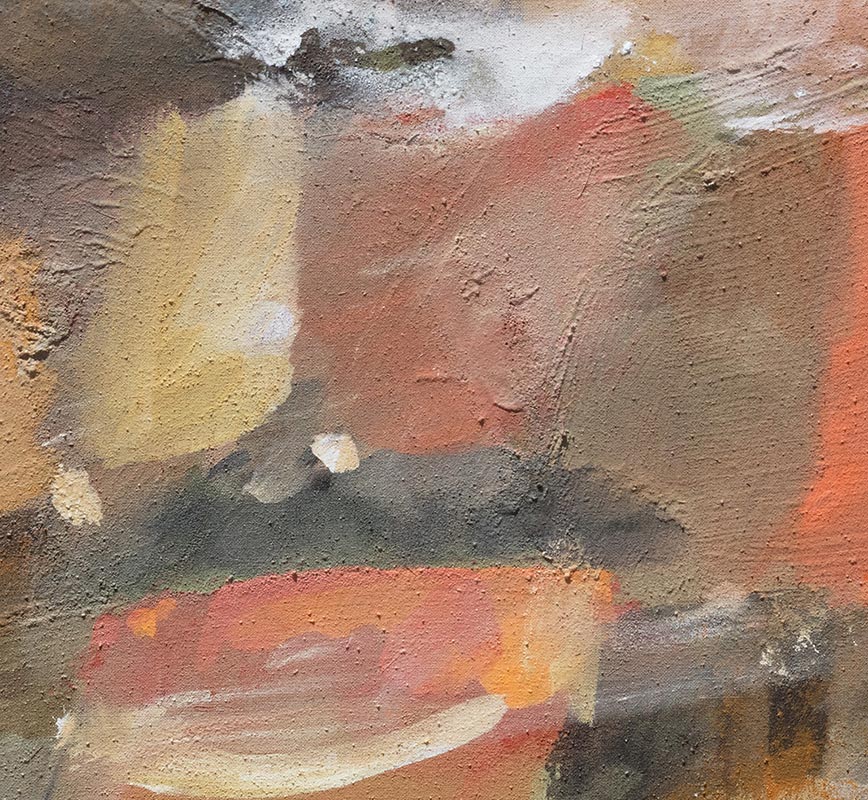
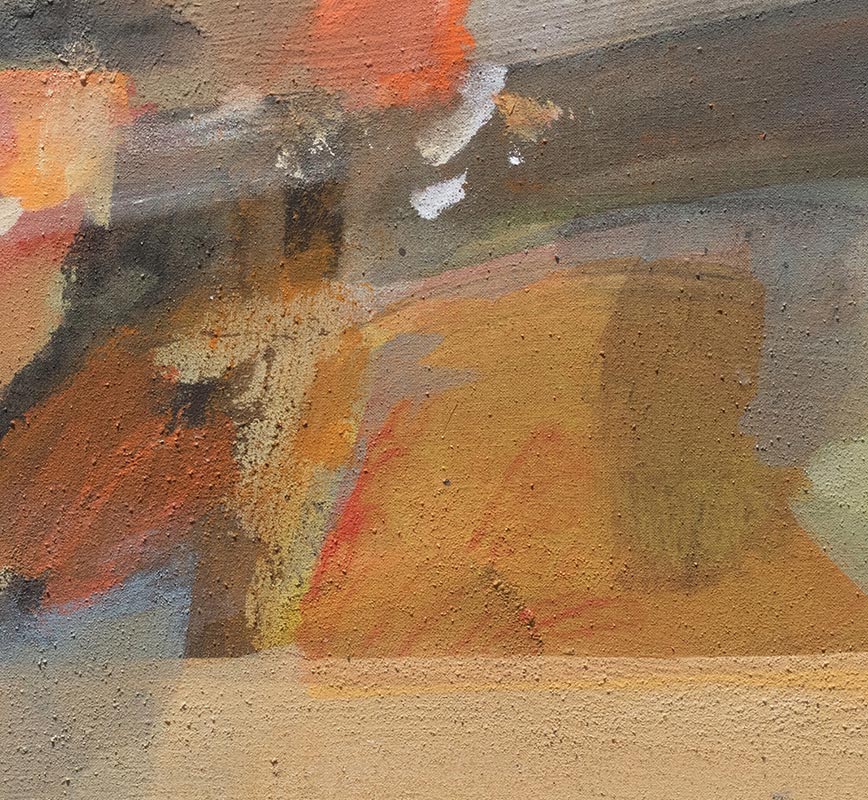
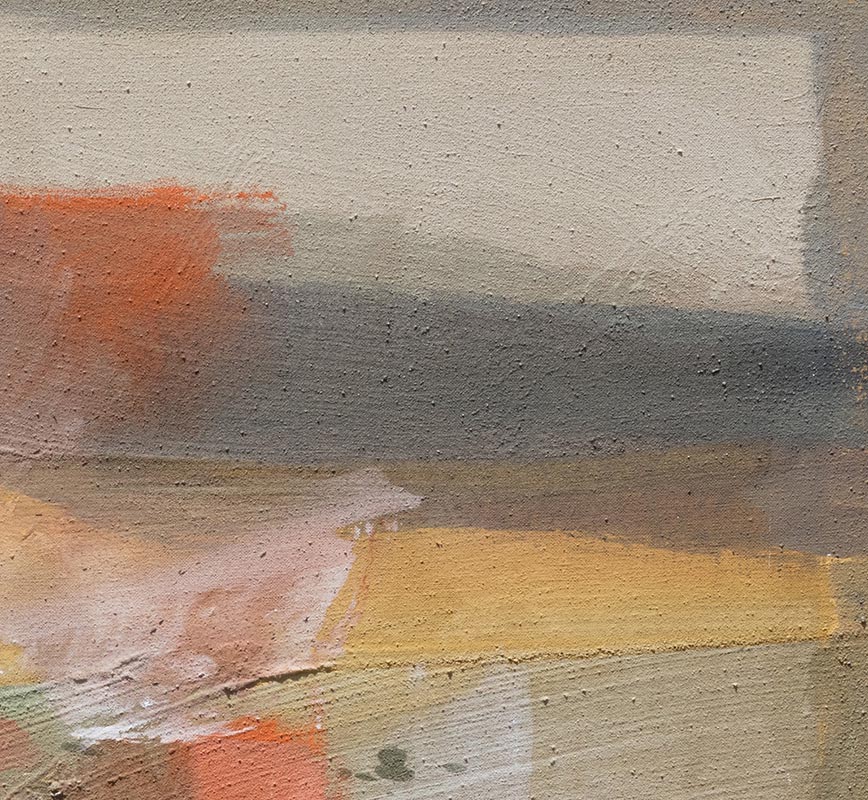
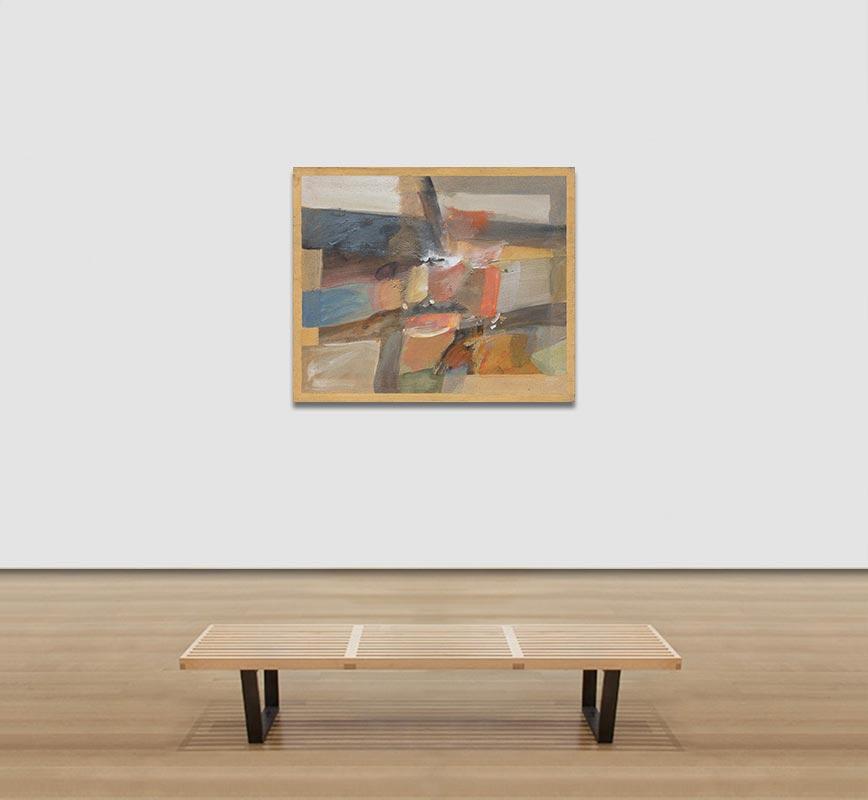
Il Ritorno del Tempo [The Return of Time] is dated 1962, the year Buggiani left Rome for New York: it sits at a precise biographical and stylistic threshold, the Roman Informale formation fully absorbed, the New York encounter still ahead. The composition, dense interlocking masses of ochre, terracotta, olive green, and dusty grey-pink pressed against one another with the weight of formed earth, is unmistakably the work of a painter trained in the Roman circle around Cagli and Burri.
Il Ritorno del Tempo [The Return of Time] is dated 1962, the year Buggiani left Rome for New York: it sits at a precise biographical and stylistic threshold, the Roman Informale formation fully absorbed, the New York encounter still ahead. The composition, dense interlocking masses of ochre, terracotta, olive green, and dusty grey-pink pressed against one another with the weight of formed earth, is unmistakably the work of a painter trained in the Roman circle around Cagli and Burri.
The surface is notably different from the later fresco-on-canvas works: thicker, more worked, with visible impasto passages and a black contour line used sparingly but decisively to define color mass edges. The “neoplastic structure” and “antique feeling for spatial composition” that Marchiori had identified two years earlier, in 1960, are fully present here, charged with the material urgency the more resolved later works have refined away. There is something unguarded in this painting that the mature practice, for all its authority, no longer permits.
The root system of the entire fresco-on-canvas series is exposed here: the constructive discipline of Burri and Cagli carrying the urgency of first encounter rather than the confidence of long mastery, color pressed against color with the directness of someone who has not yet learned to leave space between things.
![Paolo Buggiani, Il Ritorno del Tempo [The Return of Time], 1962. Fresco on canvas, 20 × 23.5 in. Dense interlocking masses of ochre, terracotta, olive green, and grey-pink with black contour lines.](images/artwork07a.jpg)