ANGELO CANEVARI: EVERYTHING HE KNEW
An in-depth look at the Strutture: the works, their making, and the thinking behind them
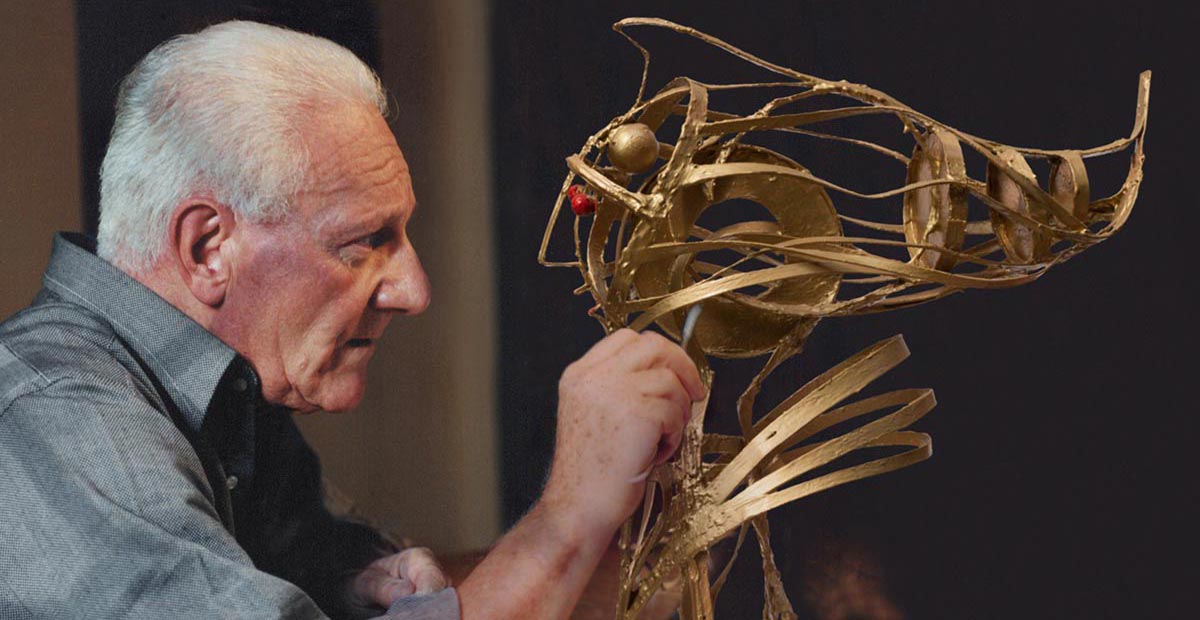
The Strutture are the last body of work by Angelo Canevari. He created them in his studio in Amelia, an ancient hill town in Umbria, from the early 2000s until he passed in 2014. It is a significant body of work in which drawing and bronze casting, the two practices that defined his creative life, converge in a single series: a synthesis that has never been presented to the public until now.
When Canevari's children showed me the Strutture, I understood at once how powerful this work was, set apart from everything else their father had made and yet wholly his. These sculptures owned the room: open skeletal figures glowing in their metallic colors, the red eye looking straight at me. I knew I wanted to bring them to the world, but they had no critical context, and I set out to do the proper research into the lineage that led to their creation. That work is what shaped the Angelo Canevari: Strutture exhibition.
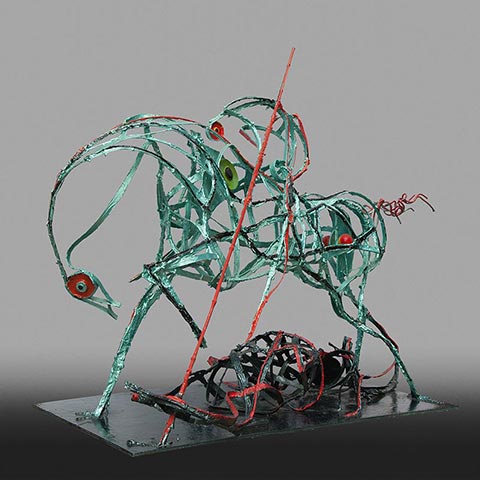
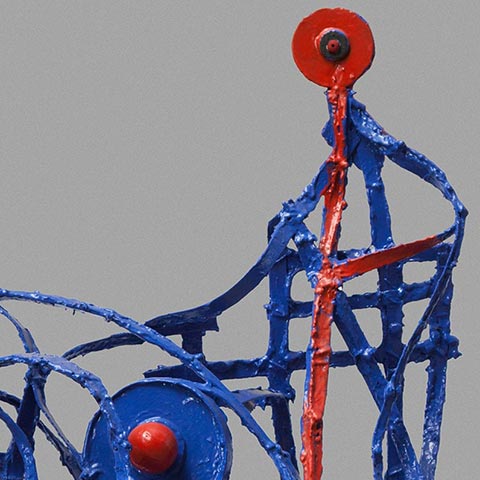
These open skeletal sculptures are built from strips of resin-coated cardboard and metal, unified by a single coat of metallic paint: the immediacy of the mark and the permanence of cast form arriving in the same object. In these sculptures the drawn line does not become something else: it becomes itself in three dimensions, given weight and shadow and the ability to hold a figure upright in space. The interior armature that the great bronze founders buried inside their finished surfaces is here offered without concealment.
The Formation
To understand what the Strutture are, it helps to understand where they come from. Canevari was born into a lineage of artists active in Rome since the seventeenth century. His father Angelo created the designs for the monumental mosaics at the Foro Italico; his uncle Silvio created five statues for the same monumental project. Lost-wax bronze casting was the primary means of the sculptor's practice across his entire career: the Canopi of the 1970s, the Erme series, the numerous monumental commissions, among them the bronze doors for the Cathedral of Belluno. He knew from the inside what the great casting tradition required and what it concealed. Donatello buried the armature inside the Gattamelata. Verrocchio solved the same problem for the Colleoni. In the Strutture Canevari removes that exterior entirely. What the great casting tradition buried, he offers. You see exactly how the figure is made, and the making is the figure.
The other root is the drawing practice, which he never abandoned from his earliest work through the illustrated editions of Don Quixote and Orlando Furioso he was producing in the same years as the Strutture. Those illustrated editions are not incidental to the series: they are its parallel stream, the same chivalric imagination moving across paper while the three-dimensional works extended it into space. Canevari drew all his life with what the critic Alfio Coccia described in 1971 as a quality that made the drawing not preparatory work but a complete poetic expression in itself. The Strutture are where that complete expression entered three dimensions.
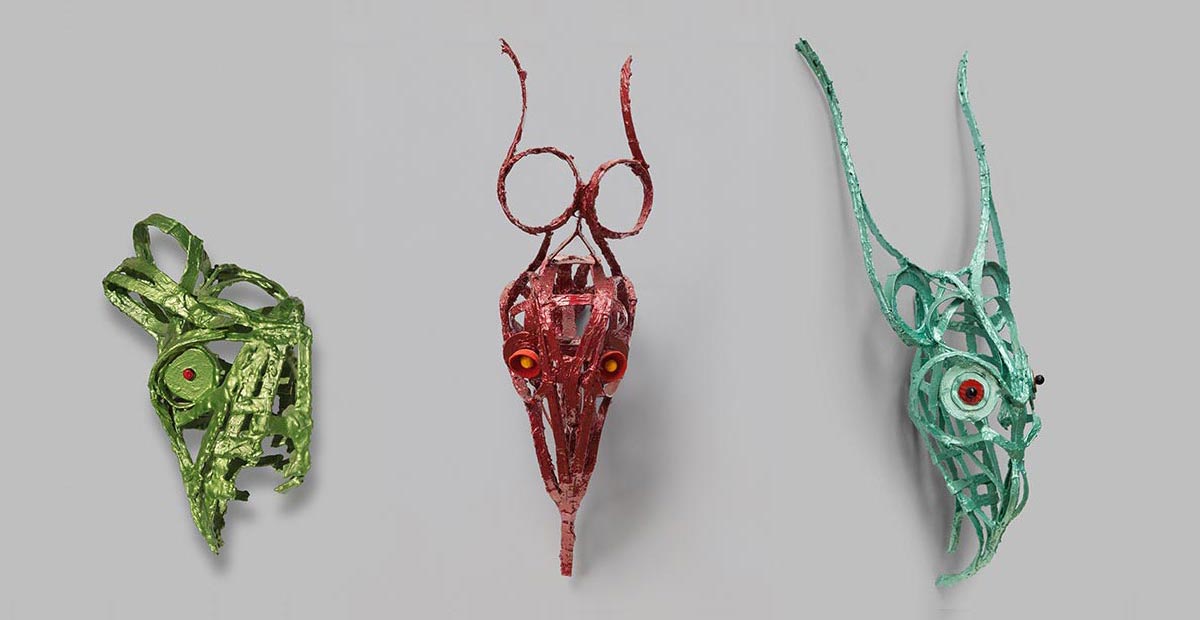
The formal vocabulary of the Strutture has a specific and documented ancestor in Canevari's years working alongside Corrado Cagli, one of the central figures of twentieth-century Roman art. In those years Canevari absorbed a sacred regard for the craft, a conviction that nothing in the work should be left to chance. Enrico Crispolti, writing of Cagli's cardboard-strip sculptures of the early 1960s, named his creative process with precision: thin strips articulated by addition, a single primary element repeated until it becomes a figure. Canevari observed the master and carried that research forward; when he became a master himself, he added, with the creation of the Strutture, new formal meaning to what Cagli had started. Those years in Cagli's studio were in keeping with the traditional Renaissance bottega practice, where artistic creation evolves across generations.
The Subjects
The subjects of the Strutture form a theatrical cast of human authorities: warriors and sacred figures, female legends, animal subjects, heraldic devices drawn from traditions separated by centuries and civilizations. Saint George, Don Quixote, a Hussar, a Condottiere, an Assyrian King, Guinevere, the High Priest, Pilate's Servant: every figure receives the same formal treatment, the same single dominant metallic hue, the same red accent that marks the point of consciousness or conflict within the composition. No tradition is ranked above another. Canevari described the chivalric imagination at the series' center as rooted in the Sicilian puppet theater, the pupi whose enactment of the Orlando cycle he called the most uncorrupted transmission of the Ariostan tradition: the ancient stories alive in popular form, neither museum nor nostalgia.
The Synthesis
The Strutture come from the end of a long working life, and they carry the particular freedom of that moment: an artist in his seventies and then his eighties, in his studio overlooking the old town of Amelia, building knights and queens because the line still had somewhere to go. The freedom is visible in the work. It is in the looseness that never tips into carelessness, the willingness to leave a figure half-dissolving, the refusal to seal anything down. Canevari's children feel these works are among their father's most personal. I think they are right. Andrea Camilleri, novelist and lifelong friend, said his sculptures use not only space but above all time as a compositional element. That is what you feel in front of them: the decades held in every strip of metal, the long knowledge spent freely, an artist answering first and foremost to himself.
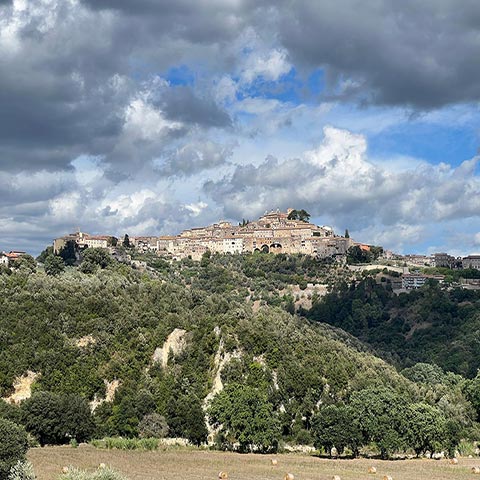
Amelia
The place where the Strutture were conceived. The medieval hill town of Amelia in Umbria, where Canevari spent the last three decades of his life and where these sculptures were created between the early 2000s and his passing in 2014.
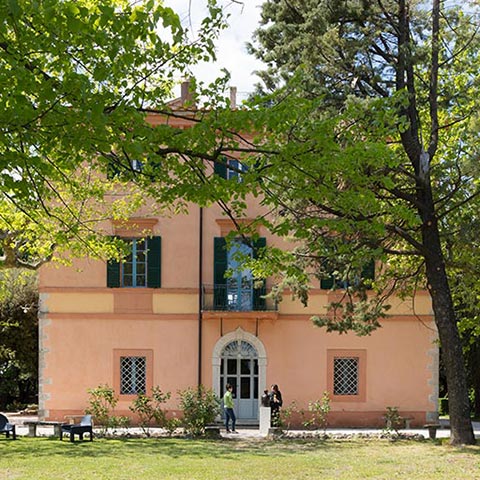
The Studio
Canevari's studio was housed in his nineteenth-century villa on the outskirts of Amelia. The Strutture were created here, in a space that had absorbed decades of drawing, casting, and thinking about what sculpture could be.
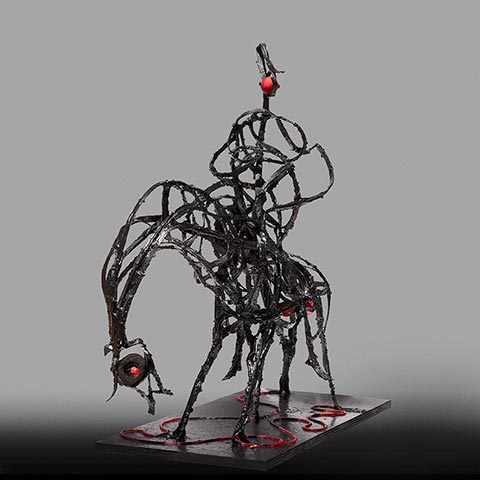
The Equestrian Works
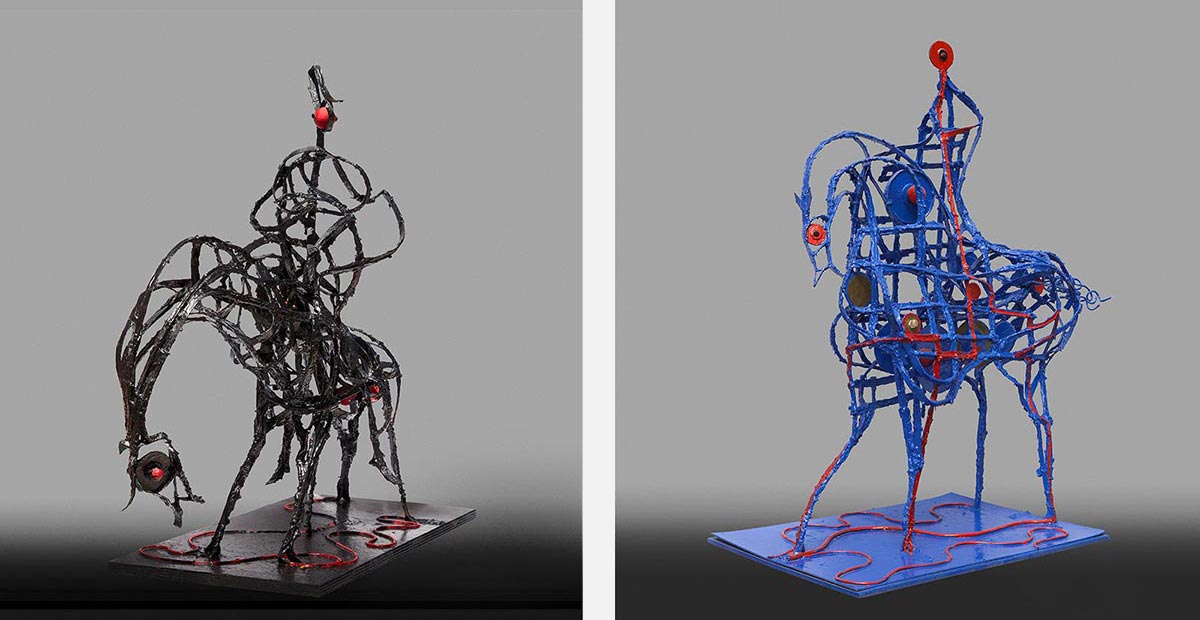
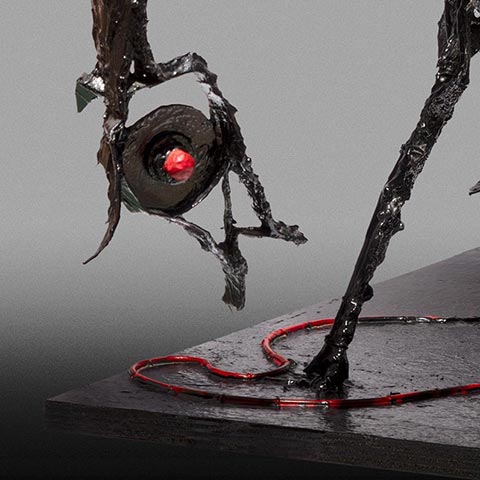
The Hussar is a figure of mobile warfare: fast, lightly armored, dependent on speed and aggression rather than ceremony. Canevari's formal choices enact this precisely. The black palette absorbs light rather than reflecting it, giving the work a quality of shadow and dissolution. No heraldic surface, no chromatic claim to permanence: only the dark energy of a form in motion, and the red wire coiling loose across the base, still escaping.
The Lance: St. George and the Dragon
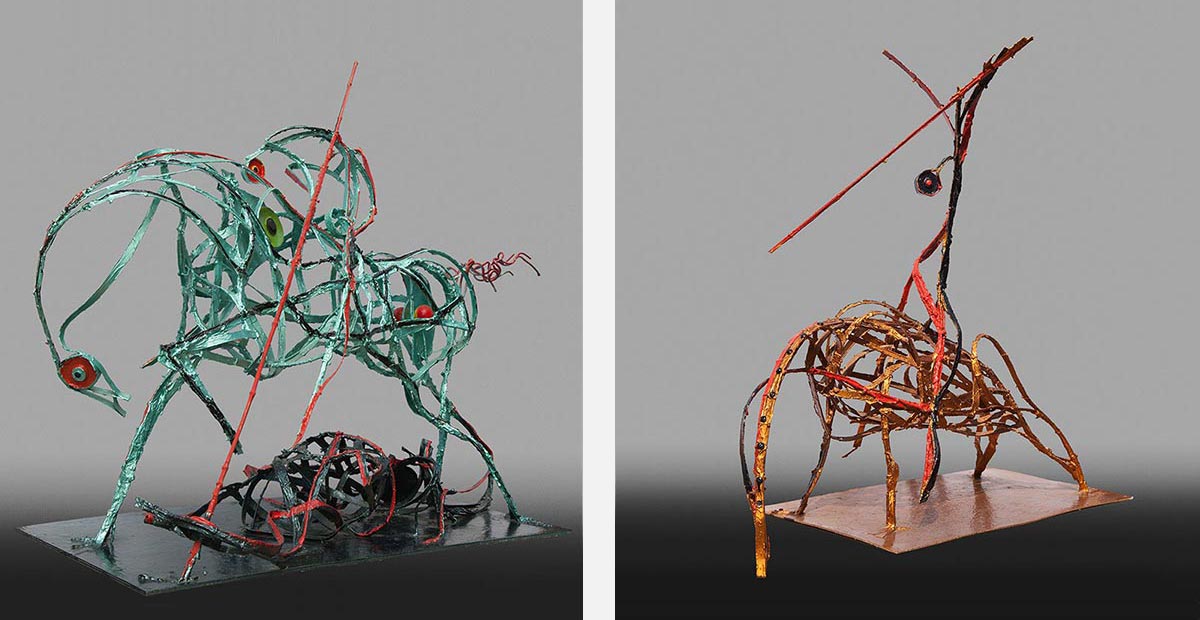
The composition is organized around a single straight line cutting through a field of curves: the lance, the only straight element, the red axis around which everything else is suspended. The dragon is already down, its strips tangled in a last convulsion at the base. The lance still extends. The narrative is paused between act and consequence.
Busts
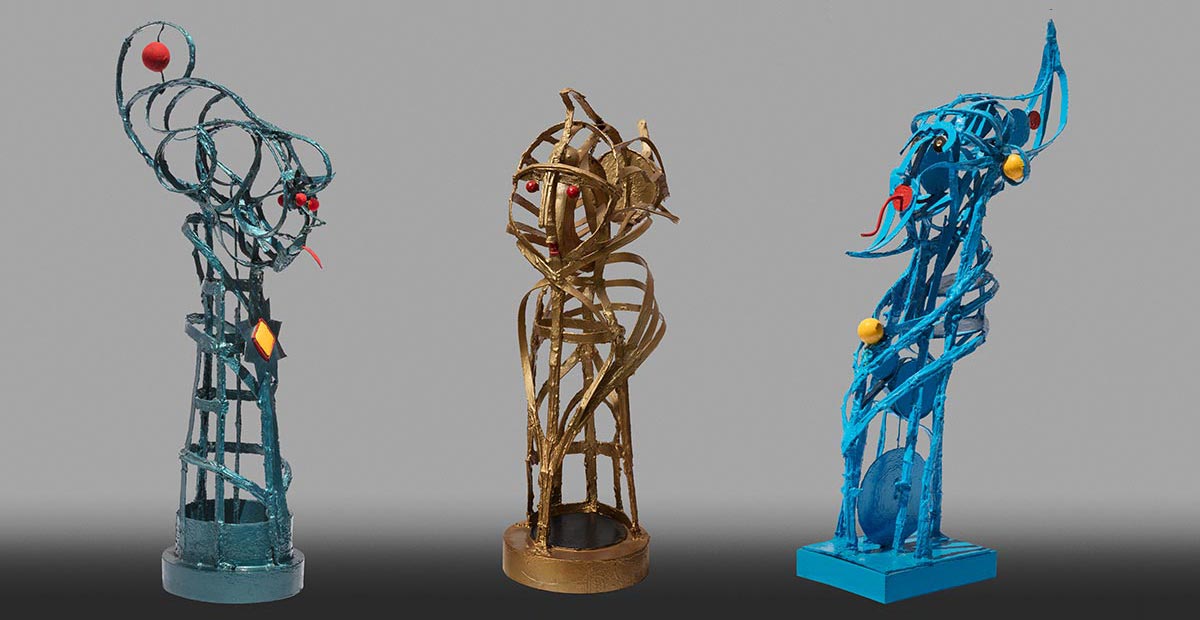
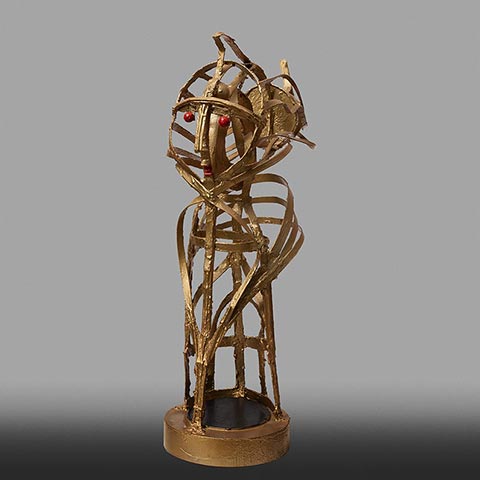
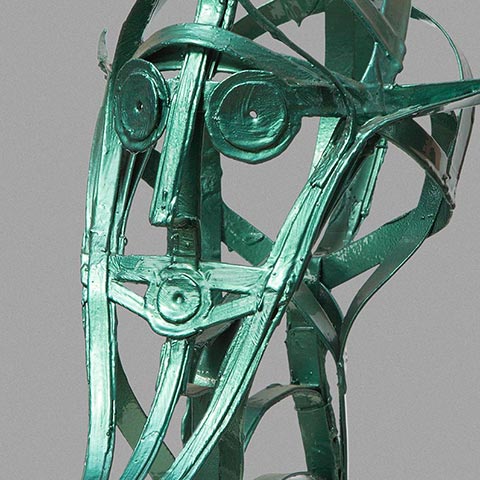
A standing figure from the world of Arthurian legend: Guinevere is vertical and columnar, the lower body a regular palisade rising from a drum base, the upper zone an eruption of swirling strips that reads as head and crown simultaneously. The gold surface carries the weight of the medieval goldsmith's claim: what is depicted exists outside ordinary time.
Bucrania
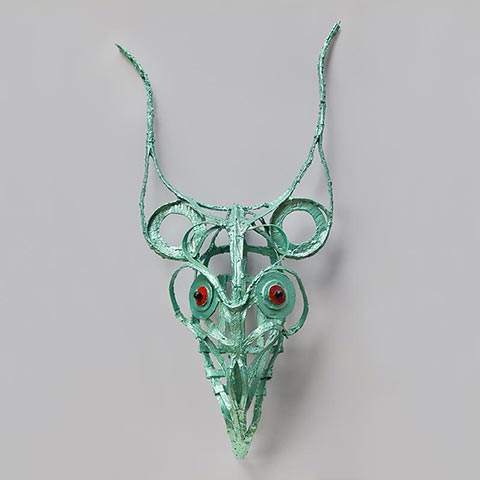
The Bucrania are the series' heraldic works: wall-mounted, frontal, emblematic. The bucranium is among the oldest motifs in Mediterranean visual culture, present in Etruscan funerary contexts wherever sacrifice required a sign simultaneously animal and emblem. Here the ancient sign enters through a modern sculptural intelligence and returns transformed.
Jacob's Ladder
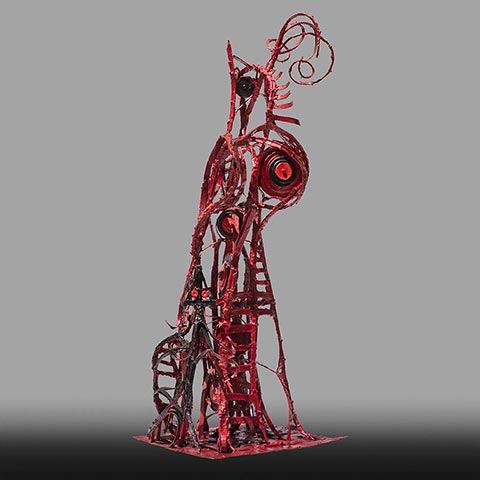
Jacob's Ladder is the series' most complex and anomalous work: a pyramidal structure rising from a dark animal figure that presses upward from the base, red eyes fixed on what ascends above it. Where the other Strutture are single figures, this one is a cosmological axis, the biblical ladder between earth and heaven, with a creature still trying to make the climb.
The Red Accent
The red accent runs through the Strutture as a system, not a device. In Don Quixote it rises vertically through the blue cage to a single disc at the apex, the one element that refuses to dissolve into the dominant field. The red is not decoration: it is the axis around which force and consciousness converge.
The Spheres
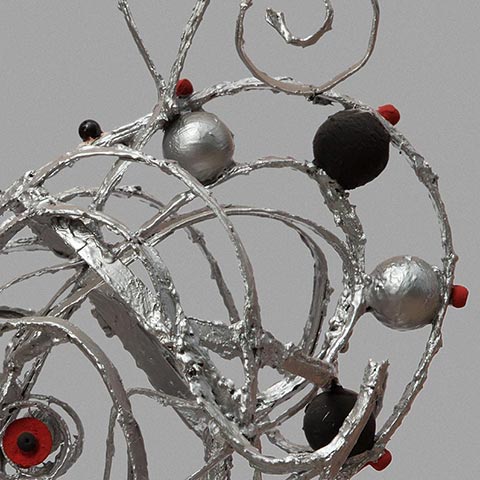
The spheres that punctuate the series are not decorative. They mark focal points: the eye, the wound, the point of authority. In the Condottiere they are silver and black against silver, the tones of a career in which not everything was honorable. The red still raw, the black spent.
Authority
The figures of authority in the Strutture carry themselves with the composure of someone who has always been looked at: frontal, erect, the upper zone dense with the accumulated signs of office. This is the hieratic posture that runs from Assyrian palace reliefs through Byzantine icons to medieval reliquary busts. The eye, two concentric rings with a colored center, is how that posture holds the viewer. It does not invite. It presides.
The Red Eye
Across the series the eye-forms vary in construction but the red center is constant: the one chromatic note that refuses to dissolve into the dominant hue. Here, in the Hussar, it burns red inside black, the most dramatic contrast in the series. Below it the red wire coils loose across the base, still escaping. Always red.