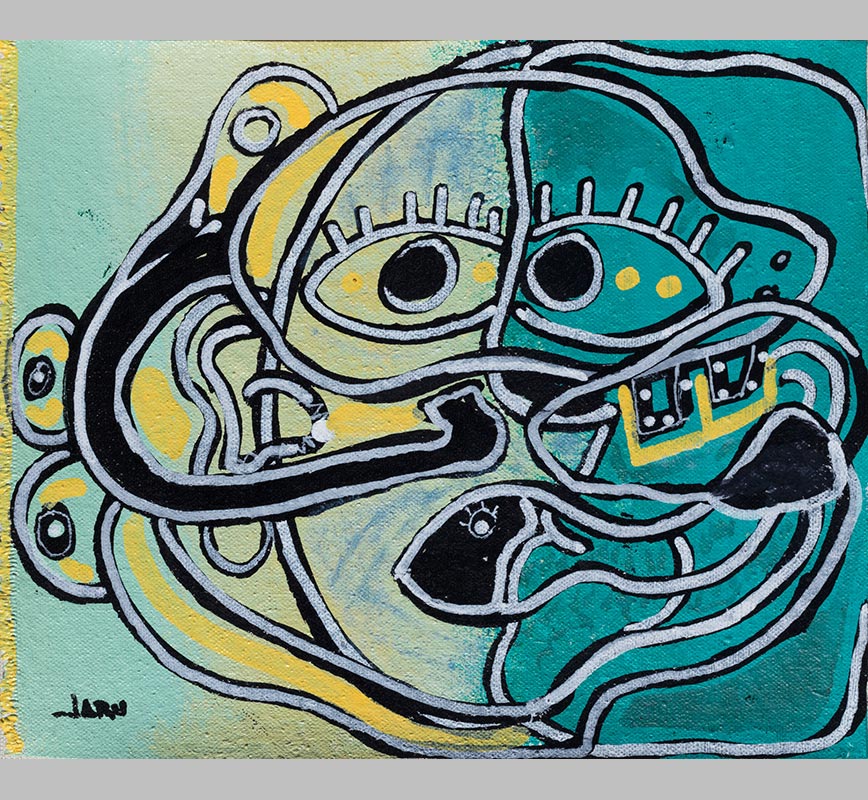
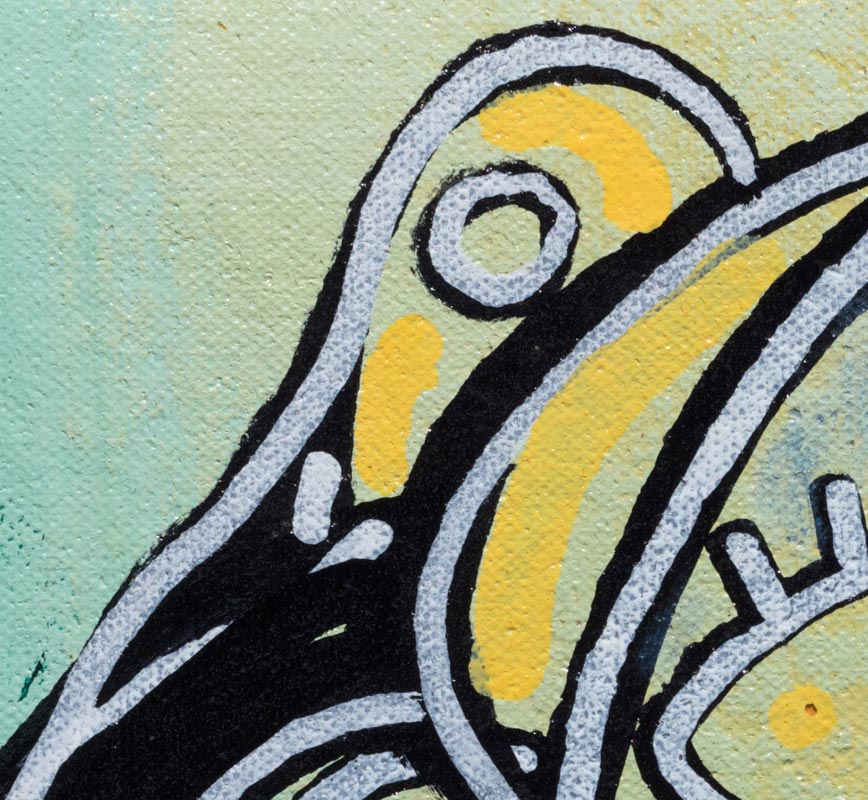
Germ Meets the Twins stages a multi-figure encounter in the high-contrast black and white of Jaru’s Chronicles of Bad Germ series, the composition dense with distorted forms, fragmented speech bubbles, and the barely-suppressed energy of people who know exactly what they are doing to each other. The text fragment at the center of the exchange, “Your piece is kinda like Bad Germ,” names the mechanism of the entire series in a single line: reputation as comparison, influence measured by proximity to the figure who currently holds it.
Germ Meets the Twins stages a multi-figure encounter in the high-contrast black and white of Jaru’s Chronicles of Bad Germ series, the composition dense with distorted forms, fragmented speech bubbles, and the barely-suppressed energy of people who know exactly what they are doing to each other. The text fragment at the center of the exchange, “Your piece is kinda like Bad Germ,” names the mechanism of the entire series in a single line: reputation as comparison, influence measured by proximity to the figure who currently holds it.
The exaggerated proportions and almost caricatured forms of Germ Meets the Twins use visual humor not to deflect seriousness but to intensify it: the distortion is not incidental but diagnostic, the visual equivalent of the way social performance distorts the people who engage in it. Philip Guston’s late-period paintings established this logic in paintings where cartoonish and deliberately crude figures enacted the anxieties and absurdities of political and cultural life; Jaru applies it to a more specific arena, the New York art world’s cycles of comparison and displacement.
The twins of the title introduce a specific wrinkle into the Bad Germ mythology. Twins are the same thing twice: in a world governed by imitation and comparison, encountering something literally duplicated exposes the arbitrariness of any hierarchy that makes one version more valuable than another. The word “kinda” in the central speech bubble does much of the work: not quite an accusation, not quite a compliment, exactly the statement that keeps the power dynamic unresolved.