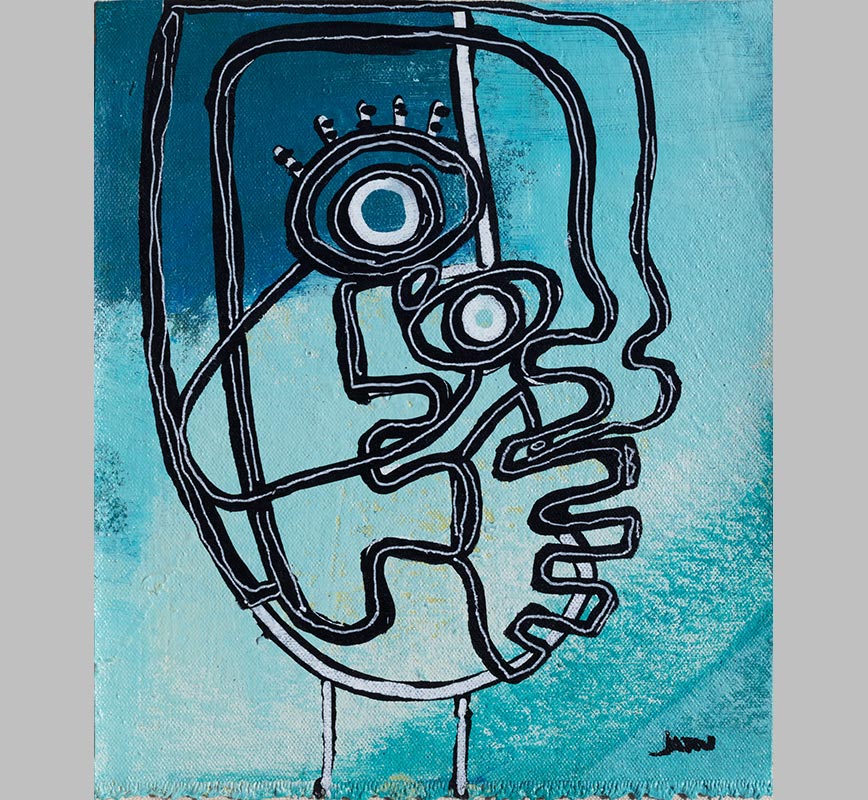
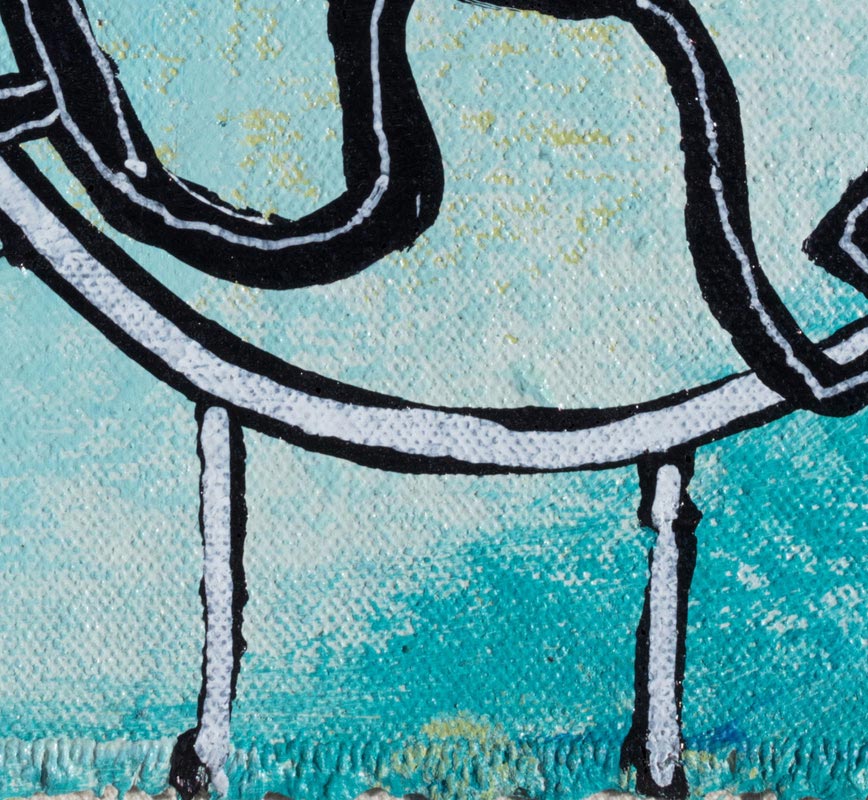
Gilly Gator and Chuck centers on a toothy, gaping mouth that dominates the upper composition, acting simultaneously as portal and threat: the primary instrument of consumption and speech in a painting entirely preoccupied with what is said, what is swallowed, and what the difference between those two things might be. Below and around this mouth, two animal-like figures identified by their names in the composition’s fragmented text negotiate an exchange whose terms are never quite stable: “Do you double-talk?” one asks, and the question hangs unanswered over the scene.
Gilly Gator and Chuck centers on a toothy, gaping mouth that dominates the upper composition, acting simultaneously as portal and threat: the primary instrument of consumption and speech in a painting entirely preoccupied with what is said, what is swallowed, and what the difference between those two things might be. Below and around this mouth, two animal-like figures identified by their names in the composition’s fragmented text negotiate an exchange whose terms are never quite stable: “Do you double-talk?” one asks, and the question hangs unanswered over the scene.
Jaru deploys the speech bubble in a world entirely his own: characters, phrases, and situations recur across the Chronicles of Bad Germ, forming a mythology where the rules of engagement are always in flux and no exchange can be taken at face value. The device has a specific genealogy, from medieval scrolls through Robert Crumb’s underground comix, where it stages dialogue in which what is said matters less than the power structure implied by who speaks and who must listen; Jaru inherits this function and applies it to a scene he has observed from the inside.
Gilly Gator and Chuck captures the moment of testing: two parties in an unequal relationship probing the limits of what the other will accept. “Do you double-talk?” hangs unanswered over the scene. The negotiation the composition stages, between the large mouth and the smaller figures, is the essential transaction of the art world the series critiques: strength performed by parties who both know the outcome is provisional.