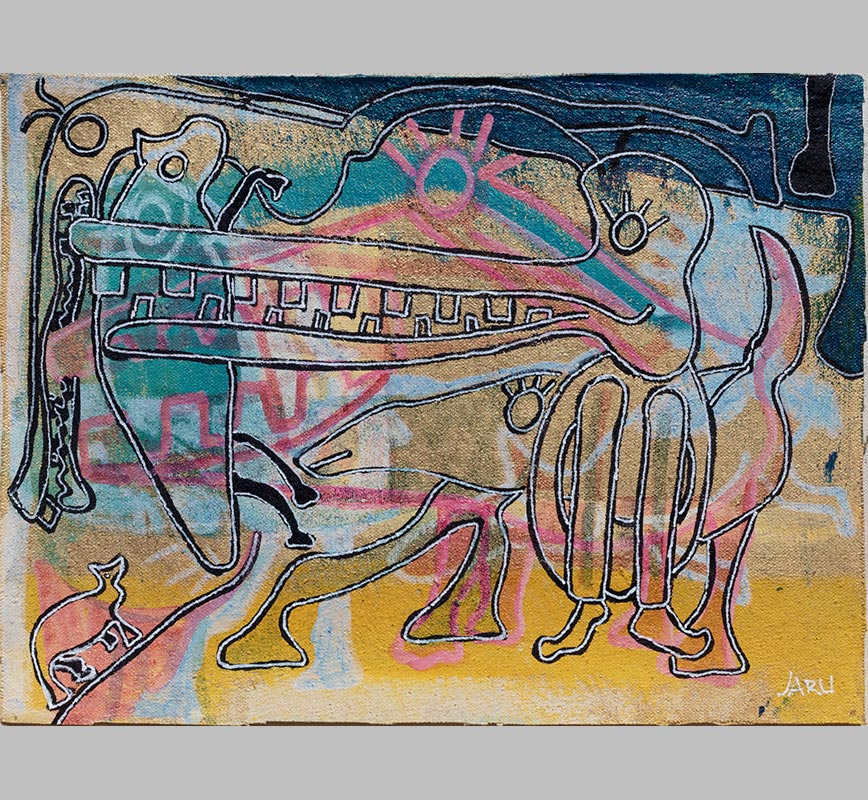
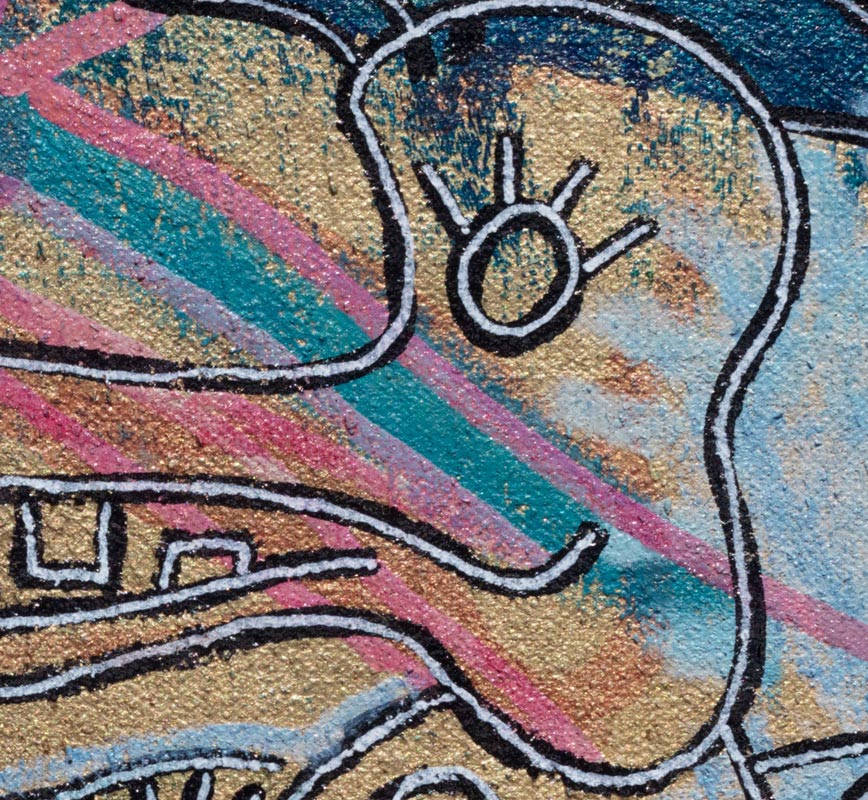
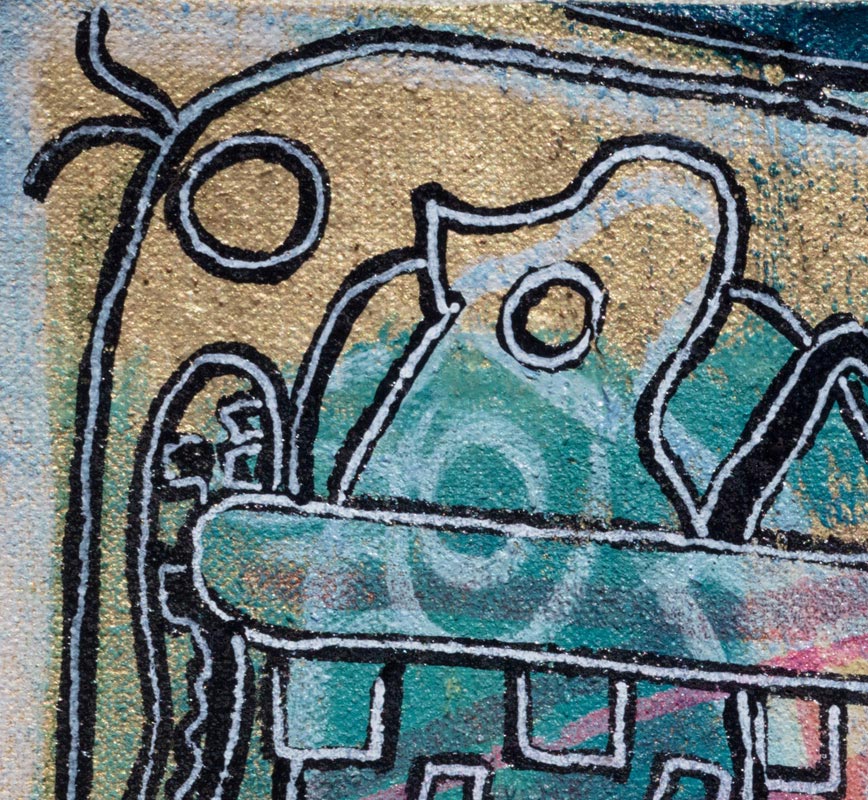
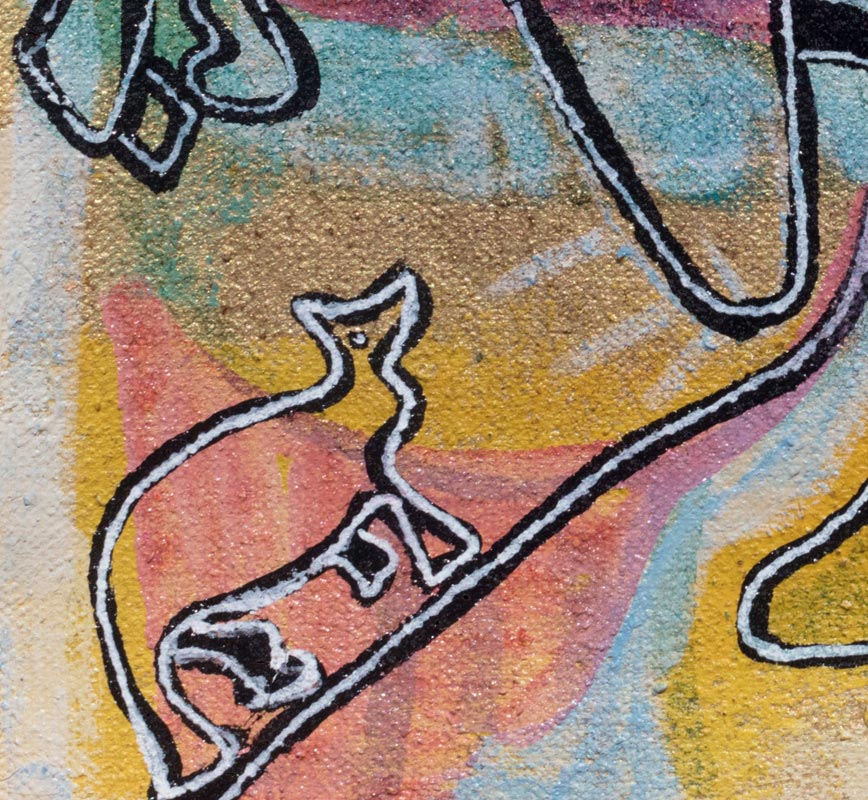
Germ Buys a Dragon presents a transaction: a grotesque wide-mouthed beast with exaggerated teeth, apparently being acquired by the Bad Germ figure in a negotiation that is chaotic and of uncertain outcome. The black-and-white linework carries the urgency of underground comics and political cartoons, the contorted figures pressing against each other in a composition that reproduces the physical sensation of a deal being made in a room where the advantage can shift at any moment.
Germ Buys a Dragon presents a transaction: a grotesque wide-mouthed beast with exaggerated teeth, apparently being acquired by the Bad Germ figure in a negotiation that is chaotic and of uncertain outcome. The black-and-white linework carries the urgency of underground comics and political cartoons, the contorted figures pressing against each other in a composition that reproduces the physical sensation of a deal being made in a room where the advantage can shift at any moment.
The dragon carries a long symbolic history: in Western traditions the beast to be slain, in Eastern traditions the force to be aligned with. Jaru’s dragon is neither: it is a commodity, something to be purchased and wielded, which is the satirical precision of the title. “Germ buys a dragon” describes exactly how the world the Chronicles of Bad Germ critiques understands power: not earned or embodied but acquired through the right transaction, portable, transferable, always at risk of being bought by someone else.
Jaru constructs his own visual mythology from scratch rather than appropriating existing comics, which means the critique is not of the comics form but through it, a distinction Roy Lichtenstein’s practice makes visible by contrast: where Lichtenstein decontextualized mass media to comment on consumer culture, Jaru invents his own symbolic language to critique a world he has observed from the inside. The text fragments scattered across the composition, “This is the tooth reality” and “Where’s bad germ on top?”, are not captions but participants, adding layers of irony that the visual language alone cannot fully carry.