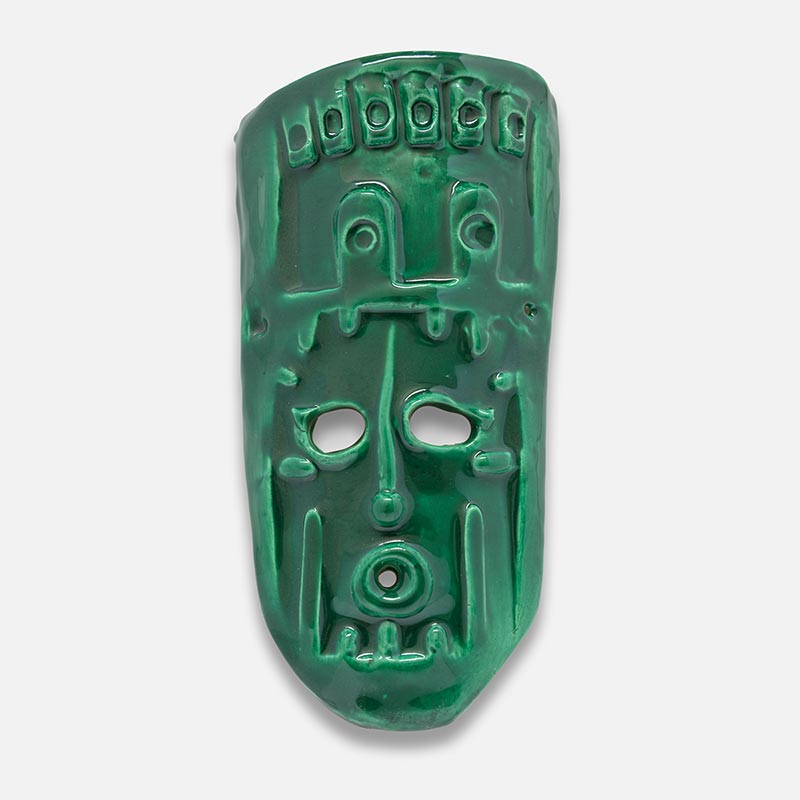
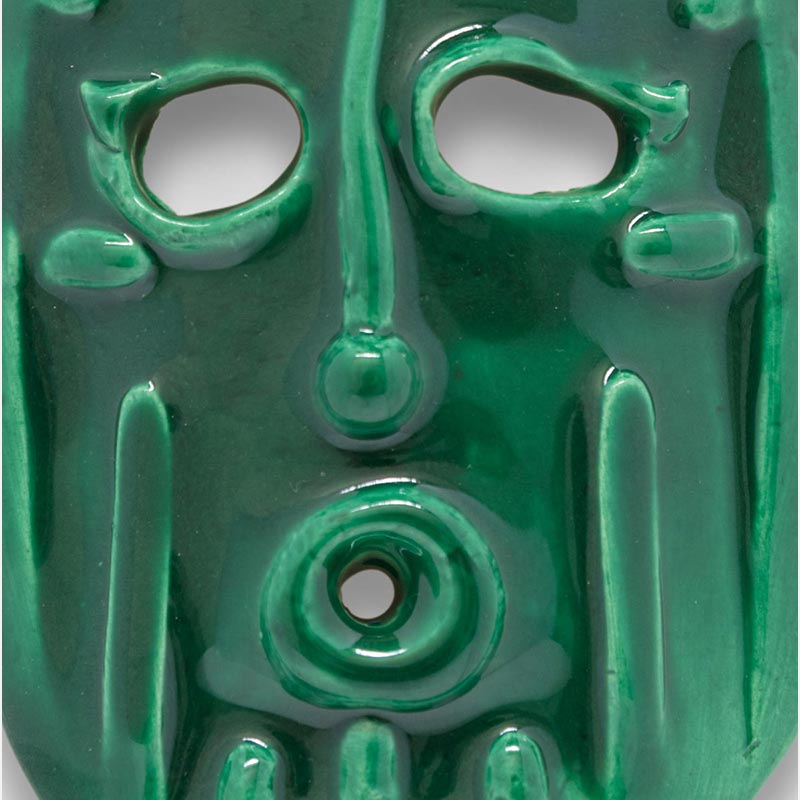
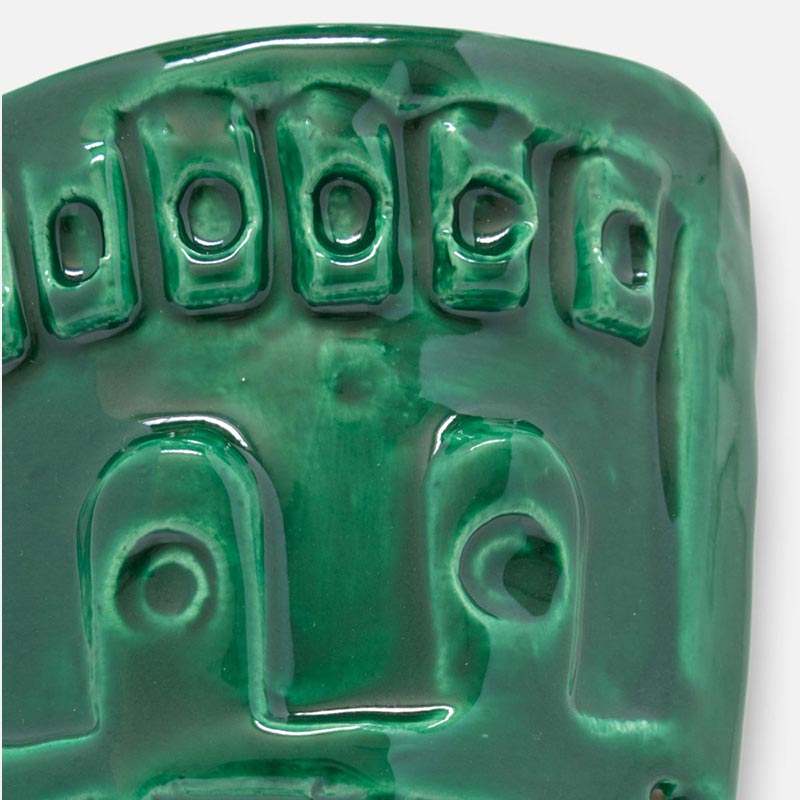
Maschera Zufolo II [Whistle Mask II] arrives as diagram. The elongated shield-shaped field carries its face in pure geometric signs: two round eye apertures ringed by concentric incisions, a minimal nose ridge, a round mouth opening, and across the top a row of rectangular apertures like battlements on a keep. Nothing organic, no flow, no material energy pushing through the surface. The green glaze is even and contained. The face declares itself through reduction, each element the minimum mark to hold a presence.
Maschera Zufolo II [Whistle Mask II] arrives as diagram. The elongated shield-shaped field carries its face in pure geometric signs: two round eye apertures ringed by concentric incisions, a minimal nose ridge, a round mouth opening, and across the top a row of rectangular apertures like battlements on a keep. Nothing organic, no flow, no material energy pushing through the surface. The green glaze is even and contained. The face declares itself through reduction, each element the minimum mark to hold a presence.
Part of the Masks series, the work carries the face to its most architectural extreme. The title Zufolo names a simple flute: the round apertures read simultaneously as eyes, mouth, and openings through which sound passes, the face an instrument as much as an emblem. This double function, sonic and visual, connects the work to the Commedia dell’Arte mask tradition, the ceramic face an acoustic object shaped to project voice as much as image.
The shield form and the battlement crown give the work a heraldic address: the face encoded as a device rather than described as anatomy, presence held in the geometry of marks rather than in likeness. The face built from the minimum vocabulary of circles, ridges, and slots operates within the same votive logic that runs through Crisafi’s practice: the mask as a sign of presence rather than a record of it, legible without being individual, the minimum sufficient to hold what the performance was.