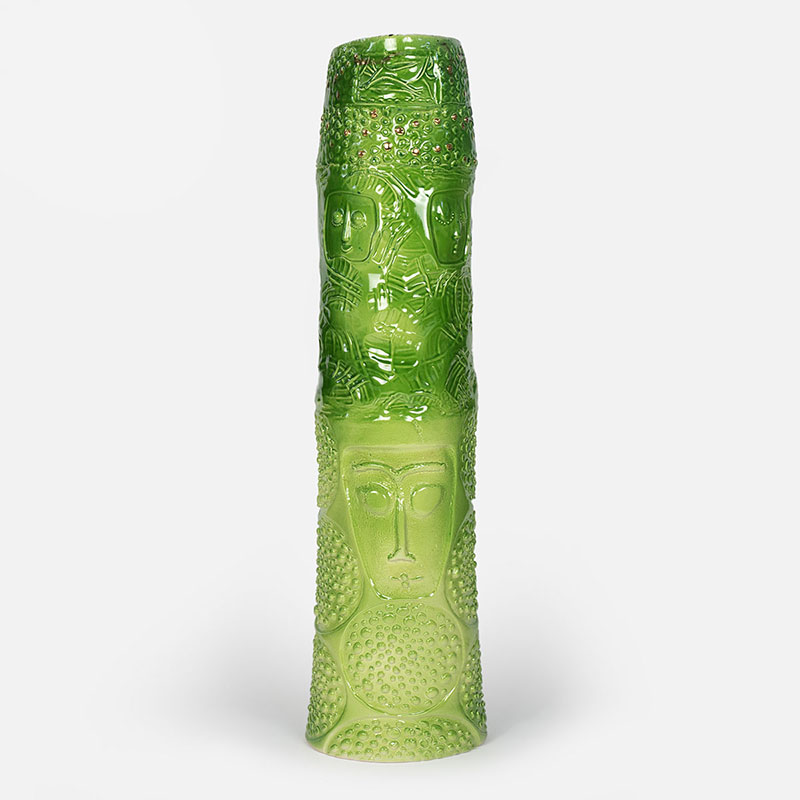
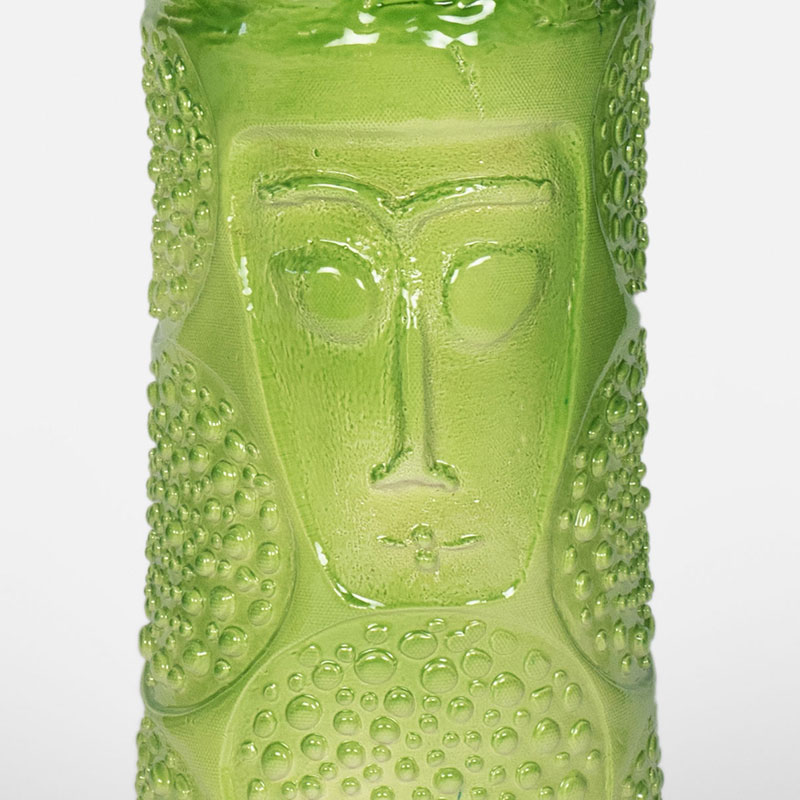
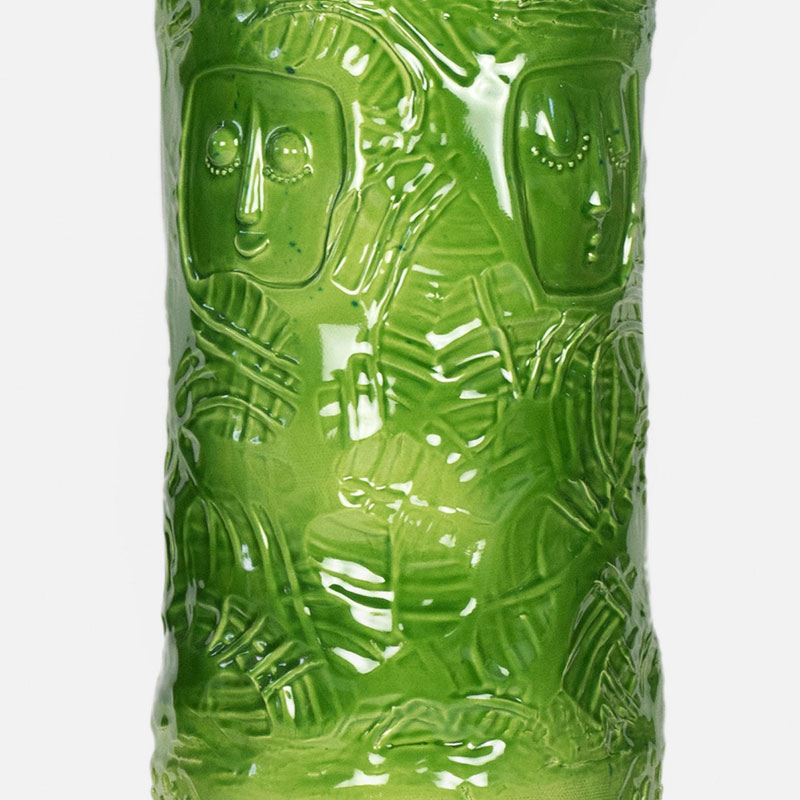
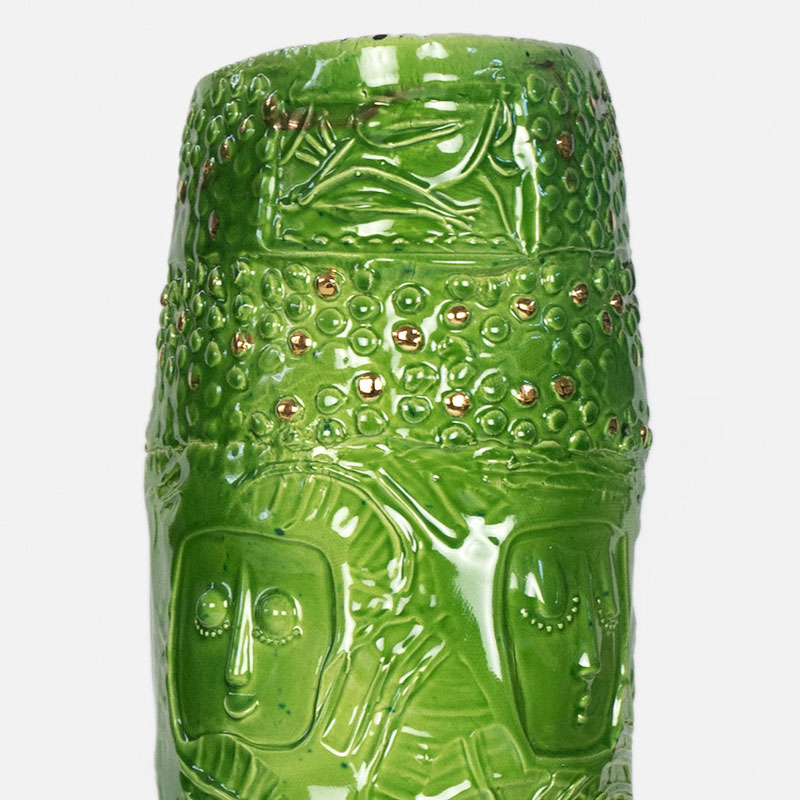
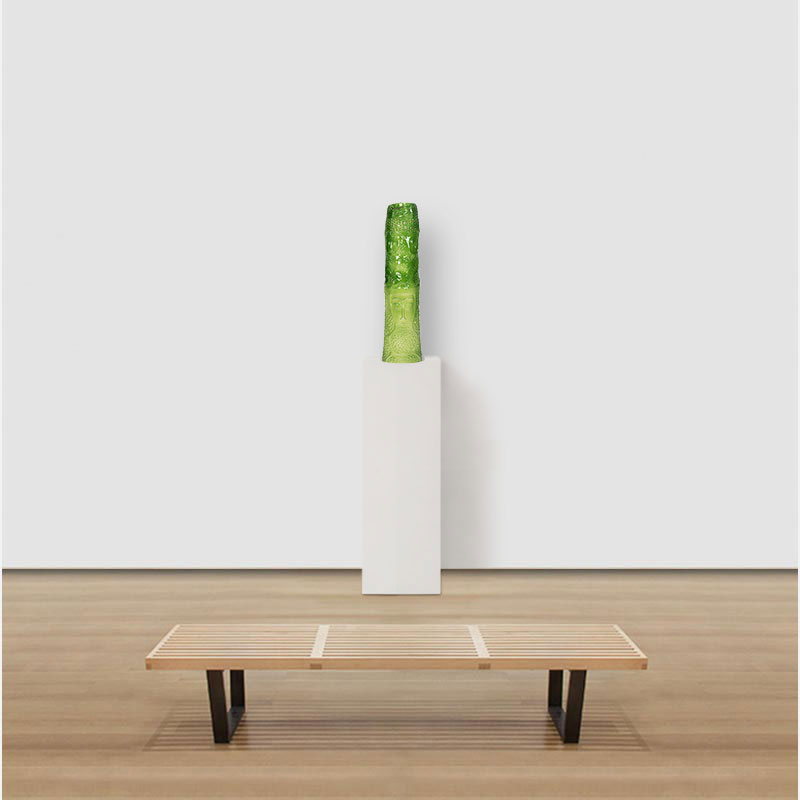
Apparizione Verdeoro I [Greengold Apparition I] accumulates. Multiple faces, stacked and partially dissolved into the body of the ceramic column, emerge through shallow relief and rhythmic surface patterning rather than through clear articulation: each face is present but absorbed, distributed across the form rather than individuated. The luminous green glaze, punctuated by subtle gold accents, activates the surface while maintaining structural unity and frontal authority. The effect is of a form that contains many presences, each surfacing briefly before receding into the material.
Apparizione Verdeoro I [Greengold Apparition I] accumulates. Multiple faces, stacked and partially dissolved into the body of the ceramic column, emerge through shallow relief and rhythmic surface patterning rather than through clear articulation: each face is present but absorbed, distributed across the form rather than individuated. The luminous green glaze, punctuated by subtle gold accents, activates the surface while maintaining structural unity and frontal authority. The effect is of a form that contains many presences, each surfacing briefly before receding into the material.
Part of the Apparizioni [Apparitions] series, the work draws on clay’s long history as a ritual medium across cultures. The serial faces recall ancient totemic and votive traditions, from Mesoamerican figural ceramics to African sculptural practices, in which the human figure operates as a condensed sign rather than an individual portrait, repetition functioning not as redundancy but as intensification. Wifredo Lam’s ceramic work engages a related logic: the vessel surface as a field of accumulated symbolic marks, presence distributed rather than concentrated, no single sign claiming priority over the whole. Crisafi works within this formal understanding, the serial faces operating as a contemporary inflection of that same principle.
The figure appears revealed rather than assembled, its identity distributed across surface and material presence. This is emergence understood as a spatial and temporal process: the form does not declare itself at a single point but unfolds across the surface, rewarding sustained attention that allows each repeated element to register individually before yielding to the whole. Crisafi presents the body as a site where memory, symbol, and material discipline converge, grounded in historical continuity without being bound by it.