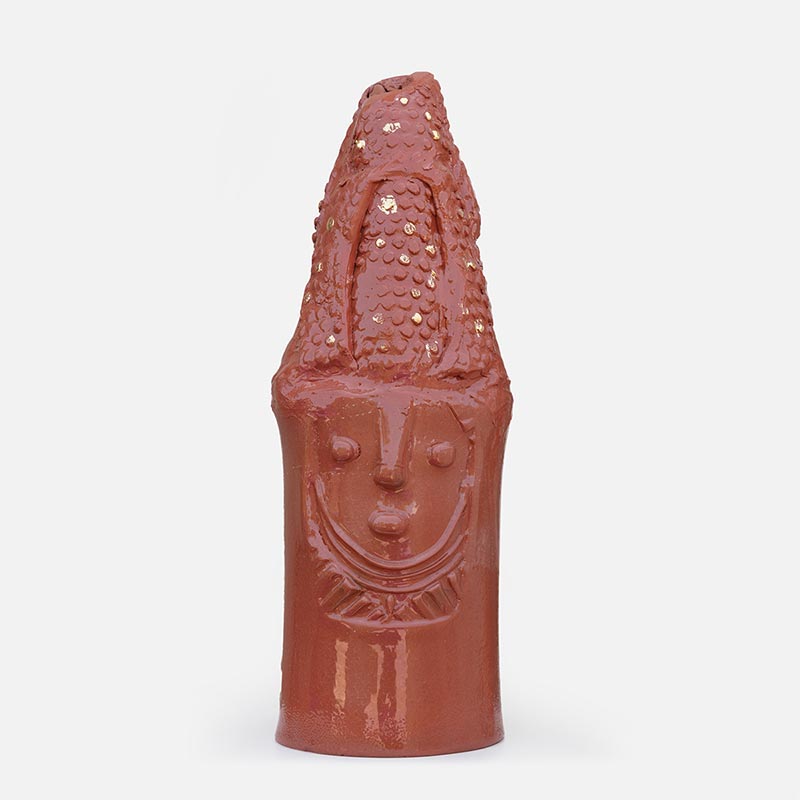
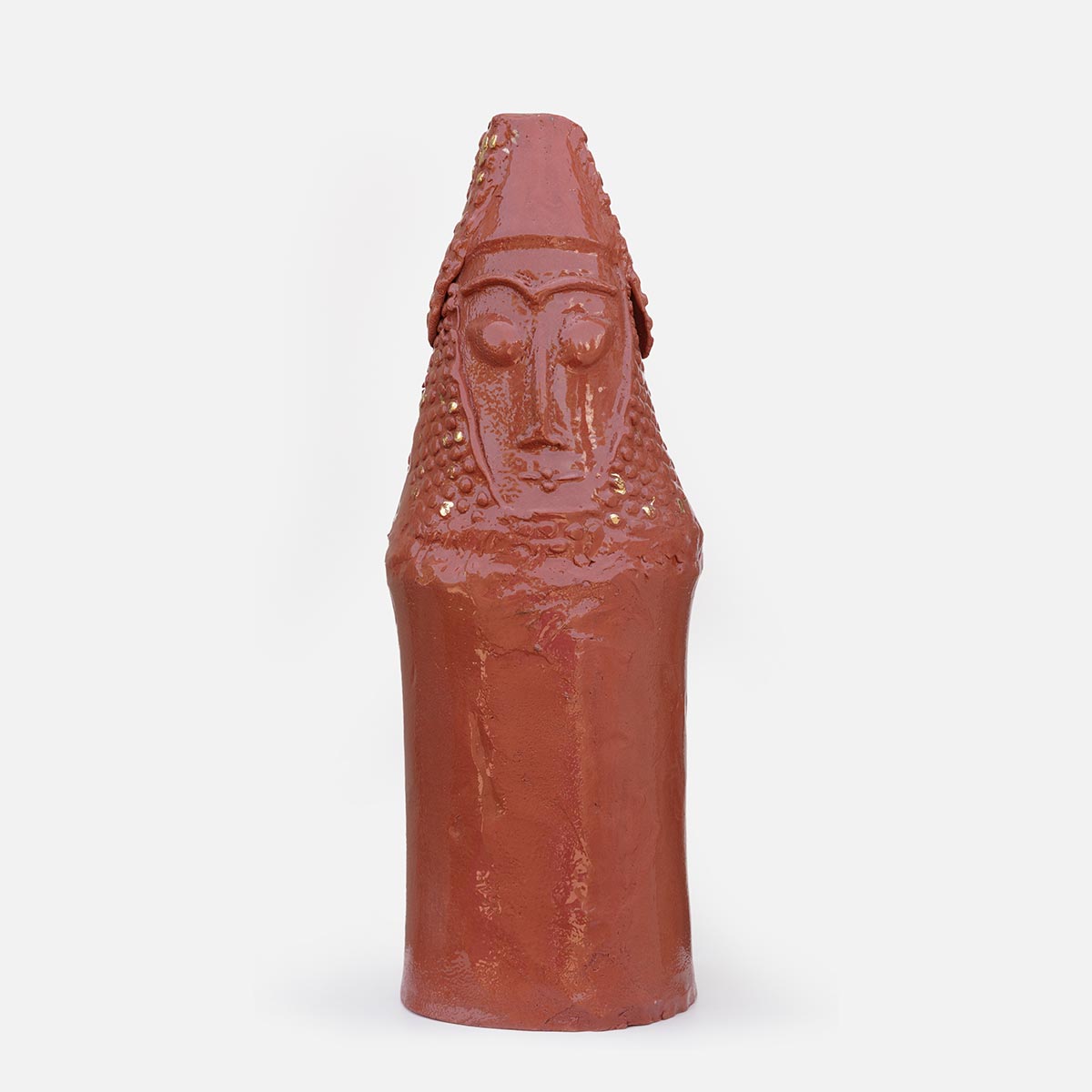
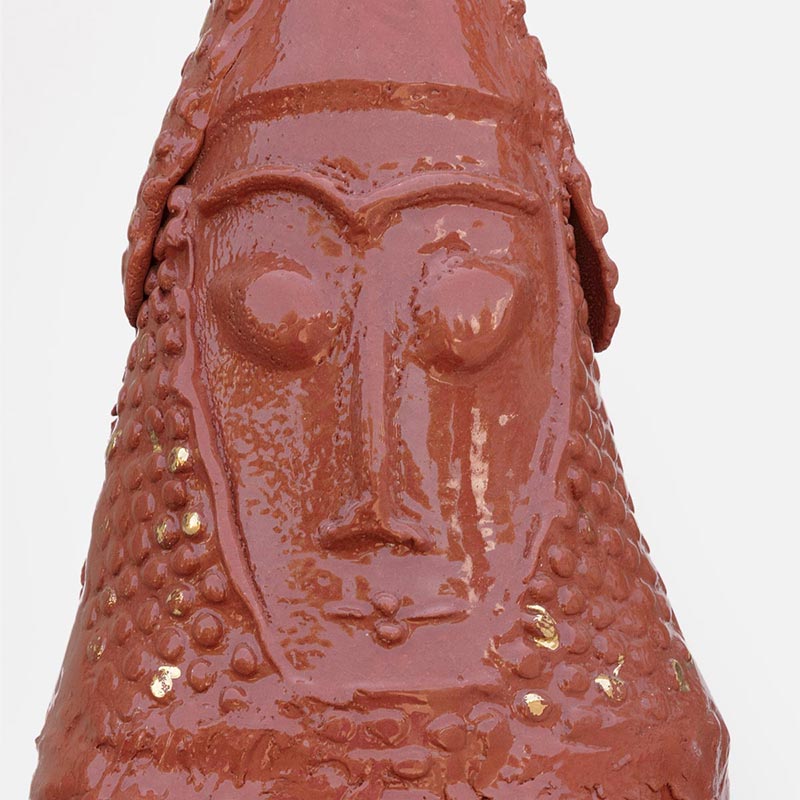
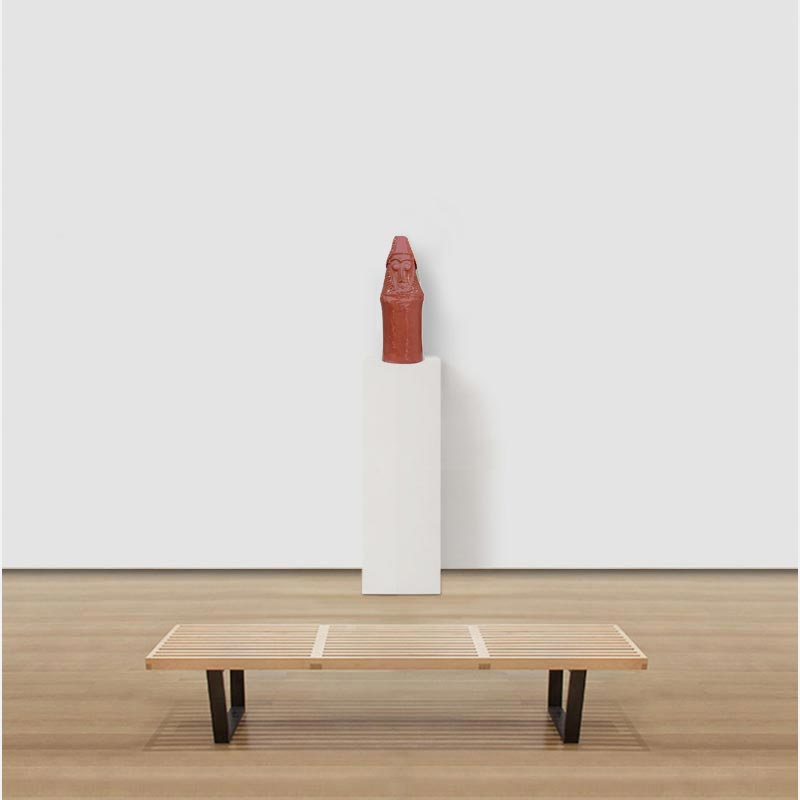
Abitante in Terra II [Earth Dweller II] announces itself through medium before form. The warm terracotta glaze, close in tone to the clay body it coats, gives the figure a chromatic unity that feels less like finish than condition: this is not a figure covered in color but a figure that is its color, pink-orange and earth-born, crowned by a nodular scaled head scattered with gold. It arrives from somewhere deep in the ground and looks as if it always belonged there.
Abitante in Terra II [Earth Dweller II] announces itself through medium before form. The warm terracotta glaze, close in tone to the clay body it coats, gives the figure a chromatic unity that feels less like finish than condition: this is not a figure covered in color but a figure that is its color, pink-orange and earth-born, crowned by a nodular scaled head scattered with gold. It arrives from somewhere deep in the ground and looks as if it always belonged there.
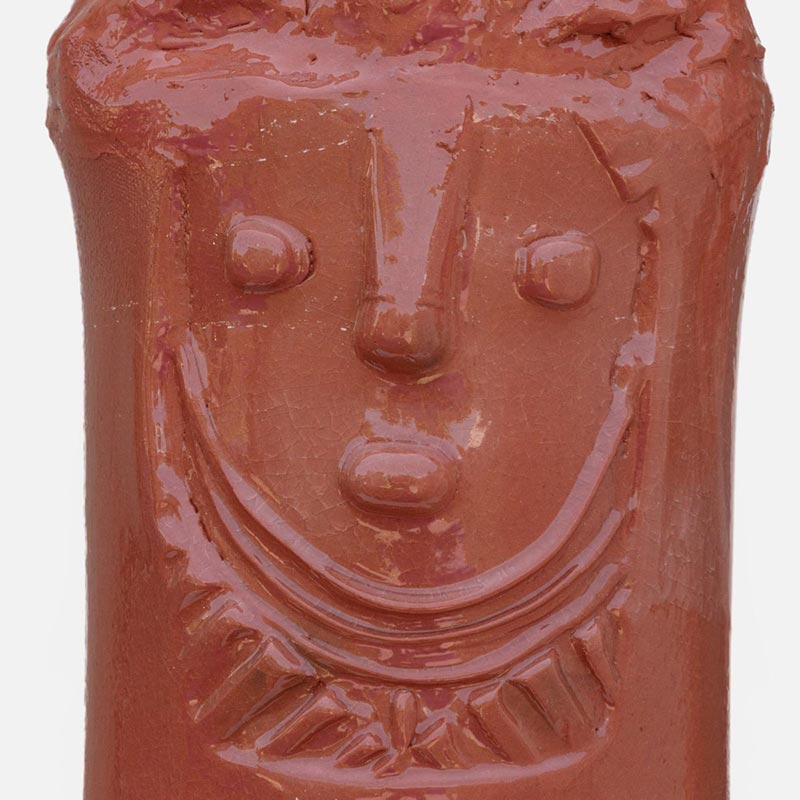
Part of the Personaggi [Characters] series, the work shifts the series’ core logic into an archaic register. In the Umbro-Etruscan contact zone extending from the Chiusine cultural radius to the Todi area, cinerary urns bore schematized faces on their lids, the vessel becoming human through minimal marks of personhood. The nodular crown, the round-bossed eyes, the crescent mouth perform the same operation: identity condensed into essential signs, the figure as container for what persists.
The gold scattered across the nodular crown marks the threshold between elemental and charged: the most precious material on the most ancient, fire on earth, the sign of what outlasts the body carried by the figure made of it. This is the figure as container, the earth dweller holding within its scaled crown what survives the ground, operating in the register that Giuseppe Penone has worked throughout his practice: the body persisting within its material ground rather than rising above it, matter and presence inseparable.