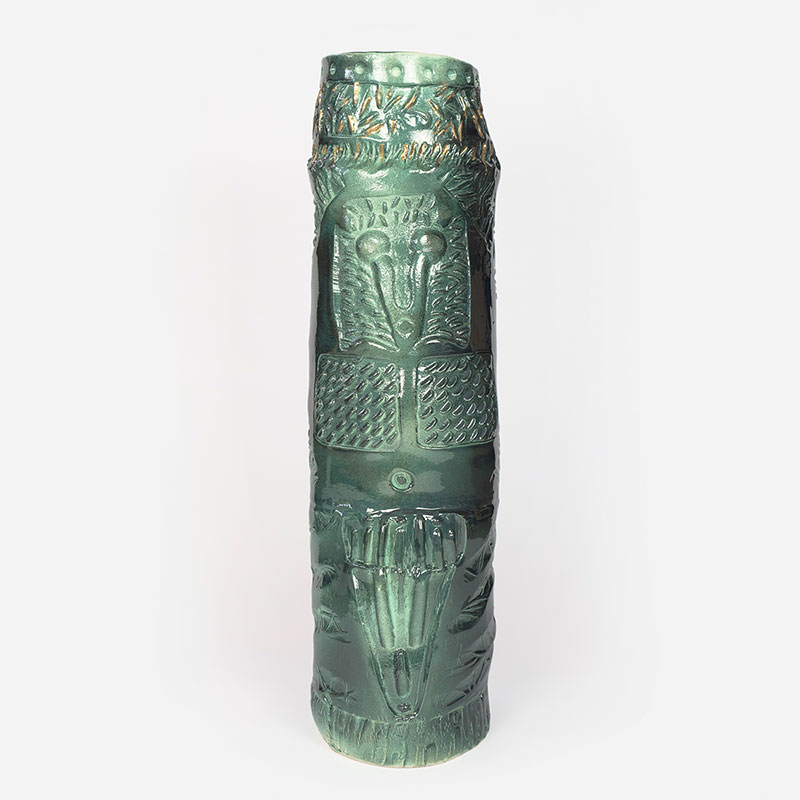
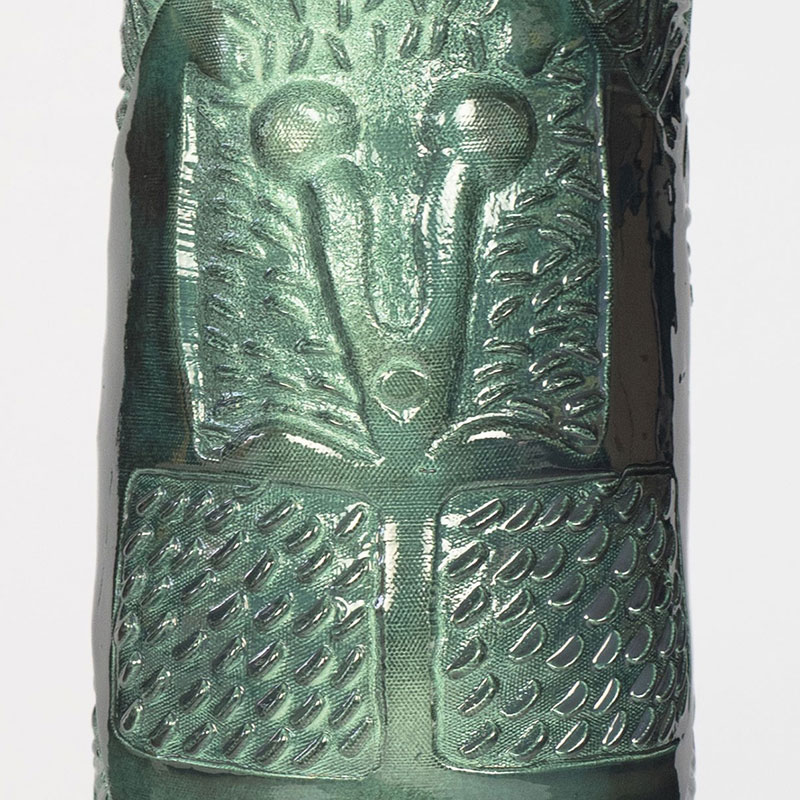
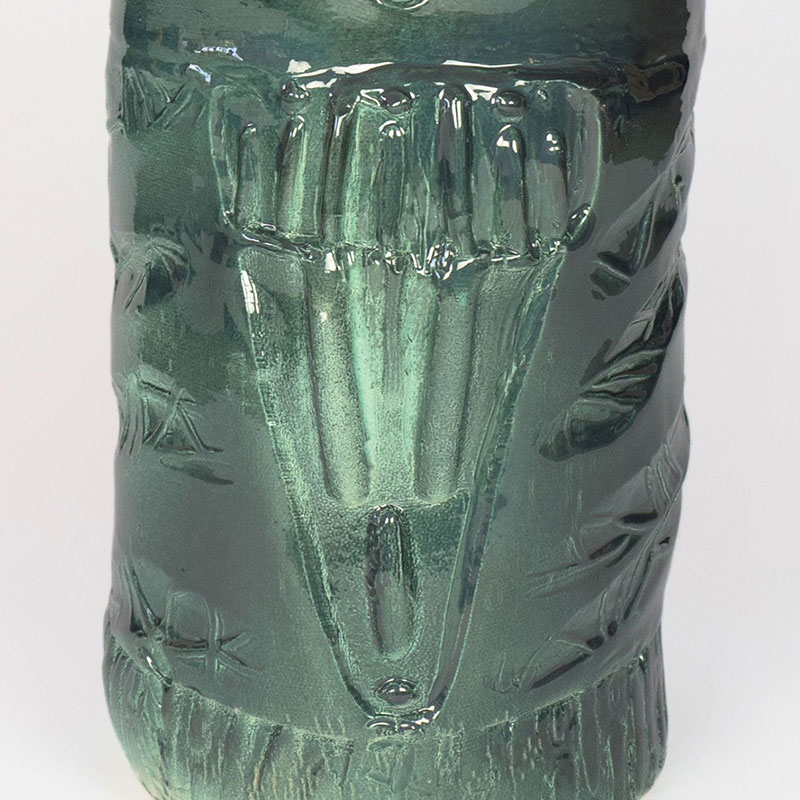
Apparizione IV [Apparition IV] is built on continuity. Where the Legami [Bonds] series assembles its figures from discrete units held in relation, this work from the Apparizioni [Apparitions] series presents an unbroken columnar body in which a facial mask is centrally placed without interrupting the surrounding mass. The green glaze, modulated by tonal variation and subtle luster, reinforces the sculpture’s frontal authority and emphasizes material density over gesture: the face is here, but it is part of the column, not a feature imposed upon it.
Apparizione IV [Apparition IV] is built on continuity. Where the Legami [Bonds] series assembles its figures from discrete units held in relation, this work from the Apparizioni [Apparitions] series presents an unbroken columnar body in which a facial mask is centrally placed without interrupting the surrounding mass. The green glaze, modulated by tonal variation and subtle luster, reinforces the sculpture’s frontal authority and emphasizes material density over gesture: the face is here, but it is part of the column, not a feature imposed upon it.
The work draws from the Umbrian ceramic tradition’s engagement with the body as symbolic structure rather than descriptive likeness. Ancient votive and funerary figures from Etruscan culture operated through a similar economy: the human presence condensed into a sign, frontal stillness and compressed anatomy placing identity at the level of emblem rather than portrait. Mirko Basaldella, who drew on comparable archaic sources in his vertical ceramic figures of the postwar decades, understood the face embedded within a continuous form as a device for making presence structural rather than expressive, identity located in the object’s weight and orientation rather than in the particularity of features.
Within the Apparizioni [Apparitions] series, Apparizione IV proposes presence as a condition of material emergence. The figure does not narrate or perform; it asserts itself through weight, surface, and frontal orientation. Crisafi allows the form to remain self-contained, offering a sculpture that functions as an object of encounter rather than representation, anchored in archetype, material memory, and structural restraint.