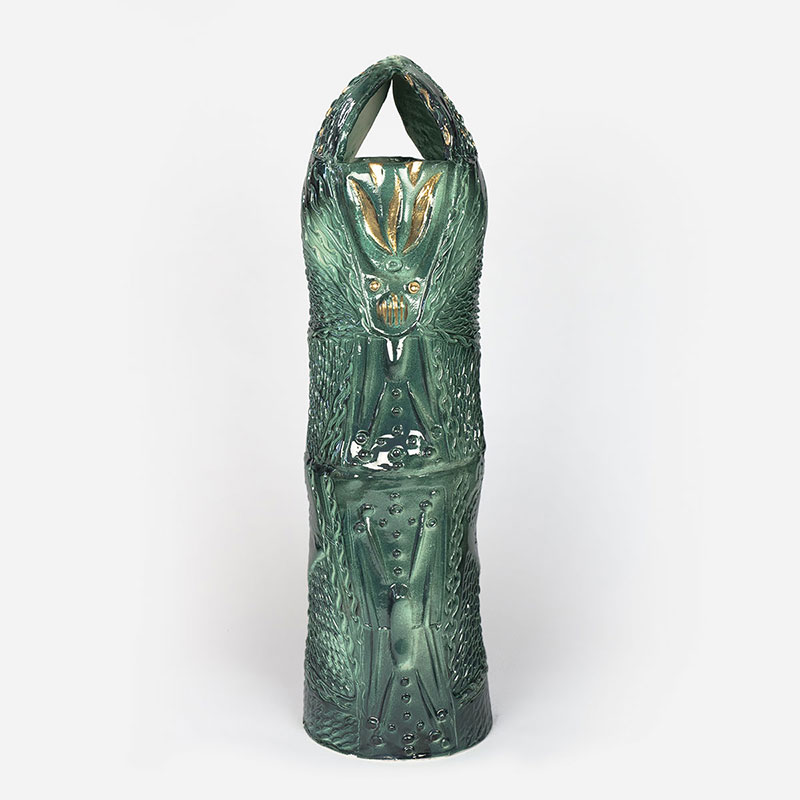
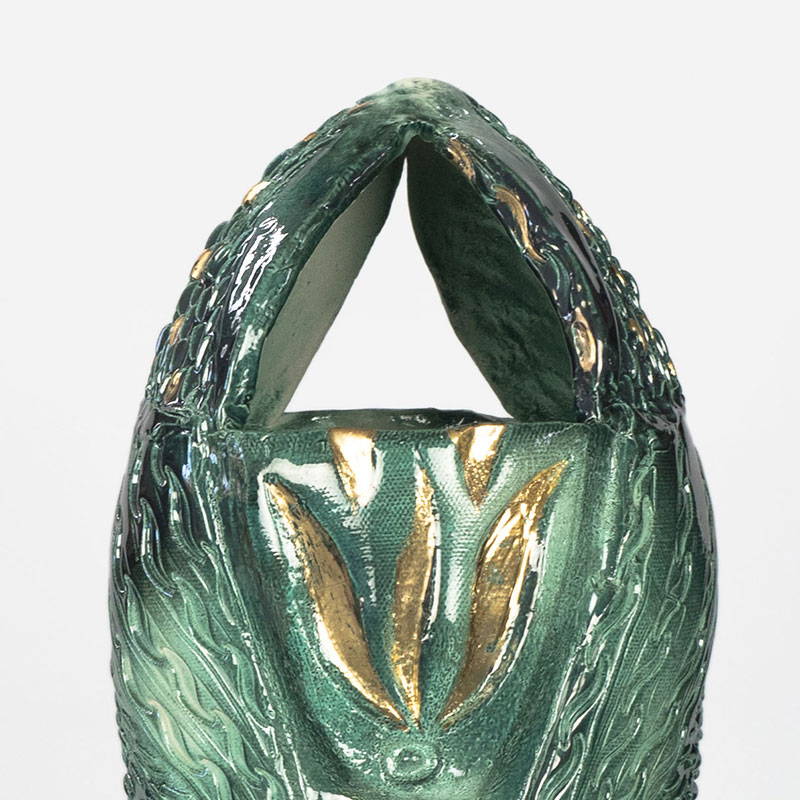
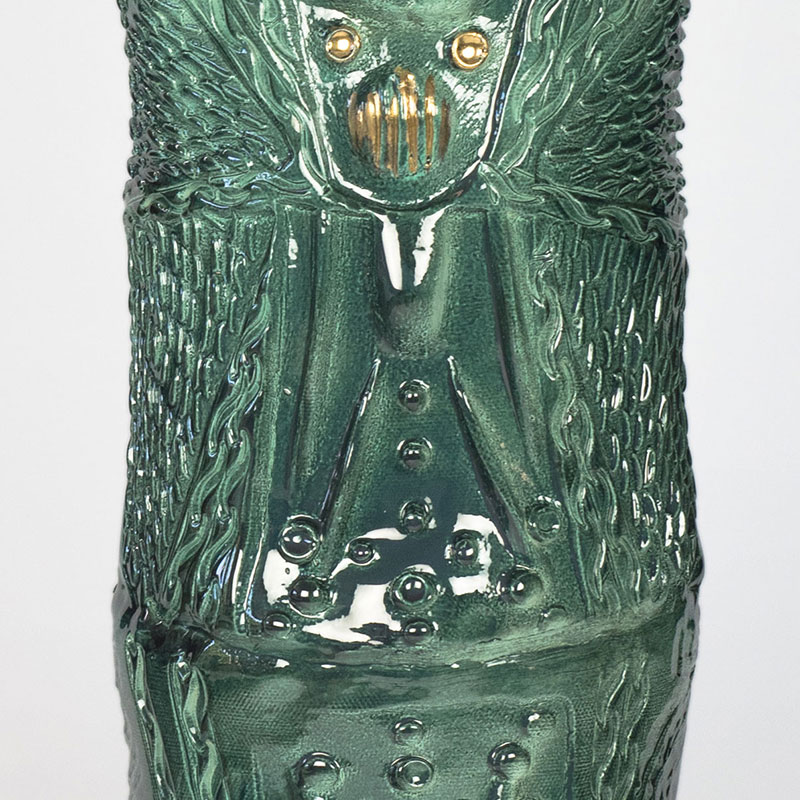
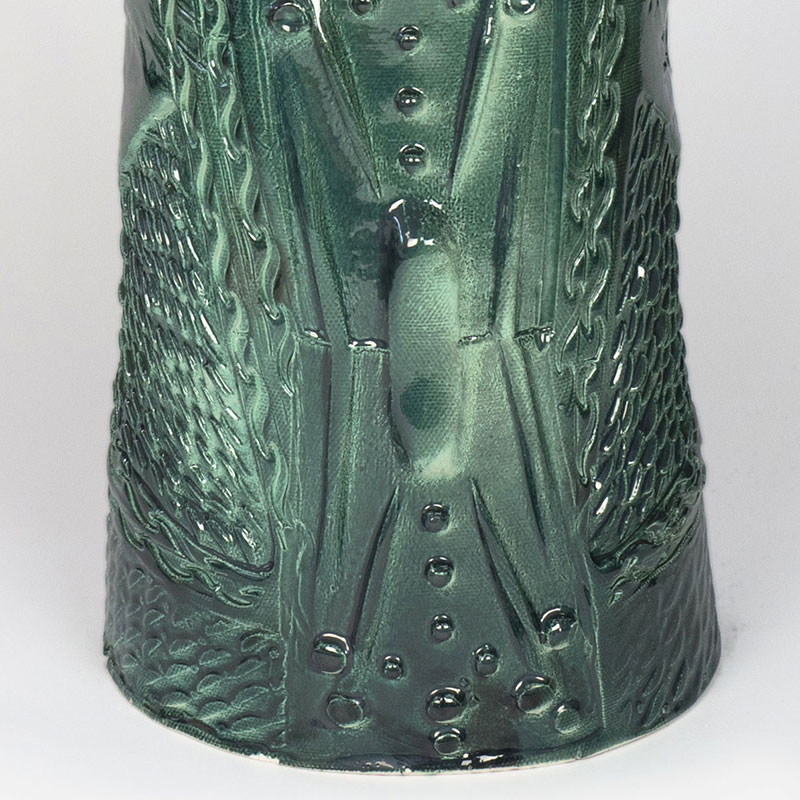
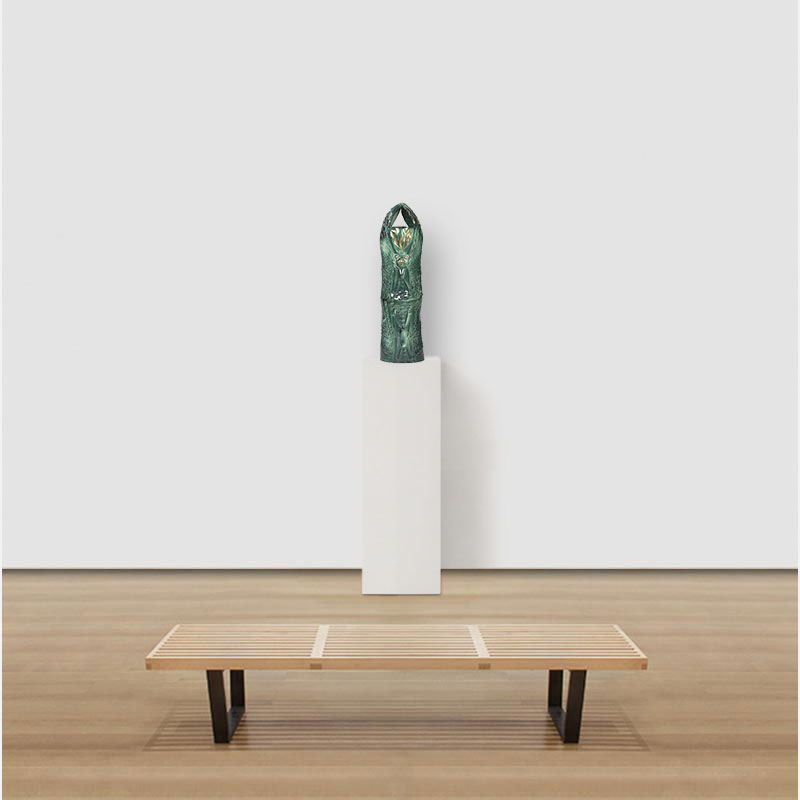
Apparizione II [Apparition II] rises as a single continuous volume from which a figure gradually emerges. The columnar ceramic body is animated by incised textures, punctuated reliefs, and a concentrated facial presence that surfaces from within the mass rather than being applied to it: the face is there, insistent, but embedded, held within the form rather than placed upon it. A green glaze enriched with subtle luster accents gives the sculpture a ritual gravity, positioning it between object, emblem, and archetypal body.
Apparizione II [Apparition II] rises as a single continuous volume from which a figure gradually emerges. The columnar ceramic body is animated by incised textures, punctuated reliefs, and a concentrated facial presence that surfaces from within the mass rather than being applied to it: the face is there, insistent, but embedded, held within the form rather than placed upon it. A green glaze enriched with subtle luster accents gives the sculpture a ritual gravity, positioning it between object, emblem, and archetypal body.
Part of the Apparizioni [Apparitions] series, the work roots itself in the Umbrian ceramic tradition, where clay has long functioned as a symbolic medium rather than a descriptive one. The frontal authority and hieratic stillness recall ancient votive figures in which the body operates as a sign rather than a likeness. Alongside this archaic inheritance, the work resonates with postwar sculptural explorations of the figure reduced to essential presence: Leoncillo Leonardi’s ceramic figures, in which form is condensed through surface tension and chromatic density, and the CoBrA artists’ urgent, matter-based figuration, in which the human image is stripped to its most insistent essentials and held by material force rather than precise modeling.
Apparizione II explores presence as revelation. The figure does not assert itself through gesture or expression but through density, surface, and frontal address: a body that seems to have surfaced briefly into visibility, carrying material memory, ritual weight, and a quiet, self-contained authority. Crisafi resists storytelling and psychological characterization, allowing the form to operate as a visual apparition, something glimpsed in matter rather than made of it.