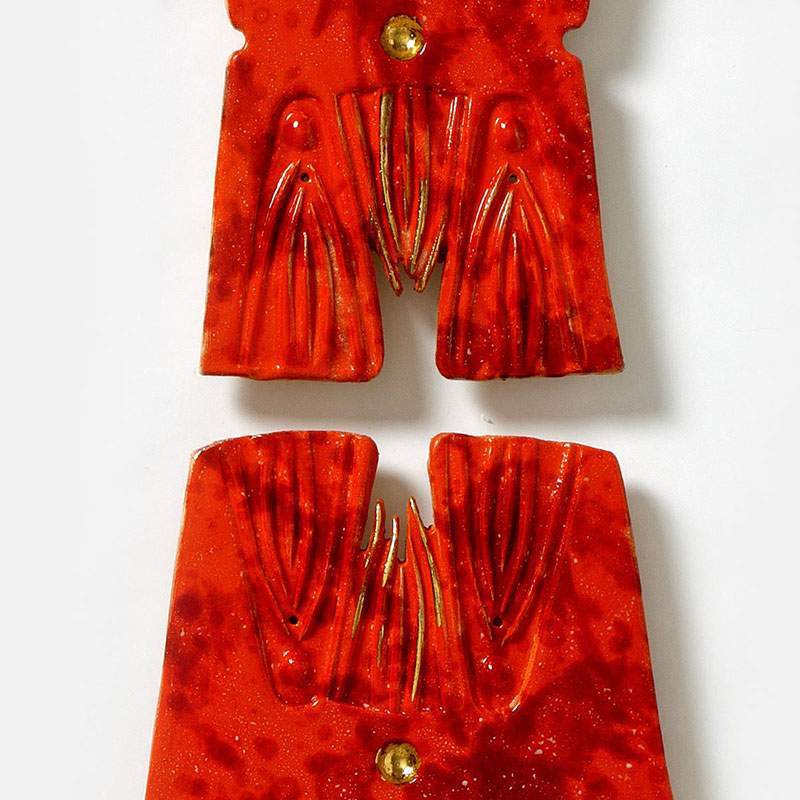
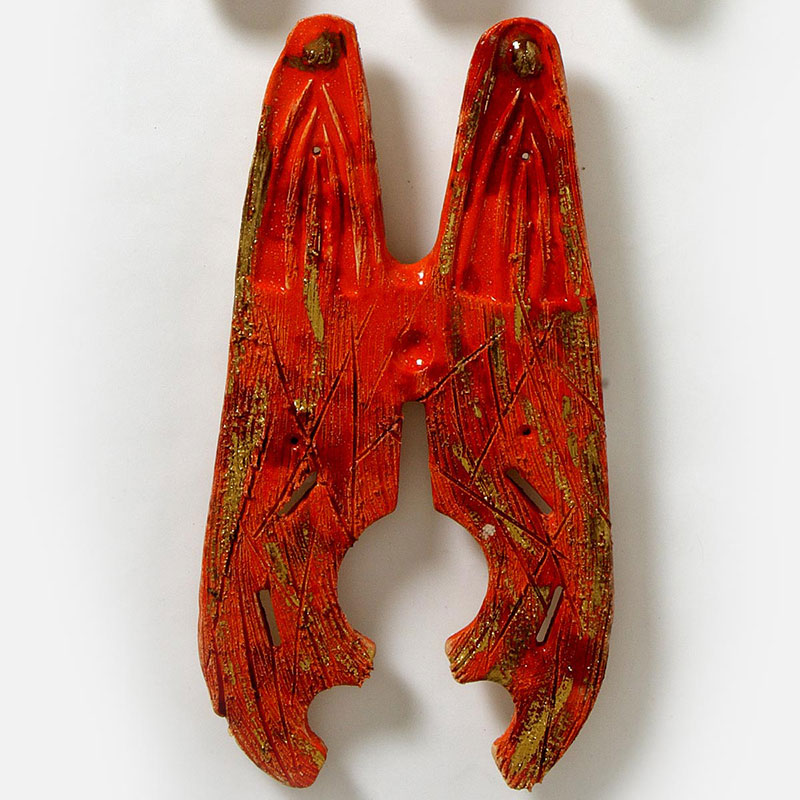
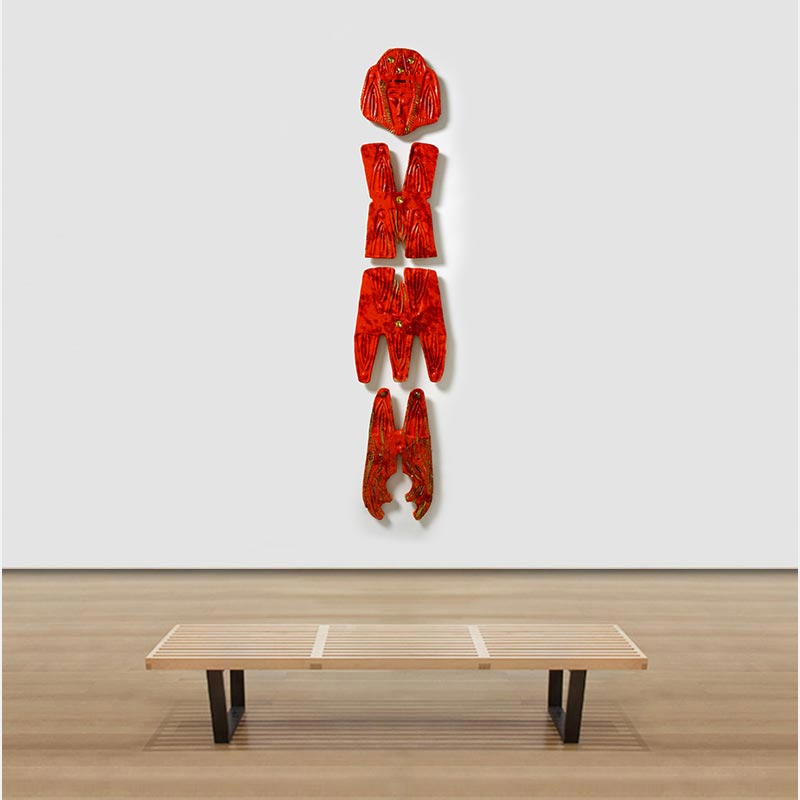
Legami VII [Bonds VII] is a red sculpture. Not red as finish, but red as pressure: the glaze saturates the four ceramic elements so completely that color becomes the figure’s primary structural event. Features emerge through incision and shallow relief rather than modeled volume, producing a presence that reads less as anatomy than as an image driven into matter, confrontational and compressed. The frontal stance holds its ground without offering explanation.
Legami VII [Bonds VII] is a red sculpture. Not red as finish, but red as pressure: the glaze saturates the four ceramic elements so completely that color becomes the figure’s primary structural event. Features emerge through incision and shallow relief rather than modeled volume, producing a presence that reads less as anatomy than as an image driven into matter, confrontational and compressed. The frontal stance holds its ground without offering explanation.
The saturated glaze and charged surface situate the work within postwar Italian ceramic expression, particularly the practice of Leoncillo Leonardi, where color operates as rupture rather than ornament, a material force that transforms the surface into a site of tension rather than resolution. Alongside this, the refusal of naturalistic continuity aligns Legami VII with Arturo Martini’s pursuit of archetype over likeness: the figure reduced to a symbolic configuration that resists narrative and psychological specificity, standing as cultural sign rather than individual body.
Within the Legami [Bonds] series, this work proposes cohesion through chromatic pressure rather than articulated connection. The figure holds itself together not through visible joints but through intensity and frontal insistence: bonds here function as internal forces, ties that bind from within rather than fasteners between discrete parts. The result is a compact ritual presence that asserts itself through color, material, and form, offering a register of connection experienced as compression rather than construction.