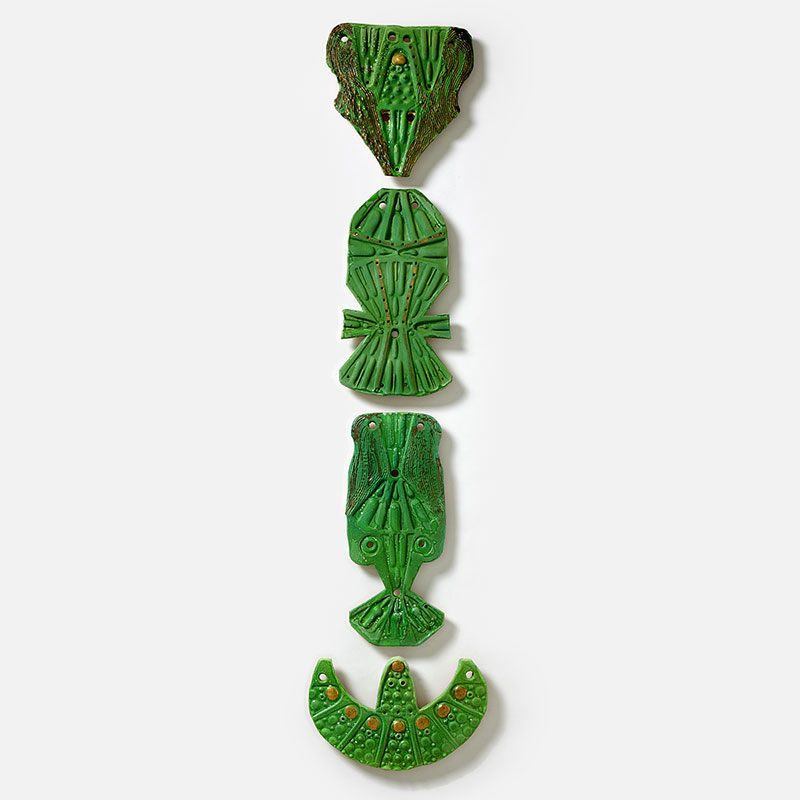
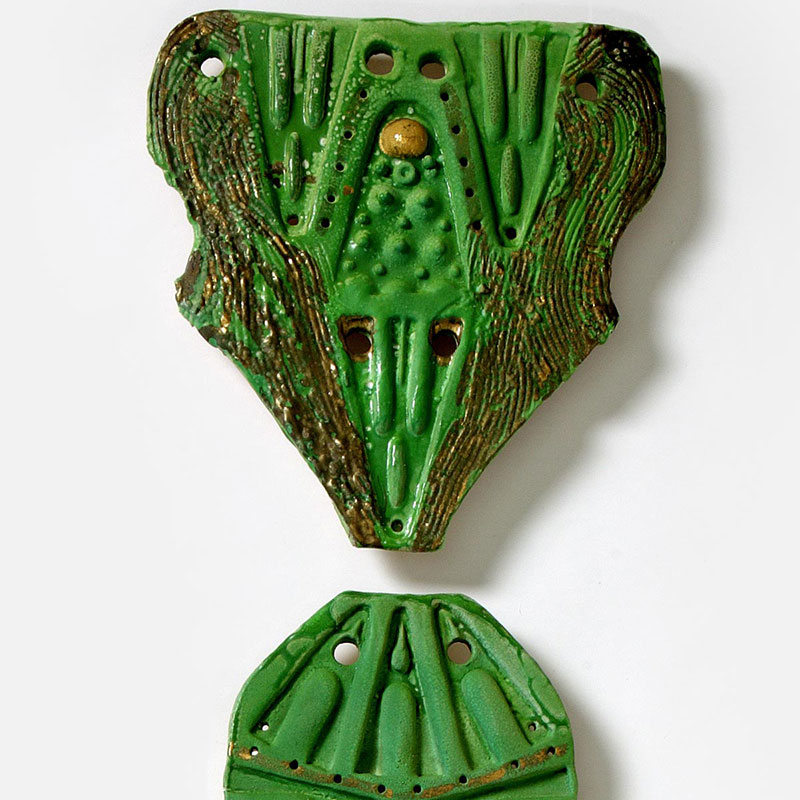
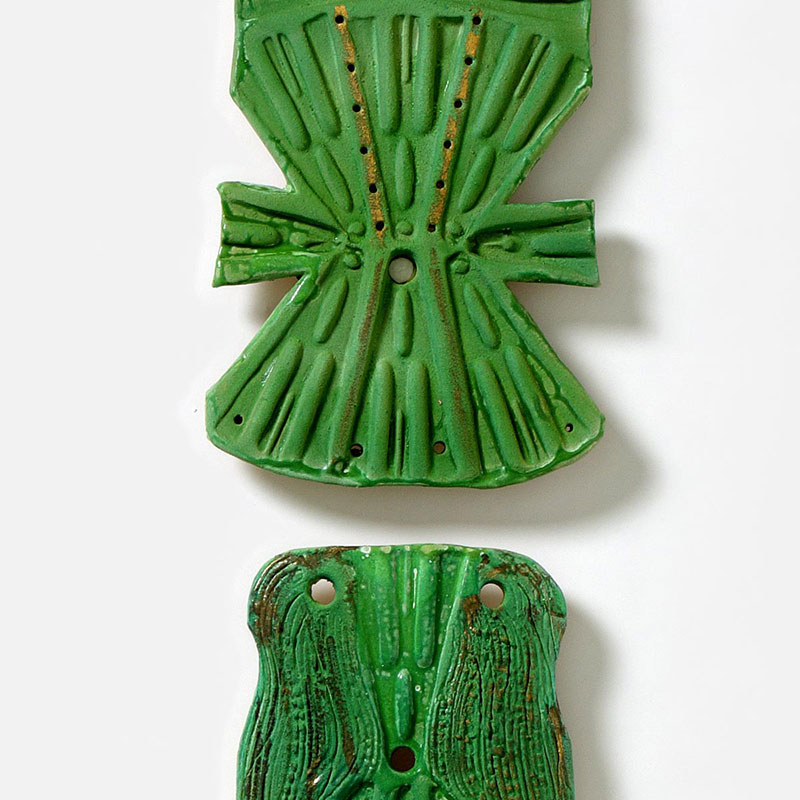
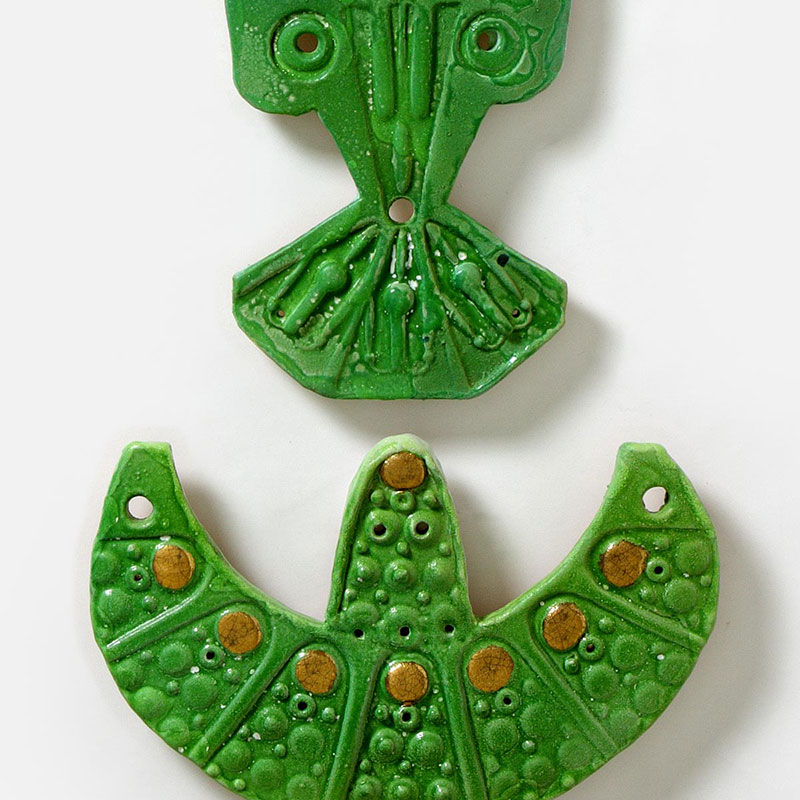
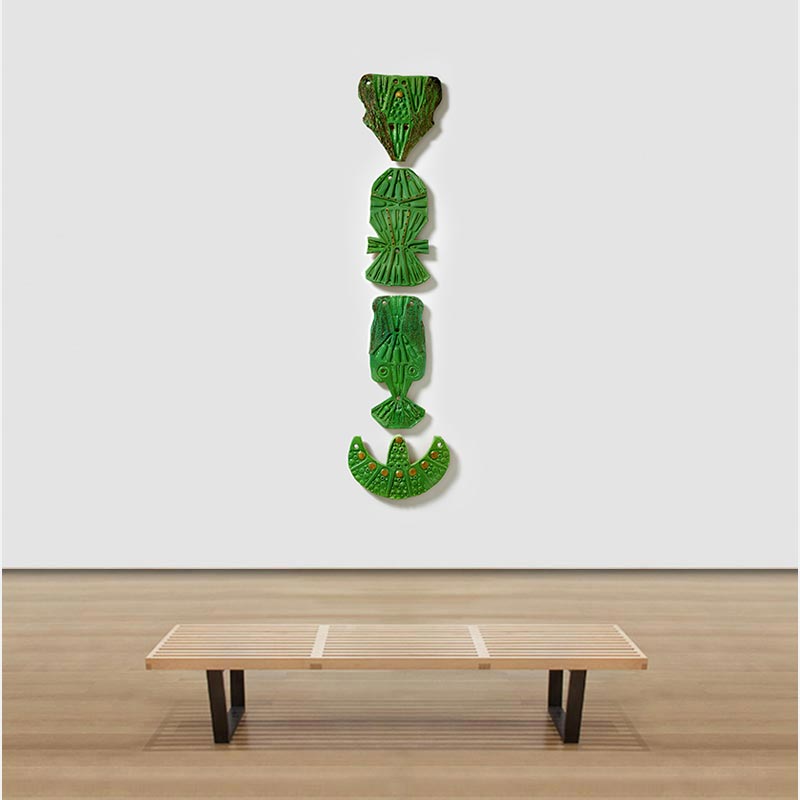
Legami IX [Bonds IX] breathes where other works in the series compress. The four green-glazed ceramic elements are spaced with deliberate openness, perforations and relief patterns interrupting the surface, luster accents catching the light at unexpected intervals. The figure assembles itself upward through intervals and visual echoes rather than through mass or frontal pressure, its presence cumulative rather than declared. Green, here, is not decorative: it carries the weight of growth and continuity, the vegetal associations of a material pulled from Umbrian earth.
Legami IX [Bonds IX] breathes where other works in the series compress. The four green-glazed ceramic elements are spaced with deliberate openness, perforations and relief patterns interrupting the surface, luster accents catching the light at unexpected intervals. The figure assembles itself upward through intervals and visual echoes rather than through mass or frontal pressure, its presence cumulative rather than declared. Green, here, is not decorative: it carries the weight of growth and continuity, the vegetal associations of a material pulled from Umbrian earth.
The Umbrian ceramic tradition brings with it a legacy of architectural rhythm and symbolic abstraction, and Legami IX engages both. The frontal organization recalls Etruscan votive figures in which the body functions as a sign rather than a likeness, while the measured articulation and emphasis on surface rhythm align the sculpture with modern investigations into balance and suspension. Fausto Melotti understood form as something sustained by proportion and interval rather than weight, and Legami IX operates in a similar register: structure held by its own internal logic rather than forced into coherence.
The lower element deserves particular attention. Rather than providing a stabilizing anchor, it departs into an asymmetrical, splayed form that refuses to resolve the figure downward. This refusal to close is deliberate: it keeps the sculpture perceptually open, reinforcing the idea that connection here is not enforcement but correspondence. Bonds and ties emerge through repetition, alignment, and chromatic harmony rather than constraint, affirming cohesion as a condition of resonance rather than enclosure.