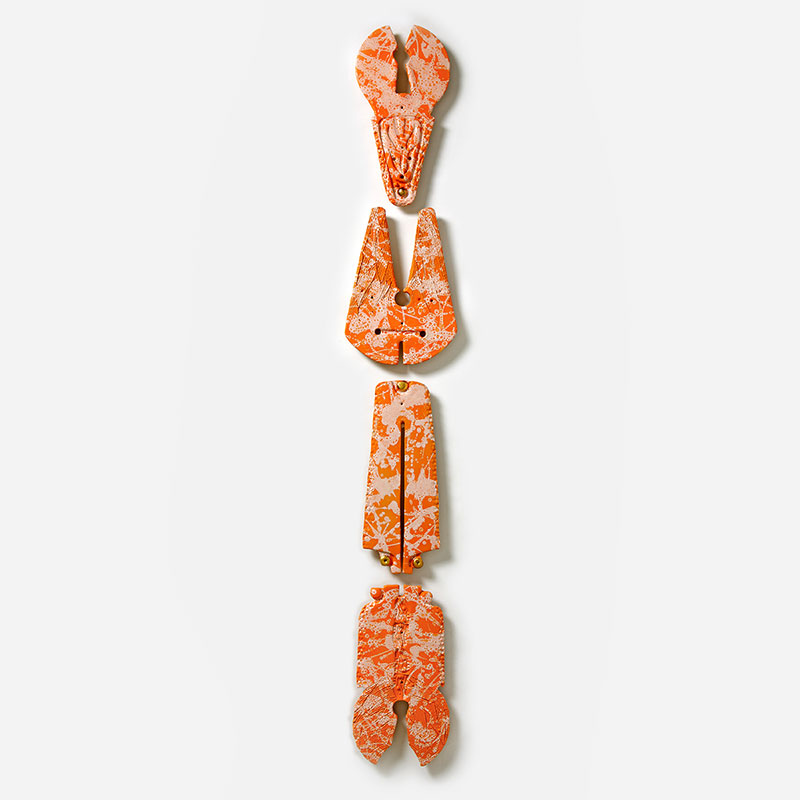
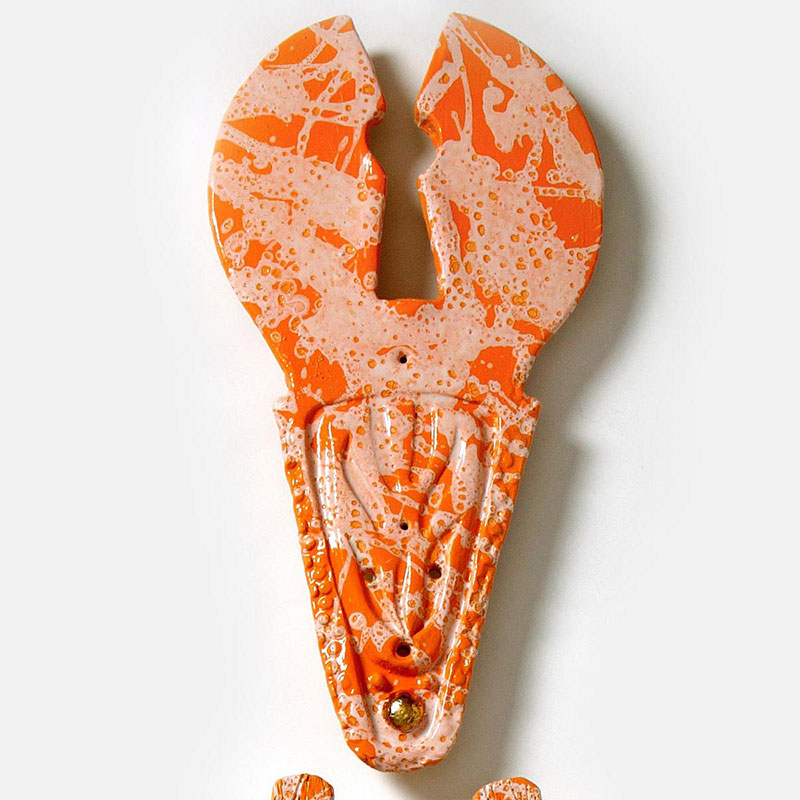
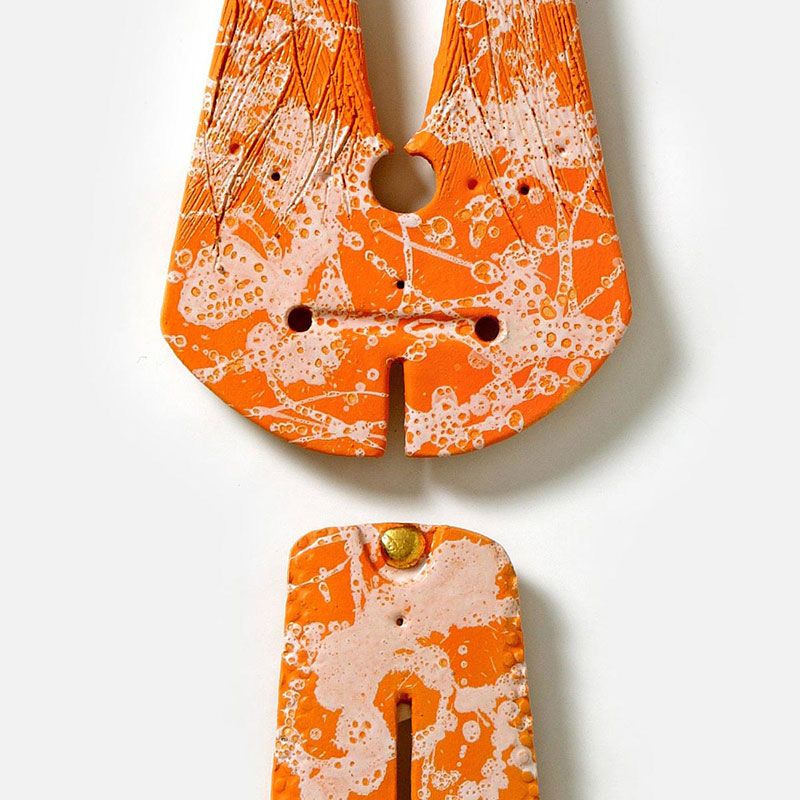
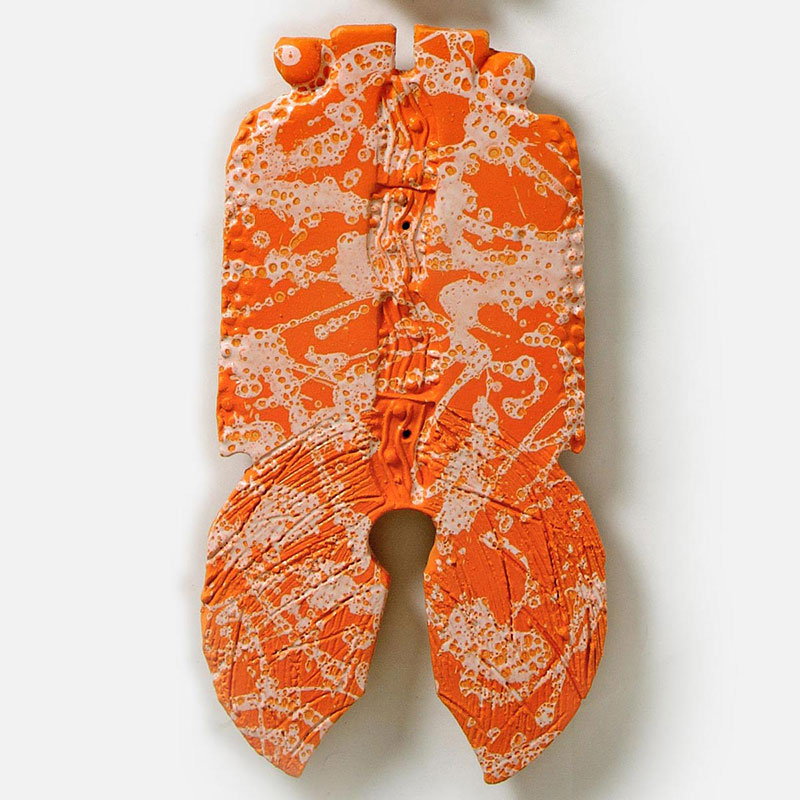
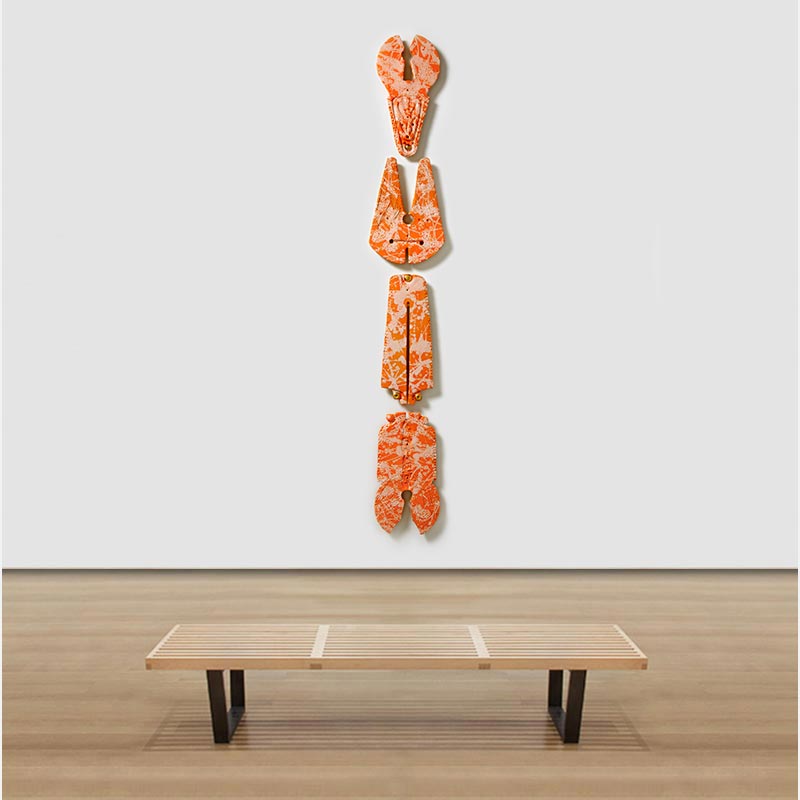
Rising to seven feet, Legami XVI [Bonds XVI] shifts the encounter from recognition to confrontation. The sculpture exceeds the viewer’s body, its elongated segmented form pressing upward along a narrow axis, and the lustered glaze responds to this verticality by destabilizing the silhouette: light moves across the surface, complicating the figure’s outline, refusing to let it resolve into a fixed image. The scale is not monumental in the architectural sense but insistent in the embodied one, a presence that occupies space through force rather than mass.
Rising to seven feet, Legami XVI [Bonds XVI] shifts the encounter from recognition to confrontation. The sculpture exceeds the viewer’s body, its elongated segmented form pressing upward along a narrow axis, and the lustered glaze responds to this verticality by destabilizing the silhouette: light moves across the surface, complicating the figure’s outline, refusing to let it resolve into a fixed image. The scale is not monumental in the architectural sense but insistent in the embodied one, a presence that occupies space through force rather than mass.
Verticality as expressive argument has a distinct lineage in postwar Italian sculpture. Giovanni Anselmo, working within Arte Povera’s engagement with gravity and material energy, understood the vertical axis as a site of tension between ascent and arrest, structure and force. Legami XVI operates in a related register: the figure does not simply stand but strains upward, the narrow proportions intensifying the sense of pressure. The lustered surface, shifting with the light, functions as gesture rather than finish, aligning the work with practices in which glaze becomes an active material rather than a protective coating.
Within the Legami [Bonds] series, this work frames connection as vertical tension. The elements are held in alignment through pressure rather than cohesion, suggesting a structure sustained by force and balance rather than resolved assembly. The sculpture reads less as a figure assembled than as one stretched into being, the bonds between its parts operating as the conditions of a sustained upward reach rather than the joints of a composed body.