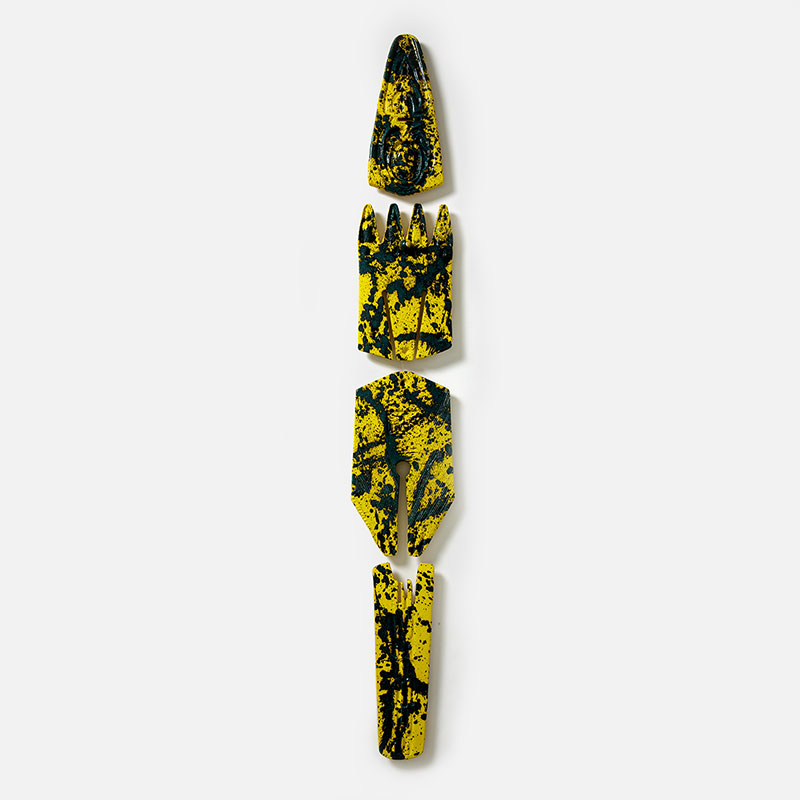
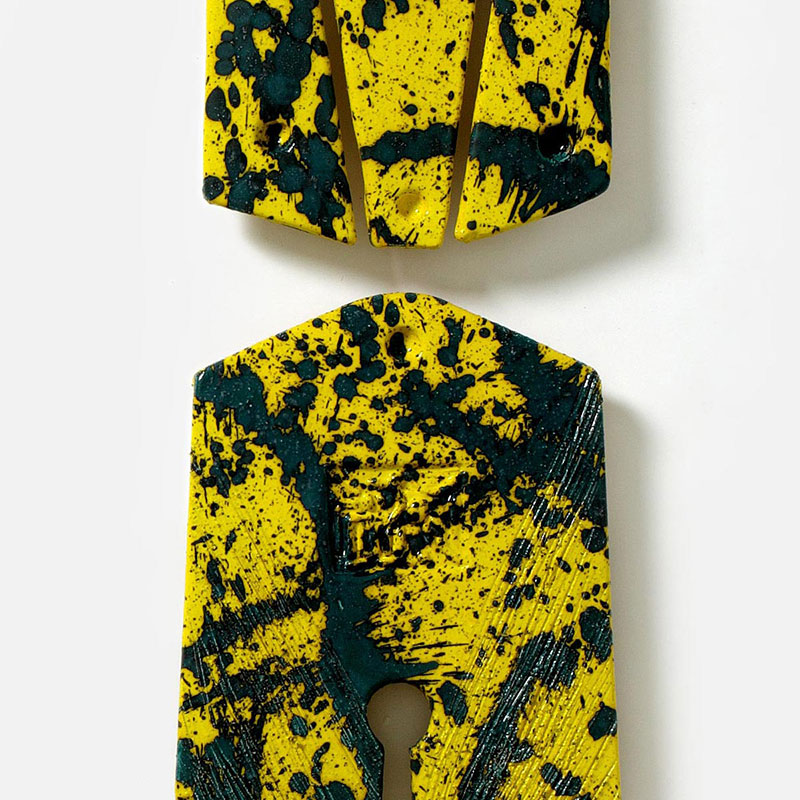
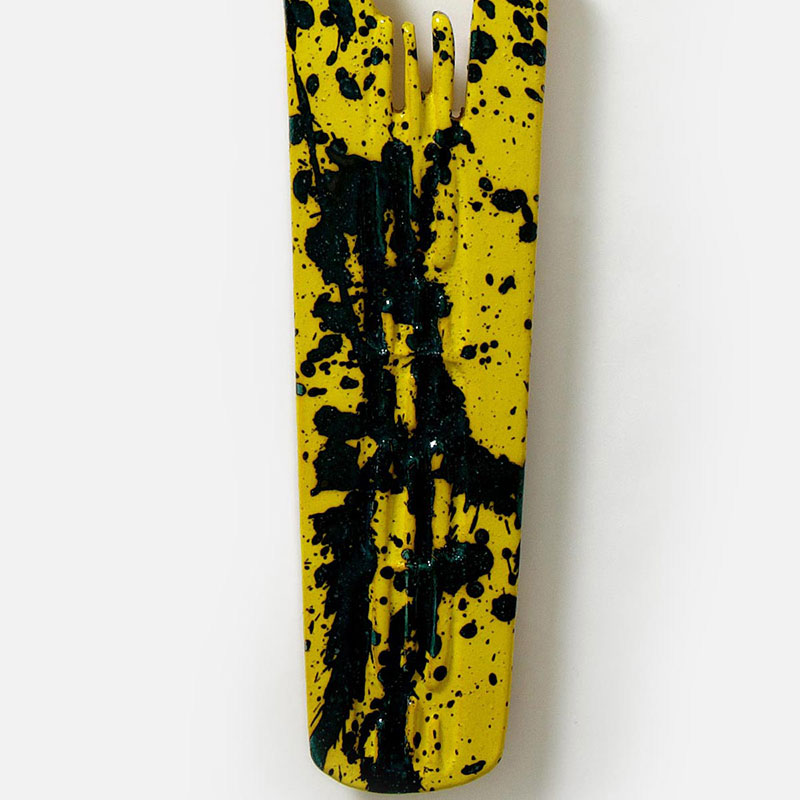
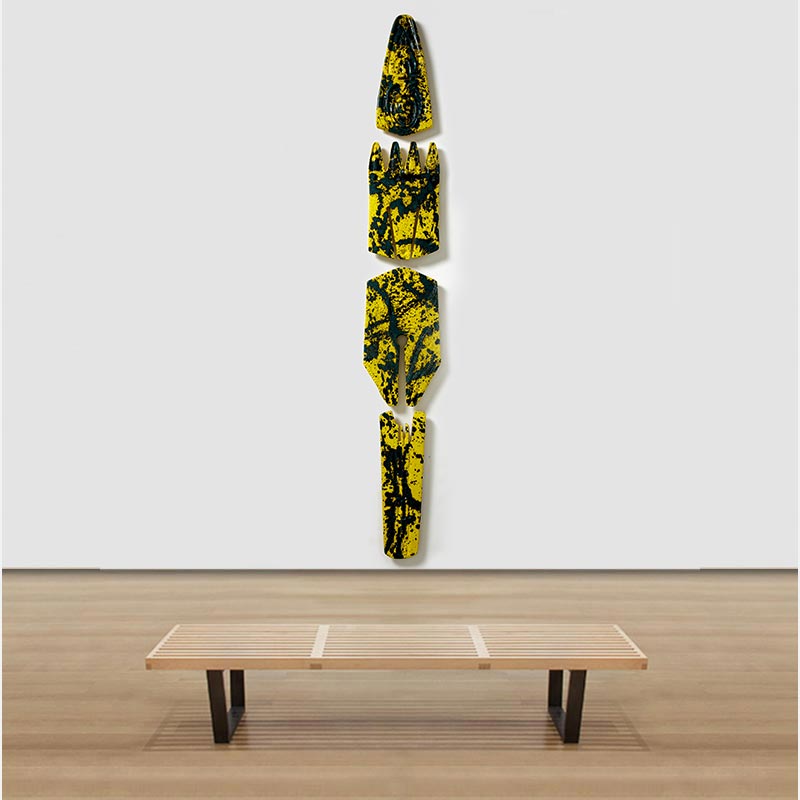
Legami XIII [Bonds XIII] does not invite the viewer to look at it so much as stand before it. The sharpened vertical axis and slender proportions intensify the sense of upward pressure: the segmented ceramic body becomes a declaration rather than a ceremony. A vivid yellow glaze, disrupted by dark corrosive splashes that read as erosion or confrontation, animates the surface through contrast and interruption rather than continuity.
Legami XIII [Bonds XIII] does not invite the viewer to look at it so much as stand before it. The sharpened vertical axis and slender proportions intensify the sense of upward pressure: the segmented ceramic body becomes a declaration rather than a ceremony. A vivid yellow glaze, disrupted by dark corrosive splashes that read as erosion or confrontation, animates the surface through contrast and interruption rather than continuity.
The aggressive encounter between glaze and surface places the work within the Arte Informale tradition, in which matter is not shaped toward an ideal but submitted to its own energies, fire and chance and material resistance becoming constitutive rather than incidental. Scale here is not monumental in the civic sense but confrontational in the phenomenological one: Leoncillo understood that proportion itself could be an expressive instrument, the vertical axis pressed to extremes becoming a carrier of instability as much as authority.
Within the Legami [Bonds] series, Legami XIII redefines connection as strain. The bonds between elements do not stabilize the figure; they expose its vulnerability, holding it together through resistance and vertical pressure. The splattered surface interrupts continuity, transforming ties and ligatures into points of stress rather than cohesion. Crisafi presents a sculpture that asserts itself through instability: connection inseparable from tension, unity achieved only through the sustained force of scale and surface intensity.