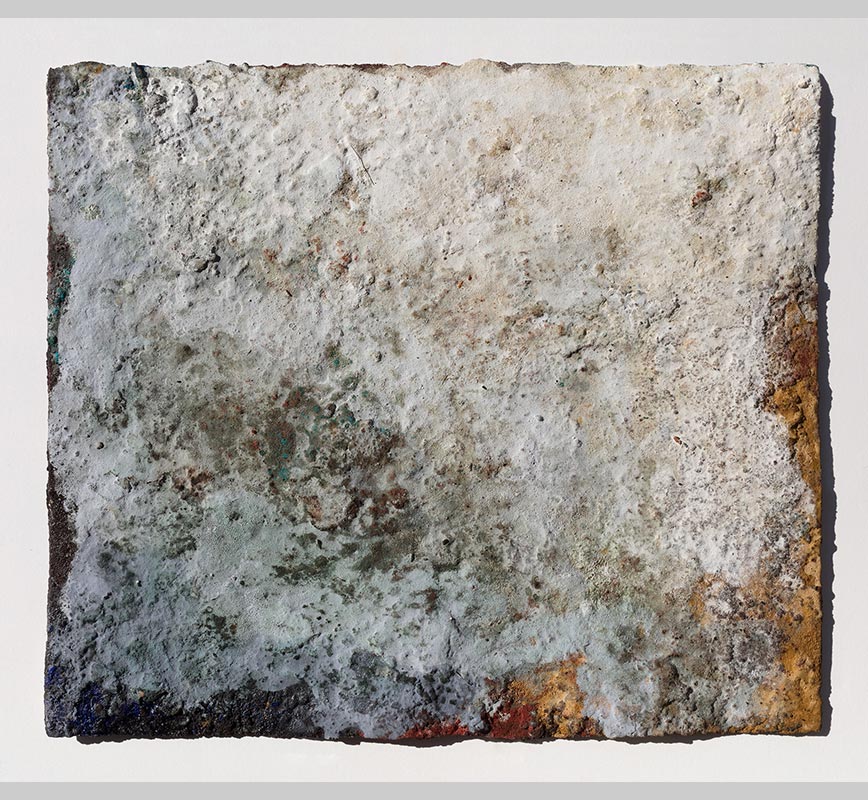
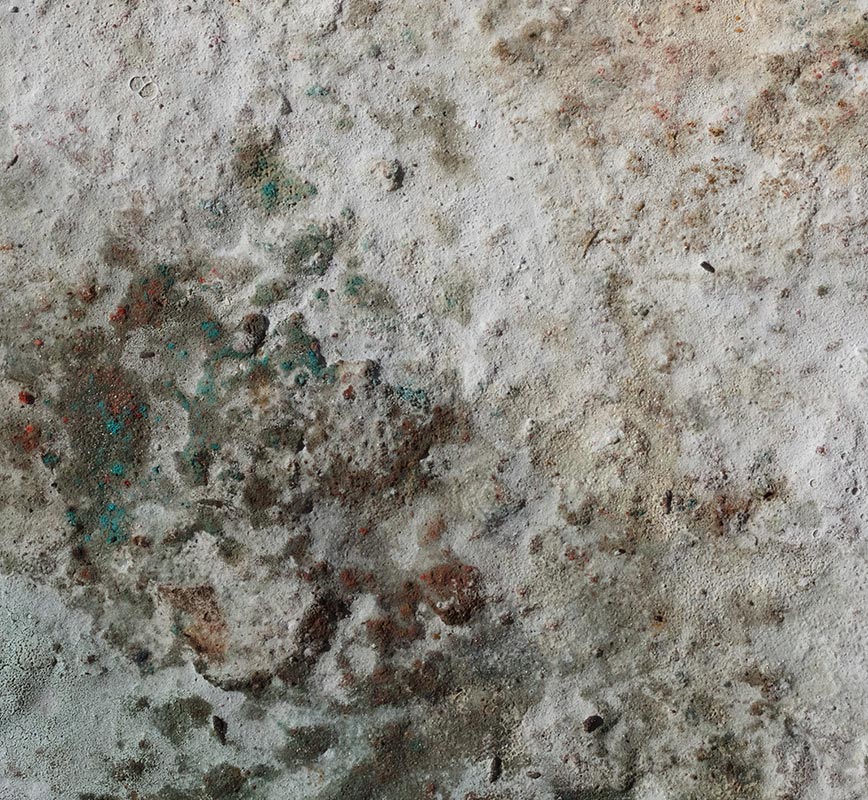
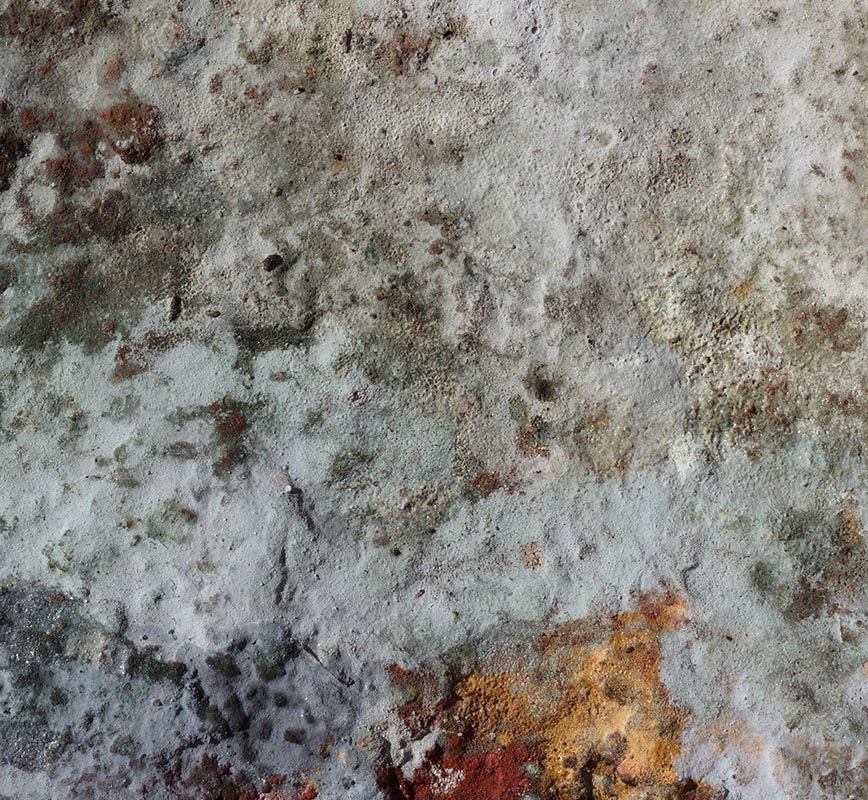
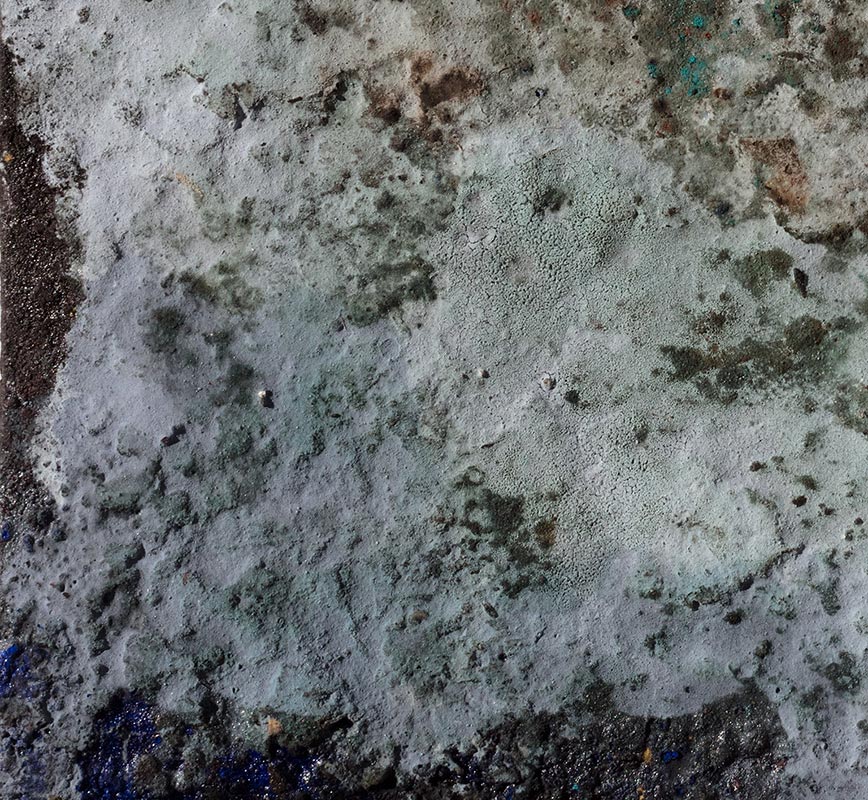
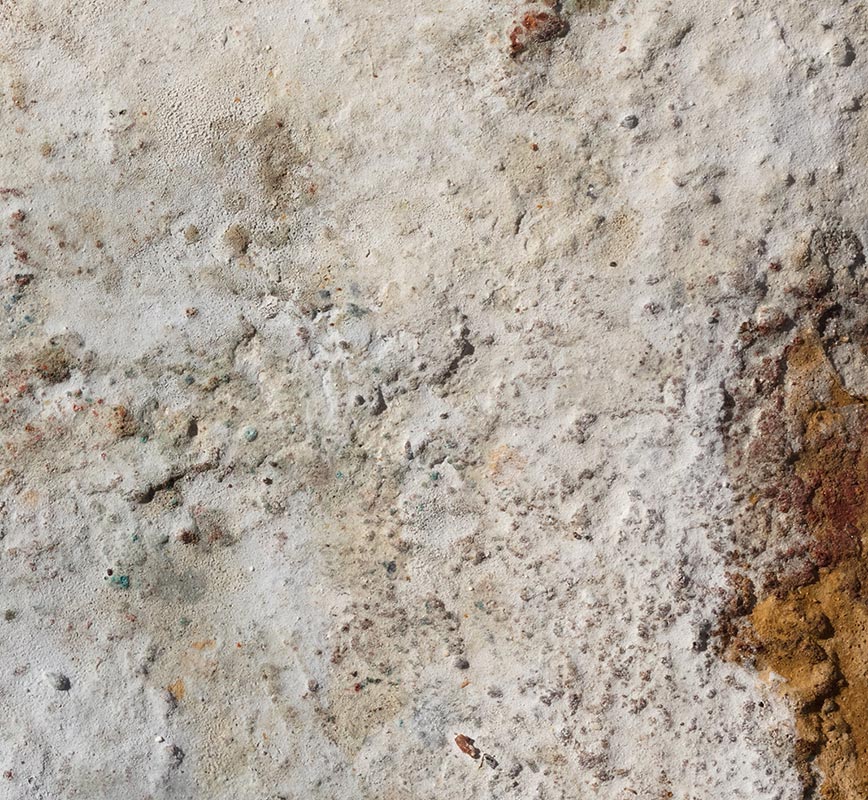
Terra Bruciata 10 works in strong contrasts: deep blacks and fiery reds dominate the lower half, giving way upward through a zone of dense purple to an expanse of pale gray that seems, against all that material darkness below, genuinely luminous. The composition reads as emergence, something brightening from within rather than lit from without. At this intimate scale, the tension between the dark weight below and the lighter field above is almost cinematic in its directness.
Terra Bruciata 10 works in strong contrasts: deep blacks and fiery reds dominate the lower half, giving way upward through a zone of dense purple to an expanse of pale gray that seems, against all that material darkness below, genuinely luminous. The composition reads as emergence, something brightening from within rather than lit from without. At this intimate scale, the tension between the dark weight below and the lighter field above is almost cinematic in its directness.
The brightness in the upper register of Terra Bruciata 10 is not sky; it is ash. The pale gray is a product of the fire process, lime and mineral residue lightened by combustion into something closer to the color of architectural ruin than to any natural atmospheric effect. Pompeii is the reference De Gennaro himself has named, and this is one of the works where that reference has its most direct material logic: the pale, ashen upper field is the color of walls that have been buried and uncovered, the color of what survives after catastrophe has passed.
The Italian Arte Informale tradition, through Alberto Burri's combustions and the material theory of pittura materia, established that the residue of fire could be a complete artistic language rather than a preliminary or a failure. De Gennaro learned this tradition through the Transavanguardia generation that formed him, specifically through Mimmo Paladino, whose dense, materially worked surfaces draw on the same pre-Roman southern Italian substrate. Terra Bruciata 10 carries that lineage without performing it: the ash is real, the fire was real, and the painting's authority comes from neither referencing nor representing but from being.