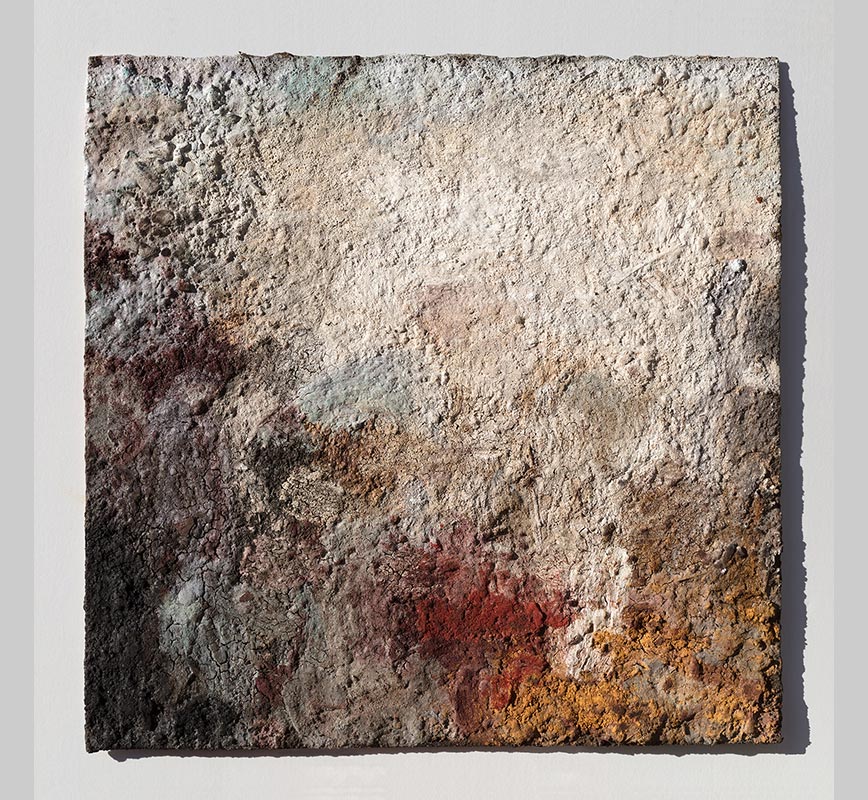
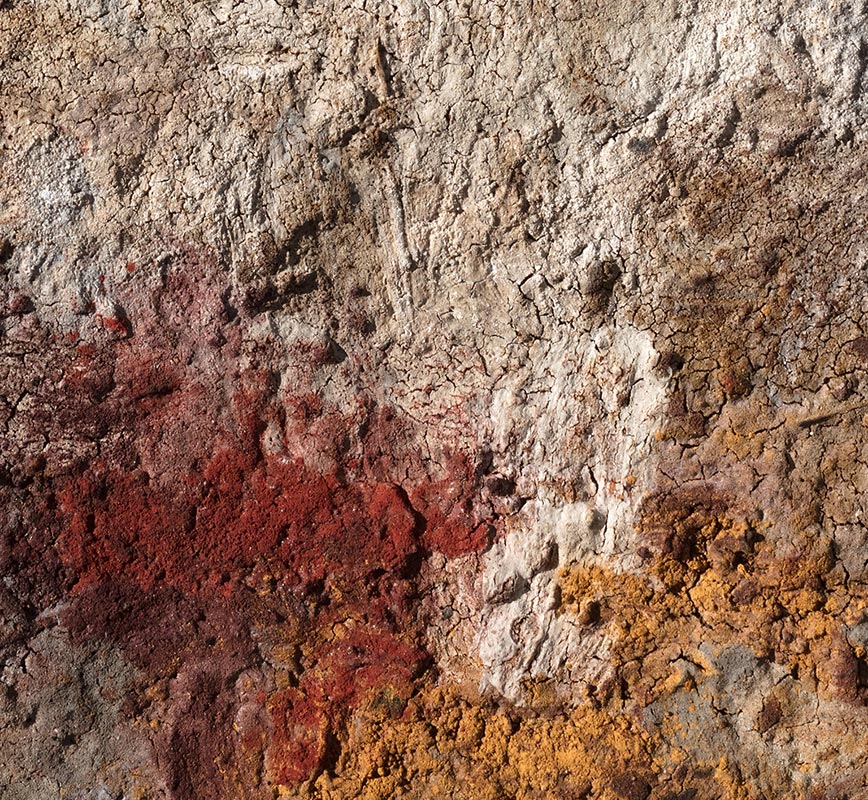
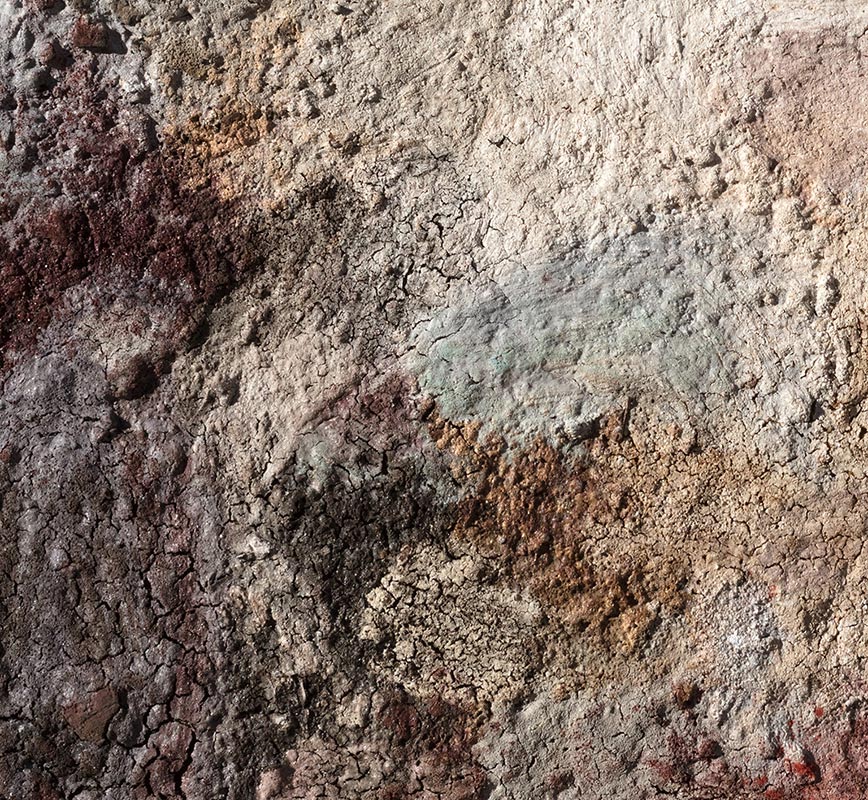
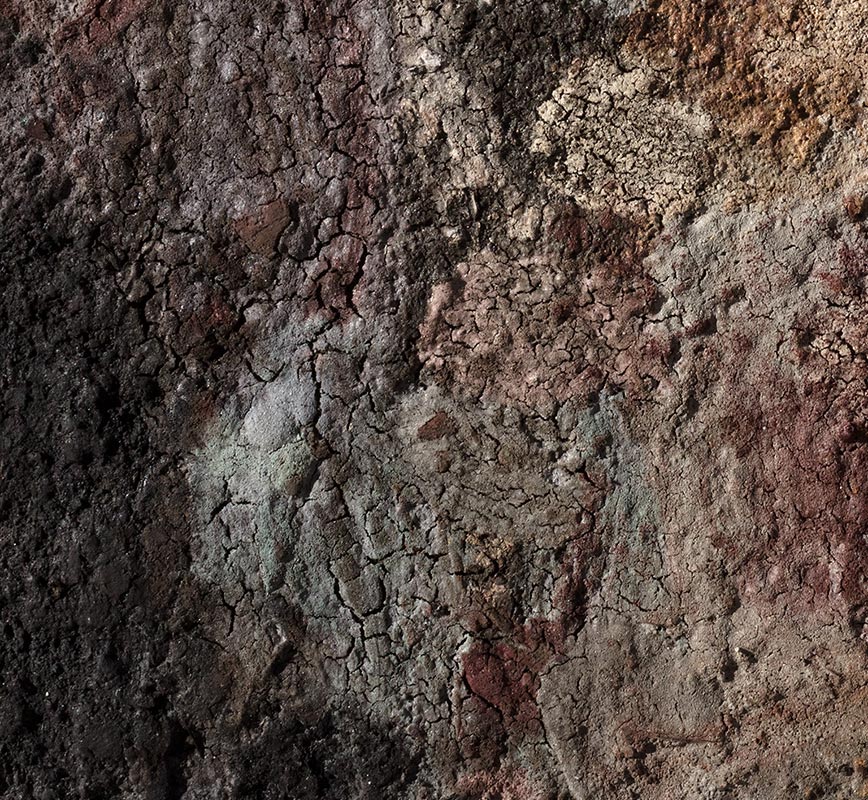
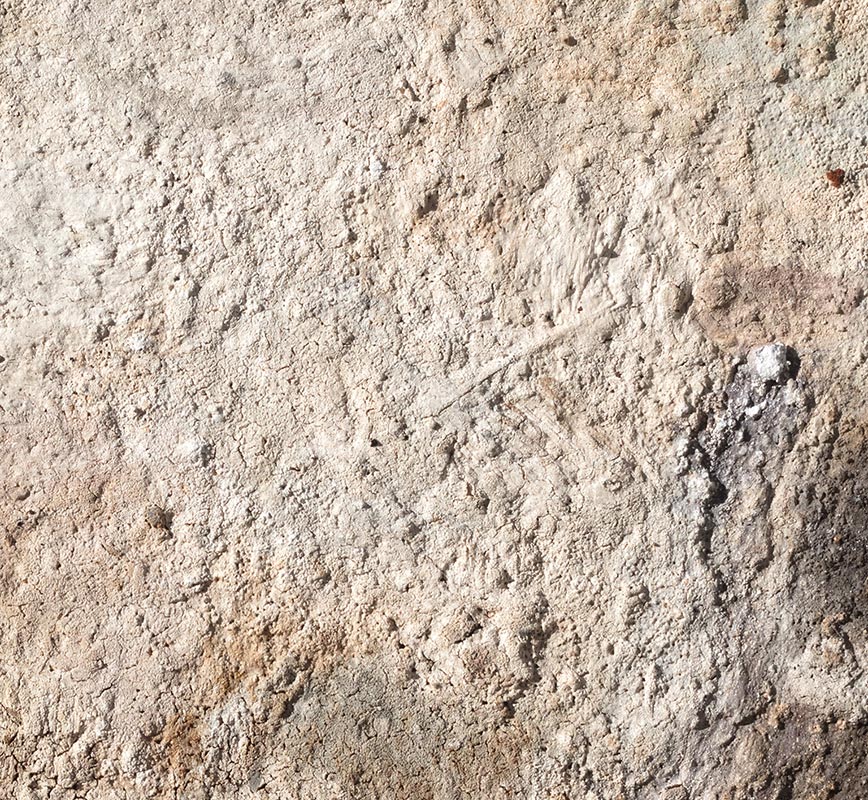
Terra Bruciata 17 opens with a burst of violet-gray in the upper left that bleeds across the top of the surface before the composition settles downward through ashen whites, muted reds, and deep shadowy blacks. Golden yellow anchors the lower corners, warm against the cooler grays above, and the interplay between those two temperatures inverts the conventional logic of landscape where sky is warm and earth is cool. The fire process has rearranged the atmosphere.
Terra Bruciata 17 opens with a burst of violet-gray in the upper left that bleeds across the top of the surface before the composition settles downward through ashen whites, muted reds, and deep shadowy blacks. Golden yellow anchors the lower corners, warm against the cooler grays above, and the interplay between those two temperatures inverts the conventional logic of landscape where sky is warm and earth is cool. The fire process has rearranged the atmosphere.
The golden yellows in the lower field are among the most distinctive chromatic events in the Terra Bruciata series. De Gennaro's statement describes standing in a wheat field bathed by golden summer light as one of the sensory registers his practice reaches for, and the ochre and gold at the base of this composition carries exactly that memory: not the Campanian coast but the interior, the Sannio agricultural landscape where wheat and burned stubble are the seasonal alternation. The fire process does not reference this cycle; it enacts it.
Joan Mitchell, the American painter who lived and worked in Vétheuil, France, and whose late abstractions are among the most searching engagements with landscape and memory in postwar painting, offers a productive if oblique parallel. Mitchell's surfaces accumulate gestural marks into fields of color that carry emotional and meteorological weight without depicting either; De Gennaro's accumulate matter into fields that carry geological and seasonal weight by the same indirect method. The difference is that Mitchell's is a practice of gesture and De Gennaro's is a practice of substance, but both arrive at the same conviction: that painting can carry the full weight of a landscape without showing it.