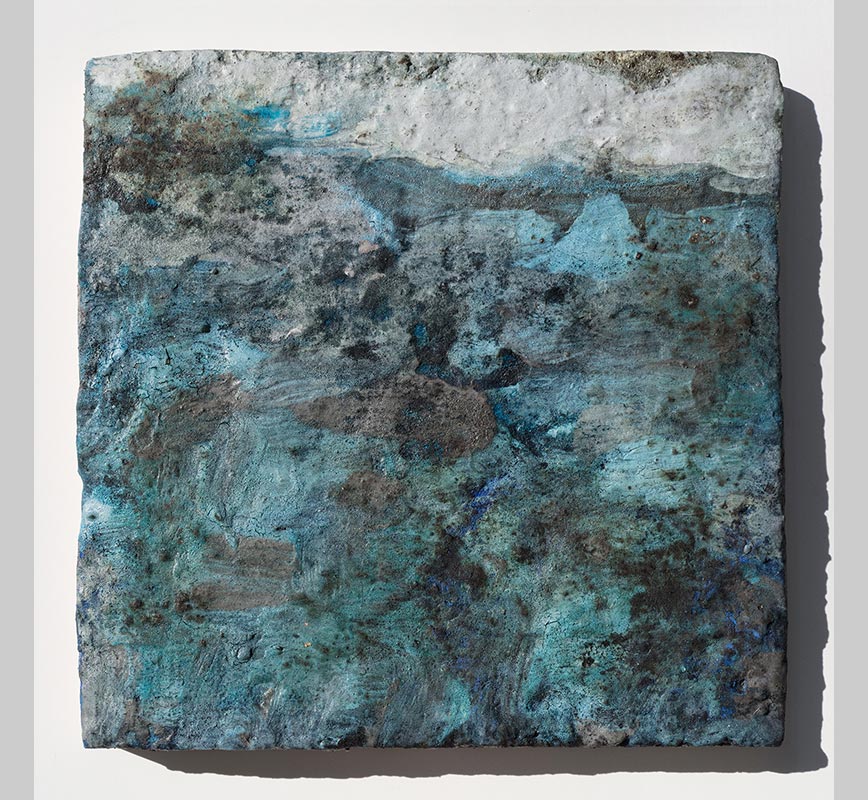
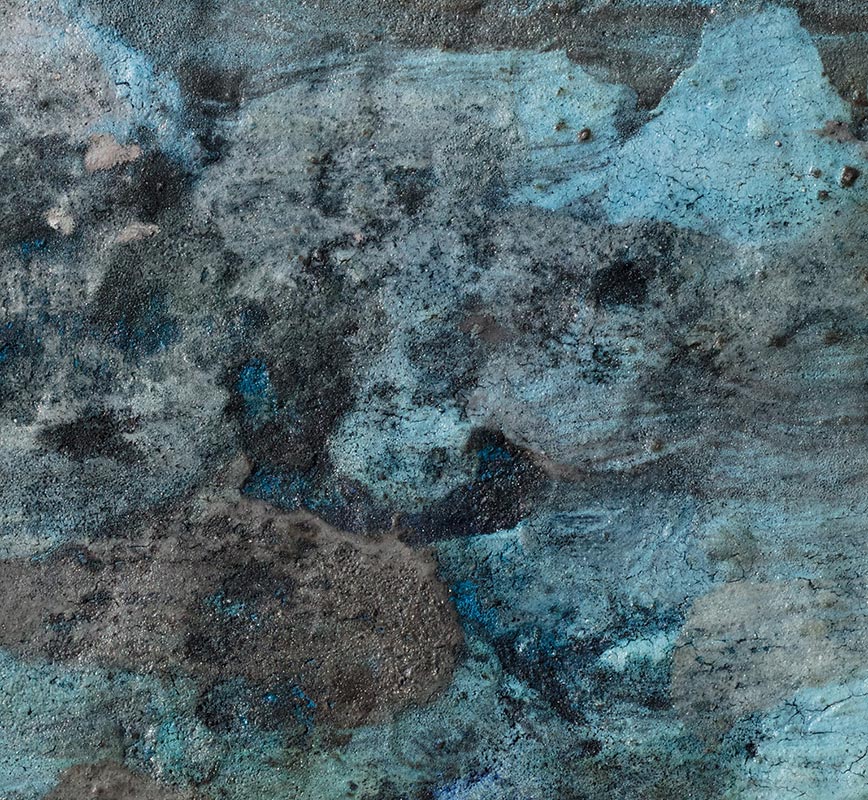
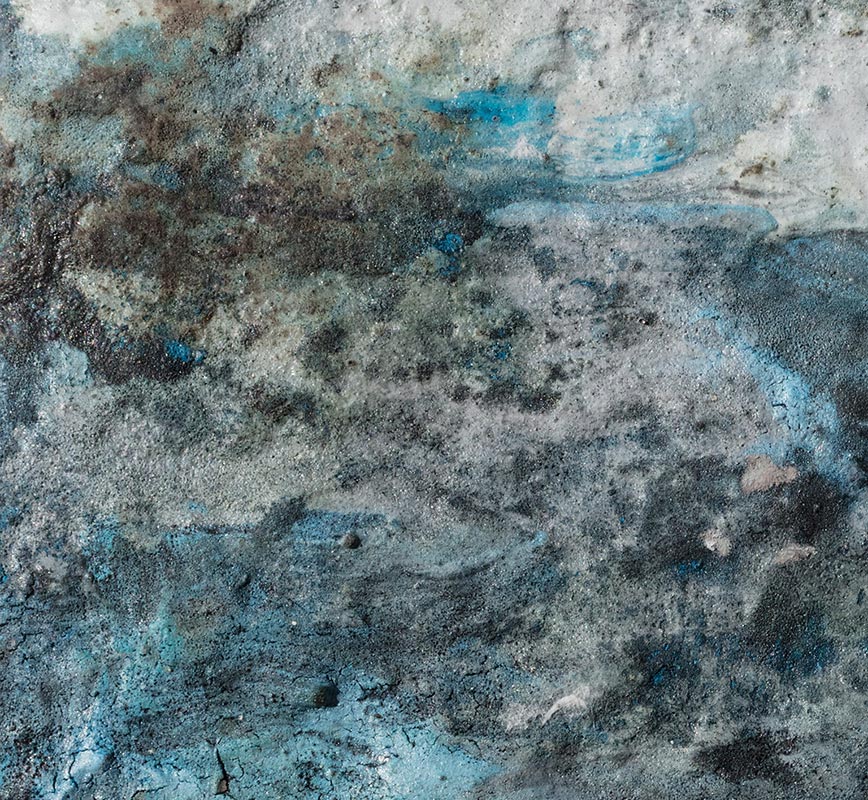
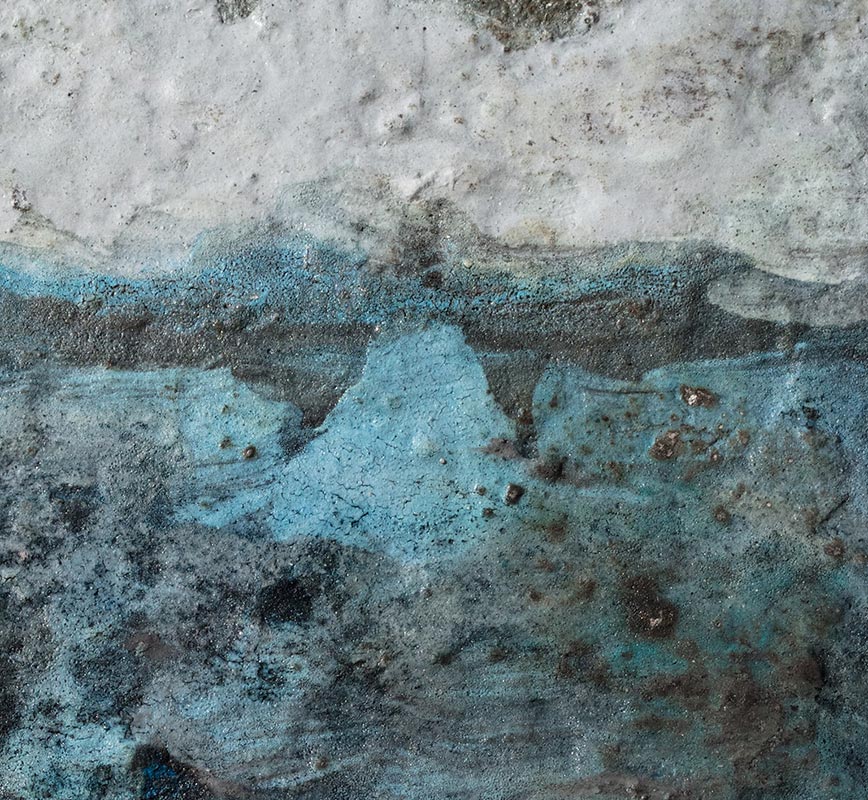
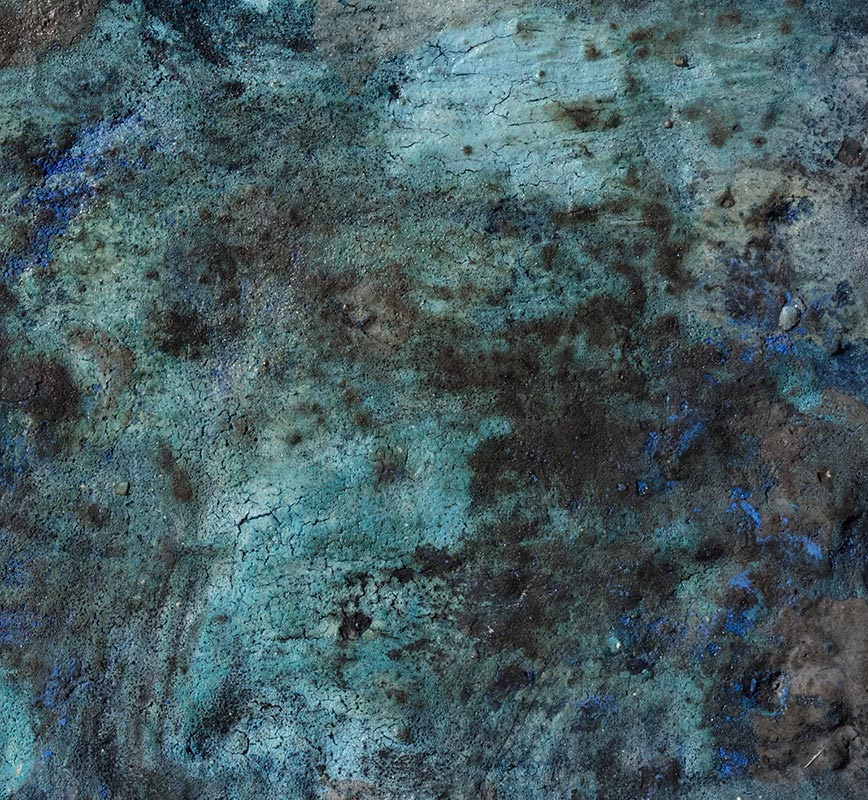
Terra Bruciata C4 works in subtle pinks, soft purples, and warm grays intermixed across a surface that feels neither scorched nor desolate but caught in a moment of chromatic transition, the way terrain looks at early morning or at dusk when light is ambiguous and the land has not yet committed to a single color. The texture is dense, the cracked and pitted relief of the fire process fully present, but the palette is unexpectedly tender, almost hesitant.
Terra Bruciata C4 works in subtle pinks, soft purples, and warm grays intermixed across a surface that feels neither scorched nor desolate but caught in a moment of chromatic transition, the way terrain looks at early morning or at dusk when light is ambiguous and the land has not yet committed to a single color. The texture is dense, the cracked and pitted relief of the fire process fully present, but the palette is unexpectedly tender, almost hesitant.
The pinks and lavenders arrive through the chemical action of the torch on the mineral composition of the earth mixture rather than through deliberate pigment selection. De Gennaro's process surrenders a portion of chromatic control to the material: the fire completes the palette. This is one of the more philosophically interesting aspects of the Terra Bruciata approach, the work is finished not when the artist decides it is but when the material has expressed what it contains.
Nicola De Maria, born a few kilometres from De Gennaro in Foglianise in the same Benevento province, developed a practice of chromatic exuberance and lyrical intensity that draws on what the same geographic formation can generate at a very different register. Where De Maria's surfaces are often brilliantly chromatic and almost ecstatic in temperature, Terra Bruciata C4 arrives at its lyricism through restraint and process rather than through declaration. The same landscape, a different inflection of it: the Sannio as twilight rather than as festival.