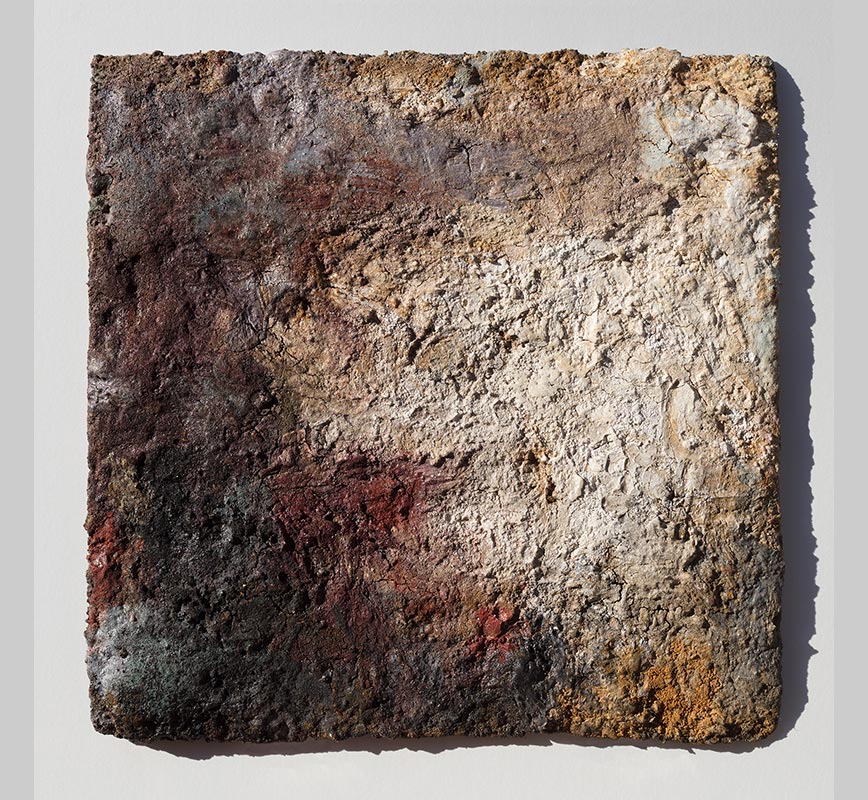
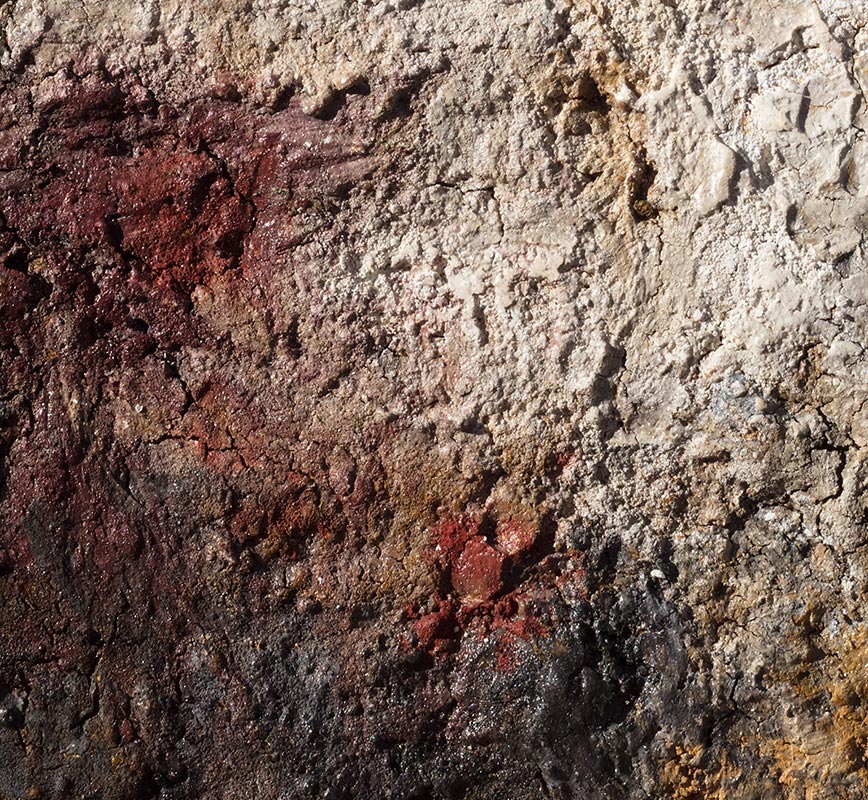
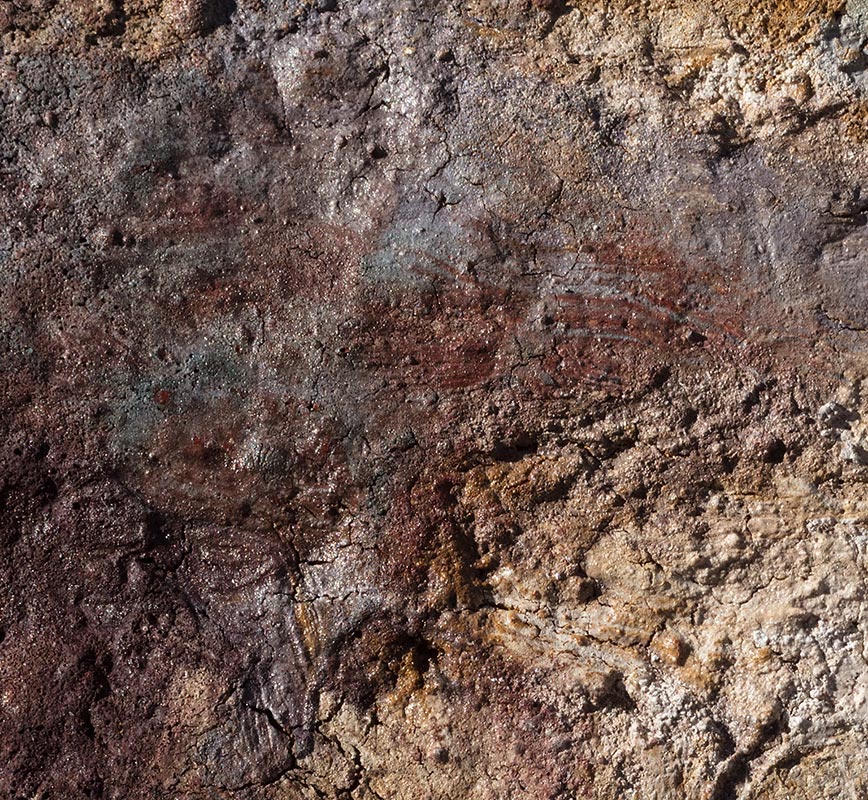
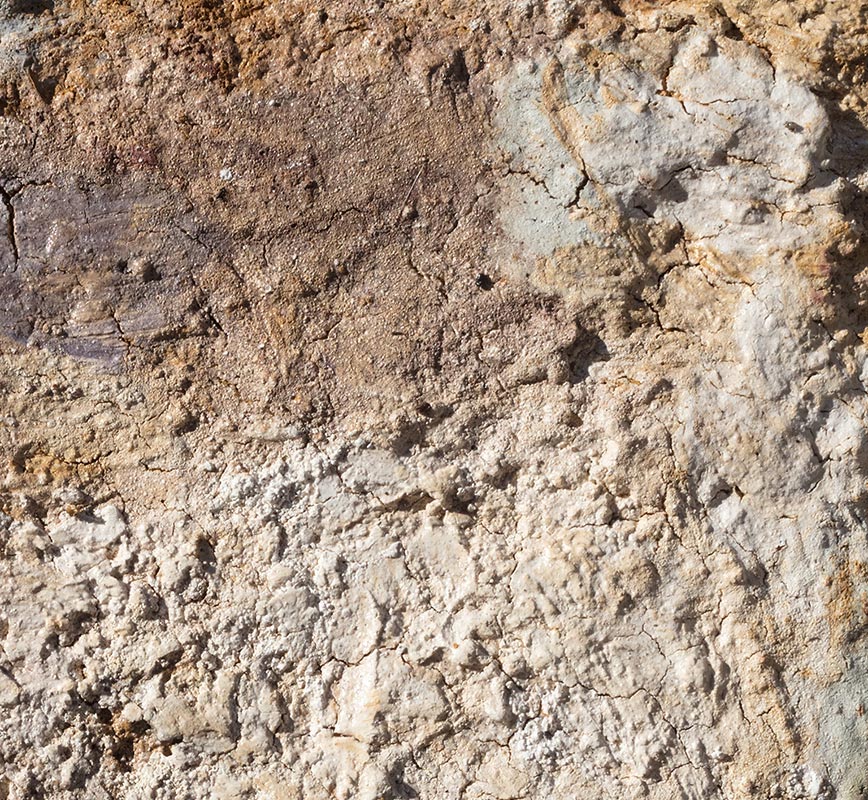
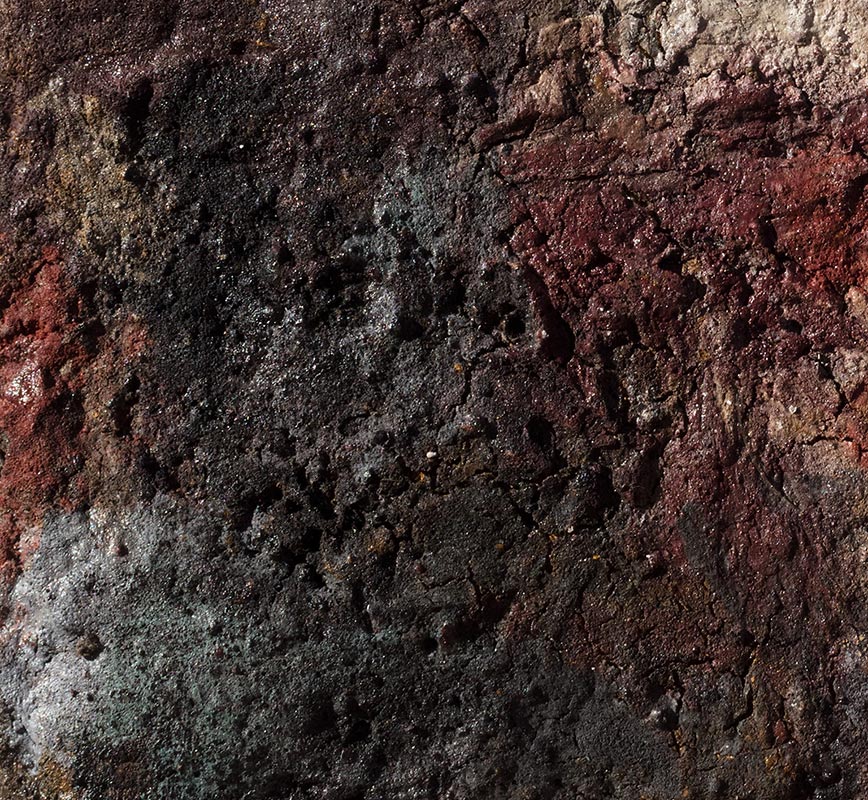
The burnt tones of Terra Bruciata 09 arrive at full saturation: rich ochres and deep reds occupy the lower and right portions of the surface while an upper field of violet-purple dissolves into diffuse ashen gray, the whole composition carrying the sense of a landscape still radiating heat after the fire has passed. The small format concentrates this intensity rather than diffusing it. There is nothing tentative about the surface: every mark has been committed to.
The burnt tones of Terra Bruciata 09 arrive at full saturation: rich ochres and deep reds occupy the lower and right portions of the surface while an upper field of violet-purple dissolves into diffuse ashen gray, the whole composition carrying the sense of a landscape still radiating heat after the fire has passed. The small format concentrates this intensity rather than diffusing it. There is nothing tentative about the surface: every mark has been committed to.
The intensity of the ochre and red in the lower field is partly a function of the earth and charcoal mixture De Gennaro used for the Terra Bruciata series, materials collected from a street excavation outside his Brooklyn studio and combined with crushed charcoal, straw, and ash before being pressed onto 400-pound watercolor paper. The warmth in these materials is not Campanian earth directly; it is Brooklyn aggregate that has been subjected to the same fire process that De Gennaro's ancestral landscape undergoes each summer when the terra bruciata cycle, controlled burning to prepare the ground for regrowth, renews the land. The material and the method converge on the same result: scorched terrain, transformed.
Emil Nolde, the German Expressionist who developed a method of pouring diluted paint onto wet paper to let the colors diffuse and merge beyond the painter's control, was after something similar in his watercolors: color and material exceeding the hand's direction. De Gennaro's fire process operates on the same principle of productive surrender. But where Nolde's results are luminous and aqueous, De Gennaro's are geological and dense, the difference between a landscape glimpsed and a landscape inhabited.