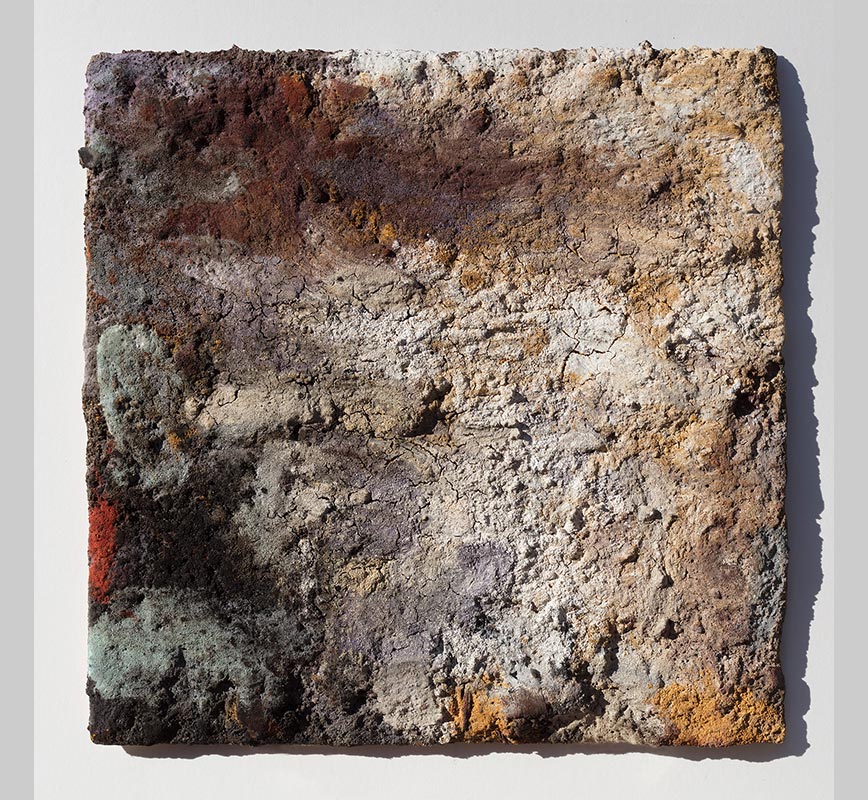
Linseed oil, pigments, beeswax, and glass powder on Panel
40 x 40 in
102 x 102 cm
US $ 6,500
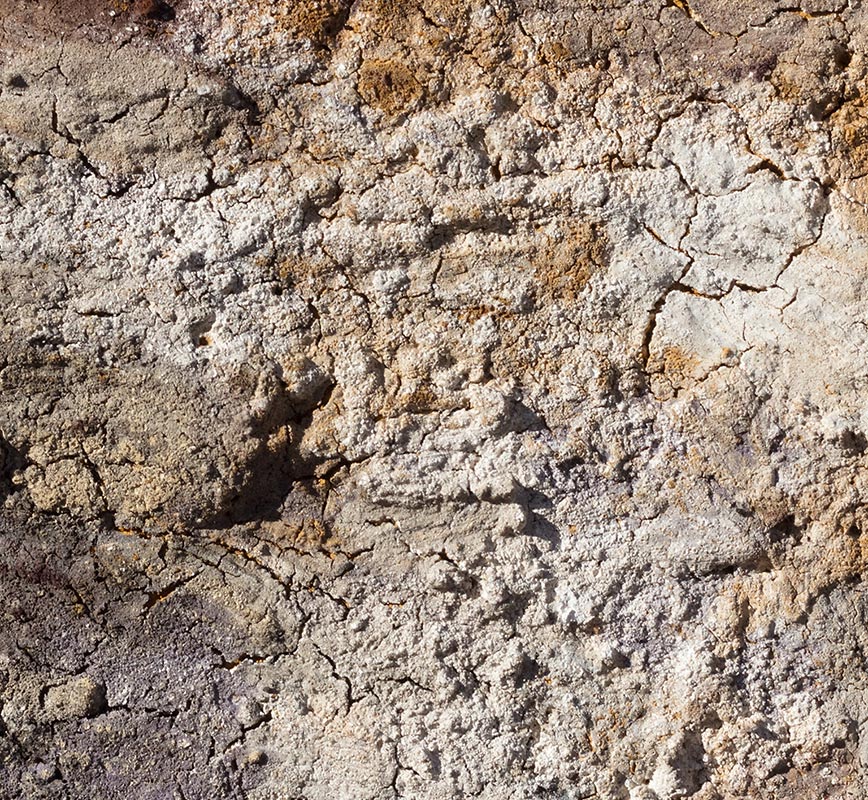
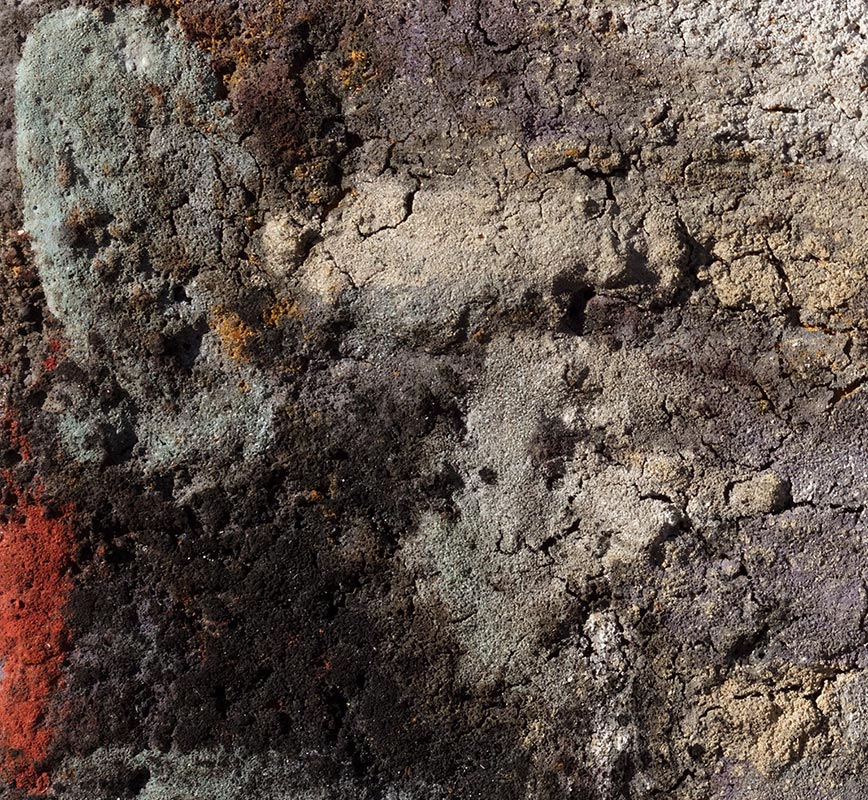
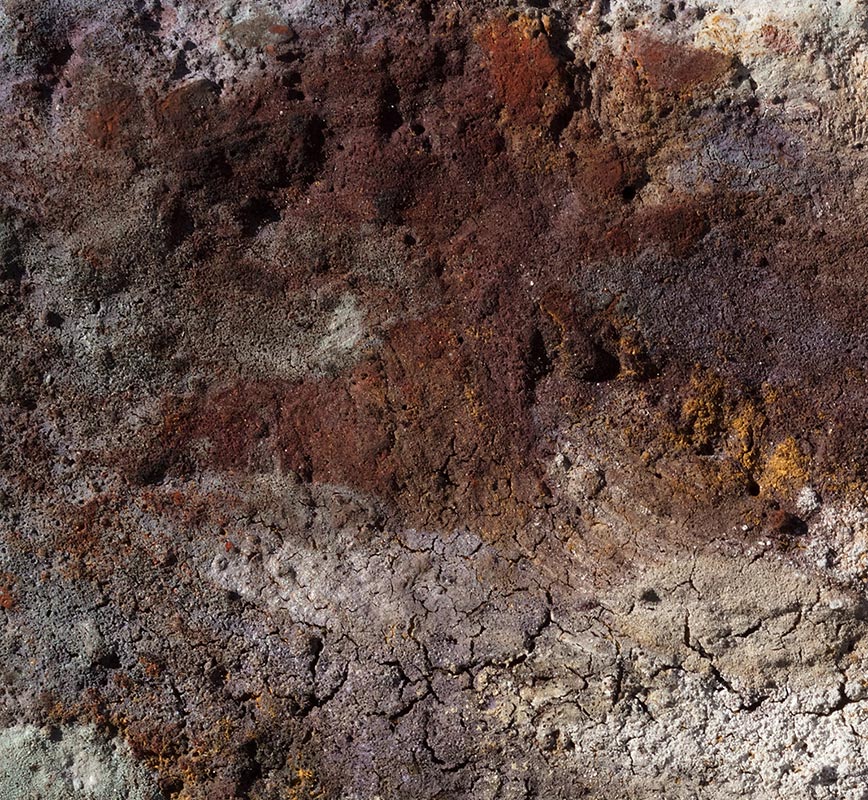
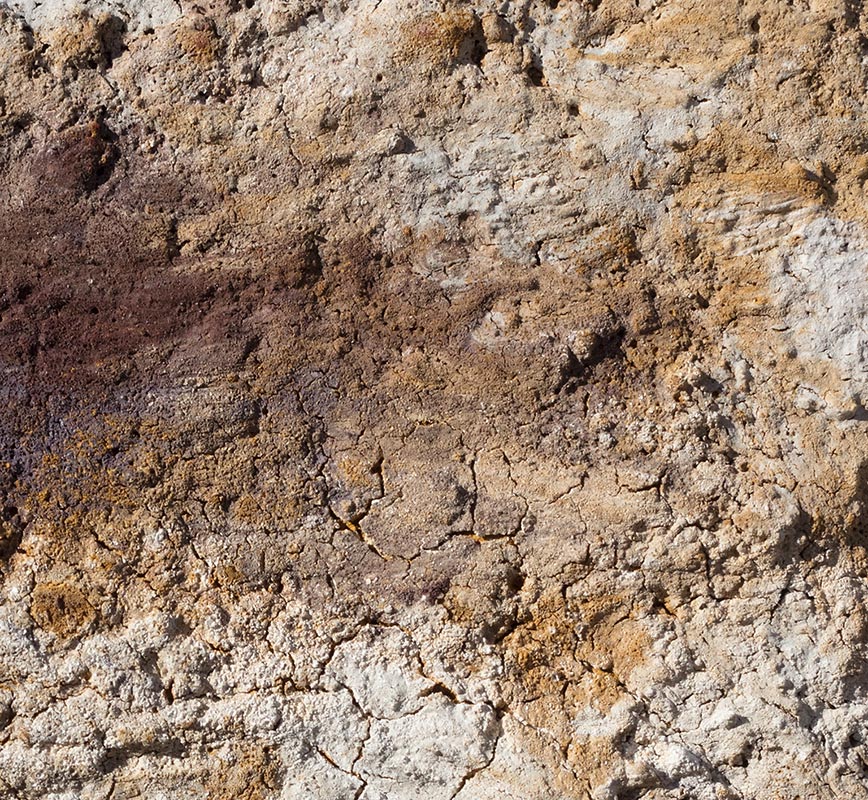
Scorched Valley works at the threshold between the two bodies of De Gennaro's practice. The palette, smoky grays, ashy whites, deep crimson, and sudden flashes of turquoise, recalls the Terra Bruciata series in its chromatic logic of fire and residue. But the surface is encaustic, built in semi-transparent wax layers rather than in the geological impasto of the paper works, and the glass powder in the medium transforms what would have been opaque density into something that shimmers at the edge of luminosity. The scorched valley is also, unexpectedly, lit from within.
Scorched Valley works at the threshold between the two bodies of De Gennaro's practice. The palette, smoky grays, ashy whites, deep crimson, and sudden flashes of turquoise, recalls the Terra Bruciata series in its chromatic logic of fire and residue. But the surface is encaustic, built in semi-transparent wax layers rather than in the geological impasto of the paper works, and the glass powder in the medium transforms what would have been opaque density into something that shimmers at the edge of luminosity. The scorched valley is also, unexpectedly, lit from within.
The title's topographical specificity, a valley rather than simply earth or terrain, gives this painting its organizing spatial claim. A valley implies enclosure: hills above, compressed air below, the particular quality of heat that collects in a hollow. De Gennaro's Sannio is exactly this landscape, an inland mountain territory of valleys and ridges where the summer heat is more intense and more retained than on the coast. The scorching in the title is both meteorological and metaphorical, the land's annual condition translated into paint.
The encaustic medium's palimpsestic logic becomes important here: what has been scorched has not disappeared, it persists in the lower strata of the wax and oil layers, visible through the semi-transparent material above it as a residue, a color memory. The crimson passages in the lower field feel like this: heat retained after the fire has passed, warmth that cannot quite be extinguished. De Gennaro's artist statement describes his process as building up layers, sometimes scraping away, often taking a torch to what remains, and Scorched Valley bears all three operations in its surface, the accumulated, the removed, and the burned coexisting in a single field of internal light.