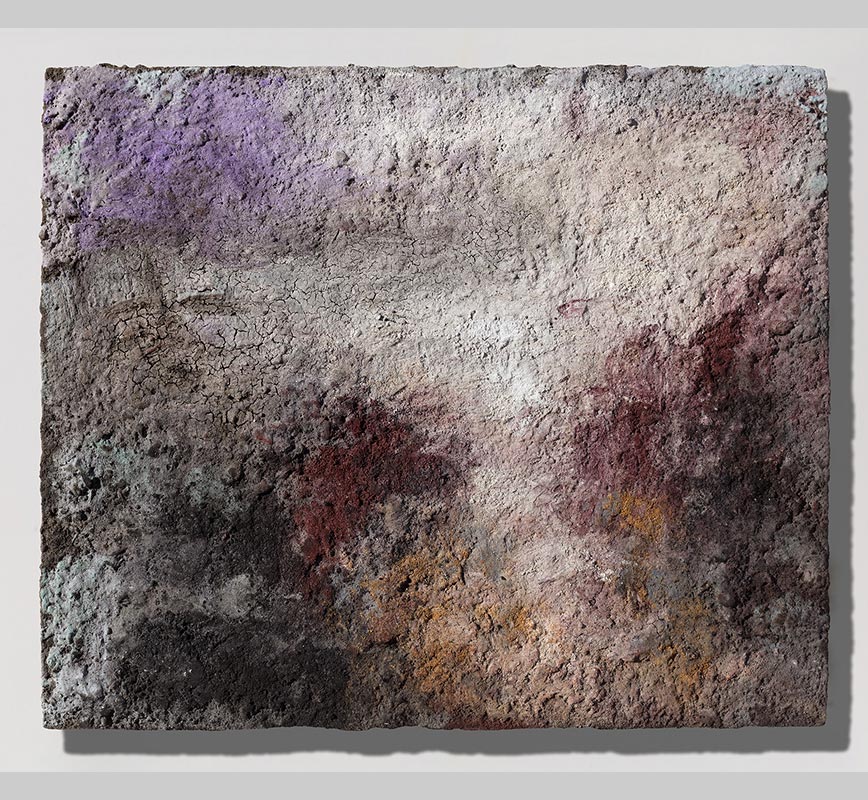
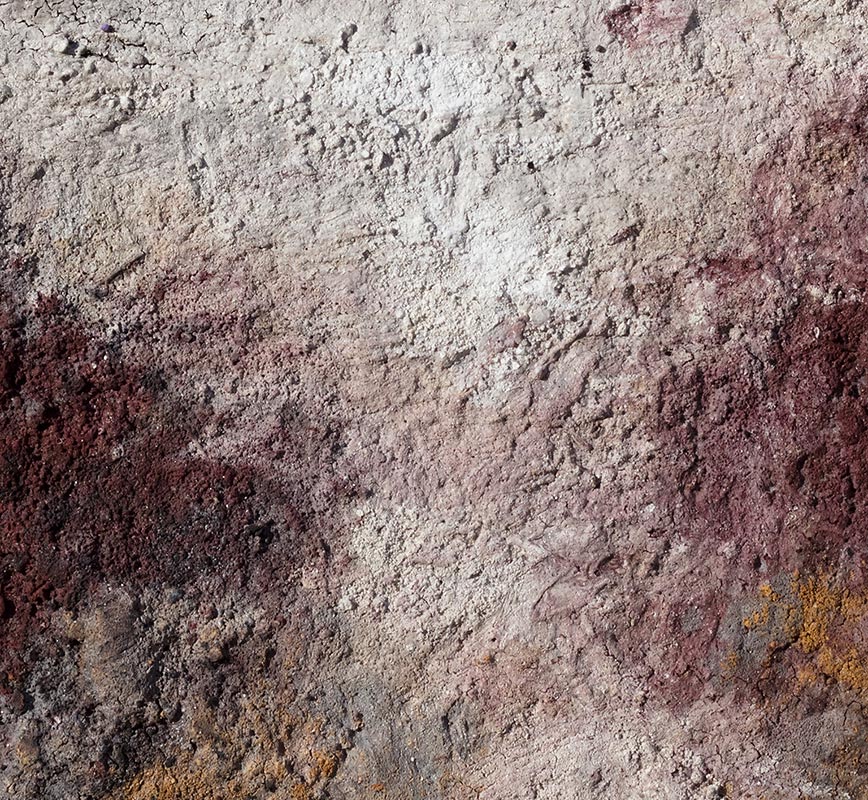
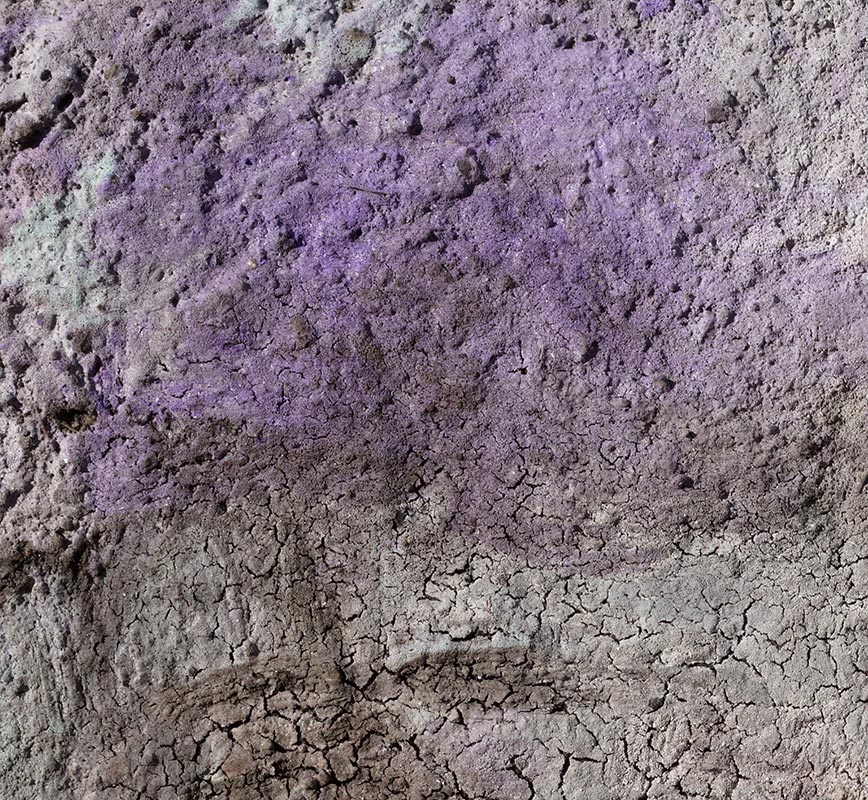
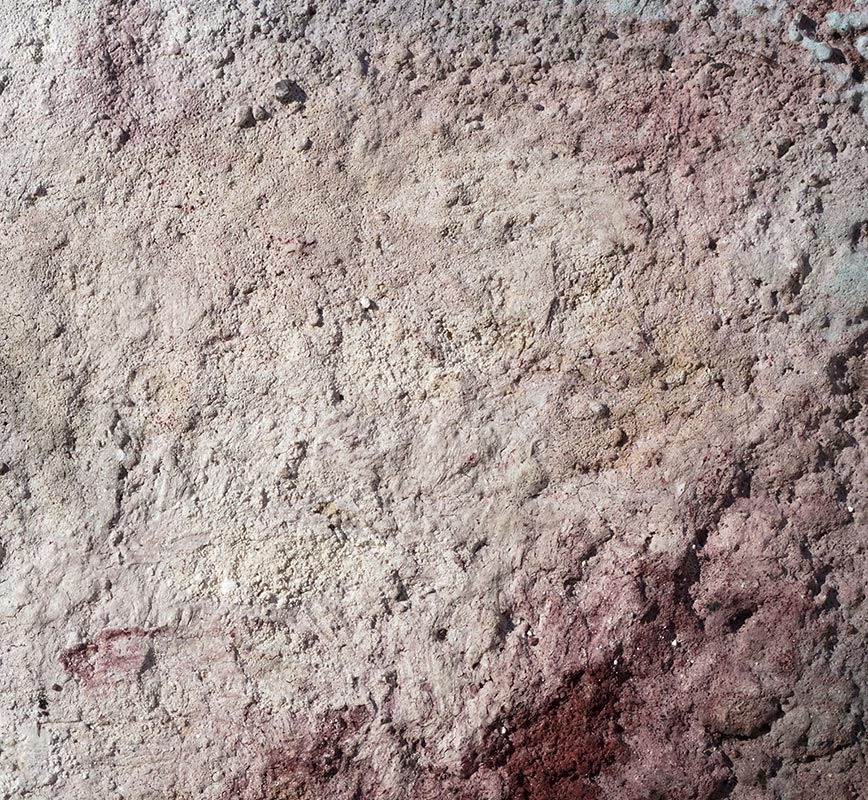
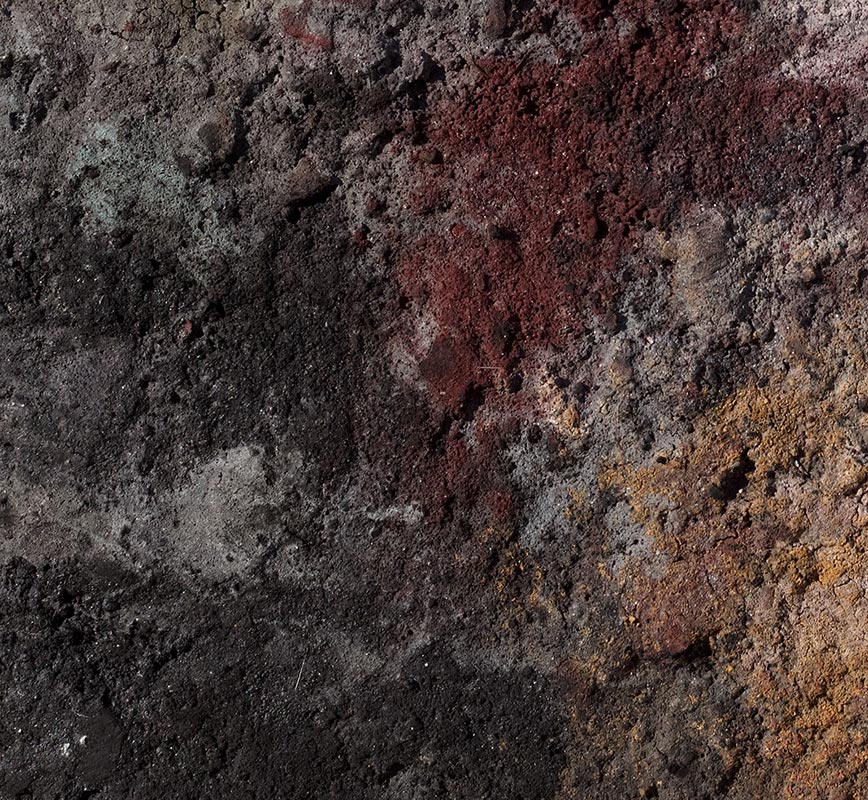
The surface of The Shape of Motion is all atmosphere and instability: a wide chromatic field dissolves from gold and olive earth tones through bands of cobalt and aquamarine into a pale, luminous upper register, with a dark tree mass anchoring the upper right. The encaustic medium is palpable here, its wax and glass-powder matrix generating a light that seems to arise from within the material rather than fall across it. The landscape is felt before it is read.
The surface of The Shape of Motion is all atmosphere and instability: a wide chromatic field dissolves from gold and olive earth tones through bands of cobalt and aquamarine into a pale, luminous upper register, with a dark tree mass anchoring the upper right. The encaustic medium is palpable here, its wax and glass-powder matrix generating a light that seems to arise from within the material rather than fall across it. The landscape is felt before it is read.
The title reaches for something that painting rarely attempts: not the appearance of a landscape but the experience of moving through one, where what the eye catches is always already becoming something else. De Gennaro's horizontal stratification, the compositional logic that runs through the encaustic panel works, reads here less as geology than as weather, a layered atmosphere in continuous, slow exchange. The tree at upper right is not a fixed point; it is caught mid-dissolution, its dark mass bleeding into the pale field behind it.
The landscape of The Shape of Motion does not sit still for inspection: the wax matrix carries the history of decisions made and partially reversed, and the glass powder refracts light at angles that shift as the viewer moves. The work's instability is structural, built into the material. Wolf Kahn, who spent decades distilling New England landscape into bands of resonant color, offers a clarifying contrast. Where Kahn's fields are optically calm, structured by the cool precision of his tonal intervals, The Shape of Motion is physically active. The distinction runs deeper than palette or temperament: it is a difference between color as tonal resolution and color as ongoing atmospheric event, one surface at rest, the other still becoming.