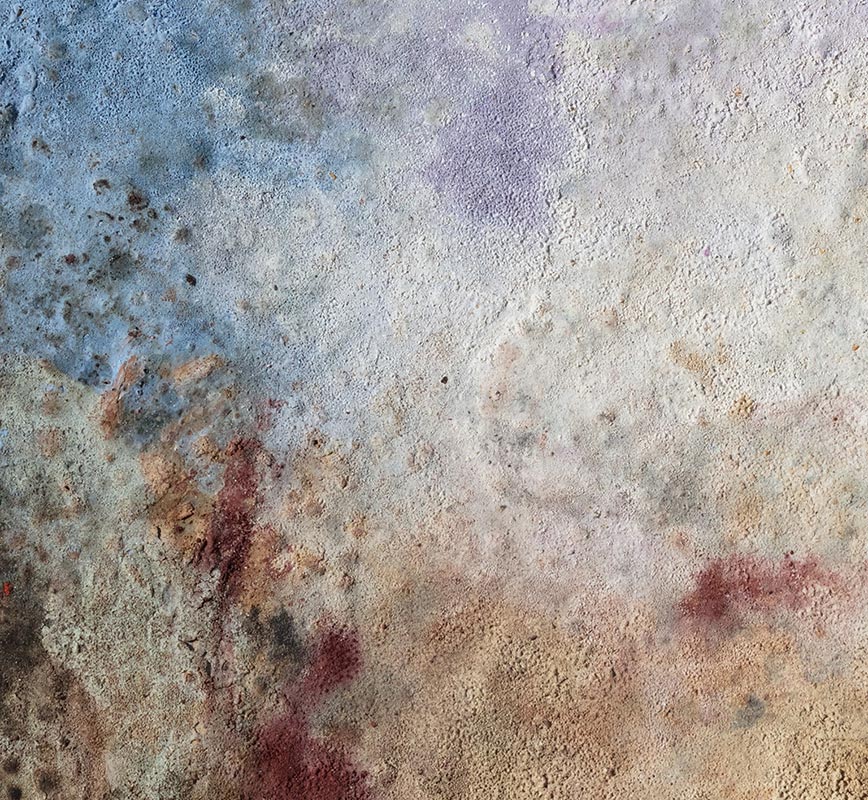
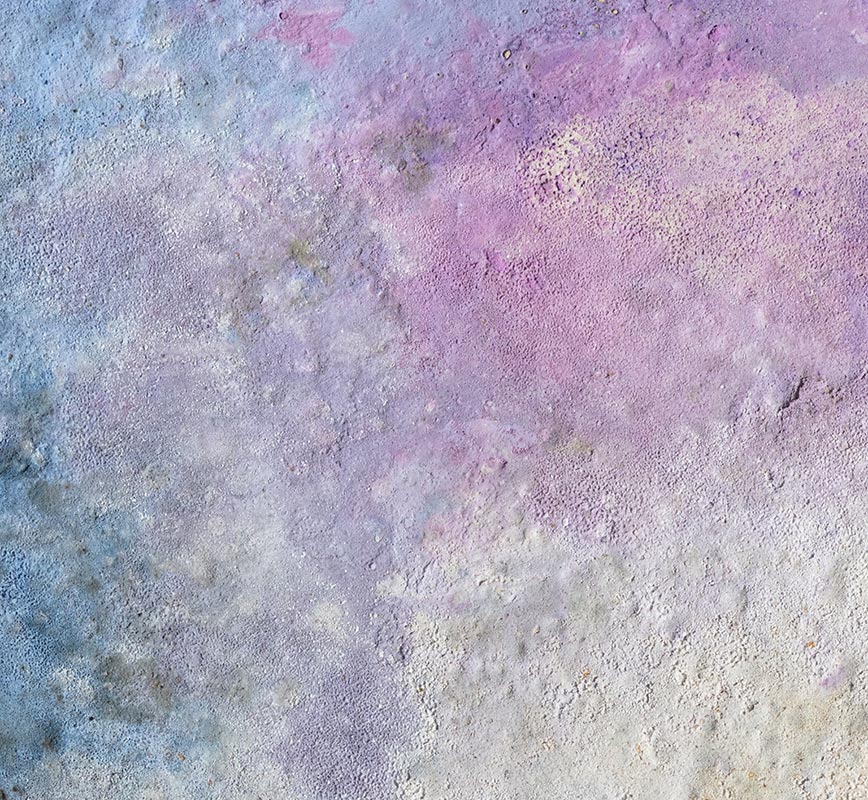
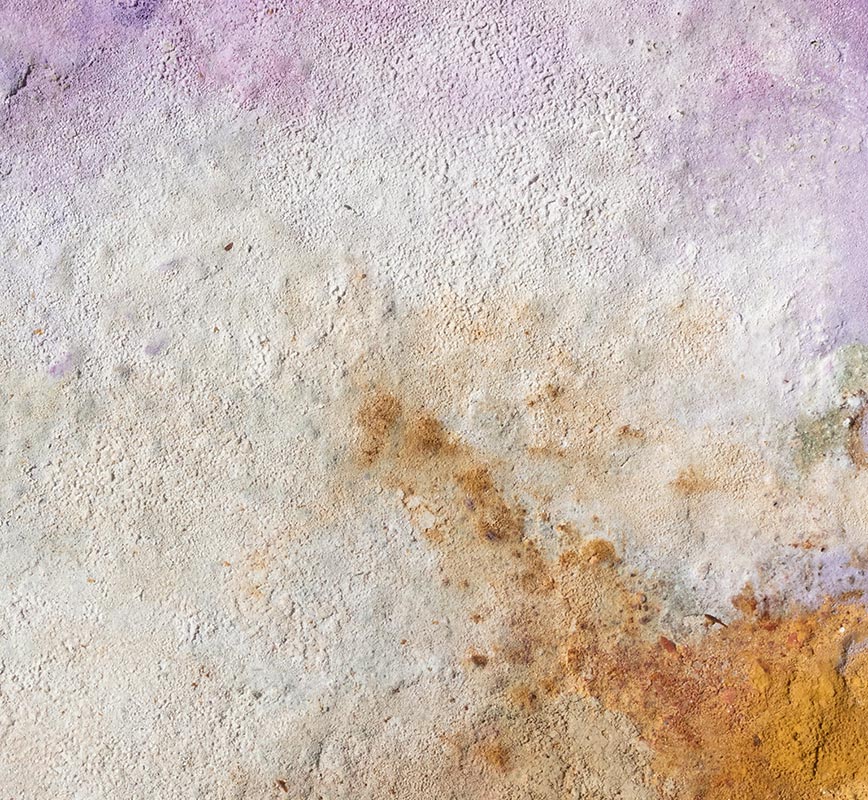
Terra Senza Evento [Land Without Event] proposes the landscape as a condition rather than a scene: a lavender sky above an earth that moves from teal and dark brown through muted ochre to a wide foreground of raw amber, a tree at left standing between atmosphere and ground without quite belonging to either. Nothing is happening here, and that is precisely the point. The surface carries the quiet of a place that exists before any human event is laid upon it.
Terra Senza Evento [Land Without Event] proposes the landscape as a condition rather than a scene: a lavender sky above an earth that moves from teal and dark brown through muted ochre to a wide foreground of raw amber, a tree at left standing between atmosphere and ground without quite belonging to either. Nothing is happening here, and that is precisely the point. The surface carries the quiet of a place that exists before any human event is laid upon it.
This is Italian landscape painting thought through the logic of pittura materia: the horizontal registers are the compositional structure, but they are not decorative divisions. Each band is a stratum, a compressed record of season, weather, and geological time. The teal marks that suffuse the tree and the earth at left have the quality of oxidation, of mineral color that has migrated through the surface over time rather than being applied in a single act.
Corot, whose late paysages intimes were built on a similarly radical economy of incident, comes to mind: like De Gennaro, Corot understood that landscape painting's deepest task is not to describe the land but to hold a particular quality of attention toward it. De Gennaro works within this tradition while moving the material logic to a categorically different register: the encaustic surface, with its layered translucency and glass-powder refraction, does not represent the quiet of the landscape; it enacts it.
![Abstract encaustic landscape by Orazio De Gennaro. Lavender sky over banded earth in teal, muted ochre, and raw amber, single tree at left between atmosphere and ground. Terra Senza Evento [Land Without Event], 2026.](images/artwork07a.jpg)