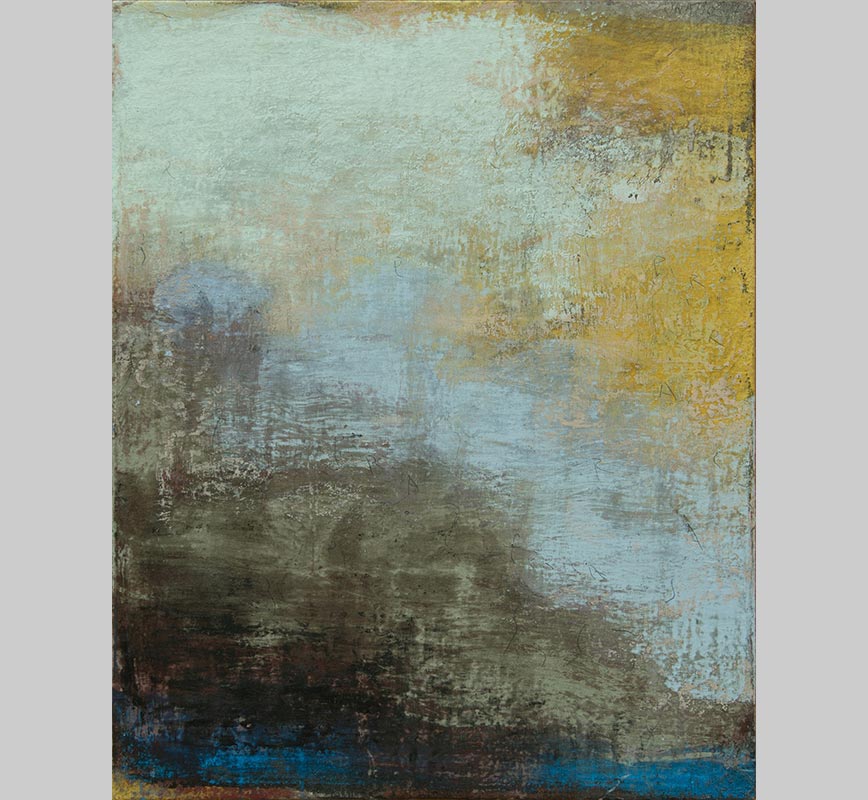
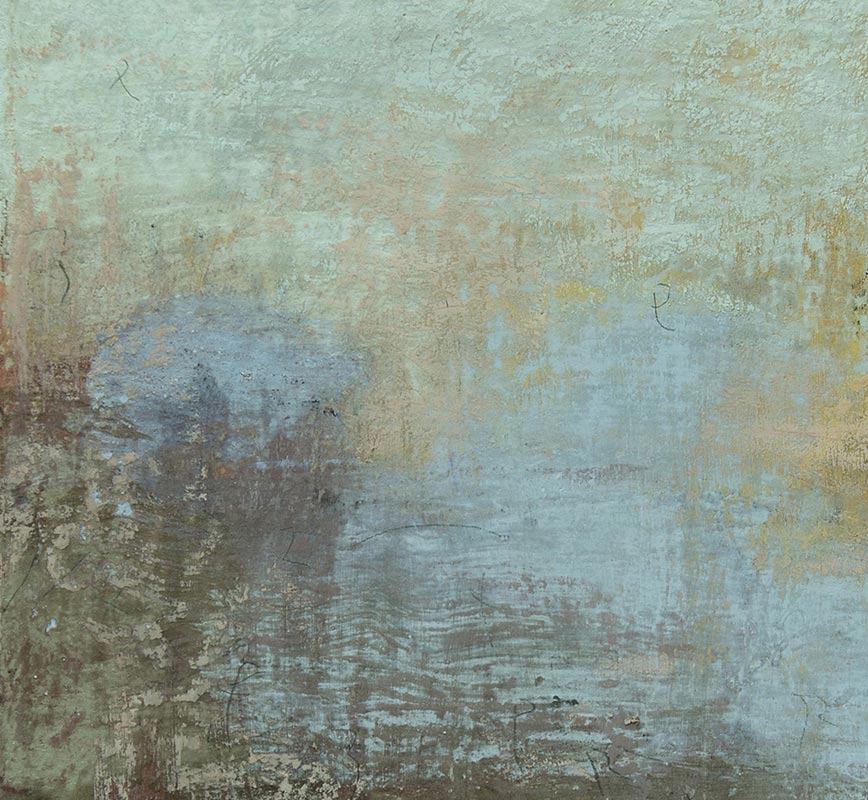
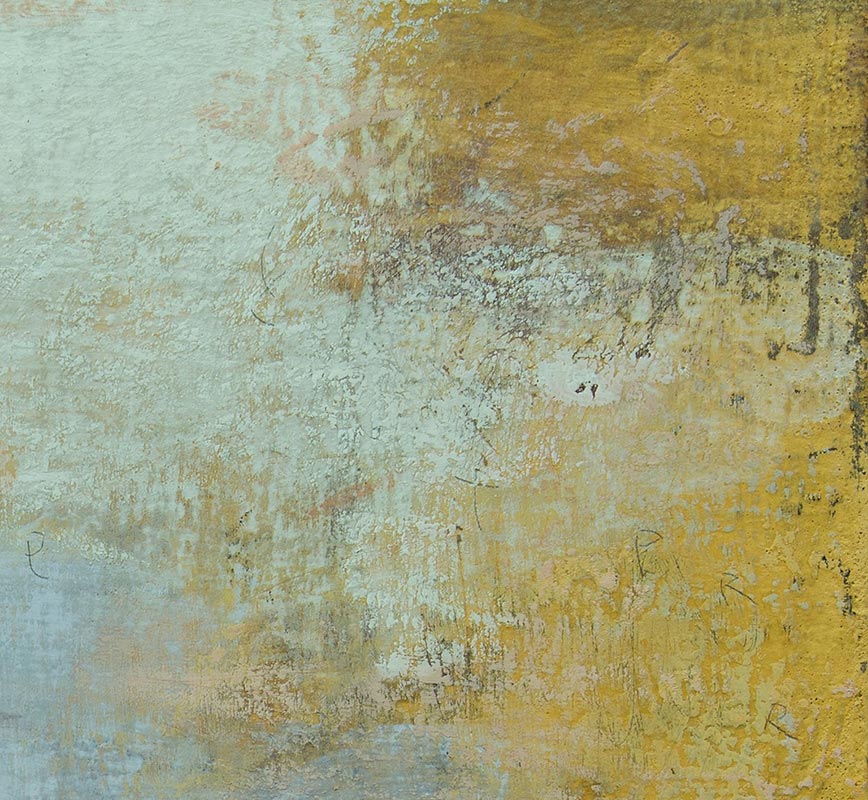
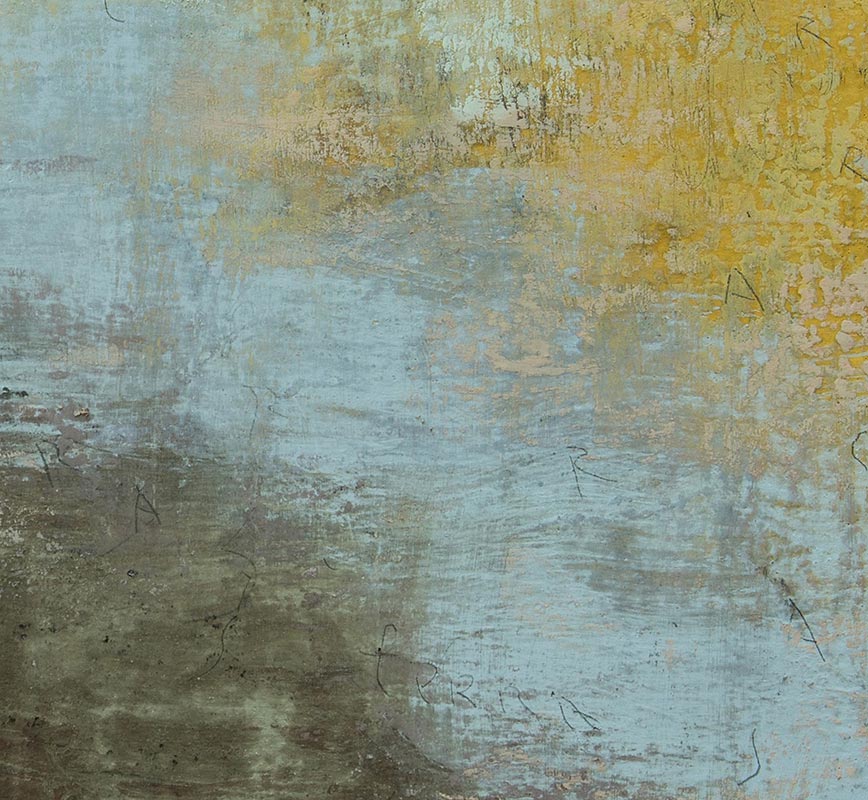
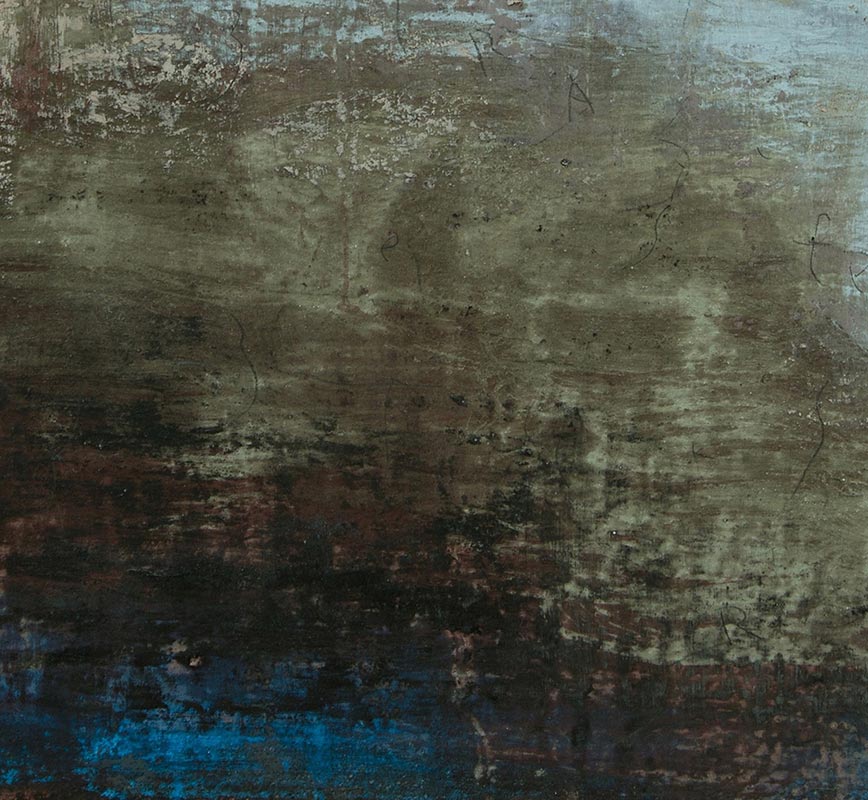
XI:MMIX announces itself through contradiction: charcoal darks and warm ochres grip the lower field while a lateral flash of turquoise and a sudden vertical of red break the earth palette with something closer to sky and blood. At nearly seven feet wide, the canvas holds all of this without resolving it, the surface scored with graphite traces and impasto relief that makes the eye move as if across actual terrain. The date encoded in the title, November 2009, is embedded in the material the way a date is embedded in rock.
XI:MMIX announces itself through contradiction: charcoal darks and warm ochres grip the lower field while a lateral flash of turquoise and a sudden vertical of red break the earth palette with something closer to sky and blood. At nearly seven feet wide, the canvas holds all of this without resolving it, the surface scored with graphite traces and impasto relief that makes the eye move as if across actual terrain. The date encoded in the title, November 2009, is embedded in the material the way a date is embedded in rock.
De Gennaro works with handmade oil pastel built from wax, marble dust, and earth pigments applied over a thick impasto of lime and sand, a process that begins in the studio the way a wall begins in a mason's workshop. The sculptural formation of the surface is not incidental: he trained as a sculptor at the Accademia di Belle Arti in Rome before moving to New York in 1983, and the physical intelligence of a person who thinks through three-dimensional material remains embedded in every painting. XI:MMIX is a canvas you read spatially as much as optically.
XI:MMIX carries the weight of historical and geographical memory through accumulated material rather than through narrative or symbol: this is painting as archaeology rather than as image, and the distinction places it within a specific European tradition of materic scale work. Anselm Kiefer is the inevitable point of triangulation, and the contrast clarifies De Gennaro's position. Where Kiefer's surfaces reach toward the monumental and the culturally programmatic, XI:MMIX is warmer and more intimate, weighted by personal rather than national archaeology. The turquoise passage in the lower register is not northern European lead and bitumen; it is Mediterranean sea. This is not the painting of traumatic historical rupture, but of deep continuity with a landscape that precedes history and will outlast it.