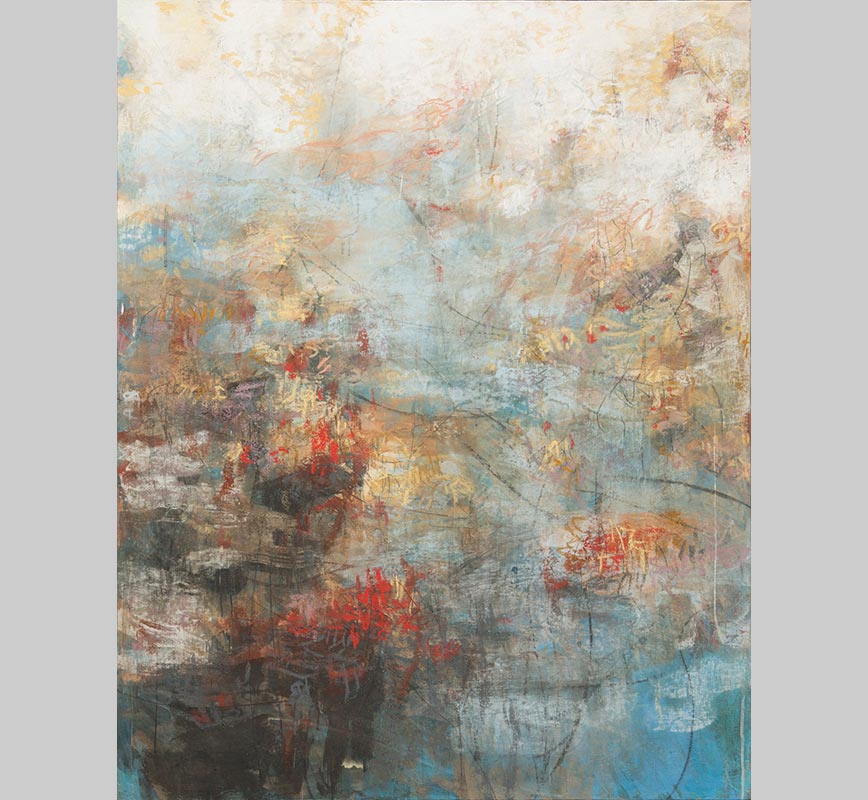
Restless Wind strips the palette to its darkest register: a field of deep navy, charcoal, and forest teal, broken by horizontal streaks of white and faint pink that move across the surface like light pressing through dense cloud. The dark mass of a tree at upper left is nearly absorbed into the surrounding field. What remains is the sensation of a landscape under meteorological pressure, the kind of scene that registers in the body before the eye has time to organize it.
Restless Wind strips the palette to its darkest register: a field of deep navy, charcoal, and forest teal, broken by horizontal streaks of white and faint pink that move across the surface like light pressing through dense cloud. The dark mass of a tree at upper left is nearly absorbed into the surrounding field. What remains is the sensation of a landscape under meteorological pressure, the kind of scene that registers in the body before the eye has time to organize it.
The tonal compression recalls John Constable's storm studies, those rapidly worked cloud sketches in which the English landscape painter narrowed his range to an almost monochromatic drama of grey against white in order to isolate the emotional temperature of weather. De Gennaro works differently: the encaustic surface cannot be blended into the tonal gradations of oil, and what Constable achieves through tonal transition, De Gennaro achieves through the dissolution of material boundaries. The white streaks are not painted over the dark field but emerge from within it, a function of the wax matrix's palimpsestic structure.
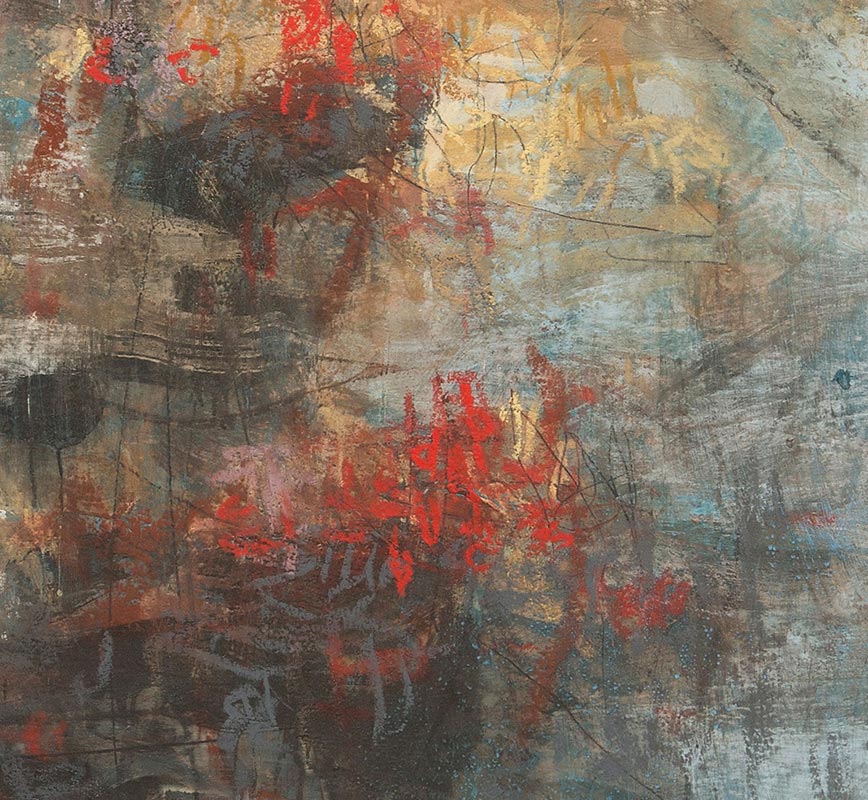
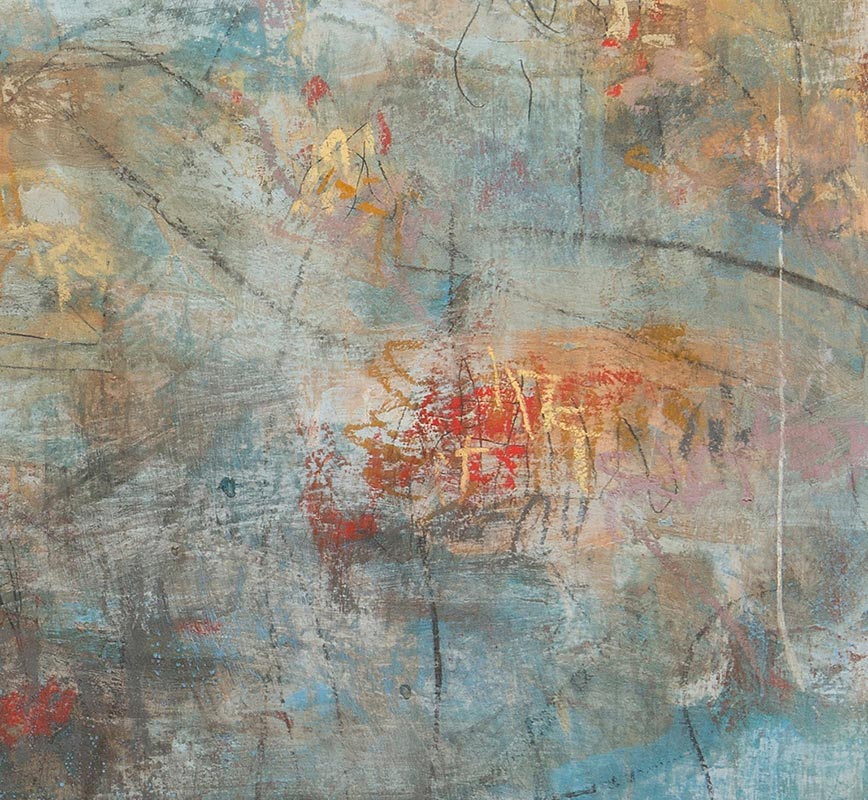
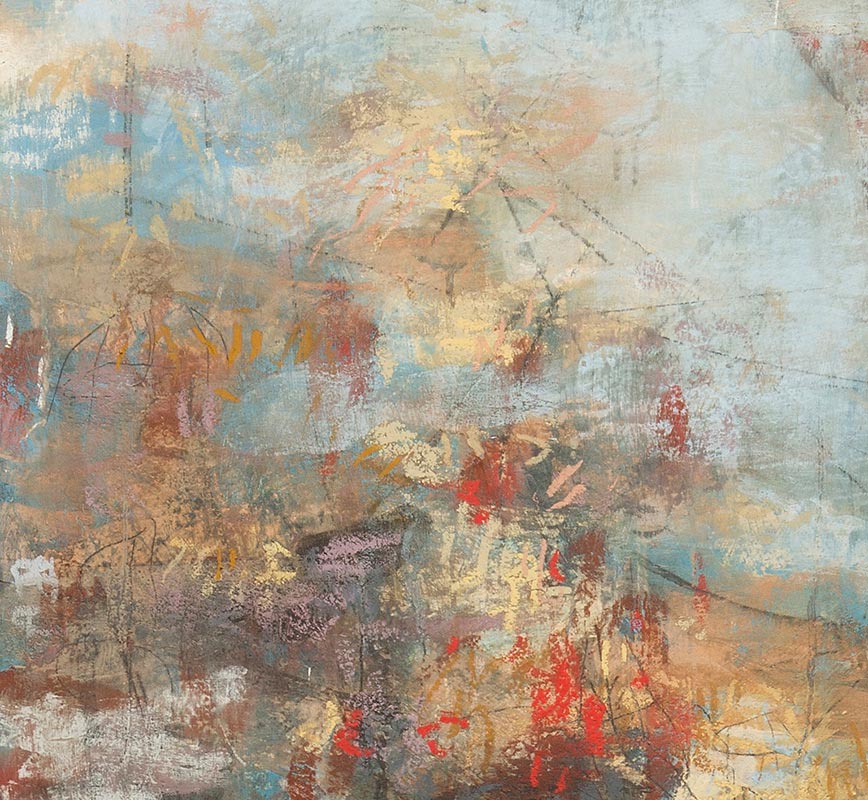
The panel's modest scale gives the work an intimacy that its emotional intensity belies. The surface rewards proximity: at close range the glass-powder component becomes readable as a material fact, its refractive properties generating small points of cold light within the deep tonal field, like breaks of sky between moving cloud.