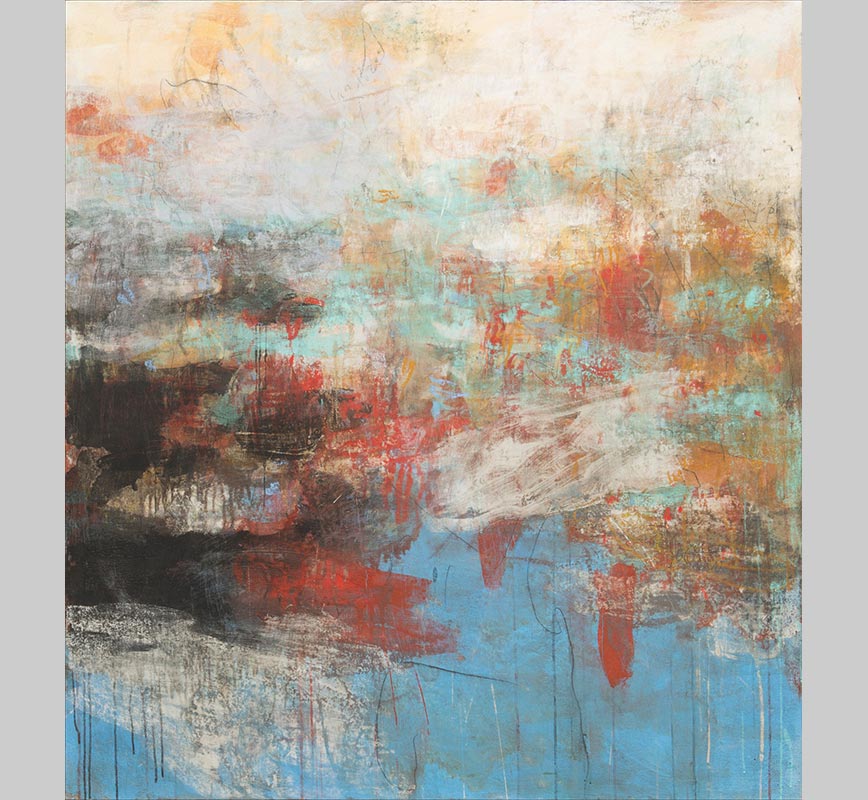
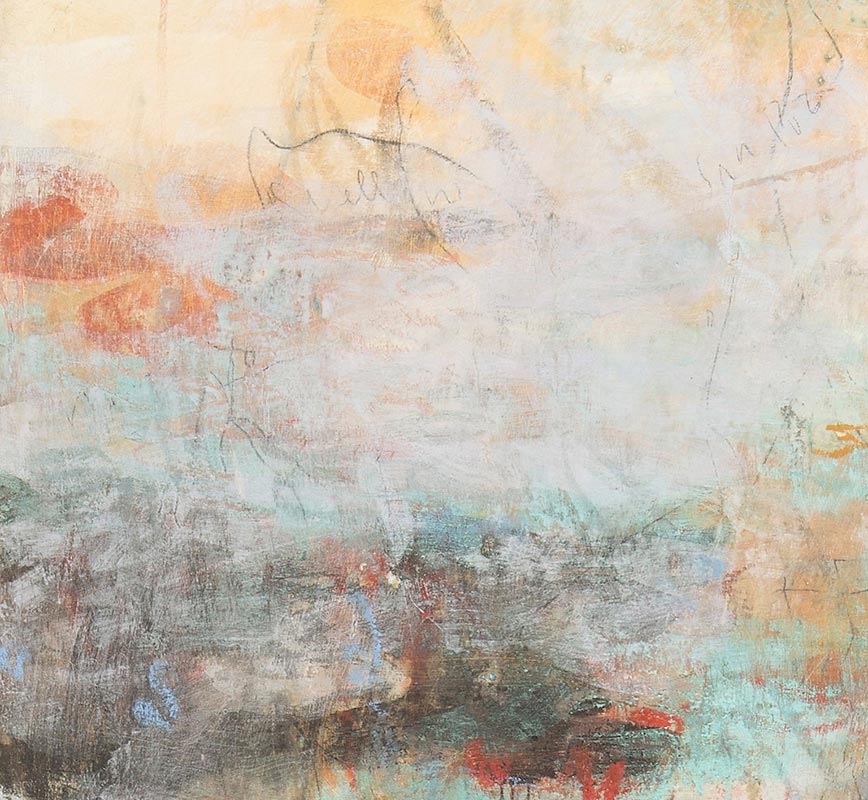
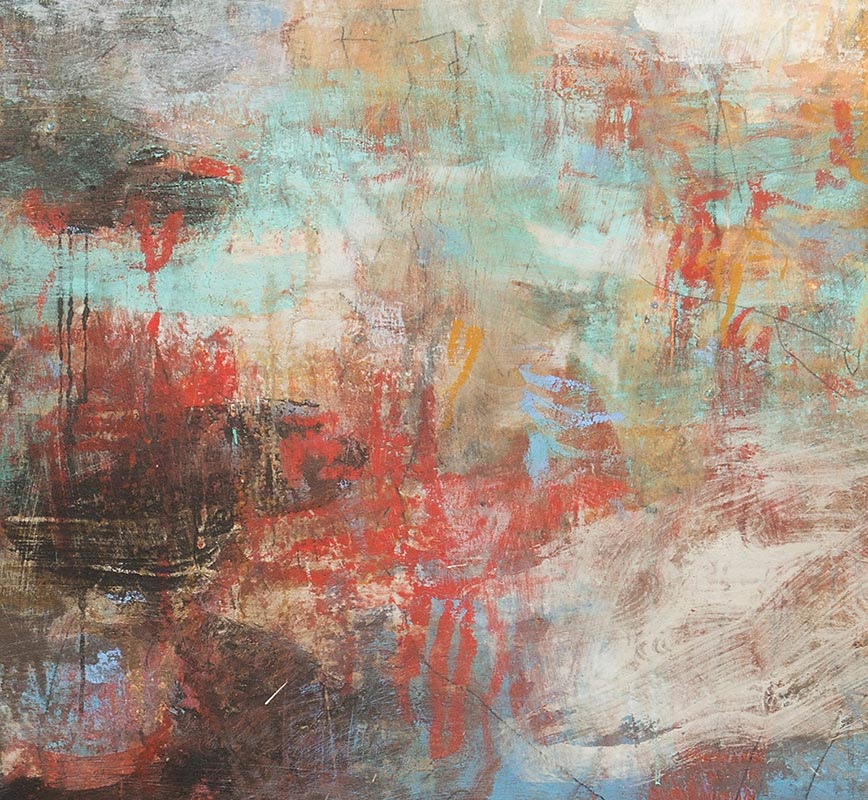
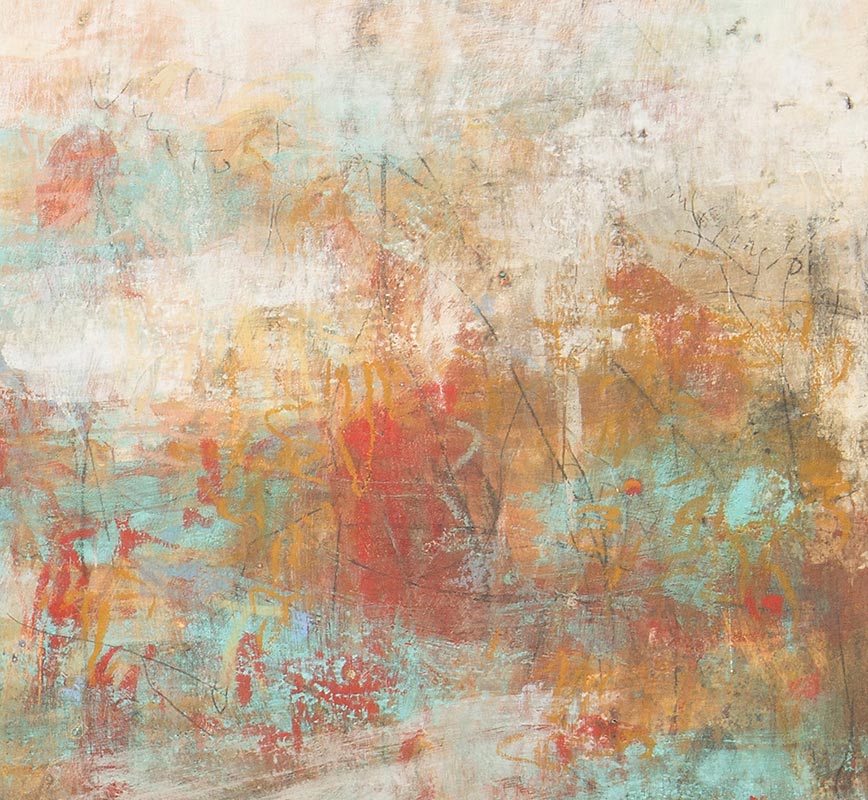
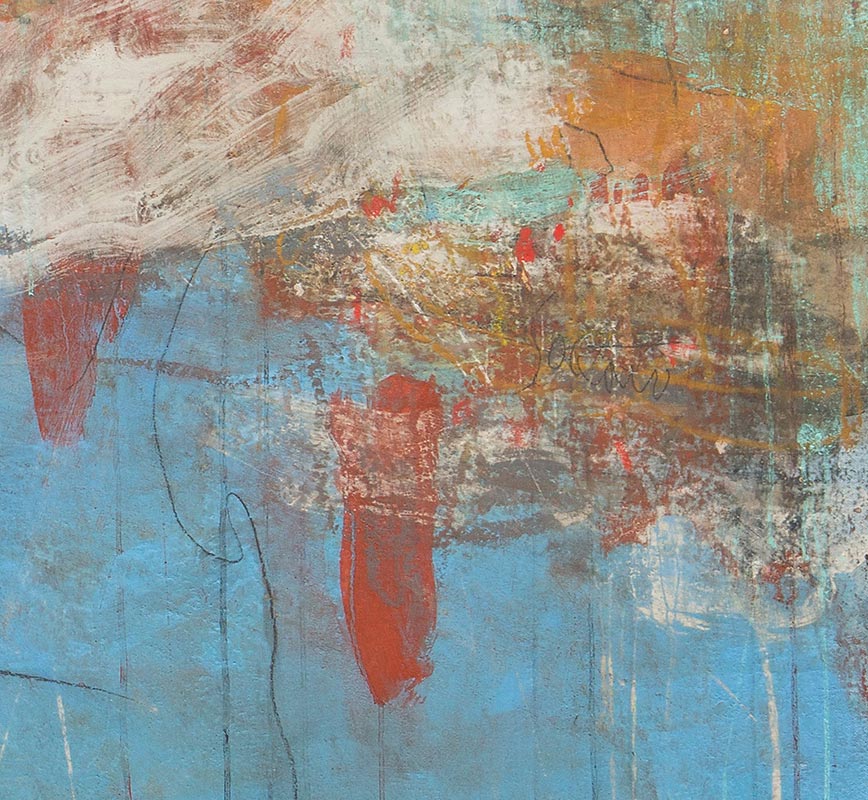
Sannio is one of those paintings that stops you before you understand why. The surface rises from the canvas in deep reddish-browns and raw siennas at the base, cooling through gray-blue veils toward a pale, almost luminous upper register, as if the terrain itself were exhaling. The marks are not brushstrokes in any conventional sense: graphite traces push up through layers of lime and earth pigment, emerging and dissolving like seams in exposed rock. This is painting that thinks in geological time.
Sannio is one of those paintings that stops you before you understand why. The surface rises from the canvas in deep reddish-browns and raw siennas at the base, cooling through gray-blue veils toward a pale, almost luminous upper register, as if the terrain itself were exhaling. The marks are not brushstrokes in any conventional sense: graphite traces push up through layers of lime and earth pigment, emerging and dissolving like seams in exposed rock. This is painting that thinks in geological time.
The title refers to the Sannio, the inland mountain territory of the Campania region where De Gennaro was born and raised, home to the Samnites whose pre-Roman resistance to conquest is written into the landscape's very character. But Sannio is not a topographical record. It is a painting built from the same materials as the land it evokes: earth pigments, lime, marble dust, graphite. De Gennaro prepares each element by hand, pressing the substances of his birthplace into the canvas's surface the way geological time presses strata into rock. The composition's horizontal stratification is not a landscape convention but a material fact.
Francesco Arcangeli, the critic who identified ultimo naturalismo as the defining strand of Italian postwar painting, described this mode of painting as the surface becoming a site of liberi accadimenti pittorici, free pictorial events, in which dense material accumulation recreates the generative tensions of the natural world. De Gennaro's canvas works operate precisely within this tradition: the surface does not depict landscape, it enacts it. Mimmo Paladino, born in Paduli in the same Benevento province, drew on the same geographic formation to develop a practice of enigmatic material density. Sannio belongs to this same southern Italian lineage, where the weight of land before history becomes the weight of painting.