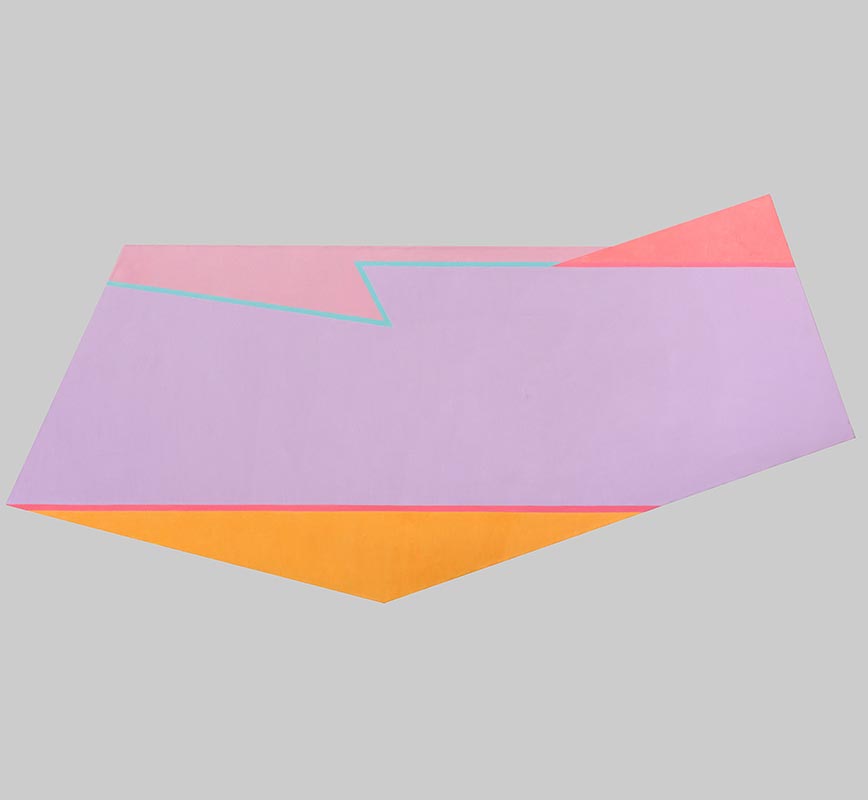
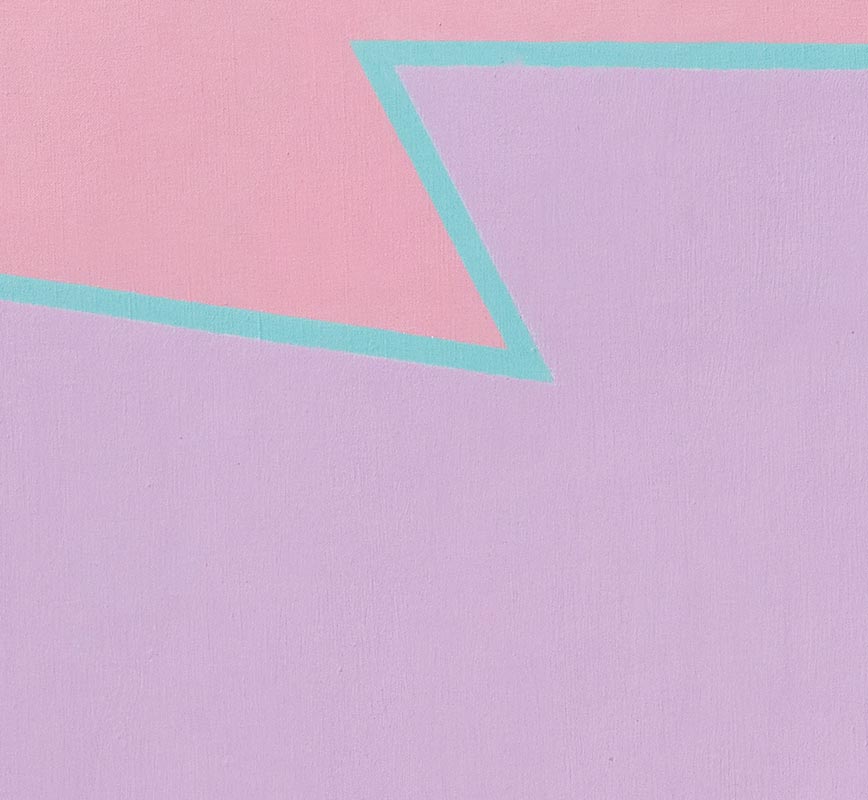
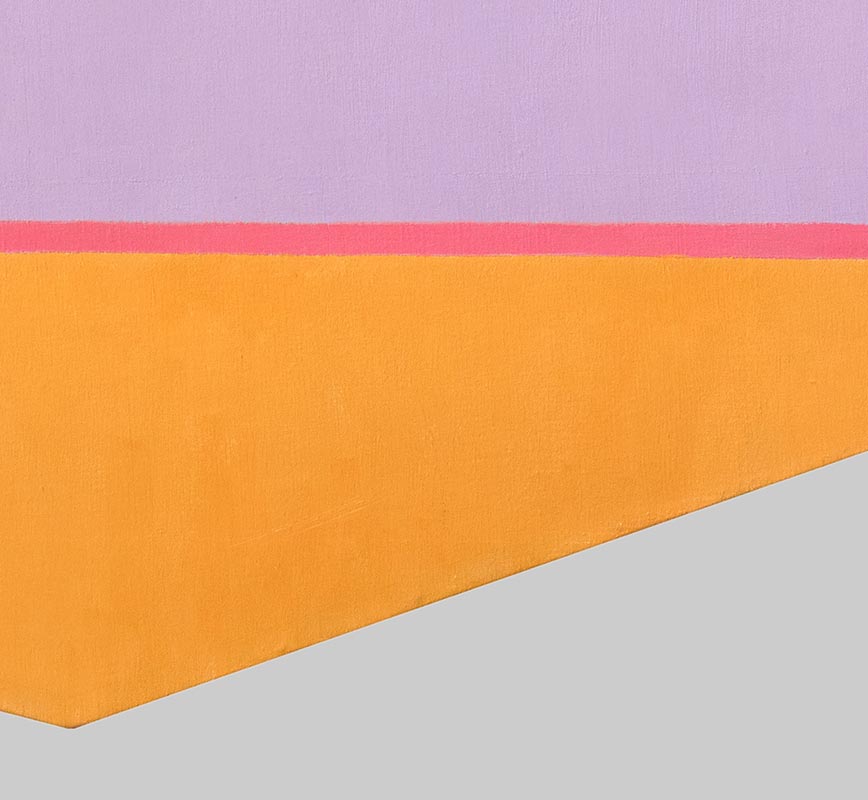
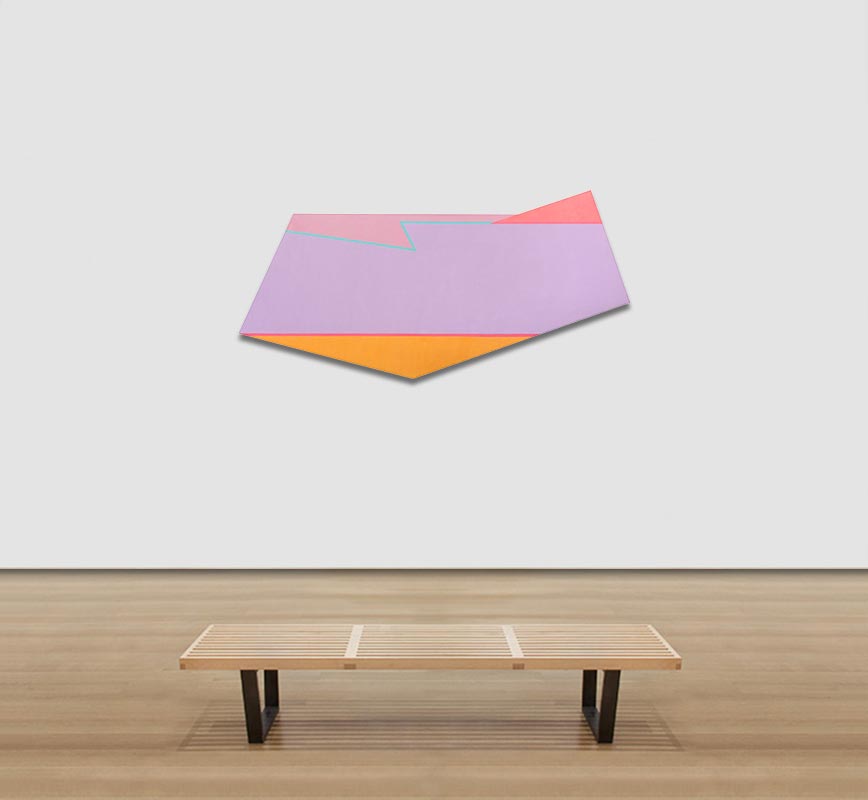
A triangular form is outlined in concentric bands of yellow, pink, and orange against a cool gray ground, and the effect is of something radiating outward from within. The gradients do not simply fill the geometry; they enact it, each band slightly warmer or cooler than the last, so that the triangle reads as a source of light rather than a shape on a surface. The gray holds the composition in check, making the warm interior bands more concentrated and more insistent.
A triangular form is outlined in concentric bands of yellow, pink, and orange against a cool gray ground, and the effect is of something radiating outward from within. The gradients do not simply fill the geometry; they enact it, each band slightly warmer or cooler than the last, so that the triangle reads as a source of light rather than a shape on a surface. The gray holds the composition in check, making the warm interior bands more concentrated and more insistent.
Canin paints his triangle on a conventional rectangular canvas, and the gradient transitions within the bands introduce a quality that contemporaries like Frank Stella deliberately excluded from their geometric work: the illusion of depth, of color receding and advancing within a flat plane. Stella’s paintings of the same moment, 1967, pursued optical power through the structural logic of the shaped canvas, the image derived from the support, bands running parallel to each edge, the form self-contained and architectural. This push and pull between geometric rigor and optical atmospheric effect is Canin’s distinctive contribution to the hard-edge moment.
The Washington Color School painters who were his contemporaries understood color primarily as stain, soaked into raw canvas so that figure and ground became inseparable. Canin’s method is the opposite: oil on canvas, surfaces taped and controlled, color layered precisely so that its boundaries are clean and its relationships calculated. The warmth that these bands produce is earned through exactitude, not gesture.