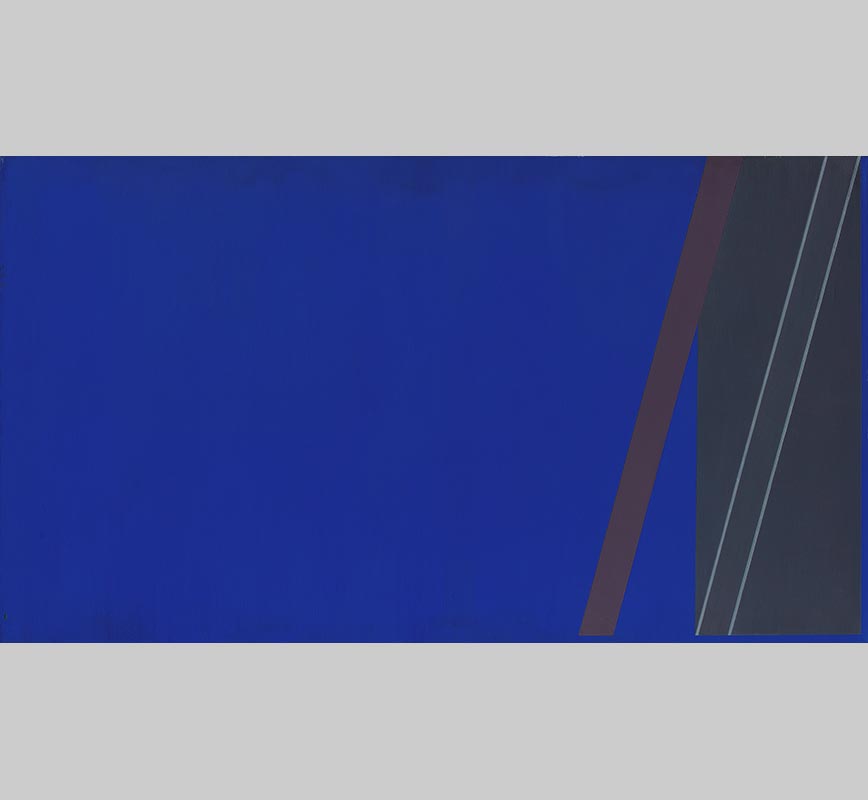
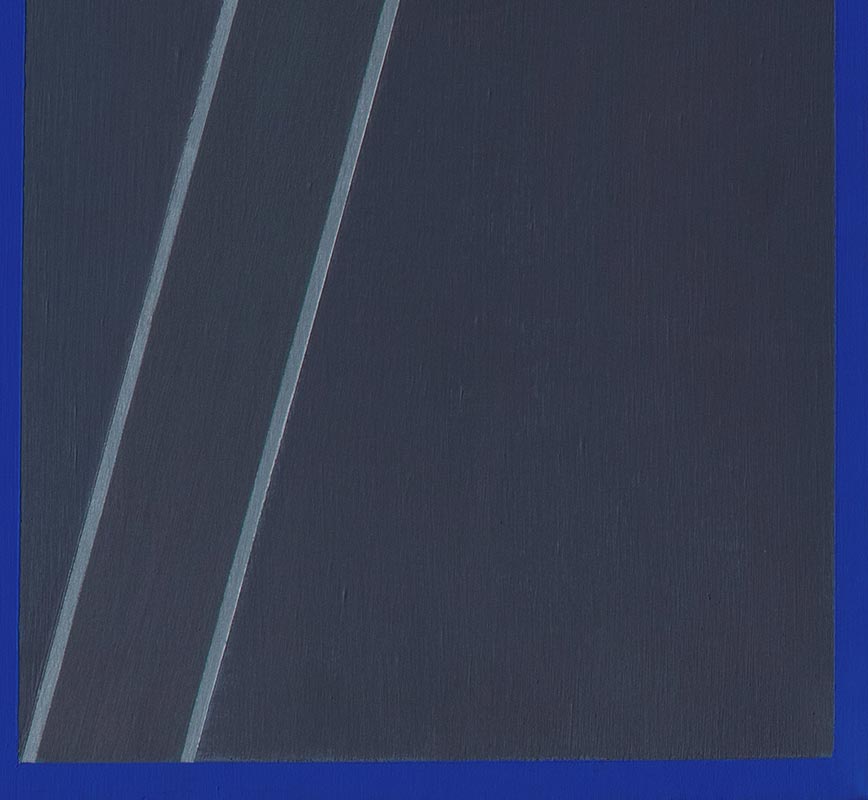
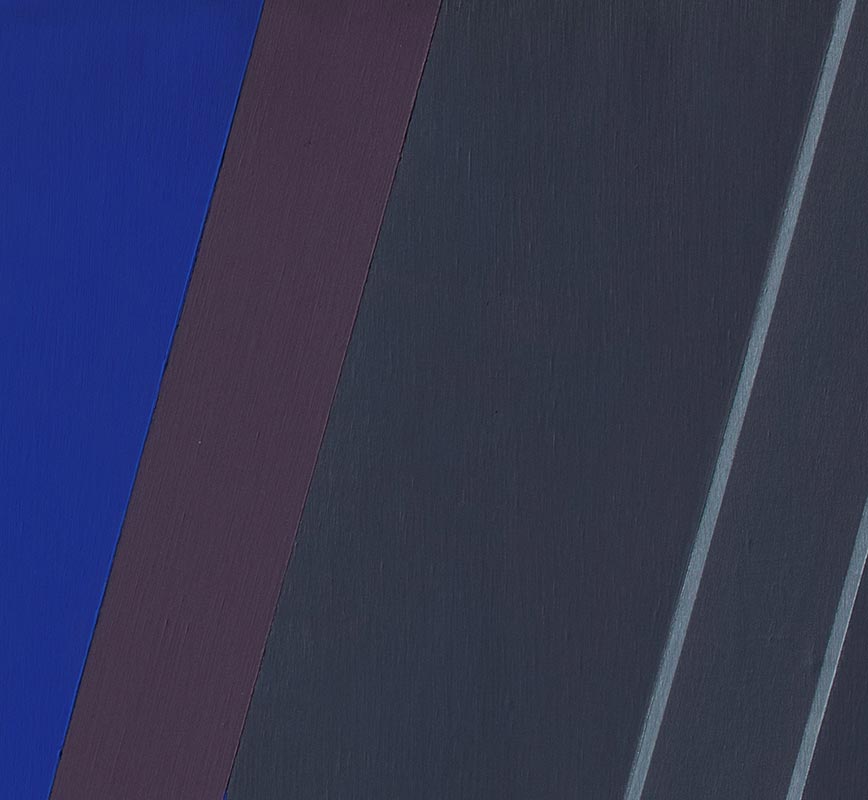
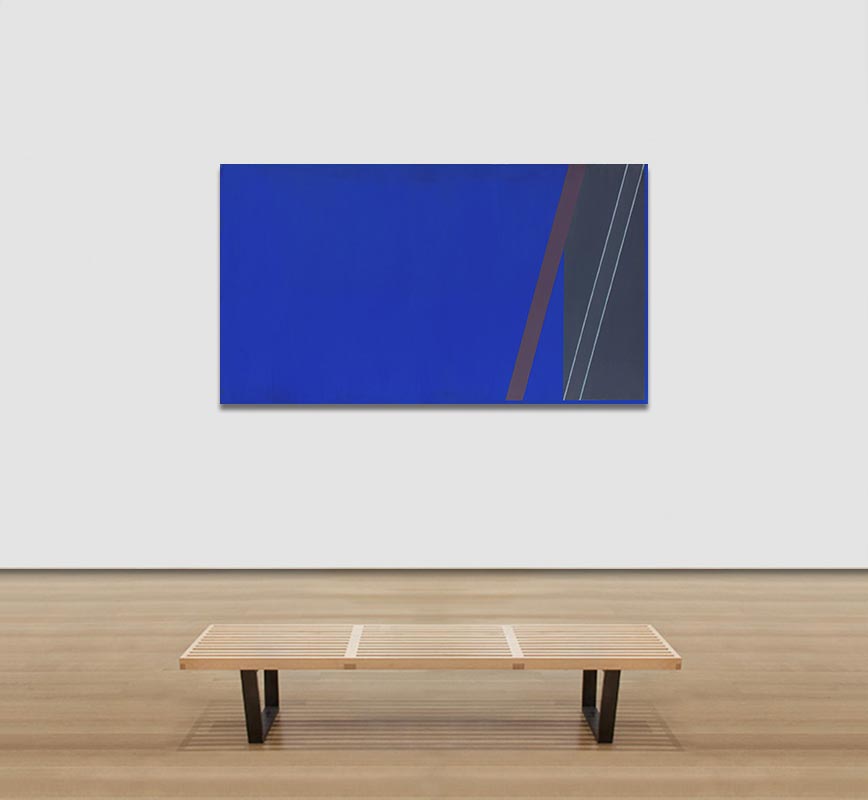
Chad is a painting that also reads as an object. The canvas is cut to a long, acute wedge, yellow and white occupying its tapered planes in carefully calibrated gradients, the angular edges creating a profile that competes with the painted surface for the viewer’s attention. The shaped support is not a formal device here; it is the painting’s first argument, raising the question of where the pictorial ends and the physical object begins before a single color relationship has been assessed.
Chad is a painting that also reads as an object. The canvas is cut to a long, acute wedge, yellow and white occupying its tapered planes in carefully calibrated gradients, the angular edges creating a profile that competes with the painted surface for the viewer’s attention. The shaped support is not a formal device here; it is the painting’s first argument, raising the question of where the pictorial ends and the physical object begins before a single color relationship has been assessed.
Canin arrived at the shaped canvas as a deliberate philosophical turn. Martica Sawin, reviewing this body of work in ARTS Magazine in 1978, described the shaped paintings as raising questions of color perception that go beyond the optical and into the conceptual: the irregular support forces the viewer to reconsider what they are seeing. Chad demonstrates this with particular economy. The wedge creates a directional pull, and the yellow and white planes must function within that spatial pressure rather than across a neutral ground.
Where Color Field painters had pursued color’s independence from form by dissolving it into raw canvas, Canin reintroduces form as a problem color must solve. The tension is not resolved here; it is held in productive irresolution. His own statement, that conciseness in art is both necessary and elegant, is nowhere more stringently tested than in a painting reduced to one color, a simple gradient, and a shape cut to its essentials.