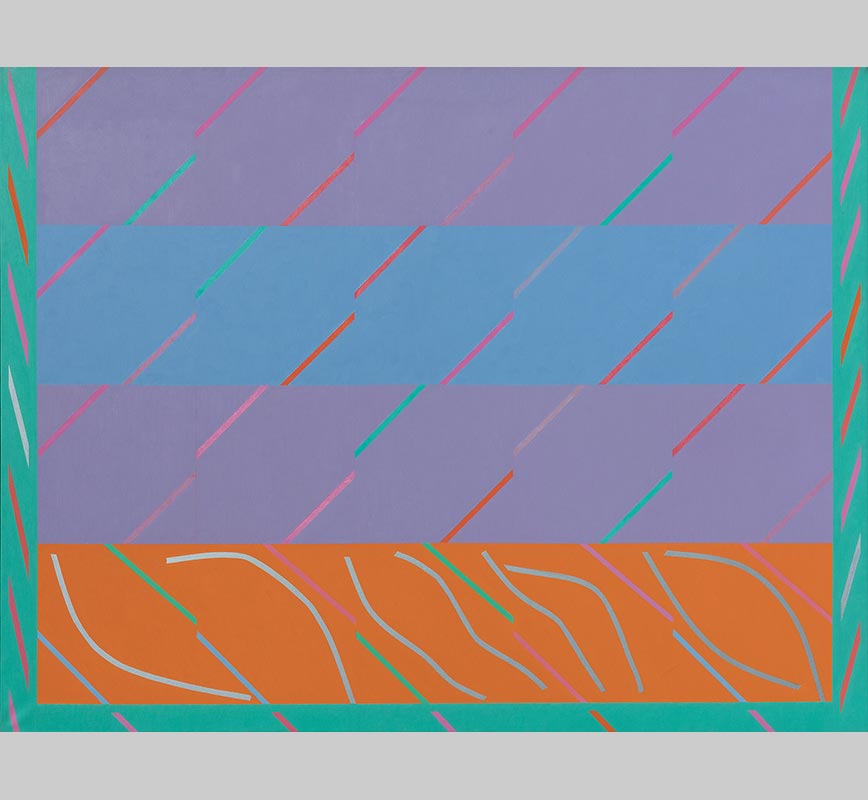
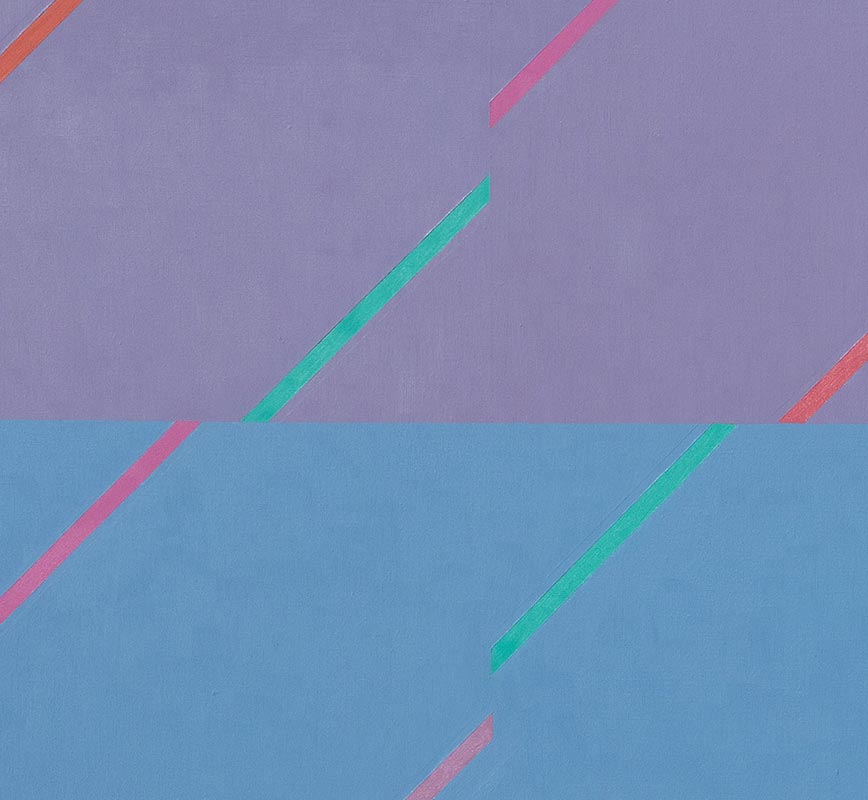
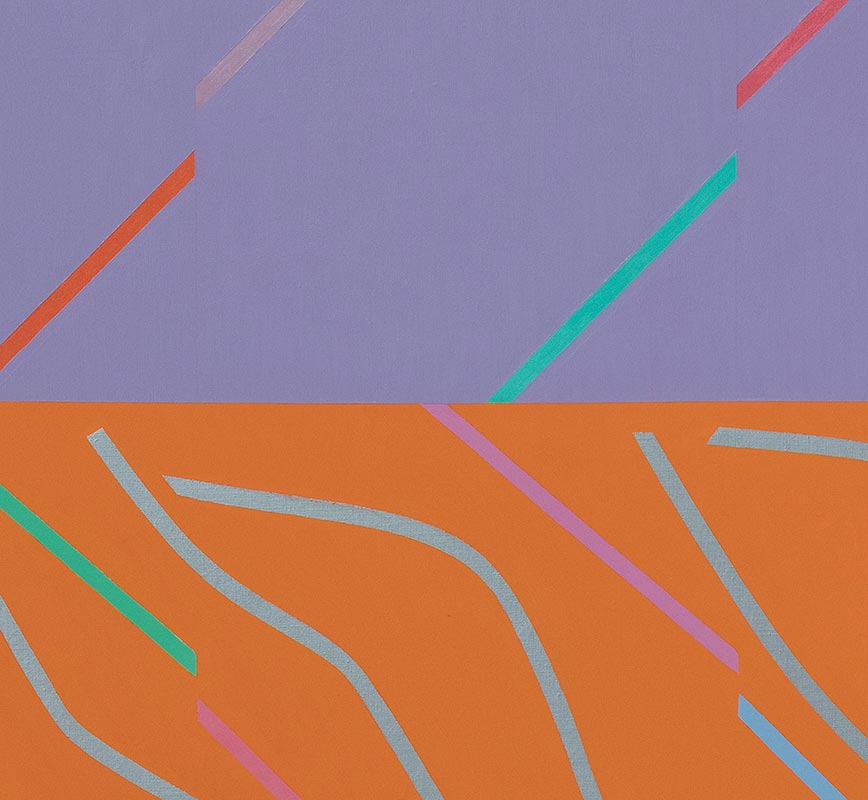
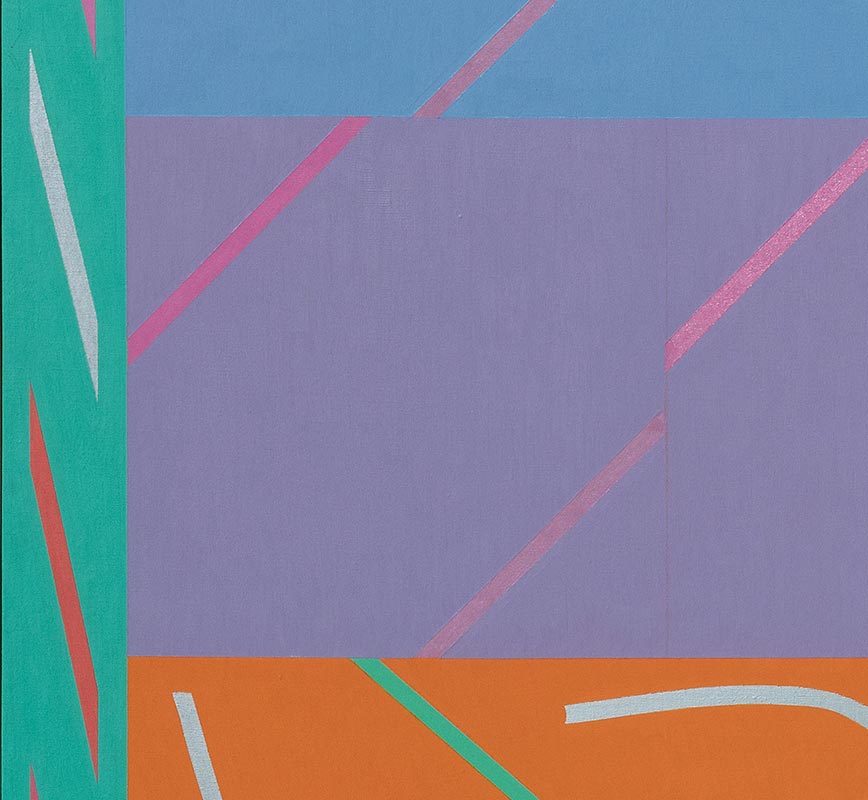
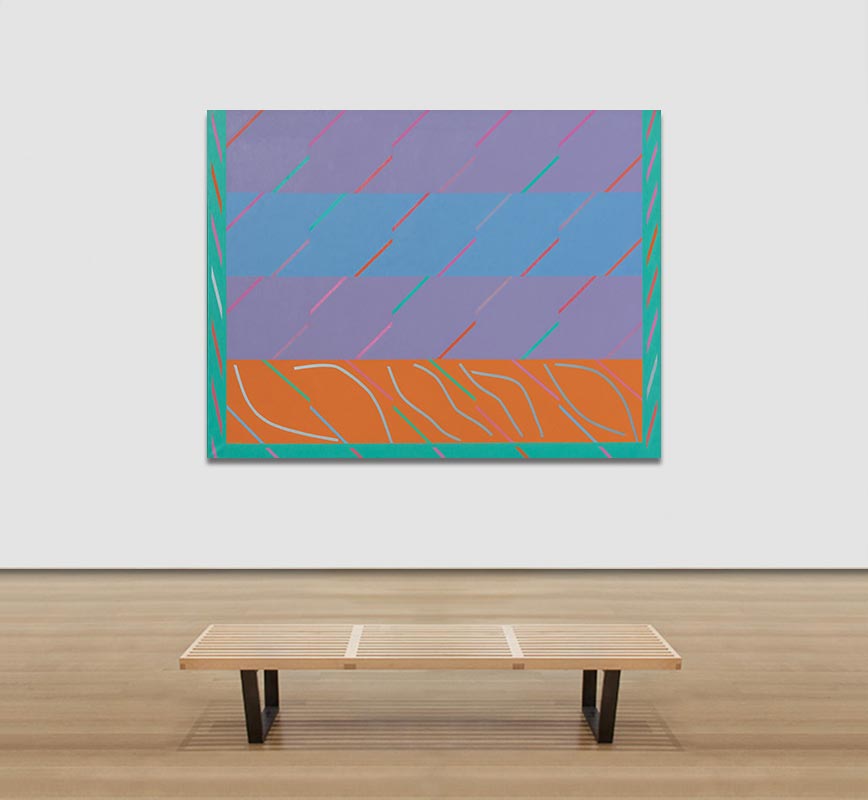
In San Anton Rock, 1972, the composition explores vibrant contrasts through layered color bands and diagonal lines. The purple and blue fields create a tranquil backdrop, while sharp diagonal strokes in bright hues like red and green cut across, injecting a sense of dynamic movement. The bottom segment introduces a vivid orange section with curving white and green lines, breaking the rhythm and adding a playful twist. The turquoise border frames the composition, grounding the painting’s energy within a structured layout.
In San Anton Rock, 1972, the composition explores vibrant contrasts through layered color bands and diagonal lines. The purple and blue fields create a tranquil backdrop, while sharp diagonal strokes in bright hues like red and green cut across, injecting a sense of dynamic movement. The bottom segment introduces a vivid orange section with curving white and green lines, breaking the rhythm and adding a playful twist. The turquoise border frames the composition, grounding the painting’s energy within a structured layout.
Canin builds the upper register of San Anton Rock through accumulated individual decisions: each diagonal stroke placed, its angle and weight distinct, no two identical, the visual energy generated through the sum of distinct choices rather than through the visual unity of a single process. This is the opposite of the Color Field logic Morris Louis exemplified: Louis derived his paintings from the pour, color following gravity across raw canvas with no gestural mark, no visible decision at the local level.
The curved lines in the orange lower section introduce the painting’s most unusual element: in a body of work that maintains geometrical discipline even when its geometry is complex, the gentle curves in this band carry a lightness that the angular upper zone lacks. The painting holds these two registers in balance across the turquoise border, and the border’s steady presence is what prevents the contrast from becoming contradiction.