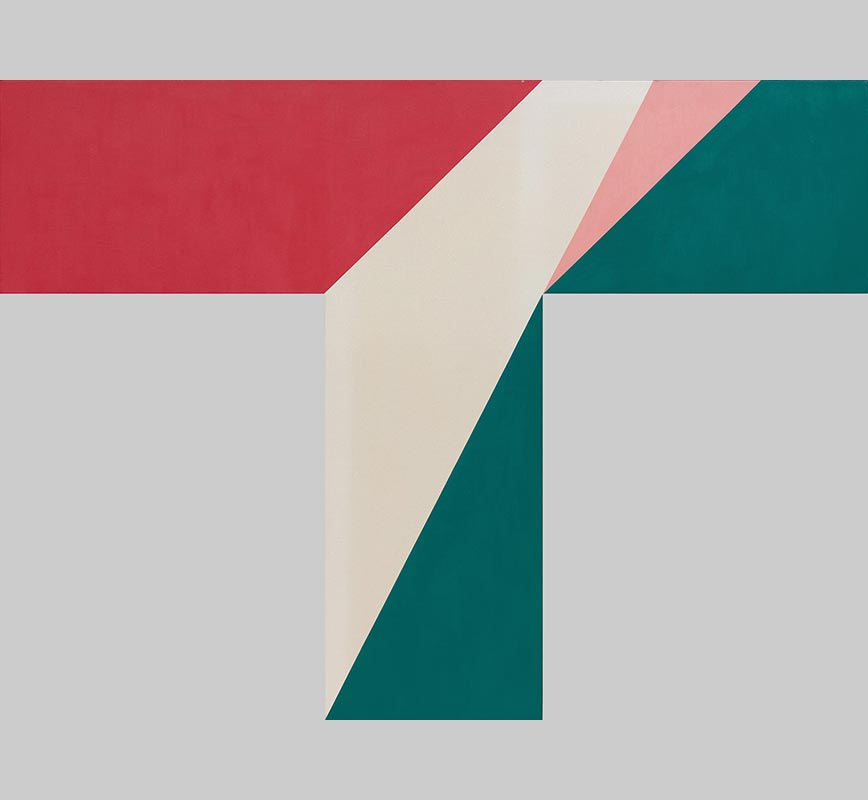
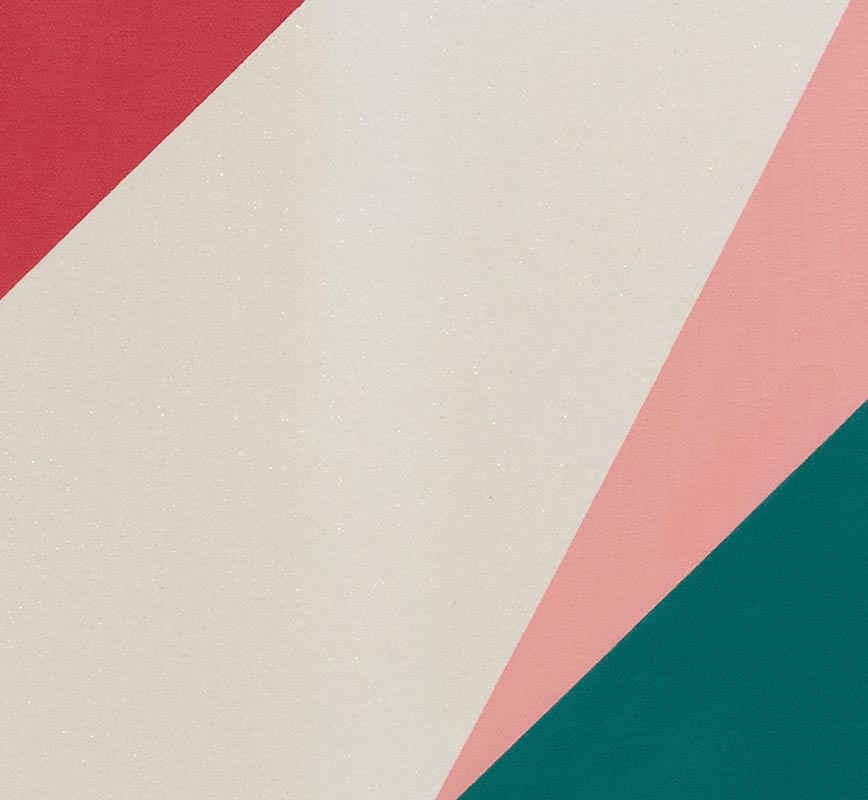
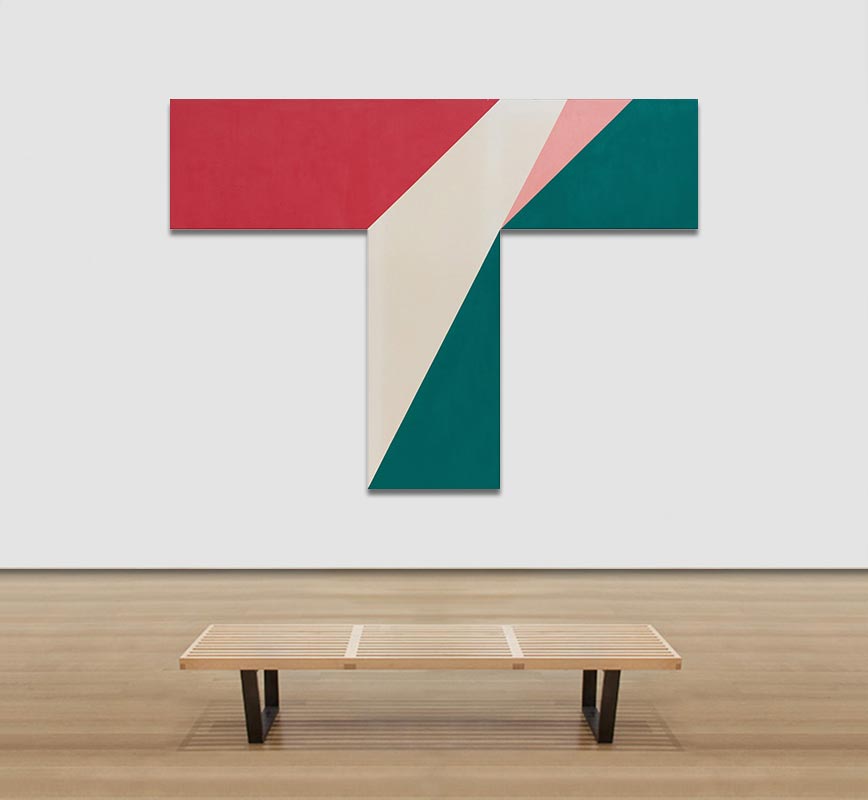
A dark, neutral field, occupying the largest portion of the canvas, holds Voyage II in an unusual suspension for a Canin painting: the color has withdrawn. At the top and bottom, thin angular shards in vivid greens, reds, and blues cut across the dark ground, and at the bottom a field of pure yellow reasserts the warmth that the central zone suspends. The result is a painting organized around absence as much as presence, the dark center making the peripheral color events more urgent.
A dark, neutral field, occupying the largest portion of the canvas, holds Voyage II in an unusual suspension for a Canin painting: the color has withdrawn. At the top and bottom, thin angular shards in vivid greens, reds, and blues cut across the dark ground, and at the bottom a field of pure yellow reasserts the warmth that the central zone suspends. The result is a painting organized around absence as much as presence, the dark center making the peripheral color events more urgent.
The shards in Voyage II carry a compositional quality that Paul Klee theorized and practiced: the sequence of forms across the picture plane following a rhythmic rather than a spatial logic, organized as though they could be heard as well as seen. Their placement at the canvas’s perimeter is too irregular to be purely geometric and too deliberate to be accidental, as though Canin were working from a rhythmic idea of composition. The dark central field is the silence between the notes.
The hard-edge painters of this period, including Ellsworth Kelly, organized their compositions around the complete suppression of accident. Canin’s shards in Voyage II carry a deliberate irregularity that resists that suppression: the shard forms look sharp but feel intuited, the control at the level of placement rather than at the level of each individual mark. The controlled spontaneity that results is characteristic of a painter who wants the structure and the sensation to arrive together rather than in sequence.