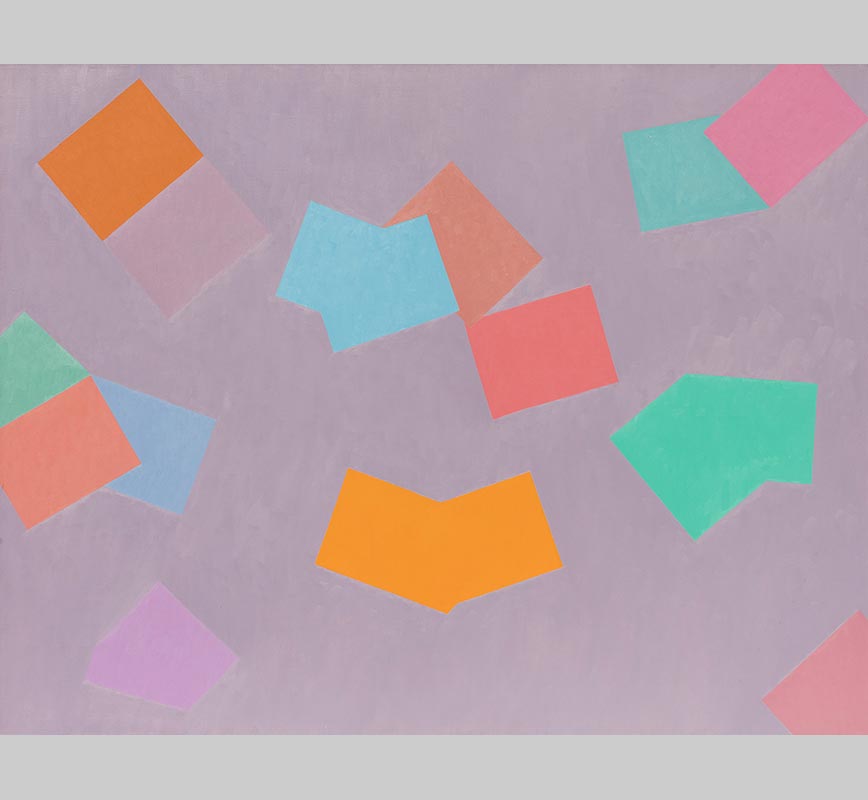
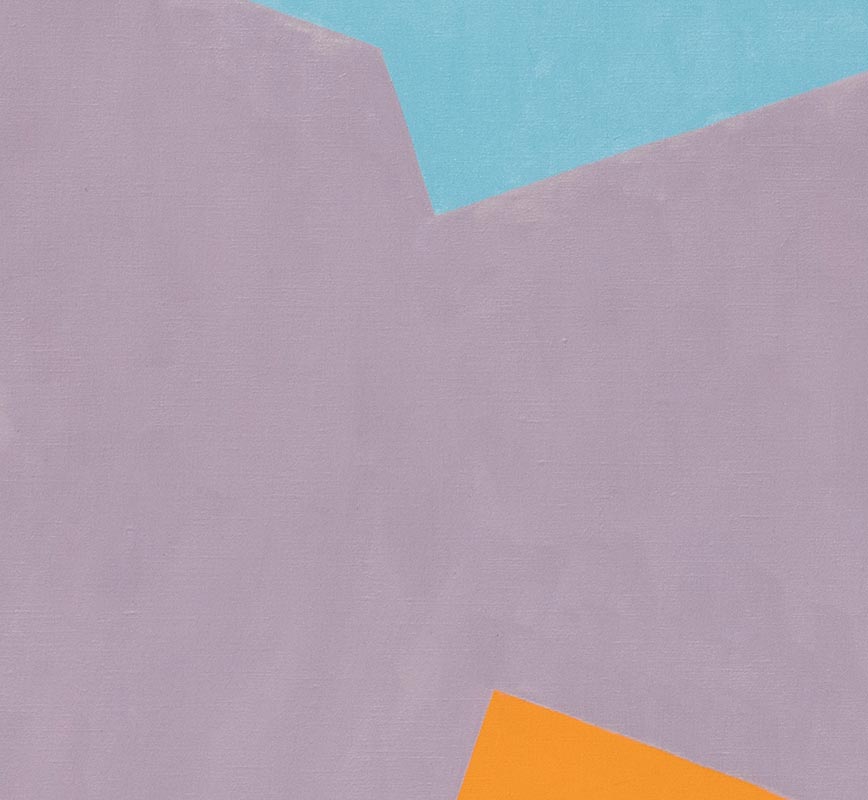
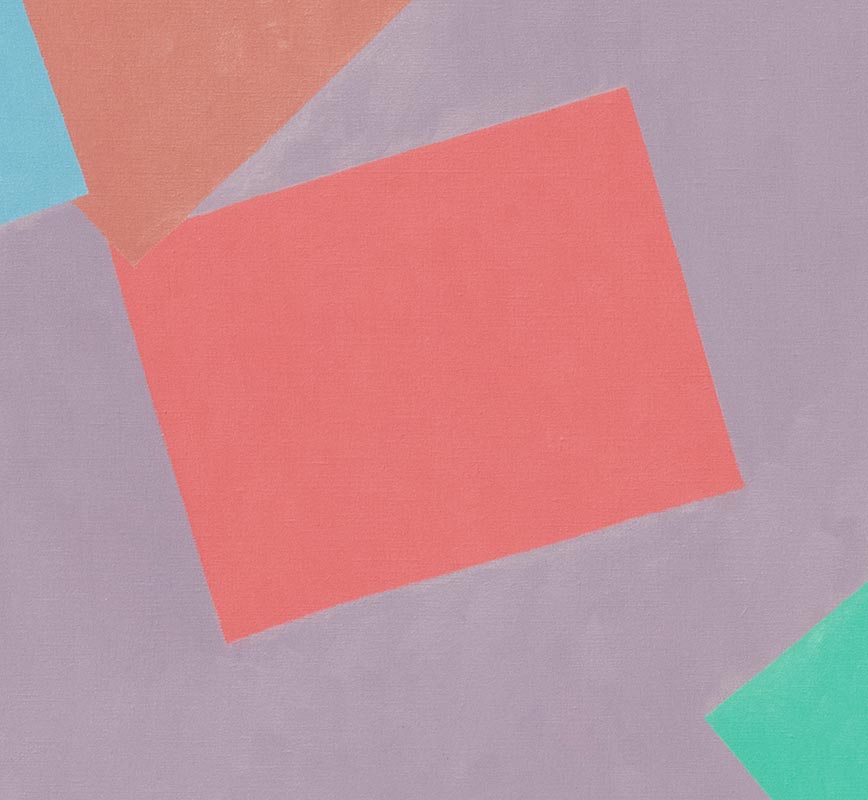
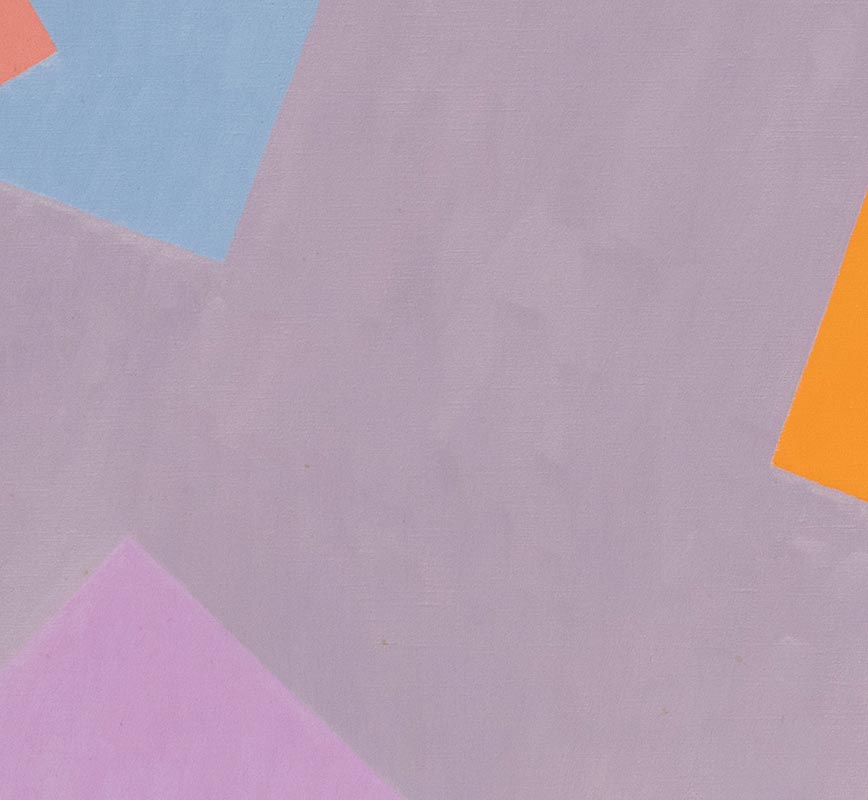
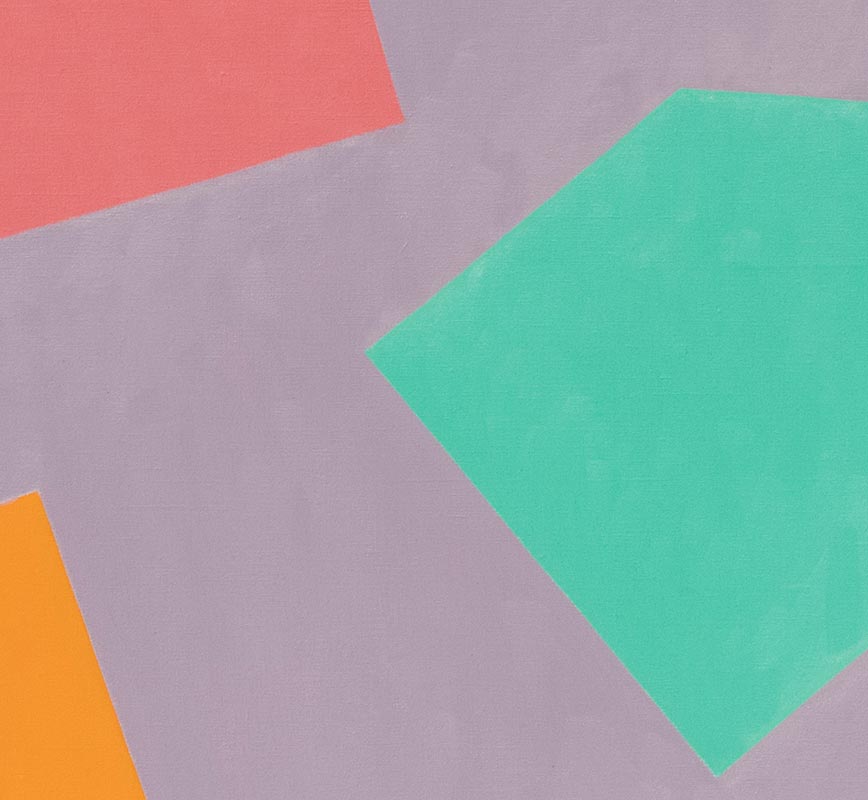
Yellow occupies Yellow Flight almost entirely: a sustained warm field interrupted by thin diagonal strokes of pastel green and pink that float across it like contrails, their soft edges suggesting light passing through rather than lying upon the surface. The diagonals do not organize the yellow field; they move within it, and their movement creates a sense of atmospheric space that the flat bands of Canin’s earlier work deliberately excluded.
Yellow occupies Yellow Flight almost entirely: a sustained warm field interrupted by thin diagonal strokes of pastel green and pink that float across it like contrails, their soft edges suggesting light passing through rather than lying upon the surface. The diagonals do not organize the yellow field; they move within it, and their movement creates a sense of atmospheric space that the flat bands of Canin’s earlier work deliberately excluded.
Yellow Flight arrives at a spatial result that Hans Hofmann theorized but rarely demonstrated with this degree of restraint: Hofmann’s push-pull theory proposed that color relationships alone, without perspective or modeling, could generate the sensation of depth within a flat painted surface. The diagonal streaks of green and pink, cooler than the yellow field, recede optically, while the warm ground advances toward the viewer. The surface is flat; the spatial experience it produces is not.
This painting belongs to the early 1970s, when Canin was working extensively with diagonal elements across warm chromatic grounds. The architectural quality his critics noted in this period, the sense of paint applied with meticulous calculation rather than spontaneous gesture, is entirely present here, but the primary effect is not architectural. It is atmospheric. The precision is the means; the open warmth is the end.