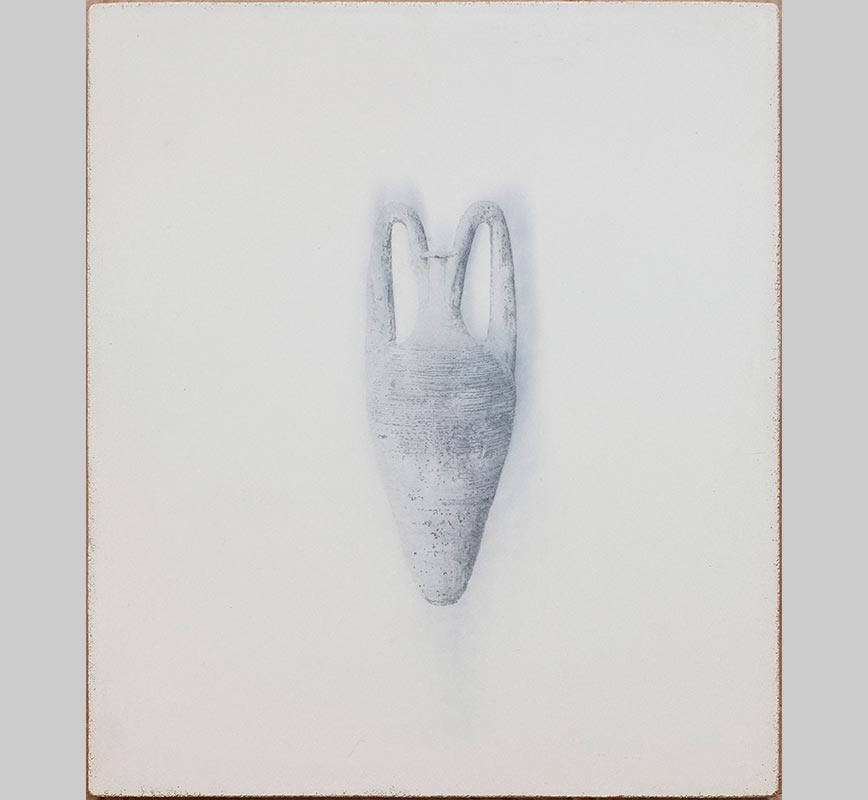
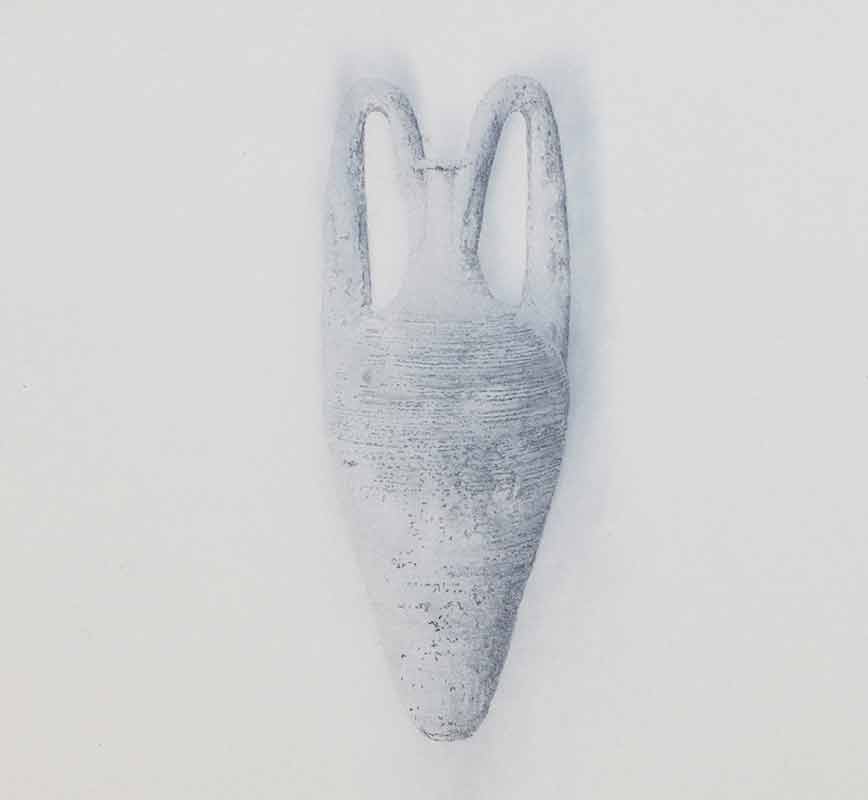
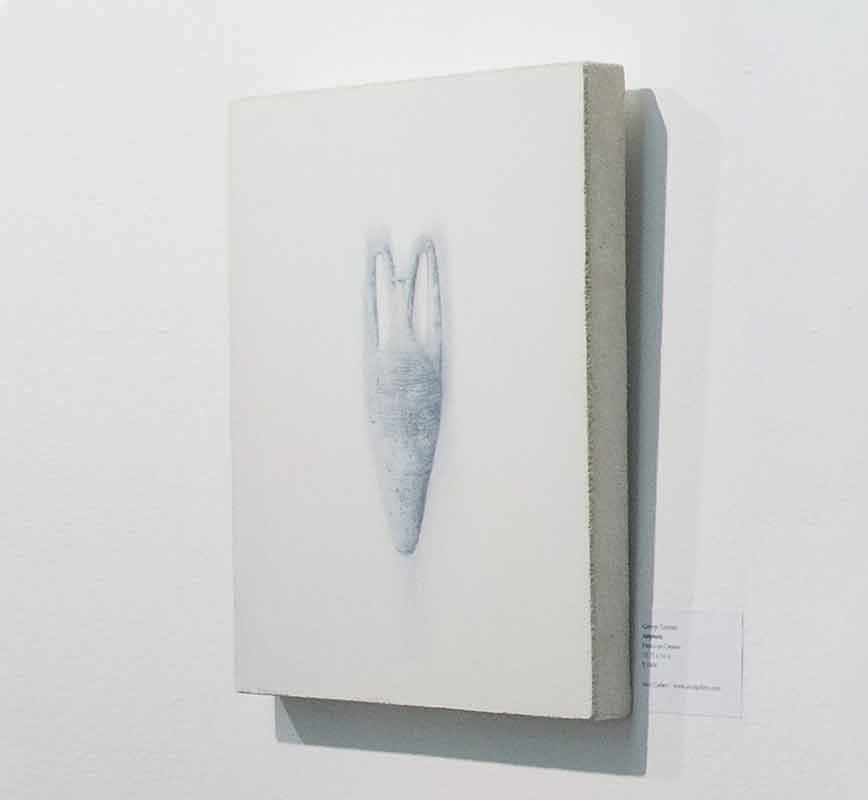
The surface of this amphora is heavily worked, the cement ground textured and dense, the vessel emerging from it with a presence that is both solid and precarious. Tzannes rendered the large storage form in pigment fixed in hardening cement, the technique he developed for his Paliopoli excavation series. The texture of the support is most fully legible here: the drawing and its ground share the same physical history, the image and the cement becoming a single inseparable thing.
The surface of this amphora is heavily worked, the cement ground textured and dense, the vessel emerging from it with a presence that is both solid and precarious. Tzannes rendered the large storage form in pigment fixed in hardening cement, the technique he developed for his Paliopoli excavation series. The texture of the support is most fully legible here: the drawing and its ground share the same physical history, the image and the cement becoming a single inseparable thing.
Giuseppe Penone buried plaster casts of sense organs alongside growing potatoes; the potatoes grew into the forms, altered by the impression made during growth. The logic is the same: a material receives an impression during transformation and carries it. This is closer to fossilization than to fresco, the vessel held as an object is held in earth that hardened around it.
The vessel is a large storage amphora, spherical body, wide mouth, the form used across the ancient Mediterranean to hold grain, oil, and wine. Its surface is mottled, the grey of the cement showing through the pigment. Tzannes made this for his 1999 exhibition Excavations of Cythera at OK Harris in SoHo, the gallery that had championed American Photorealism for three decades; the C-spelling of the title invokes Kythera's mythological register, Aphrodite, erotic love, the form of the goddess held in the form of the vessel.