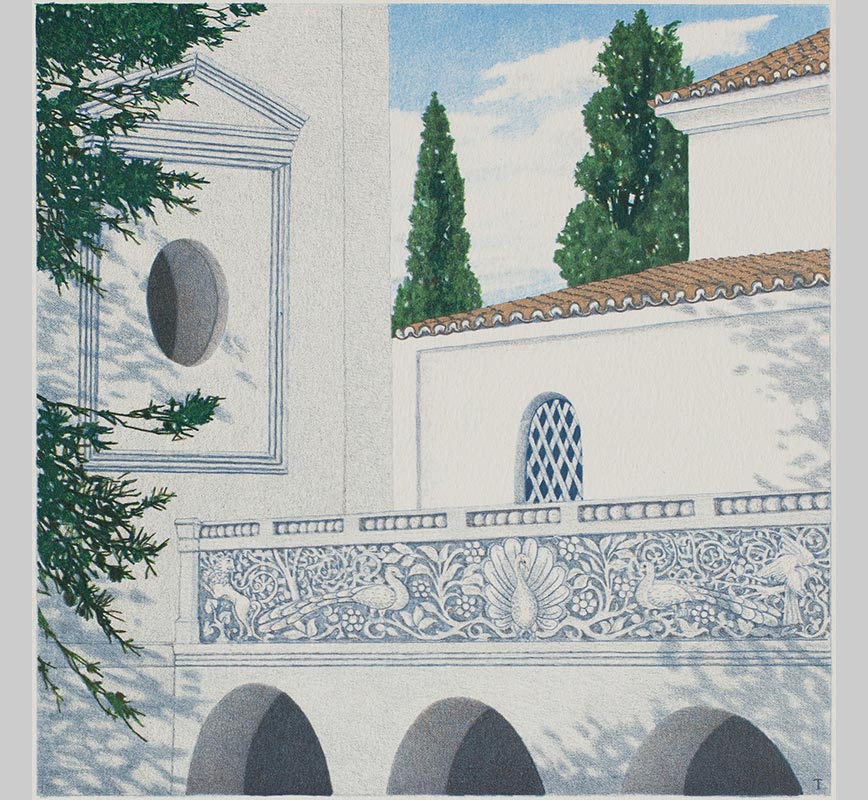
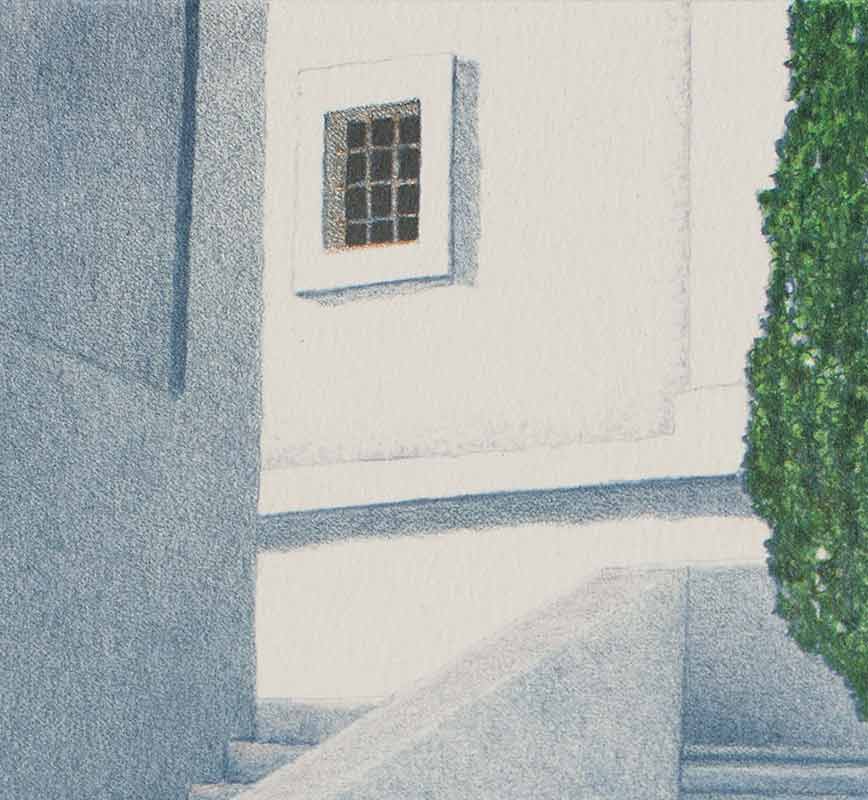
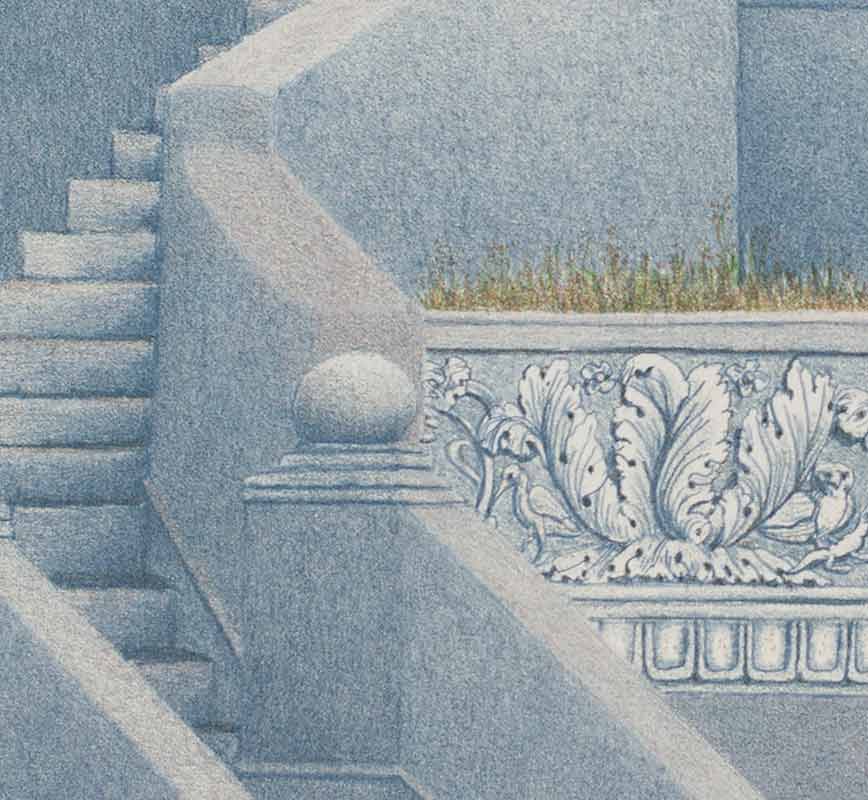
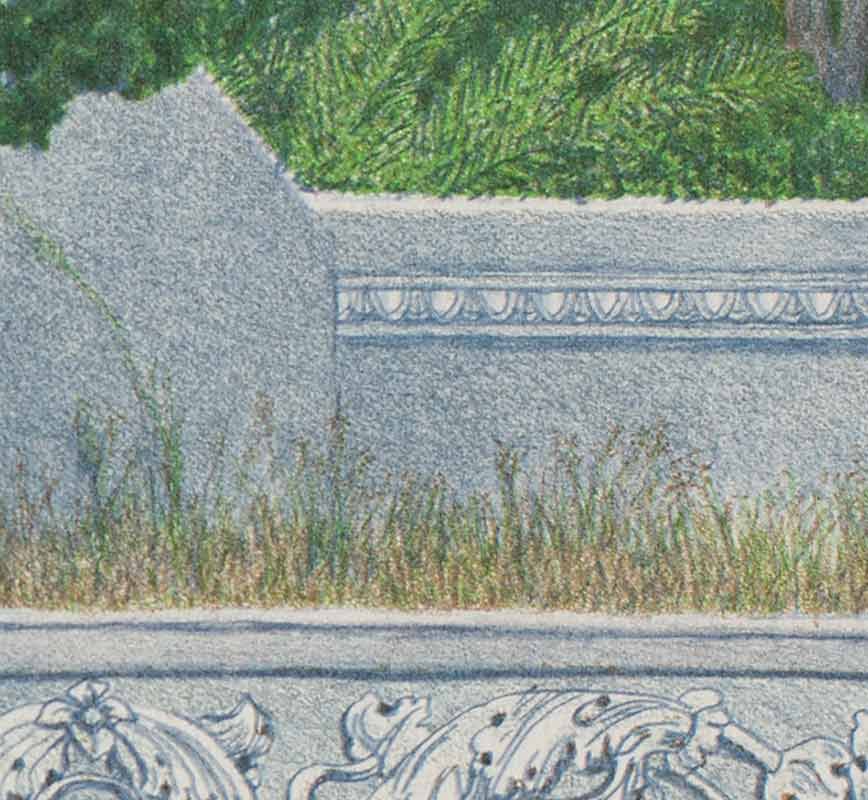
The wall fills the lower two-thirds of the canvas and a small stone column-stump rises above it into a blue sky scattered with thin clouds. The masonry is extraordinary in its complexity, each stone a different shape and color, fitting against its neighbors with the accumulated judgment of a builder working in local material over many days. Above the broken roofline, that small vertical element, quiet and isolated, the only thing that survives above the wall.
The wall fills the lower two-thirds of the canvas and a small stone column-stump rises above it into a blue sky scattered with thin clouds. The masonry is extraordinary in its complexity, each stone a different shape and color, fitting against its neighbors with the accumulated judgment of a builder working in local material over many days. Above the broken roofline, that small vertical element, quiet and isolated, the only thing that survives above the wall.
The blue sky above the wall is not a backdrop; it is a presence, the open air that continues where the wall stops. The village of Aroniadika, where this wall stands, was one of many Kytheran settlements depopulated over centuries by emigration and raids. The column-stump above the wall is all that remains of whatever structure stood here. Tzannes paints it with the same care as the wall itself: an equal claim on attention, an equal claim on memory.
Tzannes restored an eighteenth-century house in Kythera himself, learning the traditional masonry from the inside. What he brings here is the knowledge of a builder alongside the eye of an artist: he can read this wall the way a mason reads it, and that knowledge is in the paint. The photorealist painters he showed alongside at OK Harris applied equivalent precision to contemporary American surfaces; Tzannes aimed the same precision at stone that predates the United States by centuries.